Why Chocolate Is One of the Trickiest Products to Package
Most dry foods just need a good barrier and a nice print. Chocolate is different, because it is sensitive in four directions at once, and a wrapper has to manage all of them. The first and most obvious is heat. Chocolate begins to soften and lose its temper at temperatures a warm room or a delivery van easily reaches, and once a bar melts and resets it never looks the same. Summer shipping turns this from a worry into a real risk, which is why the package and the shipping plan have to be thought about together.
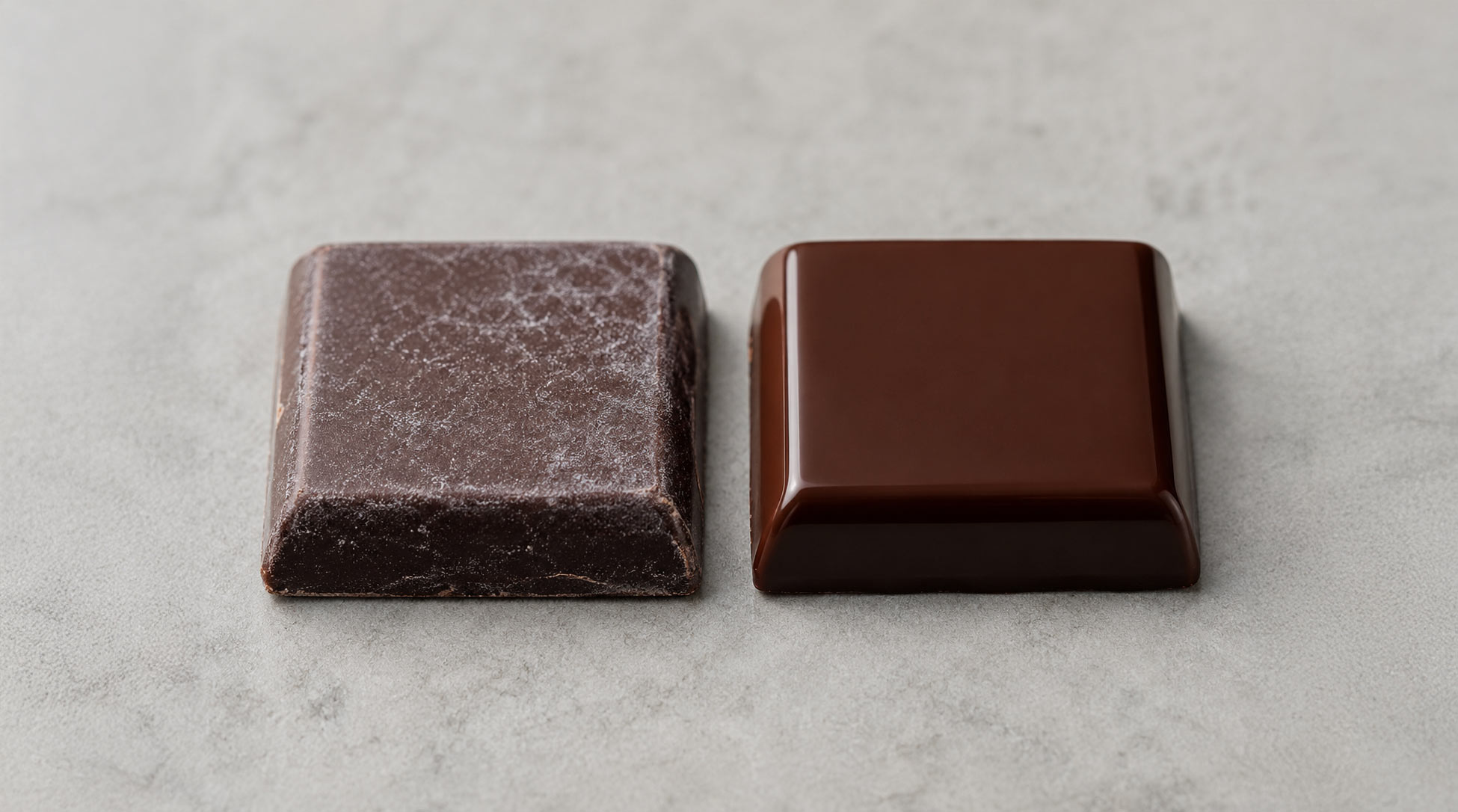
The second threat is bloom, the gray or whitish film that shows up on a bar that has been through temperature swings or has picked up moisture. Fat bloom comes from cocoa butter rising to the surface after the bar gets too warm, and sugar bloom comes from moisture dissolving and recrystallizing the sugar. Packaging cannot fully stop bloom that is caused by temperature, but a tight moisture barrier prevents sugar bloom and keeps the bar stable in normal storage. The third and fourth threats travel together. Chocolate is fatty, which means it slowly goes stale and picks up off-flavors when oxygen reaches it, and it is also a sponge for smells, so a bar stored near coffee, spices, or cleaning supplies will taste like them within days. A real barrier keeps oxygen and outside odors away from the cocoa butter.
Put those together and the job of chocolate bar packaging becomes clear. It has to seal out moisture, oxygen, light, and odor, hold the bar's shape so it does not bruise, and do all of it while looking like something worth giving as a gift. A few protection points are worth fixing before anything else.
- A moisture and oxygen barrier is not optional, since chocolate goes stale and blooms without one
- The wrapper has to block outside odors, because chocolate absorbs the smell of whatever is nearby
- Light protection matters for flavor, so a foil or metallized layer or an opaque sleeve helps
- The format should support the bar so it does not flex and crack in a customer's bag
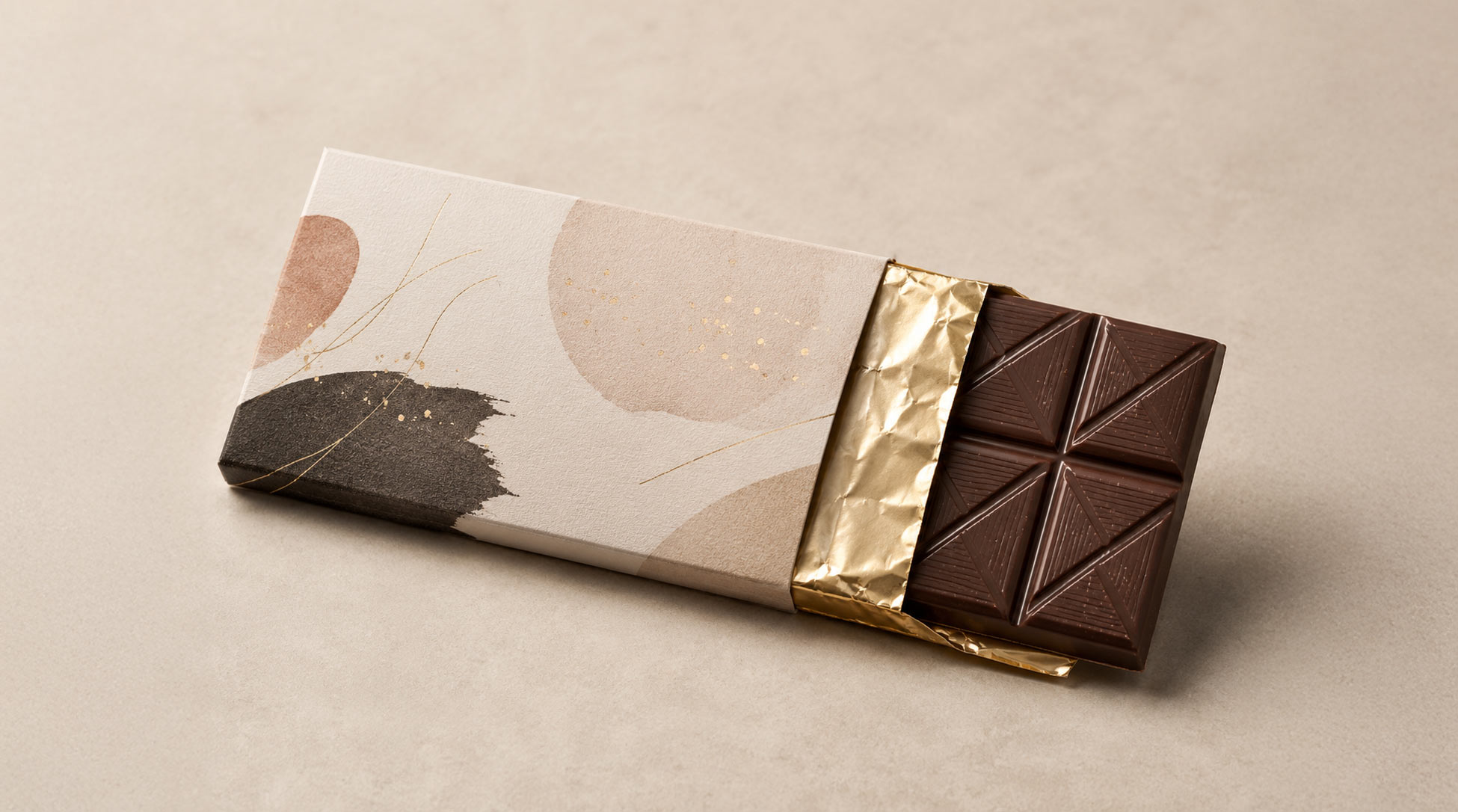
The Classic Two-Layer Format: Foil Inner, Printed Sleeve Outer
The traditional way to wrap a chocolate bar is still the best place to start, because it solves the barrier problem and the branding problem separately. The bar is first wrapped in a thin foil or metallized film that hugs the chocolate and does the protective work, sealing out moisture, oxygen, light, and odor. Then a printed paper sleeve or band slides over the foil and carries the brand, the origin story, the cacao percentage, and the legally required information. Two simple layers, two clear jobs.
This format earns its place for craft makers because it looks premium and it is forgiving to produce. The inner foil can be folded or wrapped by hand at small volume, which means a new maker can launch without buying a machine, and the outer sleeve is just a printed flat piece that is inexpensive to order and easy to update when a recipe or design changes. It also photographs beautifully, since the moment a customer slides the sleeve off to reveal the foil and the molded bar is part of why craft chocolate feels special. The trade-off is labor, because hand-wrapping takes time, so makers usually move toward a wrapping machine as volume grows. When you spec this format, the foil and the sleeve should be designed as a pair so the sleeve fits snugly and the whole package feels intentional. This is squarely a
food packaging decision, and the barrier choice matters as much as the look.
Other Ways to Wrap a Bar
The foil-and-sleeve is the classic, but it is not the only option, and the right choice depends on how a bar is sold and how fast it moves. A single flow wrap is the most common alternative. This is a flexible printed film sealed around the bar in one continuous motion on a flow-wrap machine, the same basic format used for many snack and energy bars. It is fast, it gives a strong all-in-one barrier, and the entire surface can be printed, but it commits you to a machine and a longer run, so it suits brands that have moved past hand-wrapping.
Not every chocolate product is a molded bar, either. Broken bark, chocolate-covered nuts, squares, and small pieces are better served by a stand-up or flat-bottom pouch, which holds an irregular product, reseals for the customer, and stands up on a shelf with a large branding panel. A bar that is sold as part of a gift set or an assortment usually moves into a printed box, which protects the bars in transit and turns the product into a present. Matching the format to the product keeps the package working with the chocolate instead of against it.
- Foil inner wrap plus printed sleeve for the premium, gift-worthy molded bar
- Flow wrap for a fast, single-step barrier once volume justifies a machine
- Stand-up or flat-bottom pouch for bark, squares, and chocolate-covered pieces
- A printed box for assortments, gift sets, and bars that need extra protection in transit
Designing a Wrapper That Sells
Craft chocolate lives or dies on the shelf by how it looks, because a customer paying a premium price expects the package to signal quality before they ever taste it. The good news is that chocolate wrappers reward bold, simple design. A clear brand mark, a confident color, and a clean layout read better at arm's length than a crowded label, and the tall narrow shape of a bar sleeve is a natural canvas for a striking vertical design. The front panel is your storefront, so the name, the origin, and the cacao percentage should be easy to read in a glance.
Finishes are where craft chocolate packaging really separates itself. A soft-touch matte sleeve feels velvety and expensive in the hand, a foil stamp or metallic ink catches the light, and an embossed logo adds a tactile cue of quality before the customer even opens the bar. These are the same premium touches that elevate any package, and they fit chocolate perfectly because the product is already positioned as a small luxury. Print quality has to hold up close, since people read a chocolate wrapper at reading distance, not across a room, which is why fine type and detailed origin maps need a printing method that renders crisp detail. Smaller, design-forward runs are a strong match for
digital packaging, which keeps minimums reasonable and lets a maker run several origins or seasonal editions without a painful setup for each one.
Sustainable Chocolate Bar Packaging
Craft chocolate buyers tend to care about sourcing and ethics, and they expect the packaging to reflect those same values, so sustainability is not a side note in this category. The classic foil-and-sleeve format actually has an advantage here, because a paper sleeve and a separable inner wrap can often be parted and disposed of in different streams, which is cleaner than a single mixed-material wrap that cannot be recycled at all. The inner barrier is where the choices are growing fastest. Compostable films made for confectionery and recyclable mono-material wraps both now hit barrier levels that were not possible a few years ago, so a maker no longer has to choose between protection and a responsible end of life.
The honest approach is to pick the green path you can actually deliver and then tell the customer how to handle the package, rather than stamping a vague symbol on it. A partner who works across
compostable and sustainable packaging can lay out which inner wraps hit your shelf-life target while still meeting your sustainability goal. The point is to match the material to both the chocolate and the values your brand is selling, then make the disposal instructions clear enough that the right thing actually happens.
Choosing a Print Method and Run Size
The last decision is the same one every flexible package comes down to, which is matching the print method to your volume and how settled your design is. A bean-to-bar maker launching a few origins, testing seasonal editions, or still refining a look is best served by digital printing, which keeps order minimums low and makes it affordable to run many designs in small quantities. That flexibility is exactly what a young chocolate brand needs while it figures out which bars sell.
Once a bar becomes a steady seller and the orders climb into high volume, the math shifts toward
rotogravure printing, which delivers a lower cost per wrapper and rich, consistent color across very large runs. The honest move is to match the method to where your brand actually is, not where you hope it will be, and to keep the barrier requirement front and center either way. A few habits keep a chocolate packaging order clean from quote to delivery.
- Use digital for launches, seasonal editions, and any lineup with several origins or changing art
- Move to rotogravure when a bar is a proven high-volume seller and the design is locked
- Confirm the inner barrier meets your shelf-life and climate before you commit to a film
- Plan the foil wrap and the printed sleeve together so they fit and feel like one package
Closing: A Wrapper Worthy of the Bar
The Small Luxury That Has to Survive a Warm Afternoon
Chocolate asks more of its packaging than almost any other craft food, because it is fragile in four directions and premium in every one. A bar has to be sealed against moisture, oxygen, light, and odor, held in a shape that does not bruise, kept as cool as the supply chain allows, and still presented like the small gift it is. The makers who win the shelf treat the wrapper as part of the product, choosing a foil-and-sleeve or a flow wrap that truly protects the chocolate, dressing it in bold design and premium finishes, and matching the print method to their stage. Get those choices right with a packaging partner early, and the bar that took you months to perfect arrives on the shelf, and in the customer's hands, exactly as good as the day it left your kitchen.