Why Most Coffee Bags Cannot Be Recycled
Walk down any coffee aisle and you will see bags that look modern, clean, and earth friendly. The hard truth is that the large majority of them end up in a landfill, no matter how green the printing makes them feel. The problem is not the ink or the shape. It is what the bag is made of, deep inside the wall you never see.
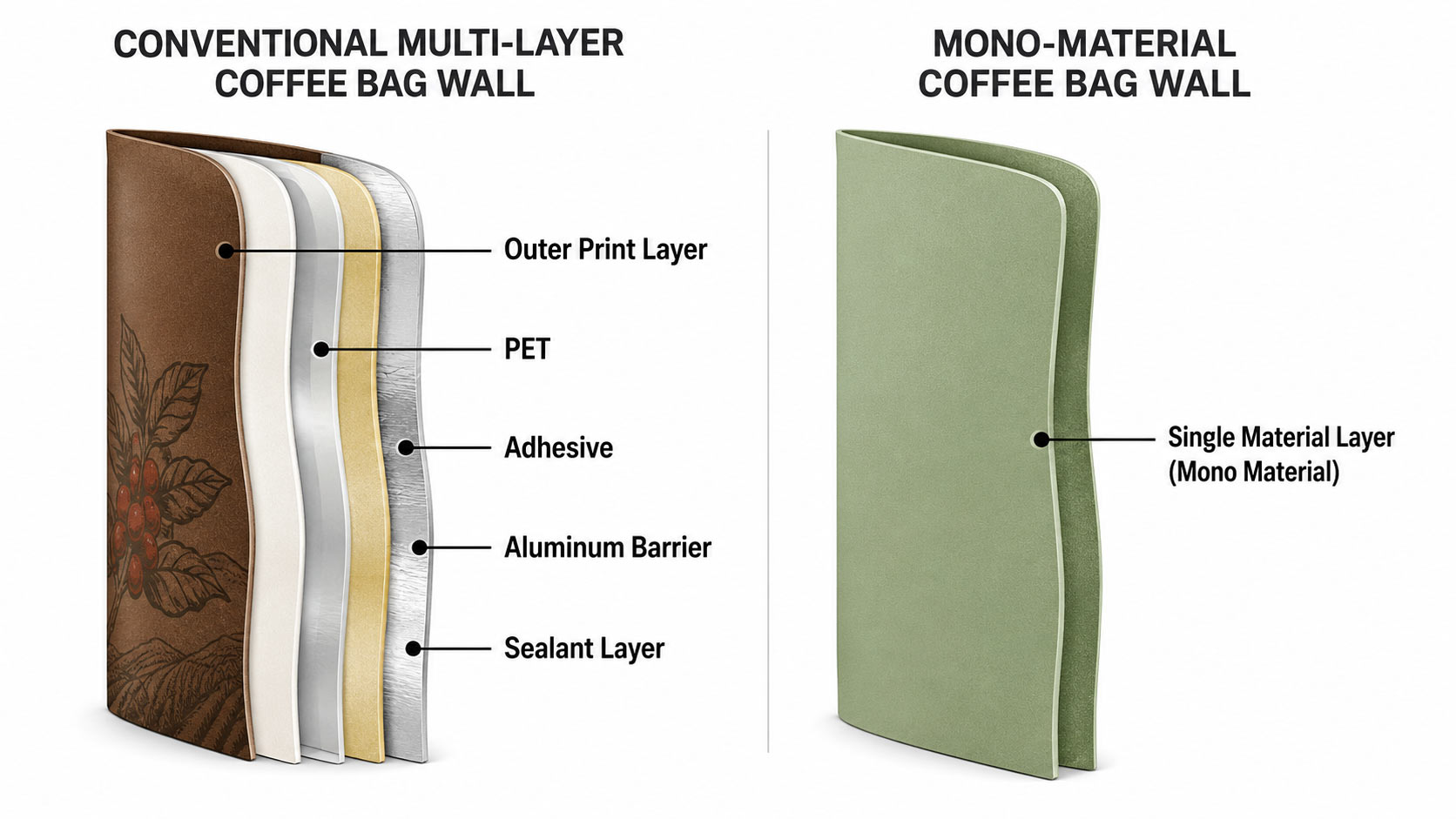
A standard coffee bag is not one material. It is a sandwich of several thin layers bonded tightly together, often a layer of one plastic, a layer of aluminum foil, and a layer of another plastic, all fused into a single film. Each layer has a job. One blocks light, one blocks oxygen, one takes the print, and one melts to form the seal. Together they protect your coffee beautifully, which is exactly why this kind of bag became the standard in the first place.
The trouble starts when that bag is empty. Recycling machines work by sorting items into clean streams of one material, and they have no way to peel a fused film back into its separate parts. A bag that is part plastic and part foil is neither, so the system rejects it. This is the quiet reason that recyclable looking coffee bags so rarely get recycled, and it is the exact problem that mono-material coffee bags were created to solve.
What a Mono-Material Coffee Bag Actually Is
The name sounds technical, but the idea is simple. A mono-material bag is built almost entirely from one family of plastic instead of a mix. In practice that usually means the whole bag is made from polyethylene, often called PE, or from polypropylene, often called PP. Whatever the choice, the layers all belong to the same material group, so the finished bag counts as a single material in the eyes of a recycler.
That one change makes all the difference at the end of the bag's life. Because everything is the same type of plastic, the bag does not need to be pulled apart. It can be sorted, melted down, and turned back into useful plastic in one piece. Sorting machines recognize it cleanly, and the recycled material that comes out the other side is good enough that manufacturers actually want to buy it, which is what keeps a recycling stream alive.
It helps to picture the difference as two walls standing side by side. The traditional wall is several different materials glued into one sheet that can never be separated. The mono-material wall is one material the whole way through, even though it may still have a few thin layers, because those layers are all cousins from the same plastic family. The same protective structure is there. It is just built so the bag can have a second life instead of a one way trip to the dump. Roasters exploring
custom coffee bags are increasingly asking for this construction by name.
How One Plastic Still Protects Your Coffee
For years the knock on single-material bags was that they could not protect coffee well enough. A bag of pure plastic simply did not block oxygen and moisture the way a foil layer does, and for a product as sensitive as fresh coffee that was a deal breaker. Coffee oils go flat fast when oxygen reaches them, so any bag that lets air seep through is not worth the savings.
The fix came from a clever bit of engineering. Instead of adding a foil layer made of a different material, makers now apply an ultra thin barrier coating to the single plastic base. Two common ones are a clear coating known as EVOH and a glass like coating known as SiOx, which is a microscopic layer of silicon oxide. Both block oxygen and moisture extremely well, yet they are so thin that the bag still behaves as a single material when it is recycled. The result is a mono-material bag that hits the same freshness targets brands expect from older foil bags.
Coffee also needs one more feature that has nothing to do with the wall of the bag. Fresh roasted beans release carbon dioxide for days after roasting, so a sealed bag needs a one-way degassing valve to let that gas escape without letting oxygen back in. Mono-material bags can carry a valve just like any other bag. When recyclability is the goal, the smart move is to talk through valve choices early, since the valve is a small separate part and you want the whole package designed to work together. A few protection points matter most when you spec one of these bags.
- A thin EVOH or SiOx coating gives oxygen and moisture protection close to traditional foil
- A one-way degassing valve still handles the carbon dioxide that fresh coffee gives off
- A strong heat seal keeps the package airtight for the full shelf life you are targeting
- The barrier and the seal have to be matched to your product, not just copied from another bag
What Recyclable Really Means for These Bags
Recyclable is a word that gets thrown around loosely, so it is worth being clear about what it means for a mono-material coffee bag. The honest answer is that the bag is recyclable where the local system is set up to handle that type of plastic film. The material itself is ready. Whether it gets recycled also depends on the bins and facilities near your customer.
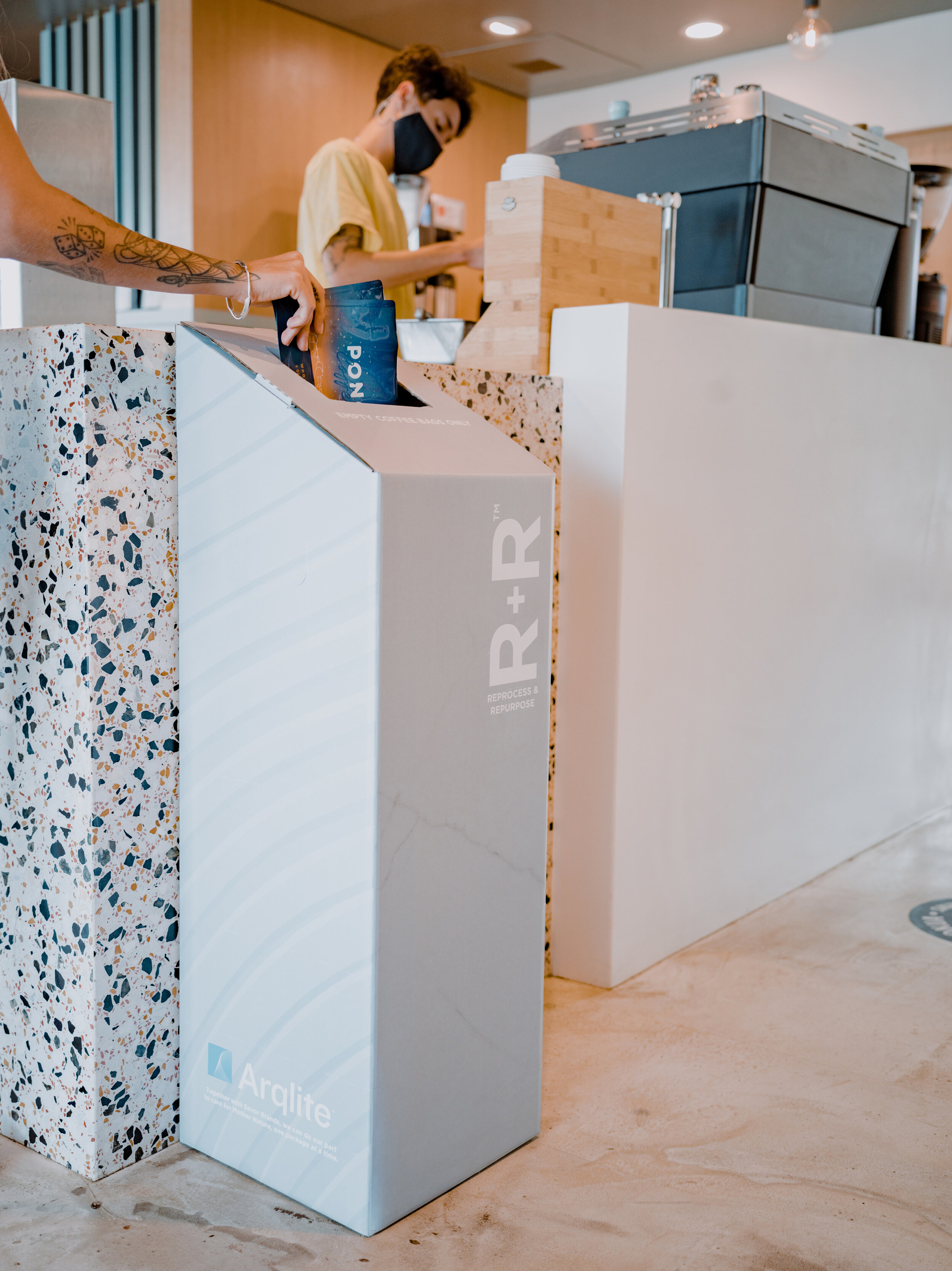
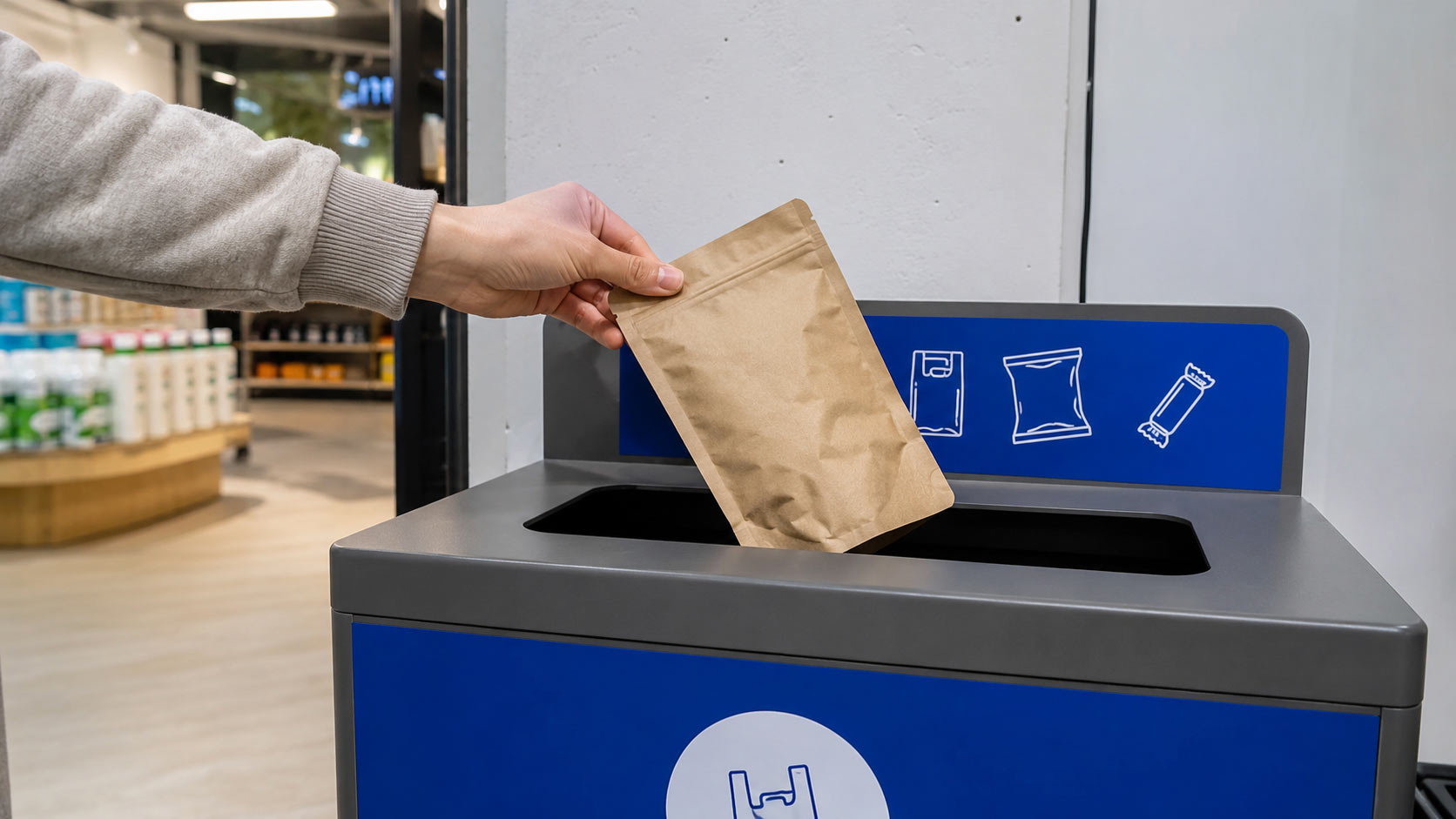
Many mono-PE bags fall into the same category as the soft plastic film used for grocery and bread bags. That kind of film is often not accepted in curbside bins, because loose film tangles the sorting machines, but it is widely accepted at store front drop-off points where shoppers already return plastic bags. So the most useful thing a brand can do is tell customers exactly how and where to recycle the bag, rather than just stamping a vague recycling symbol on it and hoping. Clear instructions turn a recyclable bag into a bag that actually gets recycled.
It is also fair to weigh mono-material against the other green paths available, because recyclable is not the only good answer. Compostable bags break down in the right facility, and reusable approaches stretch the life of a bag before it is ever discarded. The best choice depends on your customers and your goals, and a partner who works across
compostable and sustainable packaging can lay the options out plainly so you are not guessing. The point is to pick the path you can actually deliver on, then explain it clearly to the people holding the bag.
Making the Switch on a Custom Run
Moving to a mono-material bag is mostly a planning conversation, not a leap of faith. The bag, the barrier coating, the valve, and your filling equipment all have to line up, which is why the smart time to raise recyclability is at the very start of a project rather than after the artwork is locked. Bring it up early and the whole package can be built around the goal from day one.
Start by being honest about your priorities. If real recyclability matters to your brand and your customers, say so up front, and let the freshness target, the bag size, and the print all be designed to support that single material structure. The good news is that going mono-material does not force you to settle for a plain or cheap looking bag. These films print in full, rich color and can carry the same premium finishes as any other custom bag, so your shelf presence does not suffer at all. Modern
eco-friendly digital printing even lets smaller roasters order recyclable custom bags without committing to giant minimum runs.
The same thinking applies well beyond coffee. Snack makers, tea brands, and specialty food sellers all face the exact same recycling problem with their mixed-layer pouches, and mono-material construction is becoming a strong option across
food packaging too. A few habits keep a switch like this smooth from quote to delivery.
- Decide early that recyclability is a real goal, so the whole bag is designed around it
- Confirm the barrier coating meets your shelf-life target before you commit to a film
- Plan the valve and the seal as part of the package, not as afterthoughts
- Write clear recycling instructions for your customer, since how-to-recycle info drives real results
Closing: One Material, One Clear Win
The Bag That Finally Lives Up to Its Symbol
Mono-material coffee bags solve a problem that has quietly bothered the coffee world for years, the gap between a bag that looks recyclable and a bag that truly is. By building the whole package from one family of plastic and leaning on smart thin coatings for protection, these bags keep coffee just as fresh while finally giving the empty bag a real second life. They are not magic, and they still depend on local recycling and clear customer instructions to reach their full promise. Done right, though, a mono-material bag lets a roaster put a recycling symbol on the shelf and actually mean it, which is the kind of honest packaging that customers remember and reward.