What Nitrogen Flushing Actually Does
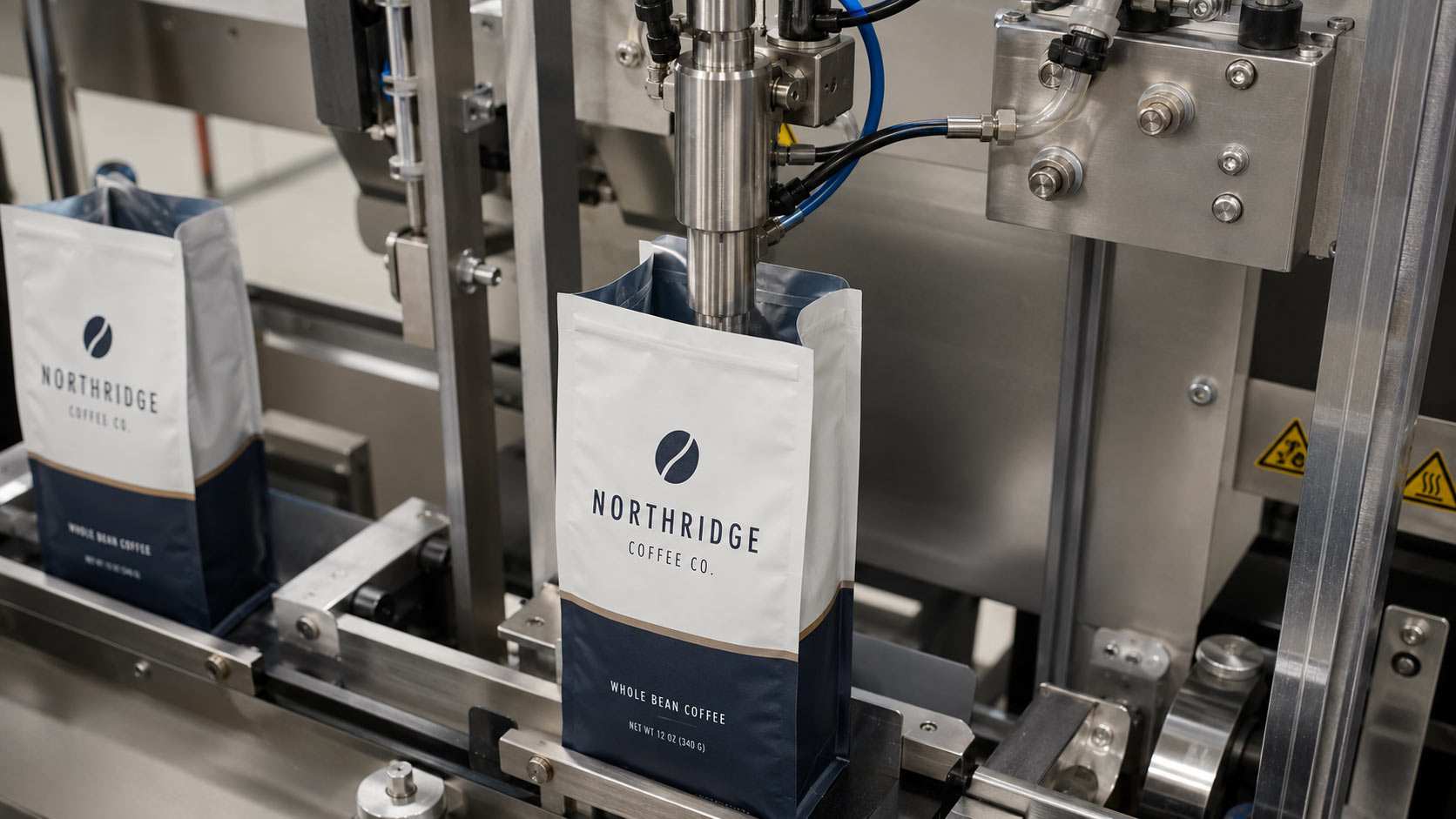
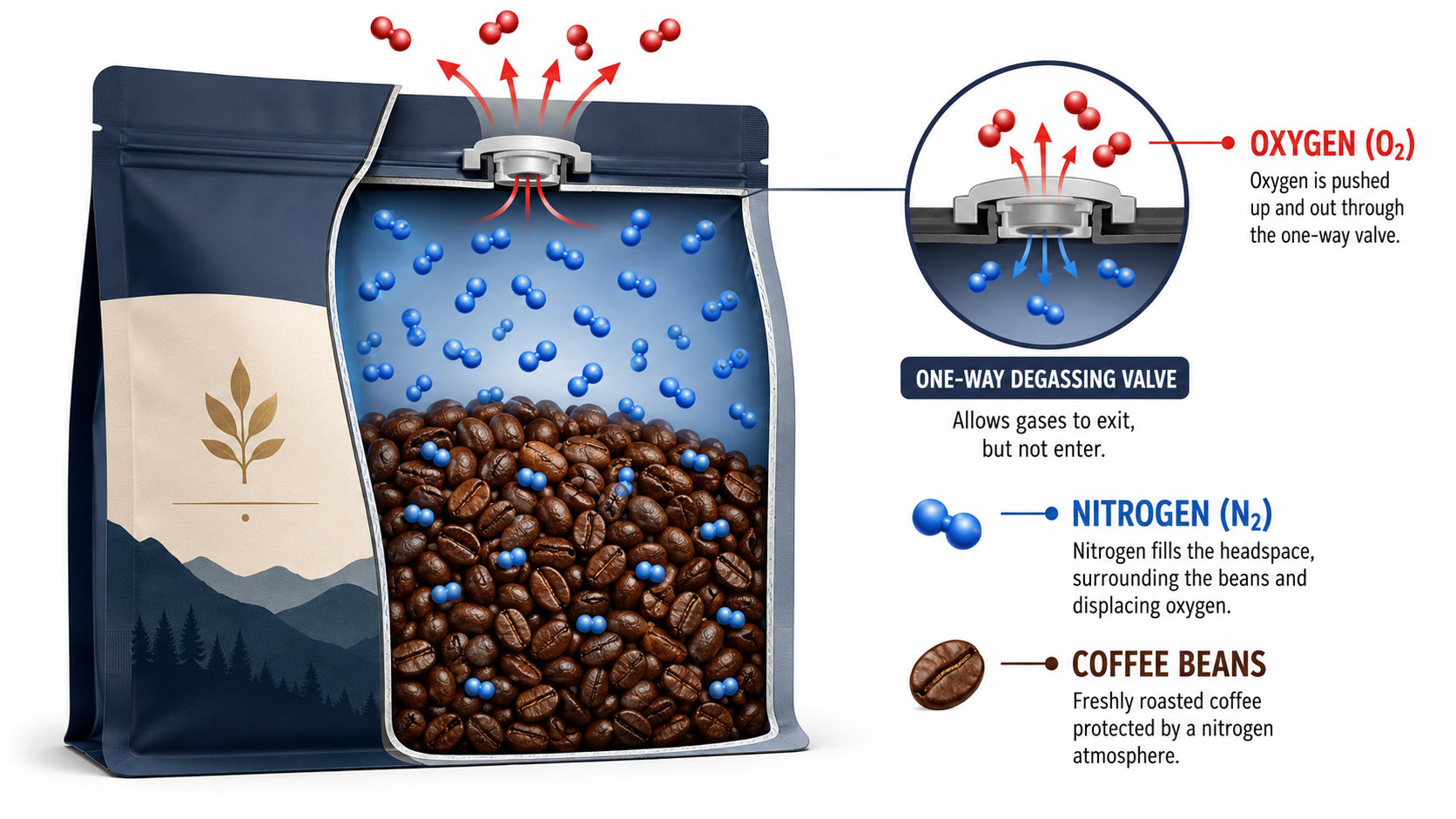
Nitrogen flushing is a simple idea with a big payoff. Right before a package is sealed, a machine pushes nitrogen gas into the bag and forces the regular air out. Since regular air is the problem, swapping it for nitrogen is the whole point. The result is a sealed package where the product is surrounded by a gas that does not react with it, instead of the oxygen that slowly wrecks it.
You may know this by its more technical name, modified atmosphere packaging. That phrase just means the air inside the package has been changed on purpose to protect what is inside. Nitrogen flushing is the most common version of it because nitrogen is the easy choice. It makes up about 78 percent of the air we breathe, it has no taste or smell, and it does not chemically react with food. It is, in a sense, the most boring gas in the room, and that is exactly why it works.
Here is the part that surprises people. The nitrogen is not added to do anything to the food. It is added to take the place of something harmful. Think of it like filling a glass with clean water to push out the dirty water already in it. The nitrogen is the placeholder that keeps oxygen from moving back in, and that single swap is what buys a product its longer, fresher life on the shelf.
Why Oxygen Is the Enemy of Fresh Food
To understand why brands bother with nitrogen at all, you have to understand what oxygen does to food once it is sealed up. Oxygen drives a process called oxidation, and oxidation is what makes oils and fats go rancid, dulls flavors, and fades aroma. Coffee is one of the clearest examples. The oils that carry all that rich smell and taste start breaking down the moment they meet oxygen, which is why a bag left open goes flat so fast.
Oxygen does more than just stale your product. It also gives mold and many spoilage microbes the environment they need to grow, since a lot of them depend on oxygen to survive. Pull the oxygen out and you make the package a far less friendly place for the things that ruin food. That is why nitrogen flushing often does double duty, protecting both the flavor and the basic safety of what is inside.
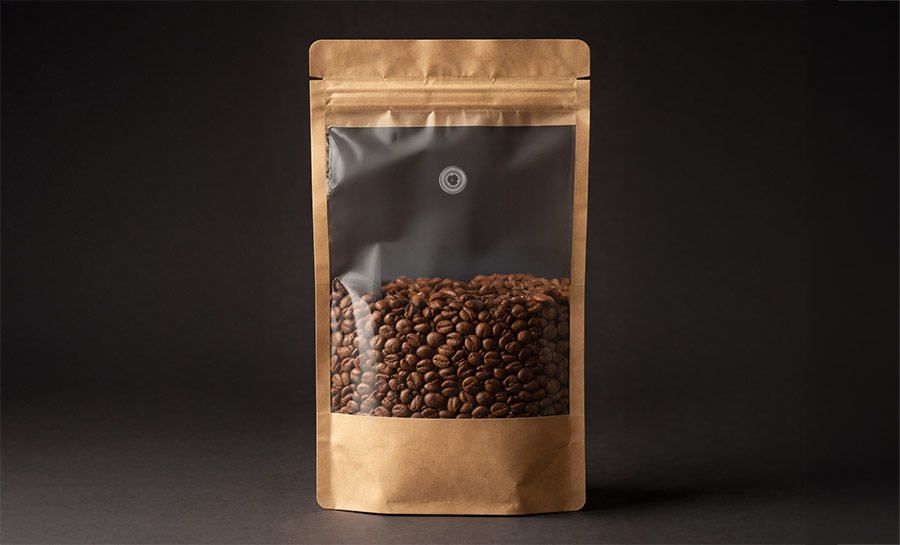
Coffee deserves a special mention here because it is so sensitive. Freshly roasted beans are packed with aromatic oils that fade quickly, and the damage speeds up once the coffee is ground and more surface area is exposed to air. A few weeks of oxygen contact can turn a vibrant roast into something dull and papery. Nitrogen flushing fights that decline at the source by getting the oxygen out before the bag is ever sealed, which is why it pairs so naturally with
custom coffee bags built to protect a roaster's hard work.
Nitrogen Flushing vs. Valves vs. Vacuum Sealing
This is where most brands get tangled up, because nitrogen flushing, degassing valves, and vacuum sealing all deal with gas and air, yet they solve different problems. Knowing which does what keeps you from paying for the wrong fix or skipping the one you actually need. The short version is that they are teammates more often than rivals.
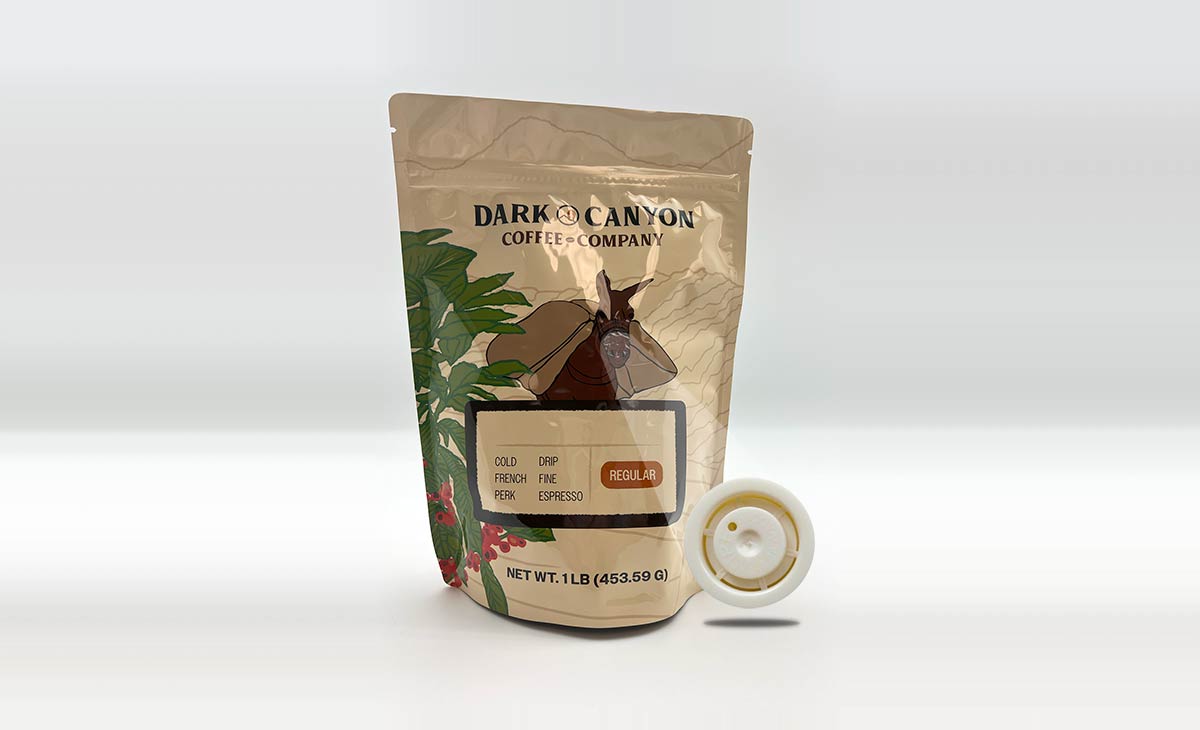
A degassing valve solves a problem unique to coffee. Freshly roasted beans keep releasing carbon dioxide for days or even weeks after roasting, a process called degassing. If you sealed that coffee in an airtight bag with no escape, the bag would balloon up and could burst. A one-way degassing valve lets that carbon dioxide out while blocking oxygen from coming back in. So the valve handles the gas the coffee makes after sealing, while nitrogen flushing handles the oxygen that was in the bag at the moment of filling. They work as a pair, not as substitutes.
Vacuum sealing takes the opposite approach to nitrogen flushing. Instead of replacing the air with gas, it sucks all the air out so the package collapses tight around the product. That removes oxygen too, but it has a real downside for delicate items. A vacuum will crush whole coffee beans, chips, and other fragile foods, and it strips away the protective gas cushion that keeps them whole. It also fights badly with fresh coffee, since beans still releasing carbon dioxide will simply re-inflate the pack. Nitrogen flushing keeps a soft gas cushion in place, so the product stays protected and intact.
A quick way to keep the three straight in your head.
- Nitrogen flushing replaces the oxygen in the bag at fill, protecting flavor and slowing spoilage
- A degassing valve releases the carbon dioxide the coffee keeps producing after it is sealed
- Vacuum sealing removes all air by suction, which works for some foods but can crush fragile ones
For a lot of coffee, the winning setup is nitrogen flushing plus a degassing valve together, getting oxygen out at the start and giving carbon dioxide a safe exit afterward. The right combination depends on your product, and a packaging partner who works in both
food packaging and coffee can tell you which tools your specific item really needs.
Which Products Actually Need Nitrogen Flushing
Not every product is worth flushing, so it helps to know where the technique earns its keep. The best candidates are foods that are sensitive to oxygen, prone to going rancid, or easy to crush. If your product checks one of those boxes, nitrogen flushing is probably on your list. If it does not, you may be able to skip the added step and cost.
Coffee sits at the top of the list, both whole bean and ground, because its oils and aromas are so fragile. Snacks are another classic case, and the puffed up bag of chips on the shelf is the most familiar example anywhere. That extra room is not wasted space or a trick, it is nitrogen doing two jobs at once, pushing out oxygen and cushioning the chips so they arrive whole instead of crushed. Once you know to look for it, you see nitrogen flushing everywhere in the snack aisle.
A simple gut check for whether your product is a good fit.
- It contains oils or fats that can go rancid, like coffee, nuts, seeds, and many snacks
- It loses aroma or flavor quickly once exposed to air, like roasted coffee and spices
- It is fragile and gets crushed by vacuum sealing, like chips and whole beans
- It needs a longer shelf life to survive shipping and time on a retail shelf
Dried fruit, jerky, nut butters in flexible packs, and many specialty foods all benefit too. The common thread is shelf life. If you are selling through distributors or sitting on store shelves for weeks, the extra freshness can be the difference between a product that delights a customer and one that disappoints. High volume runs of these foods often move through
rotogravure bags on lines built for exactly this kind of gas flushing at scale.
Getting Nitrogen Flushing Right on a Custom Run
Adding nitrogen flushing to your packaging is mostly about planning, because it touches the bag, the fill process, and your equipment all at once. The gas can only do its job if the package can hold it, so the conversation has to start with the bag itself. A flushed package needs a strong barrier film and a reliable seal, or the oxygen you worked to remove will simply creep back in over time.
That barrier is the quiet hero of the whole system. Nitrogen flushing gives you a great starting point by clearing the oxygen out, but the film has to keep new oxygen from migrating back through the package walls. This is why brands serious about freshness invest in proper high barrier materials rather than thin, cheap film. The flush and the barrier work as a team, and a weak link on either side undoes the benefit you paid for.
A few things keep a flushed run smooth from quote to delivery.
- Choose a high barrier film and a strong seal, since the flush only matters if the package can hold it
- Decide early whether you also need a degassing valve, which is common for fresh roasted coffee
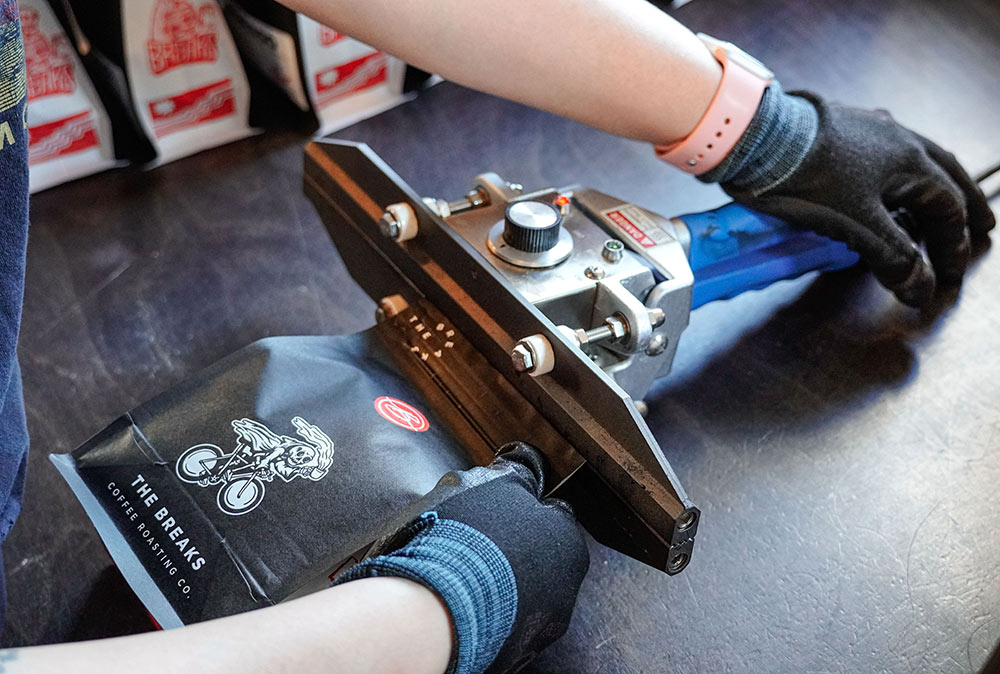
- Match the flush to your fill equipment, because the gas is injected during the sealing step
- Keep your shelf life goal in the conversation, so the whole package is built to hit it
The good news is that none of this forces you to give up a beautiful bag. You can still print in full, rich color and make the package look premium while it quietly protects what is inside, and modern
eco friendly digital printing lets even smaller brands order custom, freshness ready packaging without committing to enormous volumes. Freshness and good looks are not a trade off, they are two features of the same well built bag.
Closing: Freshness You Can Feel
The Quiet Gas Doing the Loud Work
Nitrogen flushing is one of those behind the scenes details that customers never think about but always notice, because they taste it. That bright, fresh cup of coffee and that crunchy, whole chip are both the payoff of pushing oxygen out and letting an inert gas stand guard. The technique is simple, but the impact on shelf life and flavor is huge, and it pairs naturally with the valves and barrier films that round out a serious freshness strategy. Figure out whether your product is the oxygen sensitive type, decide if a valve belongs in the mix, and build the bag to hold the gas you put in it. Do that, and the freshness your customers feel becomes one more reason they come back for the next bag.