The One Approval That Saves a Whole Print Run
Picture approving your coffee bag from a bright image on your laptop, feeling great about it, and then opening a box of a few thousand printed bags where the logo sits too low, the roast date field is missing, and the brand blue came out closer to purple. Nobody set out to make that happen. It happened because the design was approved from a picture instead of from a proof. Mockups and proofs are the two checkpoints that stand between your idea and a full print run, and knowing the difference is the cheapest insurance you can buy in custom packaging.
Mockup vs Proof: They Are Not the Same Thing
People use these two words as if they mean the same thing, but they do very different jobs. A mockup sells the idea. A proof protects the print.
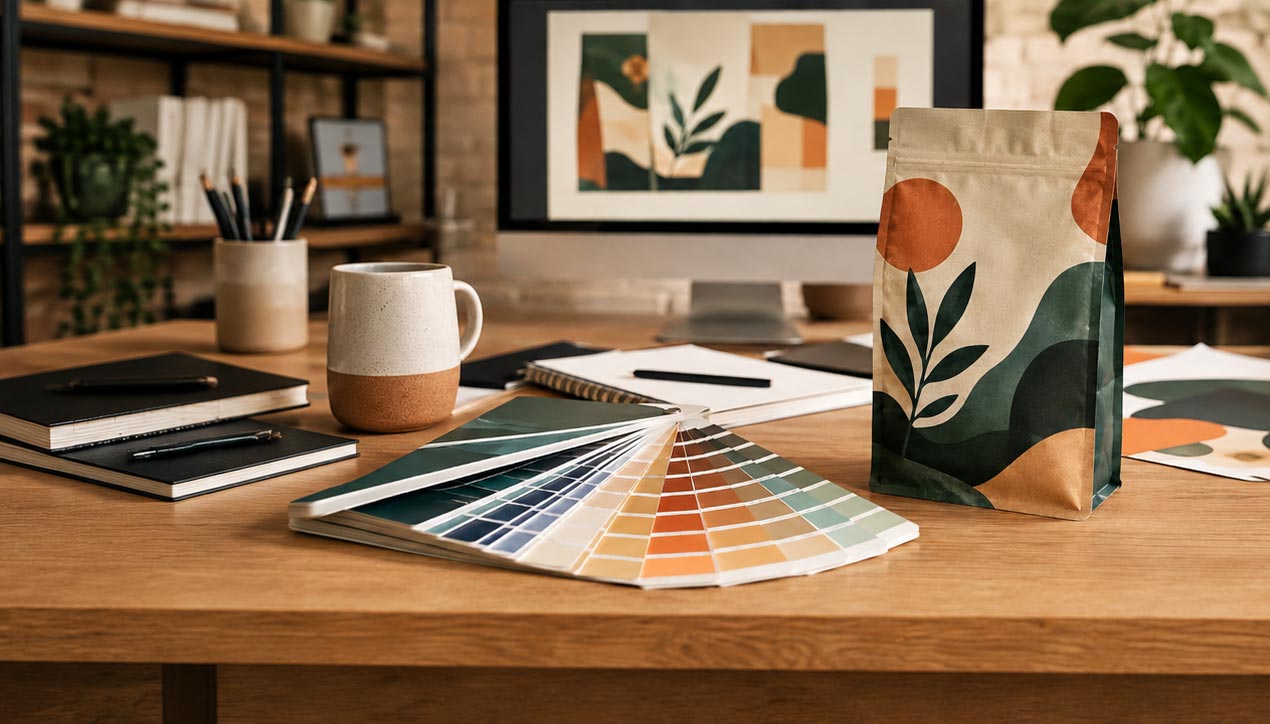
- A mockup is a visual preview, usually a 3D render or a flat picture of your artwork on a bag shape. It shows how the design feels and helps your team agree on a direction.
- A proof is a production-accurate check of the actual file that will be printed. It exists to catch errors, not to sell the look.
A beautiful mockup built on an unchecked file is exactly how good-looking mistakes get printed. You want both, in order: the mockup first to agree on the design, the proof second to verify it is correct.
The Digital Mockup: Your First Look
The mockup is the fun stage. It is where your artwork gets wrapped onto a bag shape so you can see the story come together, share it with partners, and decide whether the layout works. It is perfect for judging balance, hierarchy, and whether the front panel reads well from a few feet away. What a mockup cannot do is promise accuracy. The colors are screen colors, the resolution may be smoothed for looks, and the bag shape is often a generic template, not your exact size and gusset. Treat the mockup as a yes on the concept, never as a yes on the details. If you are still shaping the artwork itself, our guide on
briefing a designer the right way helps you get a clean file to mock up in the first place.
The Digital Proof: Checking the Real File
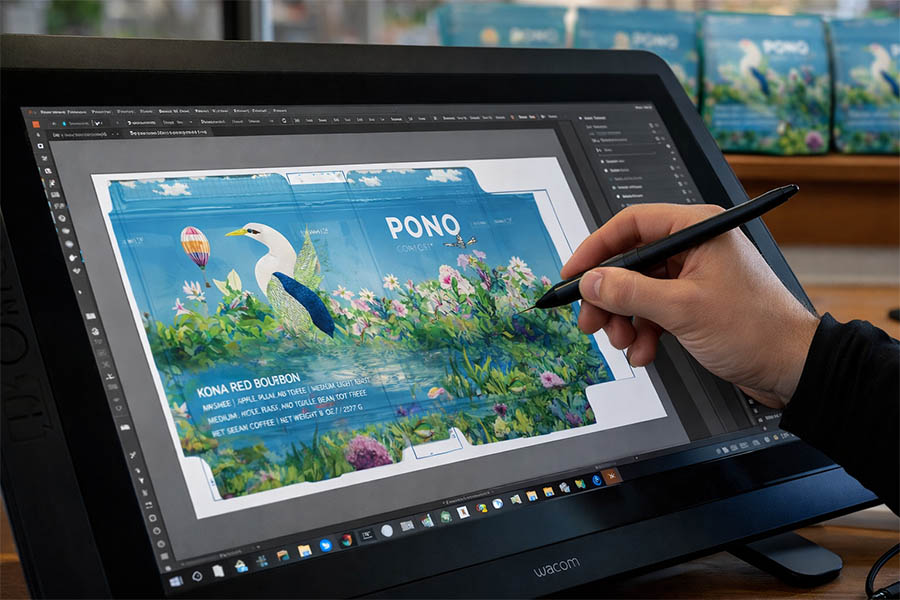
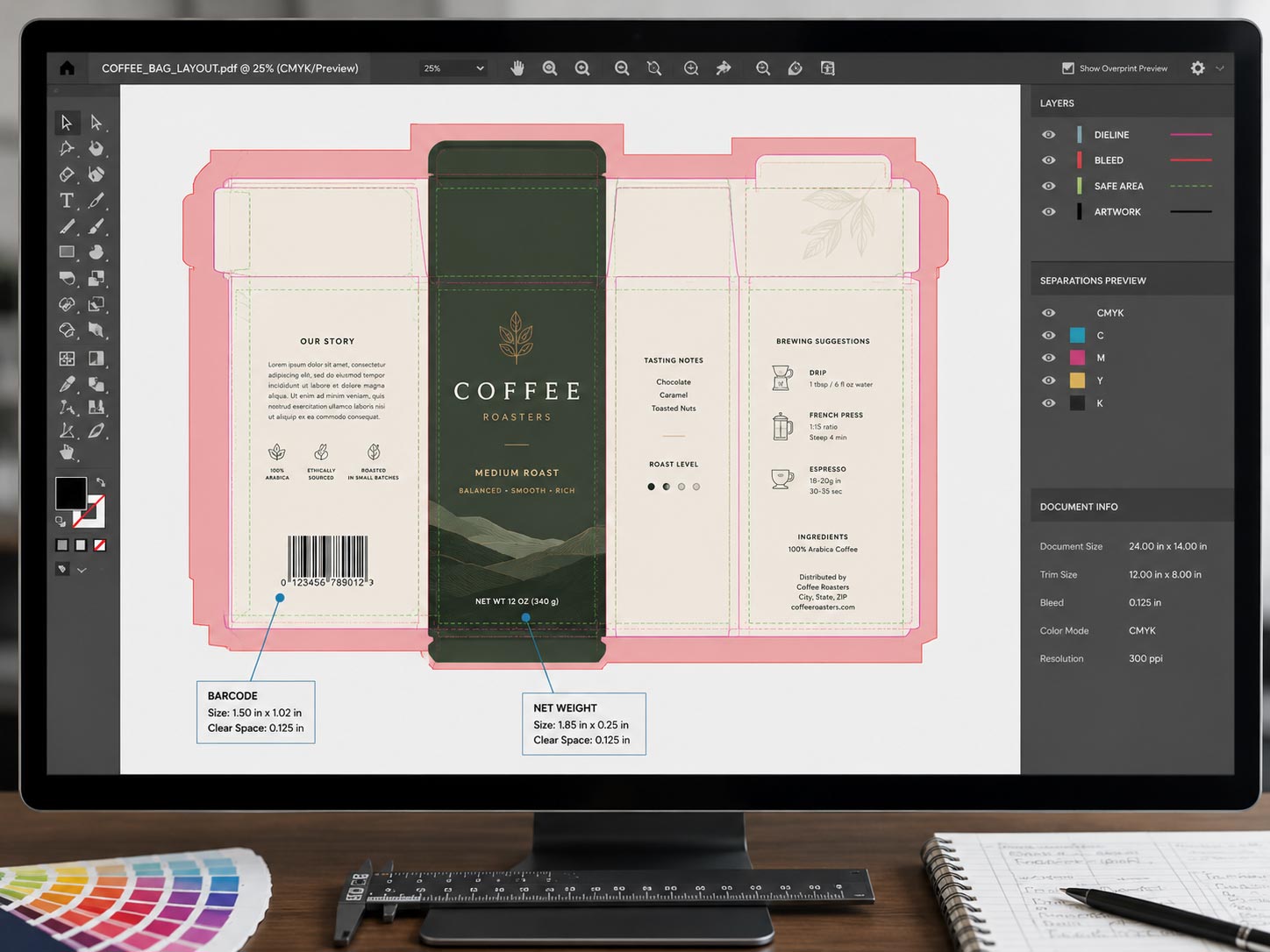
Once the concept is approved, the digital proof is where the real work happens. This is the print-ready file laid onto your exact
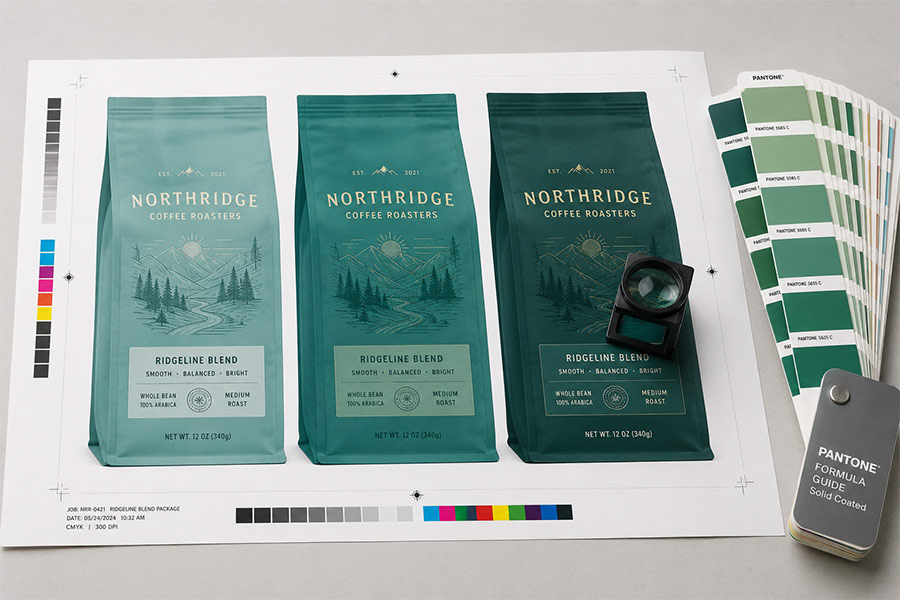
dieline, so you can confirm the artwork fits the bag, sits inside the safe margins, and extends into the bleed so nothing important gets trimmed off. It is also where you confirm color the right way. Screen color is unreliable, which is a whole story on its own in our post on
why packaging colors look different on screen, so the proof should reference your brand color as a specific Pantone number rather than a shade you eyeballed. Read every word of the spelling, the legal copy, and the net weight line, and run a quick scan test on the barcode. A digital proof is fast and free to revise, which makes it the ideal place to fix problems while fixing them still costs nothing.
The Pre-Production Sample: Seeing It in Your Hands
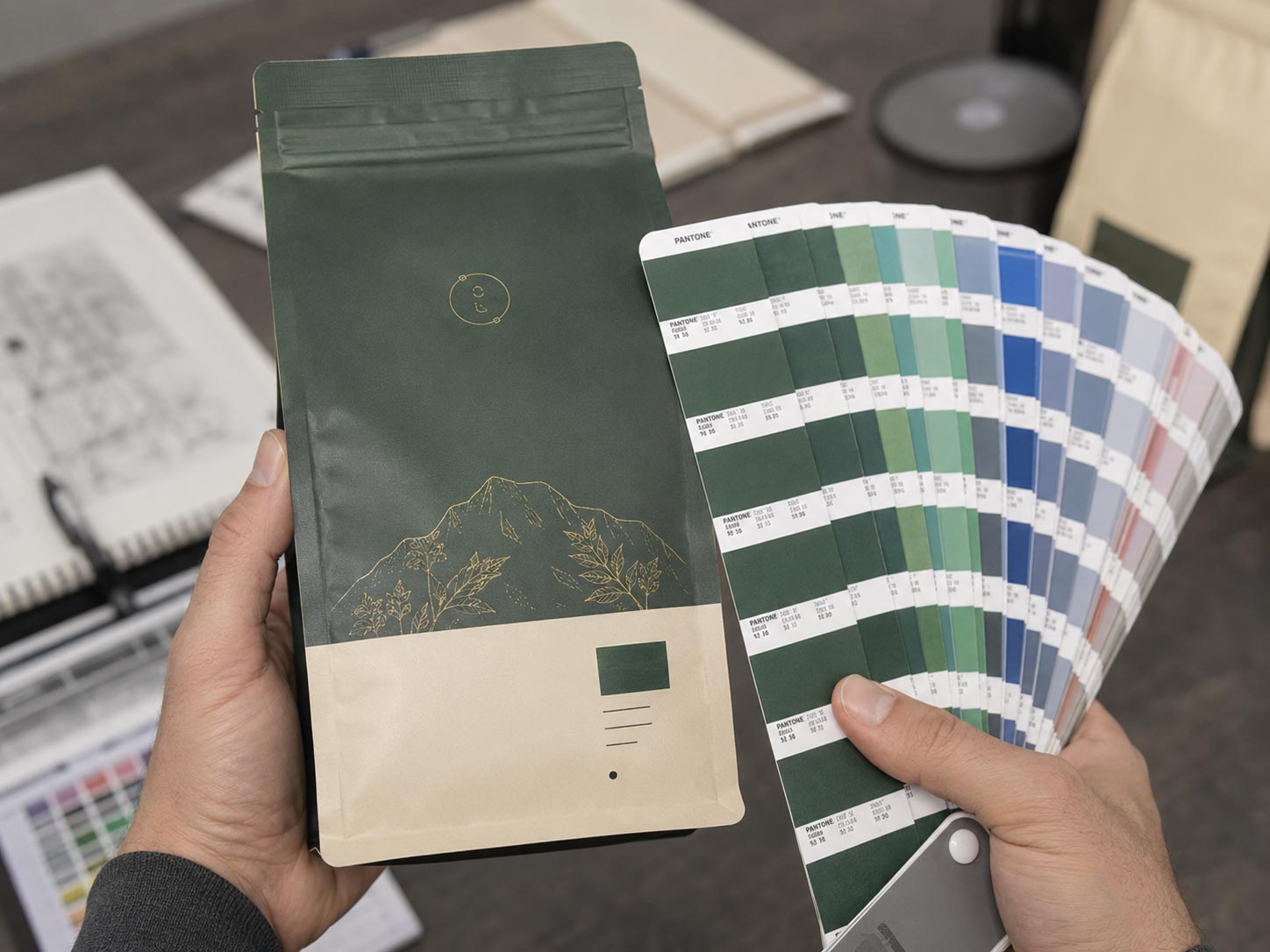
A digital proof is powerful, but it is still a picture on a screen. For a critical launch, the final checkpoint is a physical pre-production sample, an actual printed bag on your real material before the full run prints. This is the only stage that tells the whole truth. You get to see how your color sits on the real film instead of a monitor, whether a matte or gloss finish changes the mood, how the bag feels in the hand, and whether the size, seal, and valve land where you expect. A color that looked right on a bright screen can read differently on a kraft or a clear material, which is exactly why our
coffee bag color matching guide pushes for a printed reference. Not every reorder needs a physical sample, but a first run or a major redesign almost always does.
What to Check on Every Proof
Whether you are looking at a digital proof or a printed sample, run the same short checklist every time. It takes a few minutes and it saves entire runs.
- Spelling and legal copy, including your business name, roast or best-by date, and origin
- The net weight line, in the correct units
- A real barcode scan test, not just a glance at the bars
- Brand color against a Pantone reference, not against your monitor
- Artwork inside the safe margins, with full bleed to the trim
- Image resolution, so photos and logos stay sharp at full size
- Finish and material, since gloss, matte, and clear each change the look
Sign off in writing only after that list is clean. The person who approves the proof owns the run, so make that approval count.
Quick Answers About Mockups and Proofs
Is a mockup enough to approve my bag? No. A mockup approves the concept only. You still need a digital proof, and for a first run a printed sample, to approve the details.
What is the difference between a digital proof and a printed sample? A digital proof is an on-screen check of the print file and layout. A printed or pre-production sample shows the real color and material in your hands, which a screen can never fully promise.
Do I really need a physical sample every time? Not always. A simple reorder of an already approved bag may not, but a first run, a new material, or a big redesign should always get one.
Will proofing slow down my order? A little, and it is worth it. A day or two spent proofing is far cheaper than reprinting thousands of wrong bags.
What mistake do proofs catch most often? Small text and color. Typos in legal copy and a brand color that drifted between screen and ink are the two that show up most.
See It Before You Sell It
Mockups and proofs are not busywork, they are the two moments where a costly mistake is still free to fix. Use the mockup to fall in love with the concept, use the digital proof to make sure the file is correct, and use a printed sample to confirm the real thing before you commit to a full run. Do all three and the bag you approve is the bag your customers hold. When you are ready to move from artwork to a finished bag, our team walks you through proofing on
custom coffee bags, including fast
digital runs that make sampling simple.