A Tiny Square With a Big Job
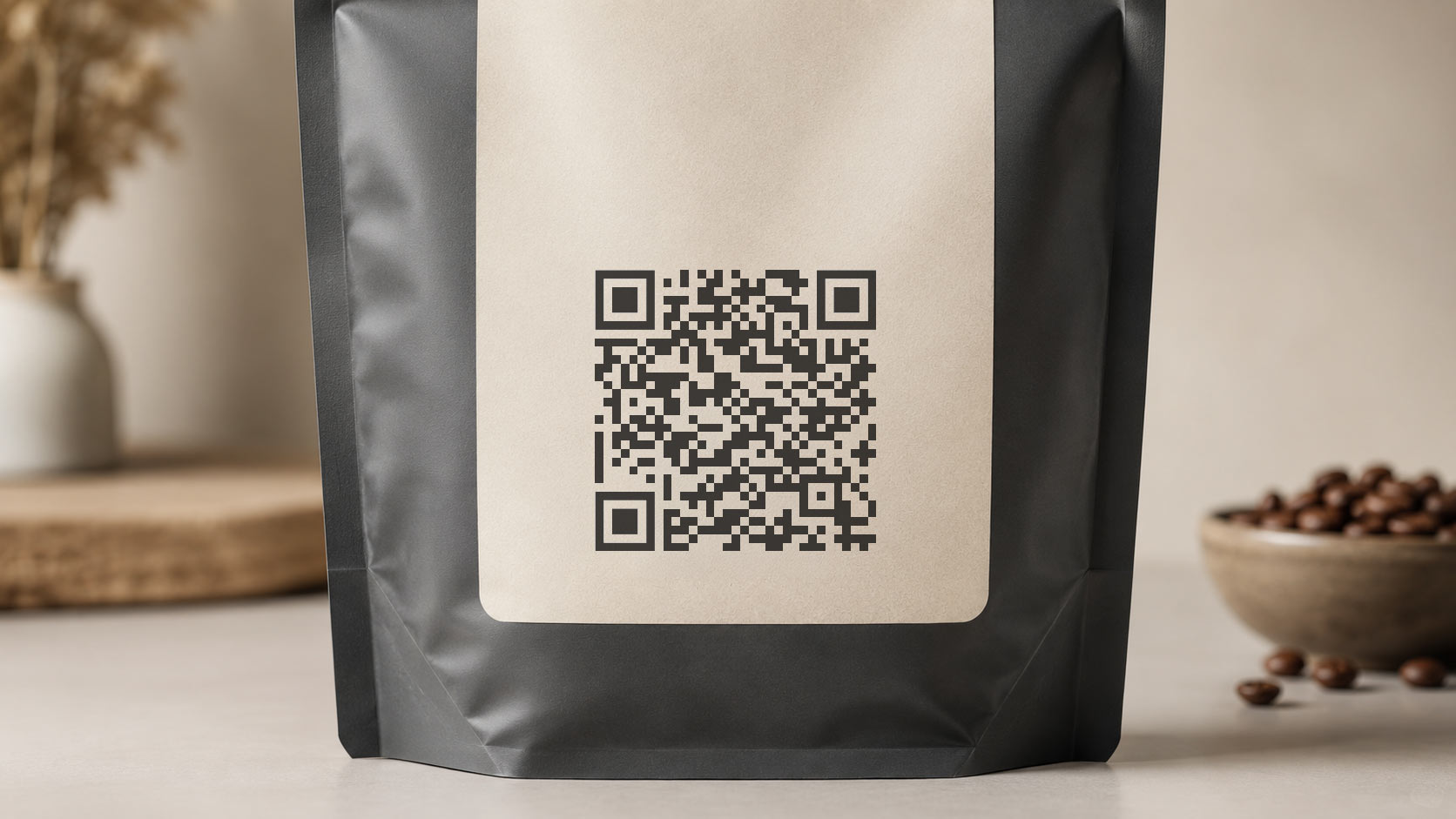
A QR code looks like nothing, a small square of black and white dots tucked into a corner of a package, yet it does something no printed label can. It connects the physical bag in a customer's hand to anything you can put on the internet. A shopper points a phone camera at it, and in a second they are looking at a brew guide, a video, your story, or a button that reorders the exact coffee they just finished. The package stops being a flat, one-way label and becomes a doorway.
That matters most on packaging that has almost no room to talk. A coffee bag or a single-serve pouch has a front panel you want to keep clean and a back panel that fills up fast with required information. You cannot fit your farm relationship, three recipes, and a loyalty signup on a bag without burying the design. A QR code hands all of that to the phone instead, so the package stays beautiful and the deeper story lives one scan away. It is the cheapest piece of real estate you will ever add to a
custom coffee bag, because it is mostly free to print and it never runs out of space.
The reason QR codes finally stuck is simple. Every modern phone reads them straight from the camera with no special app, so there is no barrier between curiosity and the tap. That was not true a few years ago, and it is the single change that turned the QR code from a gimmick into a tool brands actually use.
What Your QR Code Should Actually Point To
A QR code is only as good as the place it sends people, and this is where most brands go wrong. Pointing it at your generic home page wastes the moment, because a customer who just scanned a bag of coffee does not want your whole website, they want the thing that bag promised. The best codes lead to a single, focused page built for that exact product and that exact moment of curiosity. Think of the scan as a question the customer is asking, and make sure the page answers it fast.
The strongest destinations tend to fall into a few buckets, and many brands rotate through them as the season or the goal changes. A brew guide helps a first-time buyer get a great cup, which protects your reputation. An origin story or a short video builds the connection that justifies a premium price. A reorder or subscription link turns an empty bag into the next sale. A promo or loyalty signup rewards the people most engaged with your brand, the ones already holding the package. A few destinations are worth considering before you print.
- A simple brew guide or how-to-use page, so the customer gets the product right the first time
- An origin story, farm relationship, or short video that earns the premium price on the shelf
- A reorder button or subscription signup, turning a finished bag into the next order
- A limited-time promo, recipe, or loyalty signup that rewards your most engaged customers
Static or Dynamic: The One Choice That Changes Everything
Here is the decision that quietly matters more than any other, and it is easy to get wrong because the two kinds of code look identical. A static QR code has the destination baked into the dots themselves, so once it is printed it can never be changed. If the link breaks, or the promo ends, or you rebuild your website, that code is dead and so is every bag carrying it. A dynamic QR code instead points to a short redirect that you control, and you can change where it leads at any time without reprinting a single package.
For anything that lives on a printed bag, dynamic is almost always the right call, because packaging outlives the campaign that inspired it. A bag printed for a holiday promo is still in someone's pantry in March, and a dynamic code lets you swap that dead promo for a brew guide or a reorder link instead of sending the customer to a broken page. Dynamic codes also tell you how many people scanned, when, and roughly where, which turns your packaging into a small source of real marketing data. The tradeoff is that dynamic codes usually run through a service with a monthly fee, while a static code is free forever. A few points help you choose.
- Use dynamic codes for anything printed on packaging, since you can change the destination after the bag ships
- Dynamic codes track scans, so you learn what your packaging is actually driving
- Reserve static codes for links that will truly never change, where the free, no-service option makes sense
- Whatever you choose, test the final link before the file goes to print, because a broken code is worse than no code
Designing a Code That Scans on the First Try
A QR code is data printed as a pattern, and that pattern needs a little respect or phones will struggle to read it. The most common mistake is shrinking it too far. A code needs enough physical size for a camera to resolve the dots, and on a coffee bag held at arm's length that usually means it should be at least the size of a postage stamp, larger if the bag will be scanned from a shelf. It also needs a clear margin of blank space around it, called the quiet zone, so the camera can tell where the code begins and ends. Crowd it against text or art and scans start to fail.
Contrast is the other half of the job. Dark code on a light background is the safe, reliable choice, and reversing it to light dots on a dark background works only if the contrast stays strong. Printing a code over a busy photo or a low-contrast color is asking for trouble. You can brand a code with color or a small logo in the center if you keep the contrast high and test it, but plain and readable always beats clever and broken. Placement matters too, since a code buried in a seam or wrapped around a gusset will not lie flat enough to scan. A few habits keep a code reliable.
- Print the code large enough to scan easily, at least postage-stamp size and bigger for shelf distance
- Leave a clear quiet zone of blank space around the code so the camera can lock onto it
- Keep strong contrast, dark on light is safest, and never lay the code over a busy background
- Place it on a flat panel, not a seam or a fold, and scan the printed proof with several phones before approving
Beyond Coffee: QR Codes Across Food and Retail Packaging
Coffee made QR codes popular, but the same little square earns its keep across nearly every kind of
food packaging. A spice or seasoning pouch can link to recipes that show the customer exactly how to use it, which sells more than any ingredient list. A snack or protein product can carry full nutrition details, allergen information, and sourcing claims on the phone instead of cramming them onto a crowded back panel. A specialty food gift can open a video greeting or a story about the maker, turning a simple package into an experience.
The same thinking extends to boxes and outer packaging too. A subscription or gift box can use a code on the inside flap to welcome the customer, guide an unboxing, or kick off a loyalty program the moment the package is opened. Brands that sell through both retail and online find codes especially useful, because the code bridges the gap, letting a shopper who discovered a product on a shelf jump straight to the website to learn more or reorder. Wherever the package has more to say than it has room to print, a code on your
custom boxes or pouches carries the overflow.
Printing a QR Code That Works Every Time
A code is only as good as the print that carries it, and this is where the right production method protects your investment. Sharp edges matter, because a QR code is fine detail, and a fuzzy or misregistered print can blur the dots just enough to break a scan. This is one more place where
digital packaging shines, since it prints crisp small detail cleanly and makes it easy to run several versions of a bag, each with its own code, without a painful setup for every one. That flexibility is a real advantage when you want a different code for different flavors, regions, or campaigns.
It also helps to plan the code into the design from the start rather than squeezing it in at the end. Decide early where it sits, how big it is, and how much quiet space surrounds it, and treat it as a real design element instead of an afterthought stuck in a corner. If you are running variations across a product line, line up the codes and the destinations before the files go to print so nothing gets mismatched on press day. Bringing your packaging partner into that conversation early, the same way you would for any print detail, keeps the code sharp, scannable, and exactly where you meant it to be.
Closing: The Smallest Feature With the Longest Reach
One Square That Keeps On Working
A QR code is proof that the smallest thing on a package can do the most work. It costs almost nothing to add, it fits where a paragraph never could, and done right it turns a finished bag into a brew guide, a story, a reorder, and a stream of quiet data about what your packaging is driving. The brands that win with it keep the idea simple, they point the code at one focused page, they choose a dynamic code so the bag never outlives its link, they design it big and clean enough to scan, and they print it sharp. Get those few things right with a packaging partner early, and that little square keeps opening doors for your brand long after the coffee is gone.