Why Stock Bag Size Is a Choice From a Fixed Menu
When you order
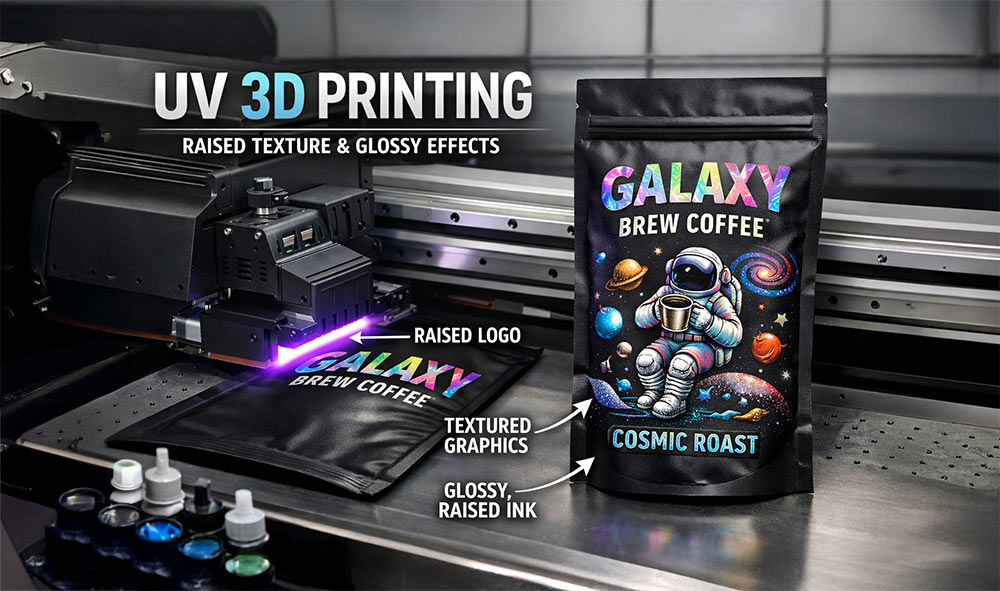
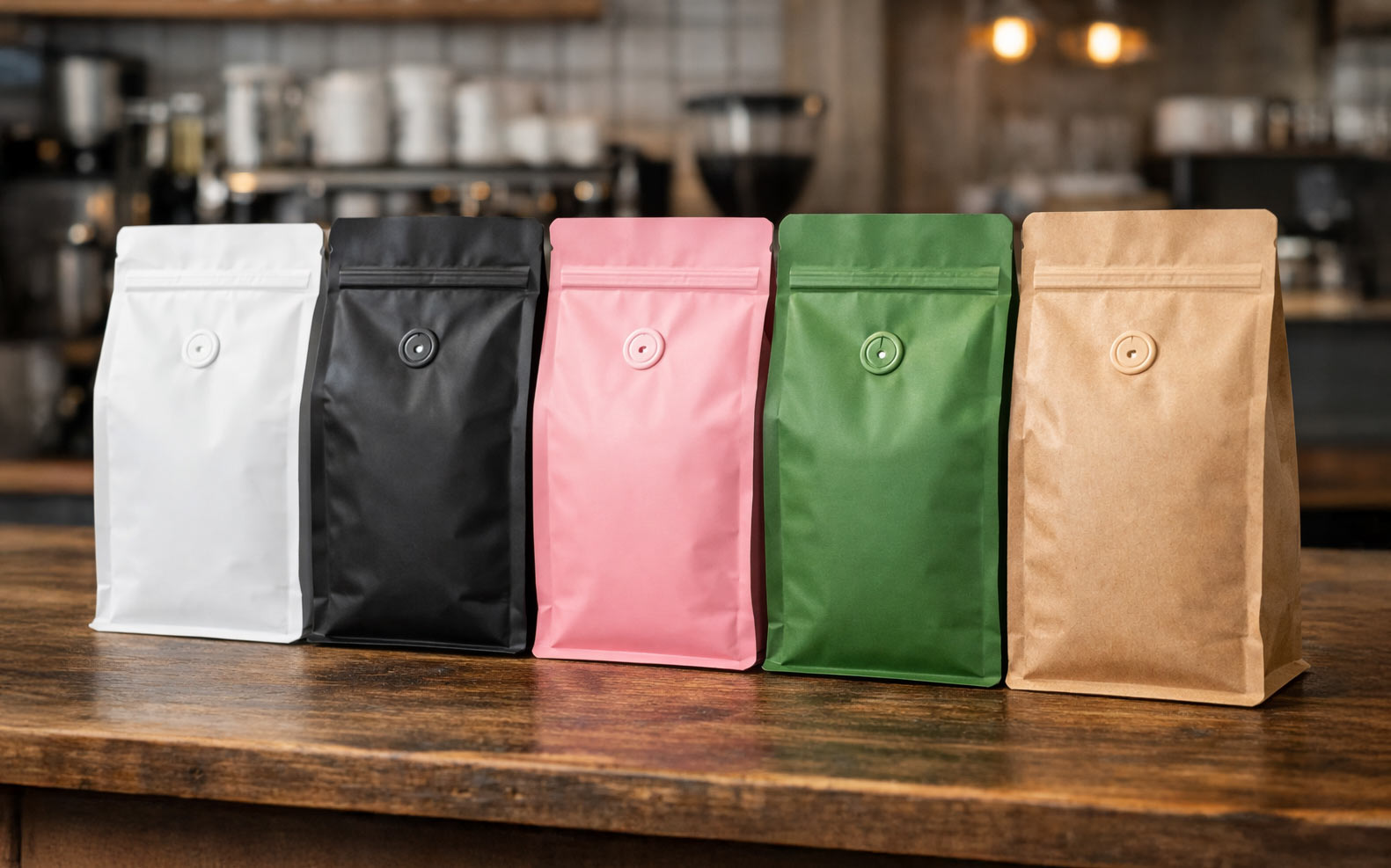
stock bags, you are choosing from a set list of sizes that already exist, not asking for a size built around your product. This is the trade you make at the entry level of coffee packaging. Stock bags start at a minimum of about 1,000 units, they come in preset dimensions, and their printing option is a UV 3D raised print rather than full color custom artwork. In return you get a fast, affordable, professional bag with no tooling cost and no long lead time. The catch is that your job is to fit your coffee to the nearest size on the menu, so knowing how those sizes work is the difference between a bag that looks made for your product and one that sags half empty or strains at the seams.
Because the size is fixed, the smart move is to understand the whole ladder of stock sizes before you pick. That way you can see where your product lands, whether you need more than one size, and how much room each size really gives you. The rest of this guide lays out that ladder and the handful of rules that make a stock size work.
How Coffee Bag Sizes Are Measured
Coffee bags are almost always named by the weight of whole bean coffee they are built to hold, not by their physical dimensions. A bag called a 12 ounce bag is sized to hold 12 ounces, or 340 grams, of whole bean coffee with a little room left over to seal it. That naming shortcut is handy, but it hides two things that catch roasters off guard. The first is that the same bag holds a different amount depending on whether your coffee is whole bean or ground. The second is that a bag rated by weight still has fixed width, height, and gusset measurements, and those dimensions decide whether your fill level and your label look right. Because 12 ounces equals 340 grams and 1 kilogram equals about 2.2 pounds, the ounce sizes and the metric sizes are really the same shelf of bags described in two languages.
The Common Stock Coffee Bag Sizes and What Each Holds
Most stock ranges cover the same familiar ladder of sizes, whether they are labeled in ounces or in grams. Knowing the ladder helps you place your product before you ever look at a spec sheet. These are the sizes you will see again and again across the specialty market.
- 4 oz, about 113 g: sample bags, single-serve, and gift or event giveaways
- 8 oz, about 225 g, and 250 g: a popular small retail size, common for specialty and international brands
- 12 oz, 340 g: the retail standard for specialty coffee in the United States
- 1 lb, 16 oz, about 450 g, and 500 g: a step up for regular drinkers and subscriptions
- 2 lb, about 907 g, and 1 kg: wholesale, cafe supply, and value retail
- 5 lb, about 2.27 kg: foodservice, offices, and bulk buyers
International brands should note that the 250 gram and 1 kilogram bags are the everyday retail and wholesale sizes across much of Latin America and Europe. Those metric sizes sit right alongside the ounce sizes on the same ladder, so a 250 gram bag lines up close to an 8 ounce bag and a 1 kilogram bag sits near the 2 pound size. If your market thinks in grams, size in grams and know it maps cleanly onto the same stock shelf.
Whole Bean or Ground: Same Weight, Different Space
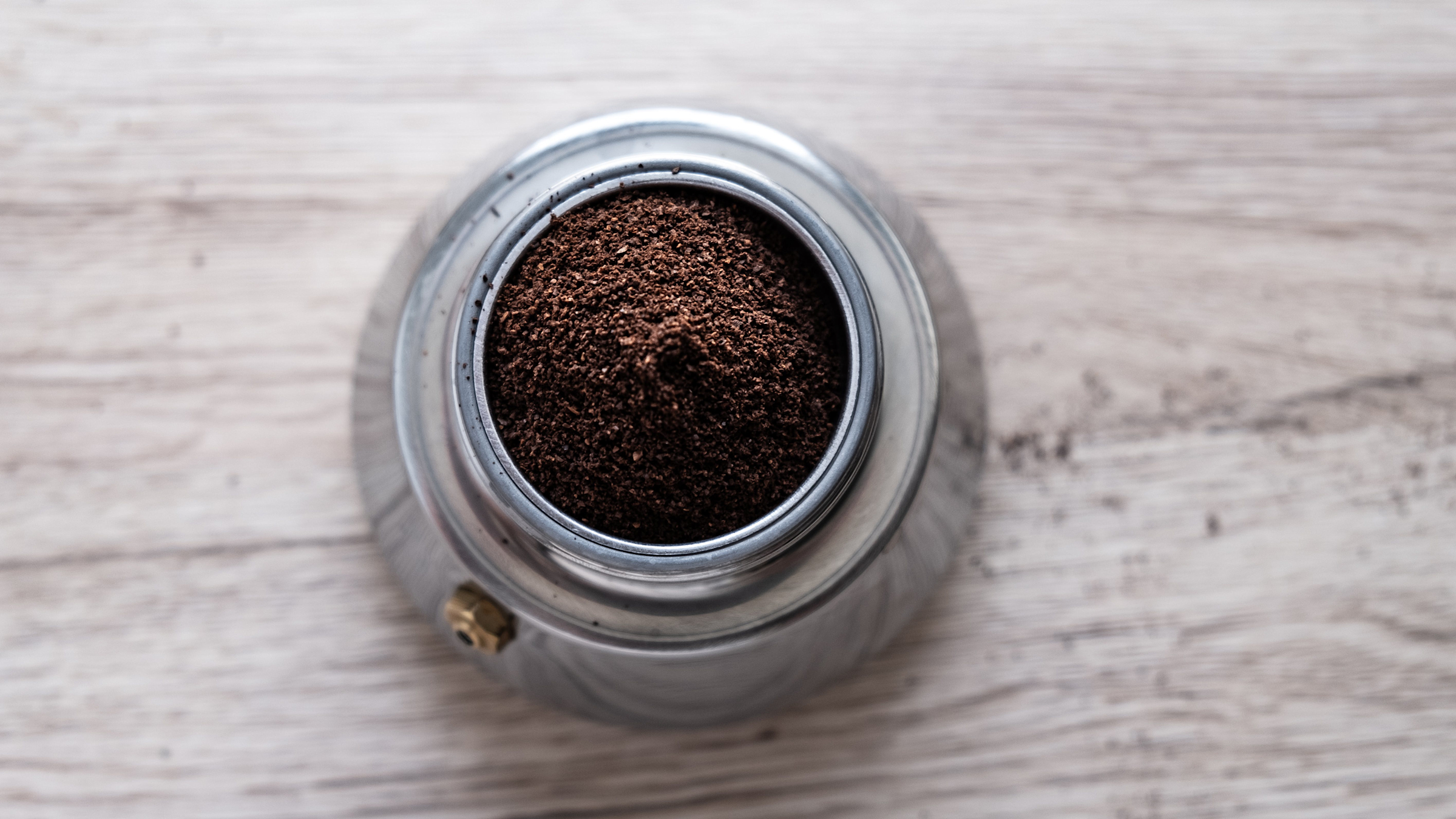
Here is the detail that causes the most half empty and overstuffed bags. Ground coffee is denser than whole bean, so it packs into less space for the same weight. A bag built to hold 12 ounces of whole bean coffee will actually hold more than 12 ounces of ground, because the grounds settle and fill the gaps that whole beans leave between them. Turn that around and the practical rule is simple. If you sell ground coffee, you often need a slightly smaller bag than the whole bean size at the same weight, or the package will look underfilled on the shelf. If you sell whole bean, size to the whole bean rating and you are safe. When you are not sure, size to the product you actually sell and confirm it with a real fill test before you commit to a run.

Leave Room for the Seal and the Valve
A coffee bag is never filled to the very top. It needs headspace, which is the empty room above the coffee that lets the bag seal cleanly and lets the one-way degassing valve do its job. Fresh roasted coffee releases carbon dioxide for days after roasting, and the valve vents that gas so the bag does not balloon or burst. If you fill a bag to the brim, you crowd the seal area, stress the valve, and risk a package that looks tight and pops open in transit. This is why the rated weight always leaves a margin, and why matching your fill to the bag matters as much as matching the bag to your fill. A short test run with your actual coffee, weighed and sealed the way you plan to ship it, tells you more than any chart ever will.

Matching Bag Size to How You Sell
The right size is really a question about your customer and your sales channel, not just your coffee. For retail shelves, the 12 ounce or 340 gram bag is the workhorse in the United States, while the 250 gram bag rules many international shelves, and both photograph well and hit a friendly price. For subscriptions and regular home drinkers, a 1 pound or 500 gram bag cuts down on reorders and feels like better value. For wholesale, cafes, and offices, the 2 pound, 1 kilogram, and 5 pound sizes move more coffee per bag and lower your packaging cost per pound. For samples, events, and gifts, the 4 ounce bag gets your brand into more hands cheaply. Many roasters carry two or three sizes across these needs, which is easy with stock bags because you are picking from the same menu each time you reorder.
When to Move Beyond Stock Sizes
Stock sizes fit most roasters, but there are clear signs it is time to graduate. If none of the fixed sizes matches your product, if you want full color artwork instead of a raised print, or if your brand has simply outgrown the stock look, the next step is a custom run.
Custom coffee bags let you set your own dimensions and print in full color, and they come in two tiers.
Digital packaging starts around a 500 unit minimum and is ideal for a custom size, full color, and brands that run smaller or changing batches.
Rotogravure printing starts around 10,000 units, delivers the lowest cost per bag, and is the natural home for a proven, high volume design. The ladder is easy to hold in your head. Start with stock at 1,000 units, move to digital at 500 when you need a custom size or full color, and step up to rotogravure at 10,000 when your volume is high and your design is locked.
Quick Answers to Common Stock Coffee Bag Size Questions
What is the most popular stock coffee bag size? In the United States, the 12 ounce, or 340 gram, bag is the retail standard for specialty coffee. Internationally, the 250 gram bag fills the same everyday retail role.
Can I get a custom size in a stock bag? No. Stock bags come only in fixed preset sizes, which is exactly what keeps their minimum low and their price down. If you need a specific size, that calls for a custom digital or rotogravure run.
Does ground coffee need a different size than whole bean? Often yes. Ground coffee is denser and fills less space for the same weight, so a bag rated for whole bean can look overfull with ground or hold more than its label weight. Size to the form you actually sell and run a fill test.
Why can't I fill the bag all the way to the top? A bag needs headspace to seal cleanly and to let the degassing valve vent the carbon dioxide that fresh coffee gives off. Overfilling crowds the seal and stresses the valve, which leads to failed seals and blown bags.
What size should a new roaster start with? Most new roasters start with the 12 ounce or 250 gram retail size, and many add a 4 ounce sample bag. Stock bags at the 1,000 unit minimum make it affordable to test a size before committing to custom.
How many sizes should I carry? Two or three usually covers it: a retail size, a larger wholesale or subscription size, and often a small sample size. Stock bags make carrying several sizes simple because you order from the same fixed menu.
Closing: A Bag That Fits Is a Bag That Sells
The Right Size Does Quiet Work for Your Coffee
Stock coffee bag sizes look like a small technical choice, but they shape how your coffee looks on the shelf, how fresh it stays, and how much you spend per bag. The whole game at the stock level is fitting your product to the closest size on a fixed menu, so start by knowing the ladder from the 4 ounce sample up to the 5 pound bulk bag, remember that ground and whole bean fill differently, and always leave room for the seal and the valve. Match the size to how you actually sell, whether that is a 12 ounce retail bag, a 250 gram international bag, or a 5 pound foodservice sack, and confirm your pick with a real fill test. Get the size right and the bag goes to work for you, holding the coffee, protecting the freshness, and looking like it was made for the product inside.