What Variable Data Printing Actually Is
The short version is this. Variable data printing is digital printing that changes one or more elements, a name, a number, a code, or a whole design, on every bag in the same production run, while the rest of the layout stays locked in place. Your logo, your colors, and your core artwork hold steady, and a defined zone on the bag becomes different every single time. It is the difference between printing ten thousand copies of one bag and printing ten thousand bags that are each a little bit their own.
This is a print technology story, not a bag style story. A stand up pouch, a flat bottom box bag, and a side gusset bag can all carry variable data, because the variable part is how the artwork is printed, not the shape of the package. That is what separates this from picking the right bag for an event or a gift. Here, the bag can be anything you like, and the magic is that the press can give each one a unique touch without slowing down or starting a new order.
The reason this matters is simple. Personalization sells, and so does anything that feels limited, traceable, or made for one specific person. Variable data printing is the tool that turns a single coffee bag order into thousands of one of a kind packages, and it does it on the same run, at digital speed, without a separate setup for each version.
Why Rotogravure Cannot Do This, and Digital Can
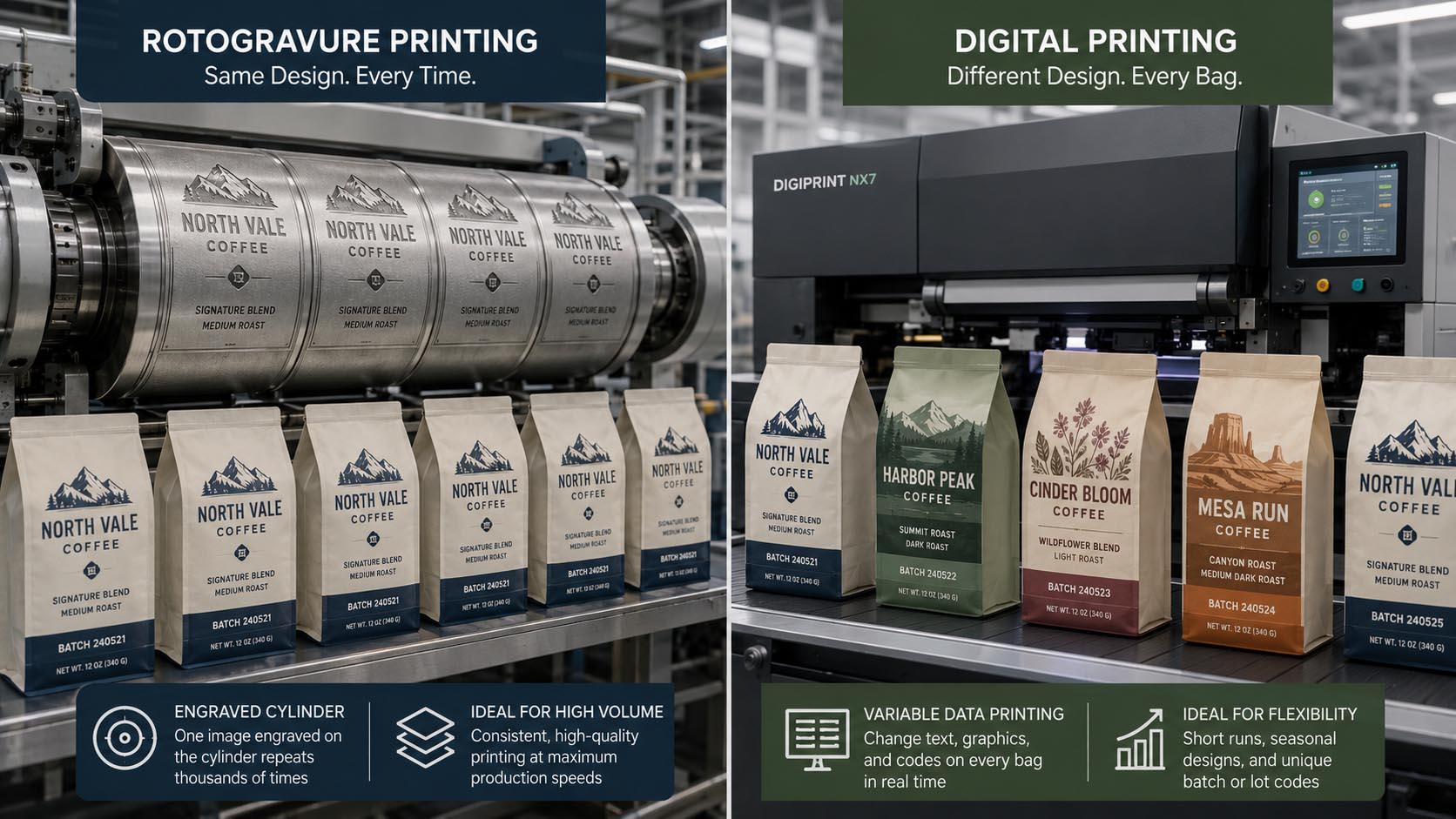
To understand variable data printing, it helps to know how the two main print methods actually work. Rotogravure engraves your artwork onto a metal cylinder, and that cylinder stamps the very same image onto the film every time it spins, hundreds of times a minute. It is fast, it is beautiful, and at huge volumes it gives the lowest cost per bag with rich, consistent color. The catch is right there in the machine. One cylinder means one image, locked in metal, repeated forever. You can read more about that method on our
rotogravure bags page, but the headline is that it physically cannot change the art from one bag to the next.
Digital printing works in a completely different way. There is no plate and no cylinder to engrave. The press reads a digital file and lays down ink based on what that file tells it, impression by impression. Because the file can change between one bag and the next, the press can print a different name, number, or design every single time without stopping. That is the entire reason variable data printing lives only on the digital side. If you want each bag to be unique, you are choosing
digital packaging, full stop.
There is one more practical reason digital is the home for this. Digital printing unlocks at a friendly 500 unit minimum, while rotogravure starts at 10,000 units. So not only is digital the only method that can vary the data, it is also the one that fits the smaller, more frequent, more creative runs where personalization tends to shine.
What You Can Change From Bag to Bag
Once you are printing digitally, the variable zone on the bag can hold almost anything you can put in a spreadsheet. The trick is to keep your brand frame fixed and let one defined area do the changing, so the line still looks like a family of bags rather than a random pile. Most brands change text, numbers, or codes, and some go all the way to swapping full regional artwork.
Here are the elements roasters most often make variable, all on the same run.
- Names and short messages, so a wedding, a corporate gift, or a subscriber box can carry the recipient's name
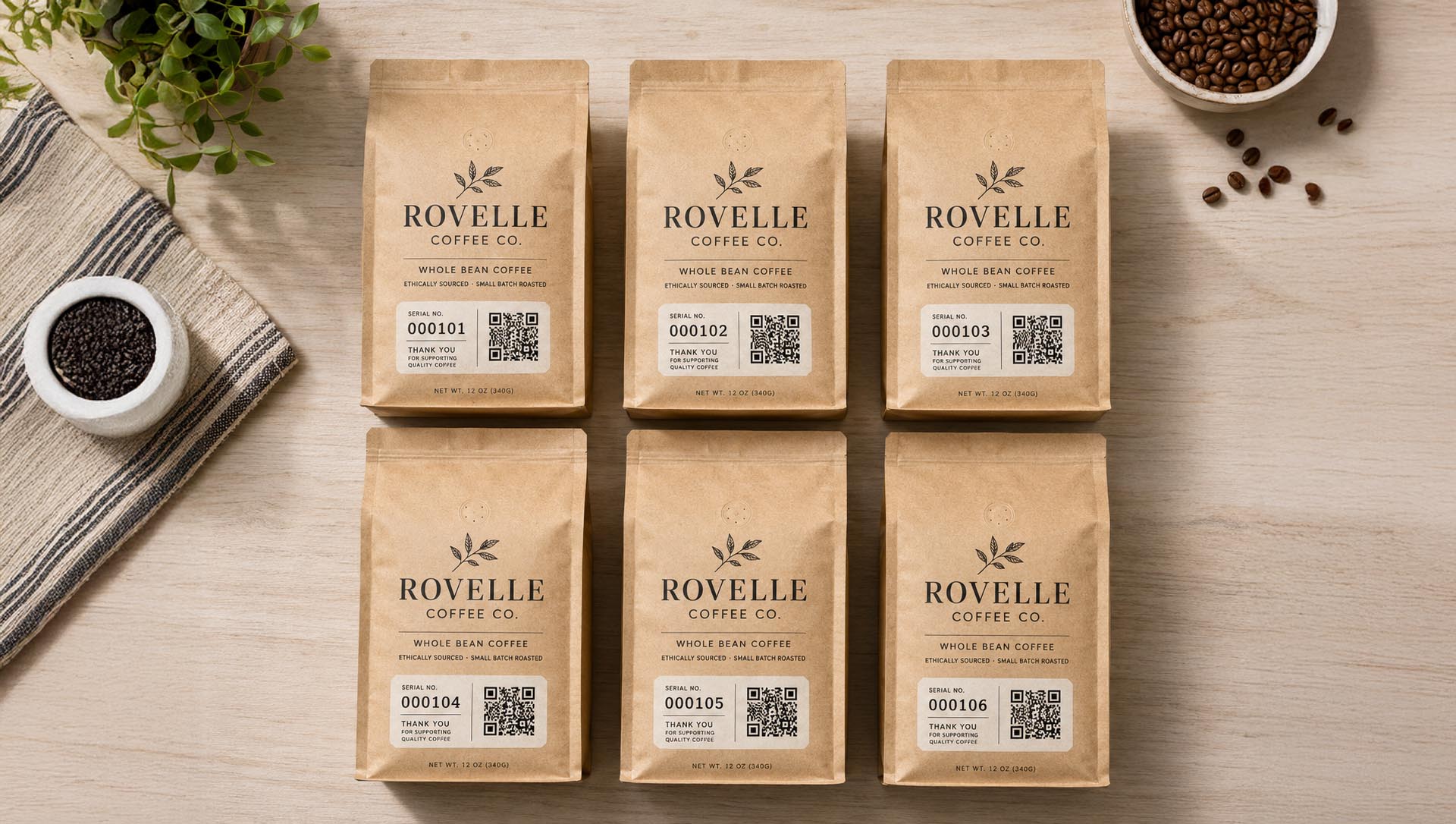
- Sequential serial numbers, which turn an ordinary bag into a numbered limited edition like 087 of 500
- Unique QR codes or barcodes, where every bag scans to its own landing page, origin story, or tracking record
- Roast dates, lot codes, and batch numbers printed right into the design instead of stickered on later
- Regional or store specific designs, so one order can serve many cities, accounts, or languages at once
The point is that none of this requires a separate order. A single variable data run can hold all five of those at the same time if your data file is set up for it.
The Real Sales Upside
Variable data printing is fun, but it earns its keep because it moves product. Personalization raises the perceived value of a bag, and shoppers will pay more for something that feels made for them or share a photo of it for free. A name on the front turns a commodity bag into a keepsake, and a keepsake gets posted, gifted, and remembered.
Scarcity does the same job from a different angle. A sequential serial number tells the customer this bag is one of a limited set, and limited sets create urgency and collectibility. Numbered releases for a new single origin, an anniversary blend, or a competition lot give people a reason to buy now instead of later, and a reason to keep the empty bag on the shelf. That kind of attachment is hard to buy with a generic label.
There is a trust angle too. When every bag carries a unique QR code tied to its own lot, a customer can scan and see exactly where that coffee came from and when it was roasted. Traceability used to be a back office detail, and variable data printing turns it into a front of pack feature that builds confidence. The same idea works for regional targeting, where one run quietly serves a dozen markets with the right name, language, or store callout on each batch, so your
custom coffee bags feel local everywhere they land.
Use Cases Worth Stealing
The clearest way to see the value is to look at how brands actually use it. Each of these is a single digital run that does the work of many separate orders.
- Personalized event bags, where a wedding, festival, or corporate gifting program gets a different name or table number on every bag, all printed together
- Limited edition serial numbers, where a special release is numbered in sequence to drive collectibility and a sense of scarcity
- Batch and lot traceability, where each bag prints its own lot code and a matching QR code so the coffee can be traced from roast to shelf
- Regional designs in one run, where the same blend ships to different cities or accounts with artwork, language, or a store name swapped per batch
Notice how different these are from simply choosing a fancy bag style. The package can be your standard pouch. The value comes entirely from the print being able to change, which is the heart of variable data printing.
How to Set Up a Variable Data Run
Setting up a variable data run is more about good data than fancy art. You start with one fixed design, the brand frame that stays the same on every bag, and you mark the zone that will change. Then you hand over a clean data file, usually a simple spreadsheet, that lists exactly what goes in that zone for each bag or each batch. That file is the engine of the whole run, so the time you spend getting it right is the time that saves you headaches later.
A few practical notes keep these projects smooth, and most of them come down to planning the variable part before the press ever starts.
- Build one master design and define a clear variable zone, so the layout holds together across every version
- Provide a clean, final data file, since names, numbers, and codes print exactly as they appear in the spreadsheet
- Plan around the 500 unit digital minimum, and split your quantities across versions however you like within that run
- Proof a real sample set that includes several different variable entries, not just one, so you can see the changes working
- Remember that finishes still apply, so a variable data run can also carry soft touch matte, foil, or spot gloss for a premium feel
Because this is a digital process, it also pairs naturally with lower waste production. The same press flexibility that allows variable data is part of why
eco friendly digital printing handles short, frequent, and highly varied runs so well, without the plate waste of older methods.
Closing: When Every Bag Can Be Its Own, Your Brand Gets Bigger
One Run, A Thousand Stories
Variable data printing takes the one rule everyone assumed about packaging, that a print run means one identical design, and quietly breaks it. With digital printing and a good data file, a single order can carry a different name, number, code, or design on every bag, all at once, with no extra setup per version. That opens the door to personalized event bags, numbered limited editions, scannable traceability, and regional artwork that makes a national brand feel local. It is a pure digital capability with real sales upside, because the bags people feel connected to are the bags people buy, keep, and talk about. Decide what you want to change, build the data behind it, and let one run do the work of a thousand.