The Coffee Bag, Part by Part
Every custom coffee bag is really a small system, and each part has one job: protect the coffee, hold its shape, open and reseal, let gas escape, and give your brand a canvas. Once you can name the parts, talking specs with a manufacturer gets a lot easier, and you stop paying for features you do not need or skipping ones you do. Let us walk the bag from the film it is made of to the panels you print on.
The Body and Barrier
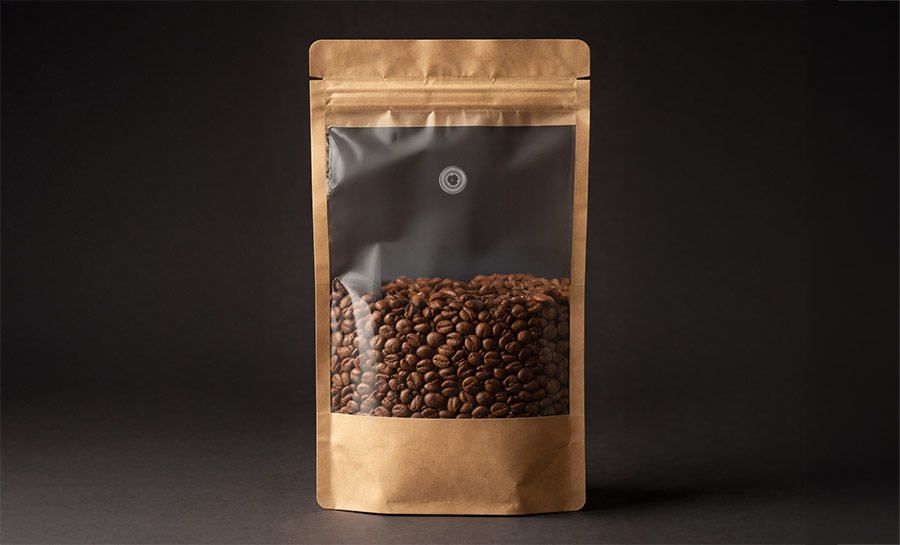
The body is the film the bag is made from, and it is the single most important part for freshness. Coffee's enemies are oxygen, light, moisture, and the loss of its own aromatics, so the body is usually a laminate of a few layers: an outer layer that carries the print, a middle barrier layer that blocks light and air, and an inner layer that seals to itself. That barrier is why a good coffee bag feels more substantial than a chip bag. You can choose a high-barrier foil-style laminate, a recyclable
mono-material structure, or a clear window film, and each trades off protection, look, and recyclability. If you are weighing which film is right for your roast, our guide to the
best material for custom coffee packaging breaks down the options.
The Bottom and Gusset
The bottom is what gives a bag its shape and its ability to stand. A flat or box bottom (also called a quad seal or block bottom) lets the bag sit upright with four crisp corners and a big front panel, which is why it dominates specialty retail shelves. A side gusset folds in along the sides for a classic brick look, and a simple stand-up pouch uses a rounded bottom gusset. The bottom style drives shelf presence and how much coffee the bag holds, so it is worth choosing on purpose: see our deep dive on the
quad seal, box, and flat-bottom pouch and, if you want a see-through look, the
side gusset with a window.

The Top Closure
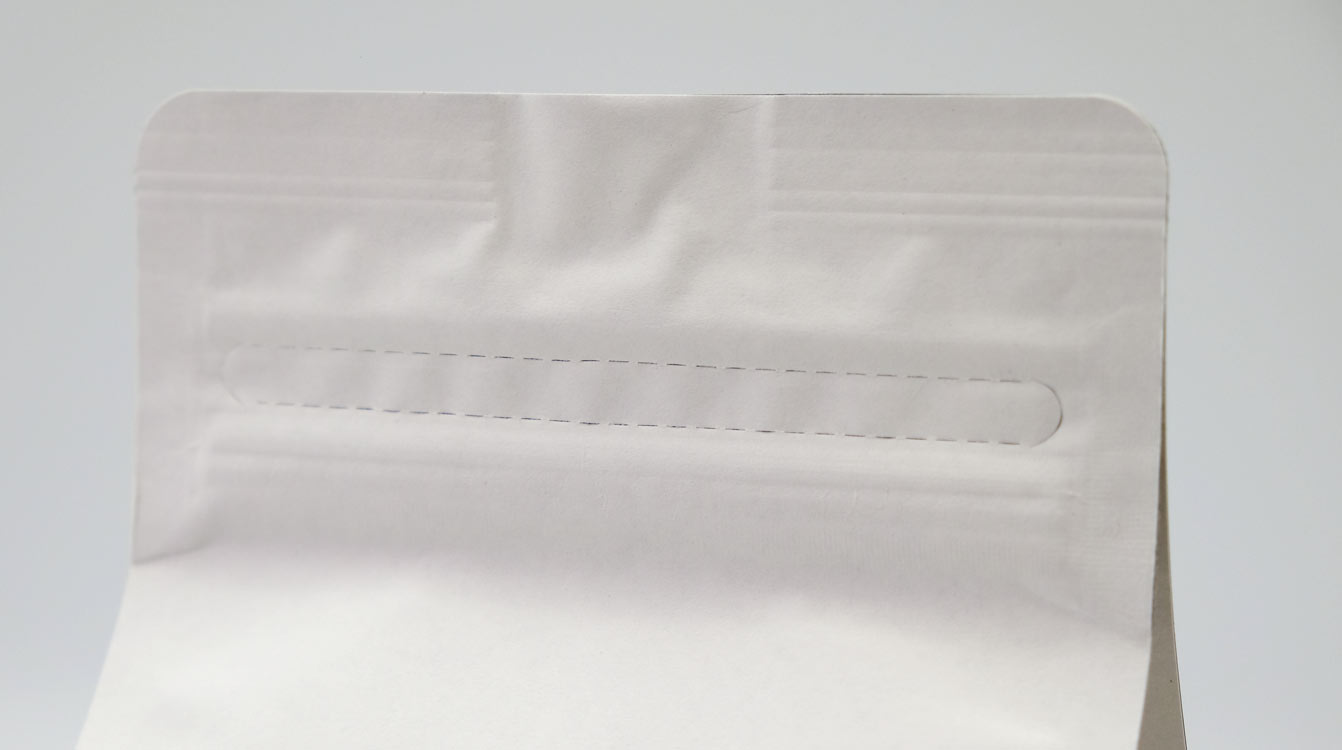
The top is where the customer interacts with the bag, and it has two parts that often get confused: how it opens and how it reseals. A tear notch is a small nick in the side seam that lets someone tear the top off cleanly without scissors, which our post on
easy-open coffee bags covers in detail. Reclosing is a separate feature: a press-to-close
resealable zipper keeps the coffee fresh after opening, while a folded-over
tin tie gives that hand-folded, craft look. Before any of that, the bag is closed at the factory or at your fill line with a heat seal across the top, the fin you see running along the very edge.
The Degassing Valve
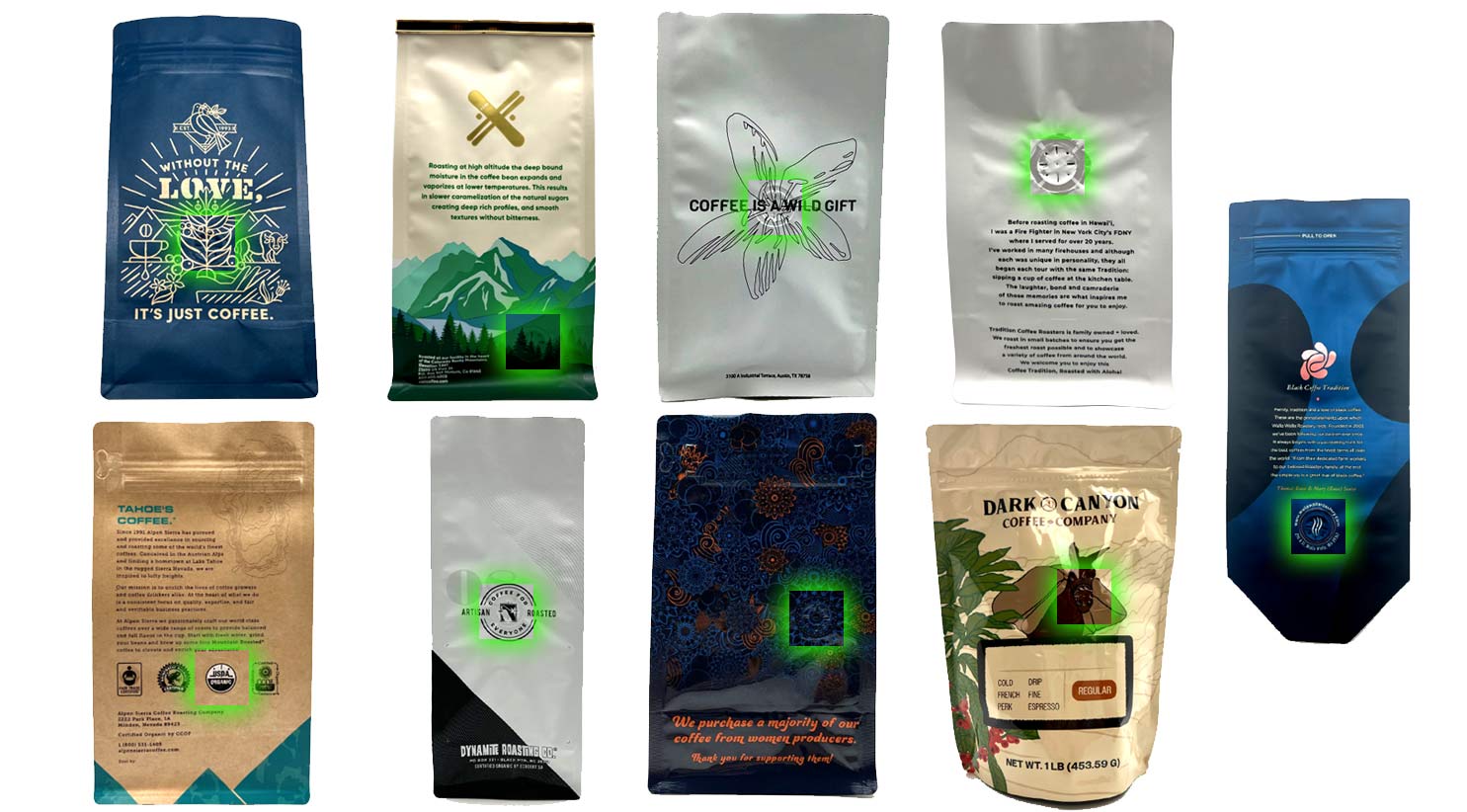
That little one-way button on the front is a degassing valve, and it is doing real work. Freshly roasted coffee releases carbon dioxide for days, and without an escape route that gas would swell or even burst a sealed bag. The valve lets CO2 out while keeping oxygen from getting back in, so you can bag coffee soon after roasting and still protect its freshness. Not every bag needs one (pre-ground or older coffee may not), but for fresh whole bean it is close to essential. Our
coffee valve design guide explains placement and how the valve actually works.

Size, Fill, and Headspace
A bag's size is not just its outside dimensions, it is how much coffee it holds and how much empty space is left on top. Choose dimensions around your net weight and grind, since whole bean and ground pack differently, and always leave a little headspace so the bag seals cleanly and the zipper closes. Getting this wrong means a bag that looks half empty or one that will not seal. Our guides on
choosing the right coffee bag dimensions and
headspace and freshness walk through the math.
The Print Panels
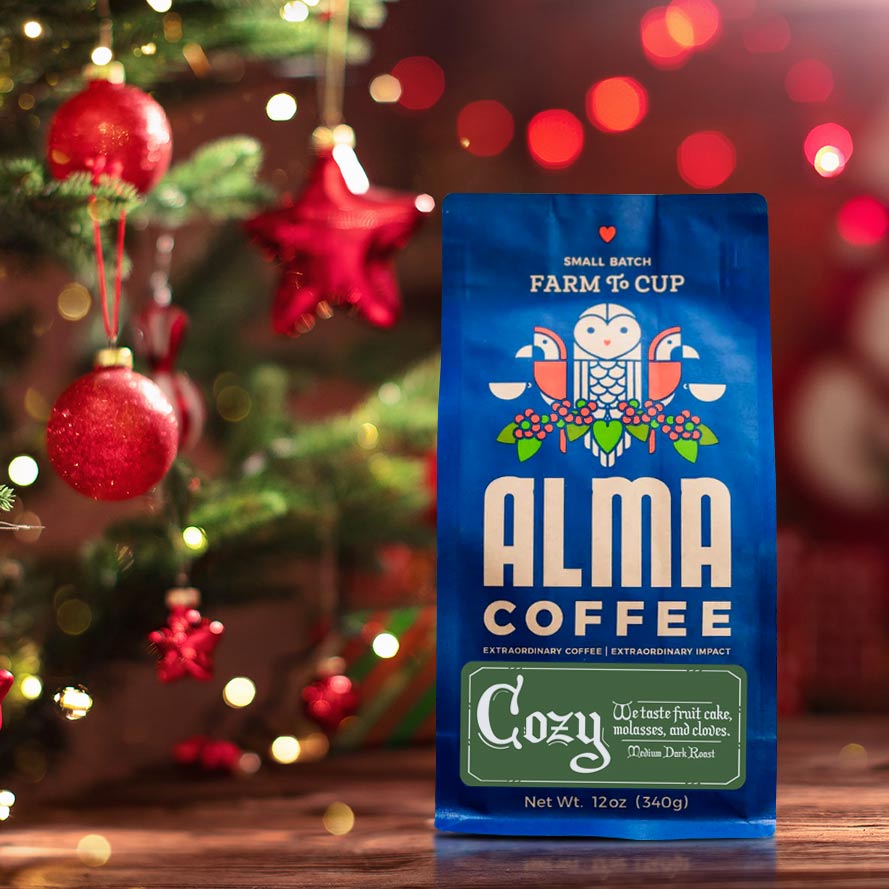
Finally, the parts you actually see: the panels. The front is your billboard, the back carries your story, roast date, and brewing notes, and the sides and bottom offer bonus space for a logo or origin details. The finish on those panels, matte, gloss, or a soft-touch feel, changes how the brand reads in a customer's hand. With custom digital or rotogravure printing you can use every panel, which is what turns a plain bag into shelf presence. When you are ready to spec your own, our team walks you through it on
custom coffee bags and low-minimum
digital printing.
Quick Answers About Coffee Bag Parts
What is the little round button on a coffee bag? It is a one-way degassing valve. It lets the CO2 from fresh coffee escape while keeping oxygen out, so a freshly roasted bag does not swell or go stale.
What is a gusset on a coffee bag? A gusset is a fold built into the bottom or sides that lets the bag expand and stand up. A box or flat bottom gives four corners and a stable base; a side gusset gives the classic brick shape.
What is the difference between a tear notch and a zipper? A tear notch is how you open the bag cleanly the first time; a zipper is how you reseal it afterward. Many bags have both.
Do I need a valve and a zipper? For fresh whole bean, a valve is highly recommended. A zipper is optional but valued by customers who want to reseal between brews.
Why is a coffee bag made of layers? The layers split the work: one prints, one blocks light and oxygen, and one seals. Together they keep coffee fresh far longer than a single-layer bag could.
Know the Parts, Buy a Better Bag
A coffee bag is the sum of its parts, and each one, the barrier body, the bottom, the closure, the valve, the seals, and the panels, is a choice you get to make. Understanding the anatomy means you can build a bag that protects your roast and looks the part on the shelf, without guessing. When you are ready to turn these parts into a finished bag, our team can help you spec it on
custom coffee bags.