Two Questions Before You Pick a Bag
Almost every packaging conversation starts with how the bag should look. That is the fun part, and it matters, but it is the second conversation. The first one has only two questions. What product is going inside, and how long does it need to stay good on a shelf before someone opens it? Those two answers decide the barrier, and the barrier is the part of the bag doing the actual work.
Think of the barrier as the wall between your product and everything that ruins it: oxygen, moisture, light, and escaping aroma. A beautiful bag with a weak wall is a countdown timer with nice artwork on it. Get the wall right first and every other decision, from finish to closure to size, gets easier because you are no longer hoping the packaging can carry a promise it was never built for.
What Your Product Actually Needs
Different products fail in different ways, so start by naming the enemy. Roasted coffee is the classic case because it fights on two fronts at once, releasing carbon dioxide for days after roasting while oxygen tries to get in and stale it. Snacks and anything fried care most about oxygen and grease. Powders and supplements care about moisture. Pet food carries fat and strong aroma that both need containment.
- Roasted coffee needs oxygen protection plus a way to vent its own gas, which is why a one-way valve pairs with the barrier
- Ground coffee has far more surface area than whole bean, so it stales faster in the same bag
- Snacks and fried foods need oxygen and grease resistance so the film does not darken or go soft
- Powders, spices, and supplements need a strong moisture barrier above all else
- Pet food and treats need fat and odor containment, plus durability for heavier fills
Once you know what you are defending against, you can put a number on how long you need that defense to hold. If you want the mechanics behind why this matters, our post on
oxygen safe packaging for coffee and tea covers what oxygen actually does to a roast.
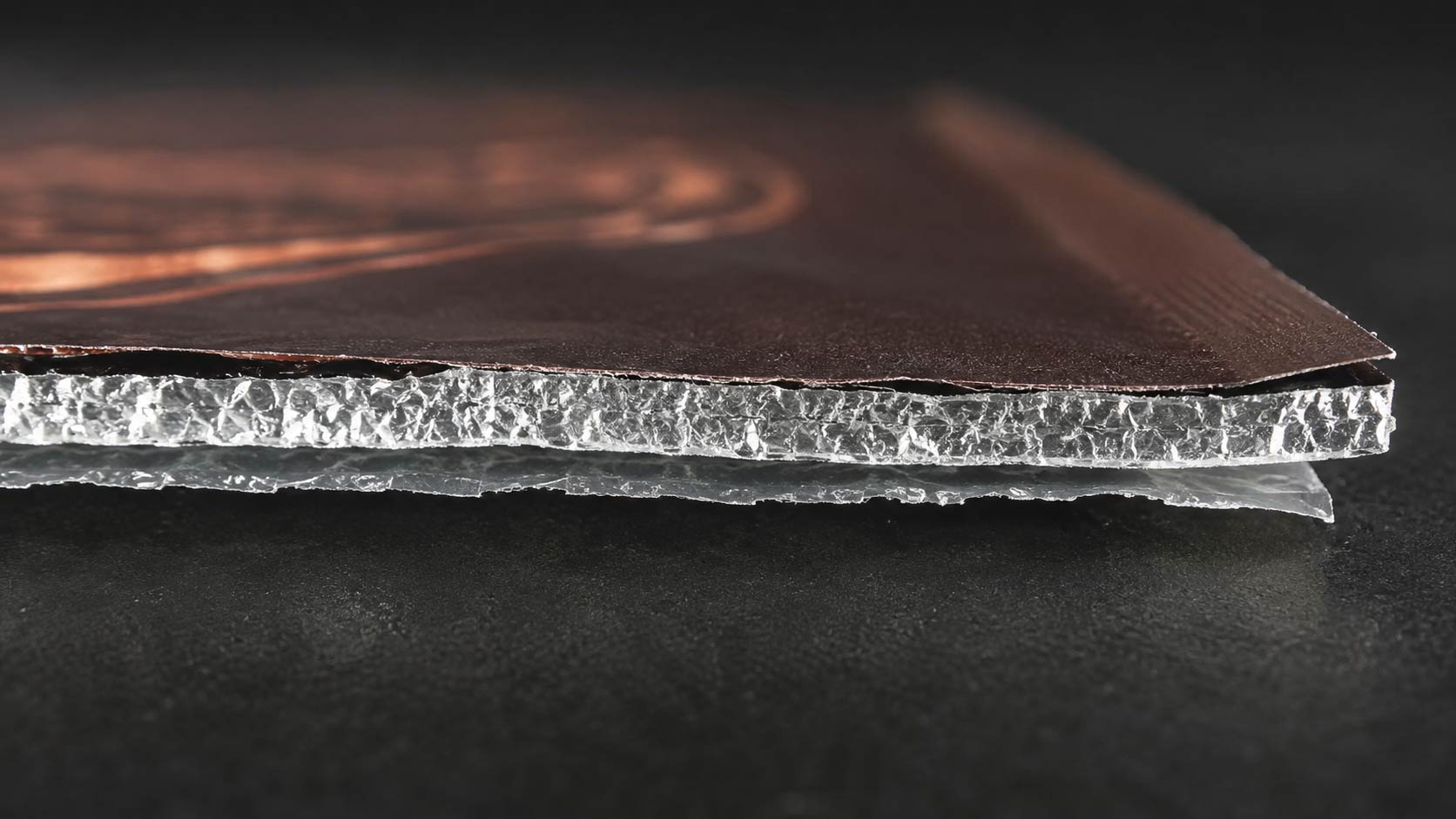
The Four Barriers, in Months
Here is the part most suppliers will not put in writing. Barrier performance is measurable, and it translates into a shelf life you can plan around. These are the four barrier materials we offer on custom coffee bags, with the protection each one delivers for roasted coffee.
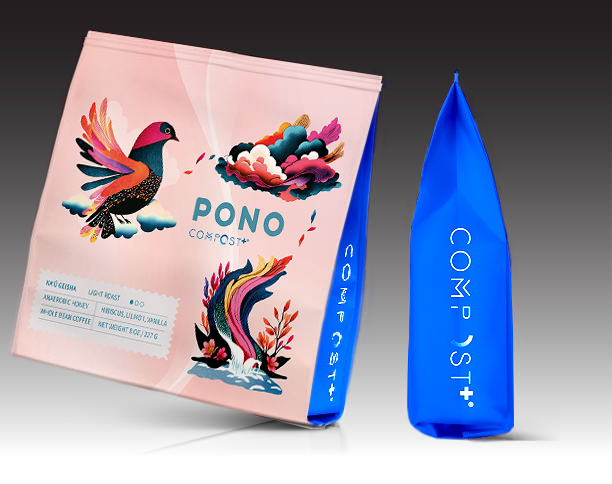
- Industrial compostable: about 4 months. Plant-based film carrying certification through BPI, DIN CERTCO, TUV Austria, or the Compost Alliance. It has to go to an industrial composter, not a backyard pile. We build ours with a compostable WIPF valve and a compostable zipper so the whole bag holds up its end of the claim.
- Mono-plastic EVOH barrier: about 4 months. The barrier that lets you show the product, since it can be clear or frosted rather than opaque. The substrate is recyclable in Europe and not yet in the United States, but it is upcyclable here through our R+R program.
- MetPET, or metallized polyester: about 6 months. The happy medium, and the cost effective choice for retail and direct to consumer alike. Strong protection, a bright printable surface, and a lighter feel than foil. Upcyclable through R+R.
- Aluminum: about 9 to 12 months. Think of it as a flexible tin can. A true light block and the strongest oxygen and moisture barrier of the group, which is why it is the retail choice when product has to travel far or sit long. Upcyclable through R+R.
Notice that nothing here is bad. They are different tools. A roaster shipping to subscribers every month does not need a year of protection, and a brand selling into distribution absolutely does. The mistake is not picking the shorter material, it is picking it without knowing what you gave up.
Read the List Backward
The useful move is to start from the shelf life you need and let it eliminate options. Be honest about the real timeline, which is not how fast your best month sells, it is how long the slowest unit sits between our production floor and your customer's kitchen. That number includes your fill schedule, transit, the distributor's warehouse, and the weeks it sits on a retail shelf before someone picks it up.
- Compostable or EVOH at four months: about one month for roasting and delivery, two months to sell, and a final month of marked down sales. That works beautifully direct to consumer and it is tight for a grocery shelf
- MetPET at six months: about one month for production and delivery, three to four months to sell, and one to two months of markdown. Comfortable for both retail and direct to consumer
- Aluminum at nine to twelve months: about one month of shipping and then roughly six months of solid selling, with real room left over. This is the retail and distribution answer
- Not sure yet, or growing fast: choose the longer barrier, because unsold inventory is what turns a short window into a returns problem
This is also where the clear-bag question resolves itself. If showing the beans matters more than the calendar, EVOH earns its four months honestly, and our post on
clear, frosted, and EVOH coffee bags covers that look in depth. If the calendar wins, you go opaque and get your shelf presence from print instead.
Sustainability Without Guessing
Compostable packaging deserves a clear-eyed look rather than a slogan. Industrial compostable film gives you roughly four months of protection and an end-of-life story that a lot of customers genuinely care about, and for a roaster with quick turnover that is a fair trade made with open eyes. It stops being a fair trade when nobody mentions the four months and product sits for eight.
The honest framing is that sustainability is a choice about trade-offs, not a free upgrade. Know the window, build your ordering around it, and tell your customers the coffee is meant to be enjoyed fresh. That is a better story than a vague claim anyway. Our
compostable and sustainable packaging options lay out what is available, and the differences between industrial and home composting are worth understanding before you print a claim on the bag.
Our Stock Bags Are Not the Compromise
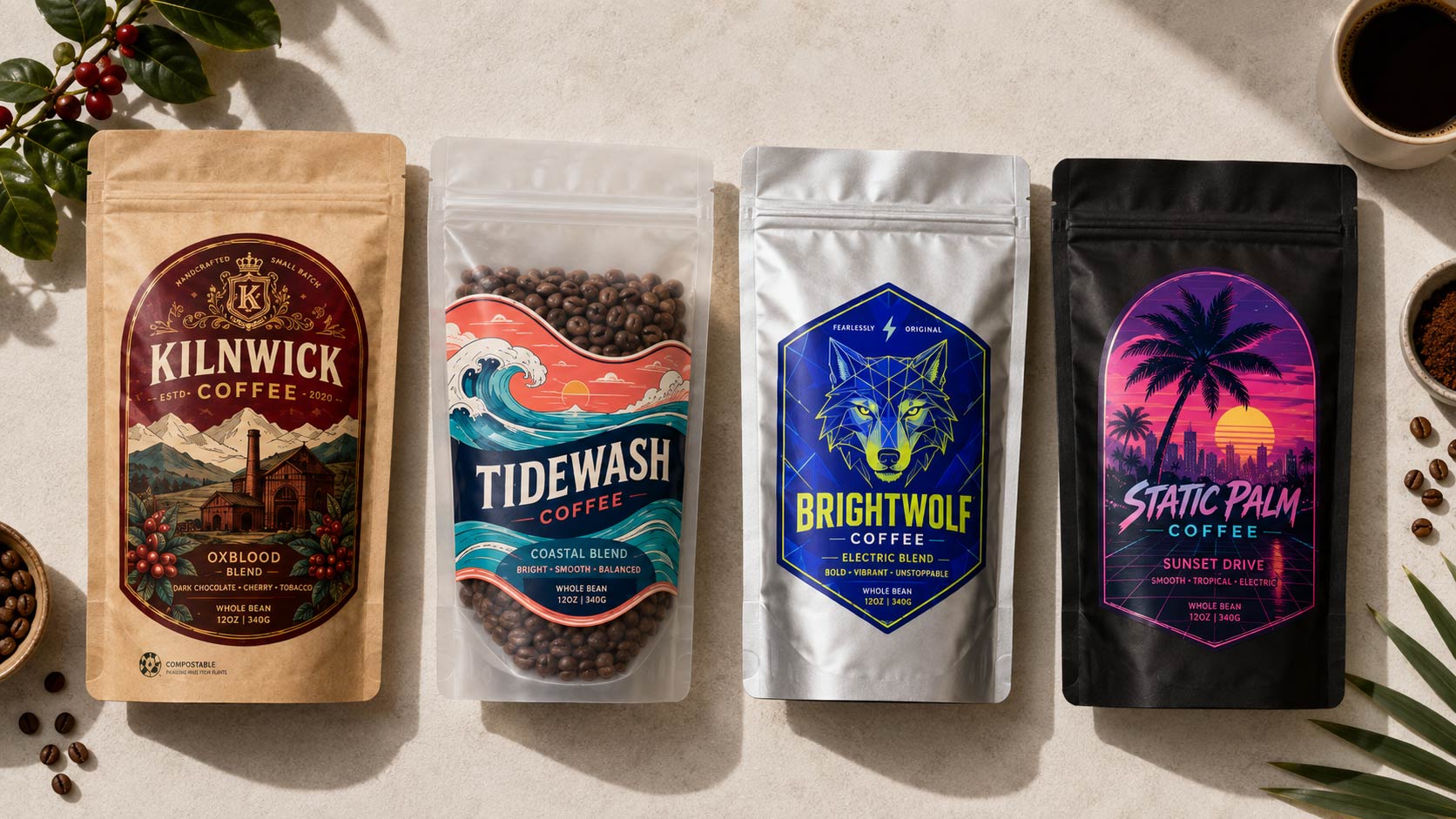
There is an assumption worth killing, which is that blank stock bags are the budget option with budget protection. Ours are not. A barrier is a barrier regardless of whether your artwork was printed on the film or applied as a label, so the months come from the material, not from the ordering method. That means a labeled
stock bag in a high barrier construction protects your coffee exactly as well as a custom printed bag in the same construction.
What you actually trade with stock is design freedom and size flexibility, not product quality. You choose from preset sizes and finish the bag with labels instead of full color printing. What you gain is speed and a lower commitment while your lineup is still moving, and you can see the sizes and colors we keep ready in our
stock bag shop. Plenty of serious roasters run both, using stock for new and rotating coffees and
custom coffee bags for the proven sellers, and their customers get the same freshness either way.
Why the Cheapest Bag Is Rarely the Cheapest
This is where we differ from a lot of suppliers, and we would rather say it plainly. It is easy to quote a low price by quietly thinning the barrier, because the customer cannot see a barrier and will not find out it was wrong until the coffee tastes flat months later. By then the money has changed hands and the problem belongs to your brand, not to the supplier who sold it.
The math almost never works out in favor of the cheap bag. A stale return, a lost wholesale account, or a customer who decides your roast is mediocre costs far more than the difference between film specs. We build both our stock and our custom bags on high barrier constructions, up to nine to twelve months of protection with aluminum, because packaging that fails quietly is the most expensive kind.
- Ask any supplier for the expected shelf life in months, not adjectives like premium or high barrier
- Ask which material the barrier actually is, since compostable, EVOH, metallized, and foil are not interchangeable
- Ask whether the quote assumes a valve, since roasted coffee without one has its own problems
- Order a sample and check it before you commit a full run to it
Any supplier who will not answer the first question is telling you something. For a deeper look at how packaging construction and shelf life connect, our guide to
coffee packaging shelf life breaks down the whole picture, and
the anatomy of a coffee bag walks through every part of the bag around that barrier.
Match the Barrier to the Promise
Your packaging is making a promise about how the product will taste when it is finally opened. The barrier is what keeps it. Start with your product, be realistic about how long it needs to hold, then pick the material that covers that window with room to spare: roughly four months for industrial compostable or EVOH, six for MetPET, nine to twelve for aluminum.
Do that and you stop guessing. You will know why your bag is what it is, you can tell your customers with confidence, and you will not discover the answer from a complaint. That is the entire point of taking the barrier seriously, whether the bag is stock or fully custom.