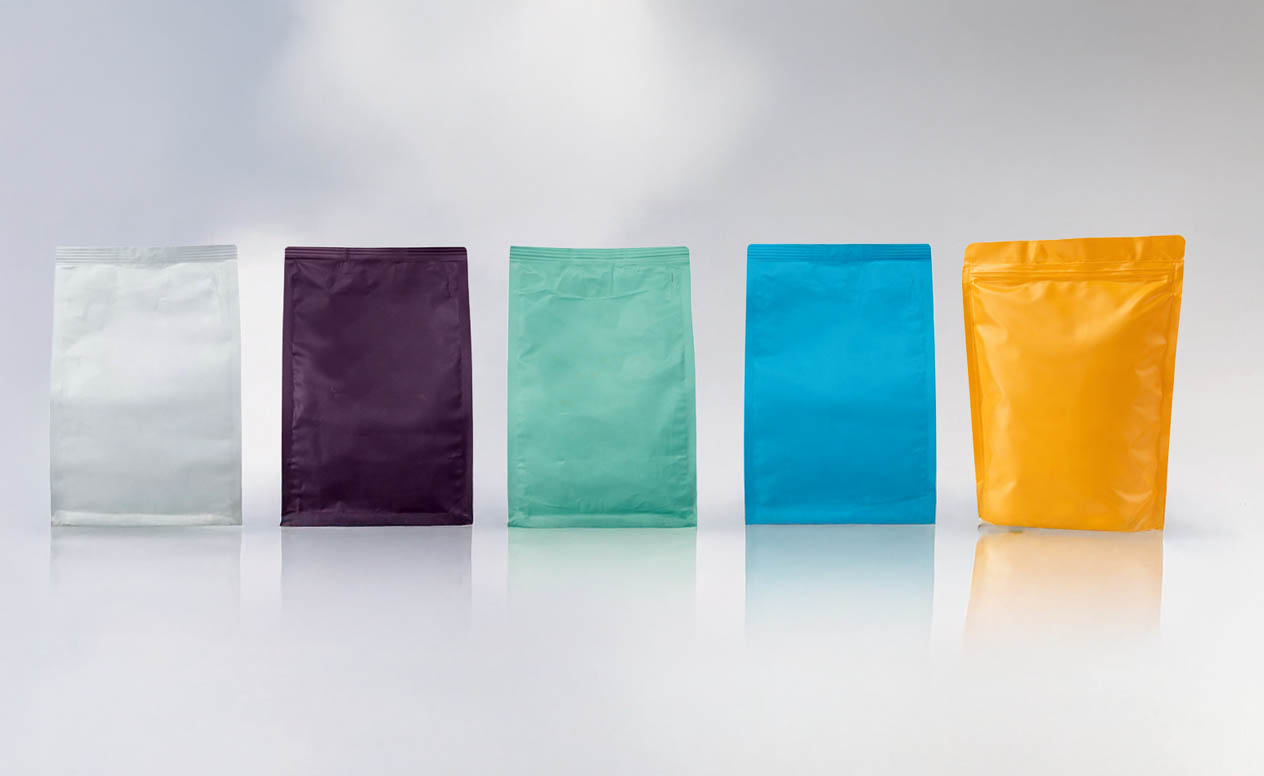
Why Minimum Order Quantity Is the First Question to Answer
Before you pick a bag style, a finish, or a color, there is a number that shapes almost every other decision you make, and that is the coffee packaging minimum order quantity. The minimum order quantity, often shortened to MOQ, is the smallest number of bags a printer will run for you in one job. It sounds like a small logistics detail, but it quietly controls four things at once: how much you pay per bag, whether you can print full color custom artwork or only a raised print, how long you wait to get your bags, and how much cash you tie up in inventory before you sell a single one. Get the MOQ wrong and you either order thousands of bags you cannot move or you lock yourself out of the look your brand needs.
The reason MOQs exist comes down to setup. Some printing methods need custom tooling, like engraved cylinders, that costs real money to make before the first bag ever prints. To spread that setup cost across enough bags to make it worthwhile, the printer sets a floor on how many you must buy. The higher the setup cost, the higher the minimum. That single idea explains the whole ladder, because coffee packaging really comes down to three levels, each defined by its own minimum.
The Three Levels of Coffee Packaging at a Glance
Almost every coffee bag decision fits into one of three tiers, and each tier is defined by a minimum order quantity that also sets your print options and your cost per bag. Here is the whole map in one look before we walk through each one.
- Custom Digital: from about 500 units, full color custom artwork, custom sizes, the lowest minimum for a fully custom bag
- Stock Bags: about 1,000 units, raised print or applied labels, the most flexible way to launch many products at once
- Rotogravure: about 10,000 units, full color at the lowest cost per bag, best for proven high volume designs
There is no single ladder you are forced to climb. Stock bags keep you flexible and low cost per bag with a raised print or labels, custom digital unlocks full color artwork at the lowest custom minimum, and rotogravure delivers the best price per bag once your volume is high and your design is locked. The trick is matching the tier to what your brand needs right now, whether that is flexibility, a full color custom look, or the lowest cost at scale.
Stock Bags: The Flexible Option at About 1,000 Units
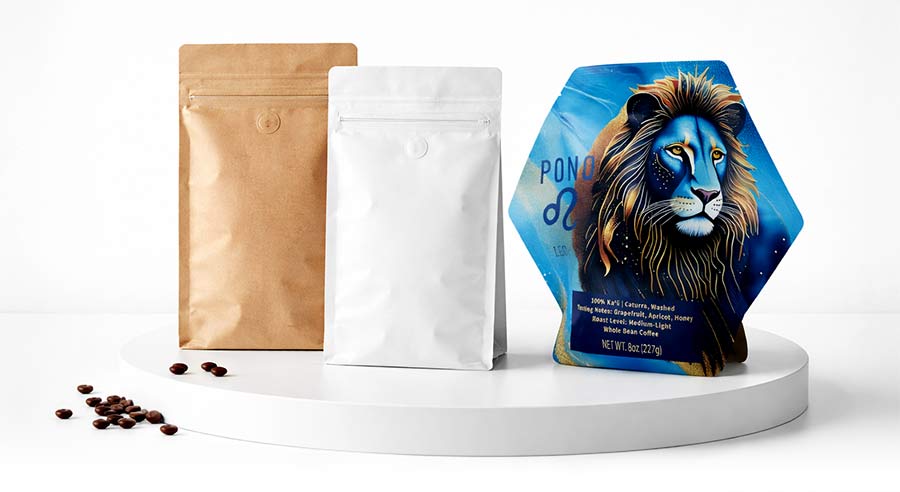
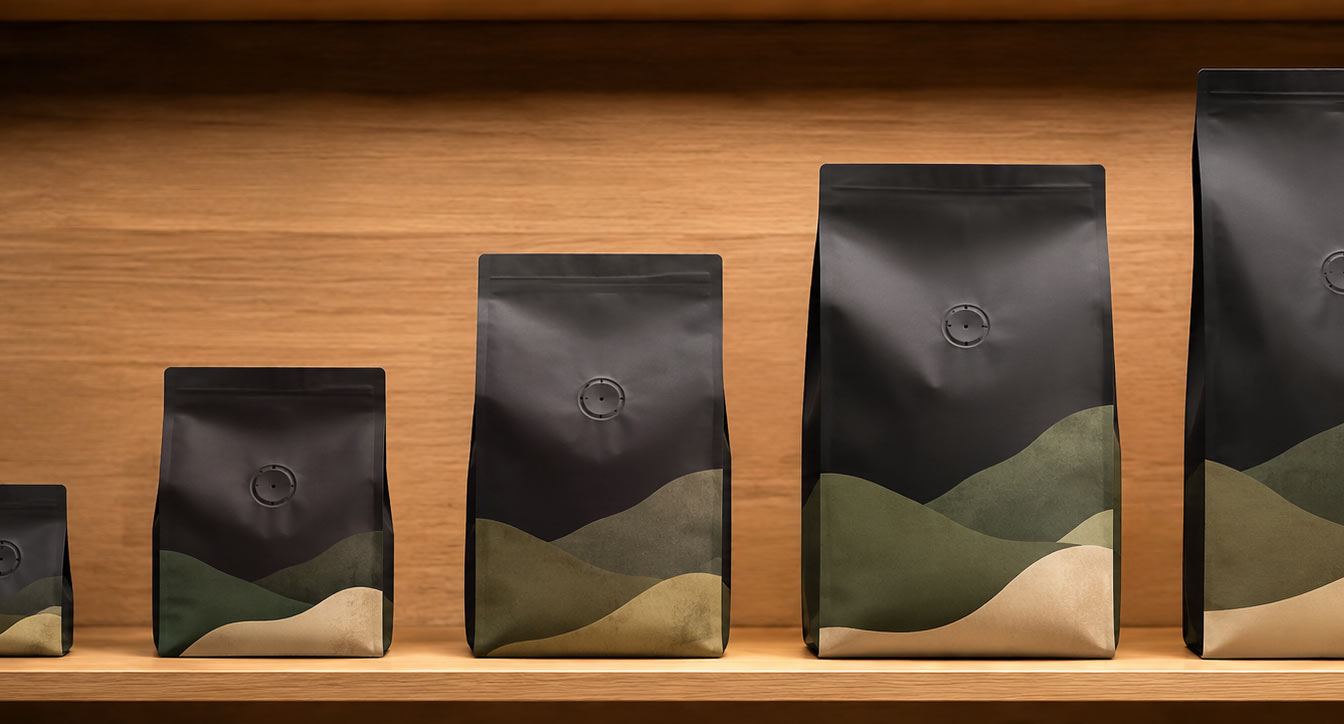
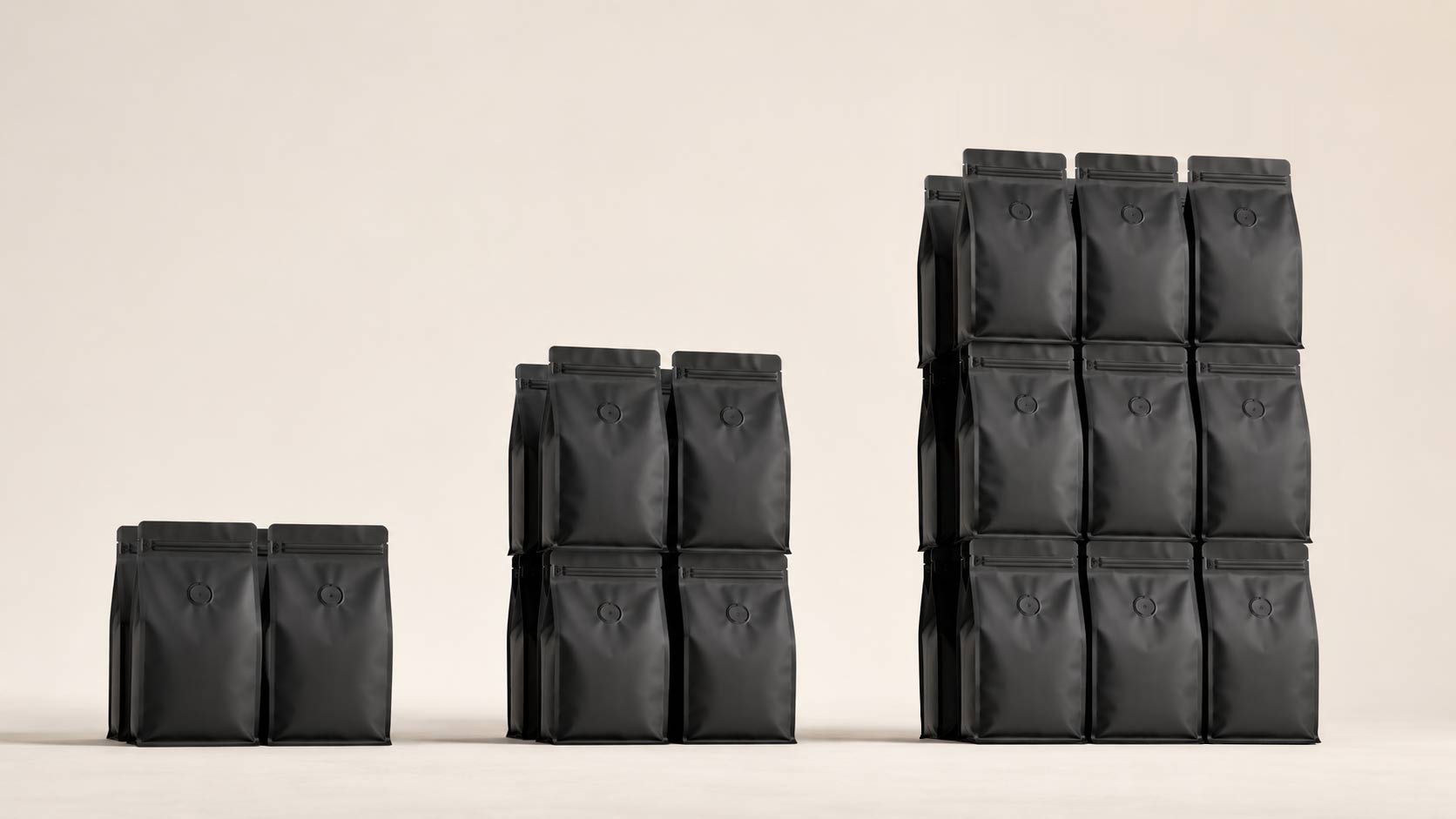
Stock bags are the most flexible way to get to market, with a minimum order quantity of about 1,000 units per size. A stock bag is a pre made bag that already exists in a fixed set of sizes and styles, so there is no tooling to build and no long setup. That is exactly why the price and speed are so friendly. You can get a professional, protective coffee bag with a one way degassing valve on the shelf fast, which makes
stock bags the smart choice for a brand that wants to launch several coffee concepts, test a market, or top up between bigger orders. Because the bags are blank, you can brand them with applied labels or stickers and run many different beans, flavors, and styles without paying for custom artwork on each one.
There is one rule at this level that trips up almost every new roaster, so it is worth stating plainly. Stock bags can only take a UV 3D raised print, not full color custom artwork. A raised print adds your logo or design as a clear, textured, spot treatment on the bag, but it is not the same as printing a full color design across the whole package. If your plan is a bag covered in your own artwork, the 1,000 unit stock level cannot do it, and that is the single most common misunderstanding about coffee packaging minimums. Stock bags also come only in fixed preset sizes, so you fit your coffee to the closest size rather than designing your own. For many brands starting out, that trade is well worth the flexibility and fast turnaround, and if you do want a fully custom bag, custom digital now starts at just 500 units.
Custom Digital Print: From Just 500 Units
When you are ready for full color custom artwork, custom digital printing is the place to start, and the minimum order quantity is now just about 500 units. That makes it the lowest minimum for a fully custom, full color bag, lower even than stock, so a brand new roaster can put their own artwork on the shelf without a big commitment.
Digital packaging prints your artwork straight from a digital file, with no engraved cylinders to build, so you get full color across the whole bag, the freedom to choose a custom size, and a shorter lead time than high volume methods. Digital printing also pairs well with water based inks, which is a more sustainable choice than heavy solvent based inks.
The 500 unit minimum shines for brands with smaller or changing runs. If you rotate seasonal designs, run several coffee origins under one brand, or simply are not ready to commit to tens of thousands of identical bags, digital gives you full custom looks without a punishing minimum. The cost per bag is higher than stock or the top tier, because you are not spreading a setup cost across a huge run, but you are paying for a full color custom look at a low minimum. For a roaster who wants their own branded bag, digital is almost always the right choice. If you are still weighing whether that jump is worth it, our guide on
when custom packaging is worth it walks through the math.
Rotogravure: About 10,000 Units
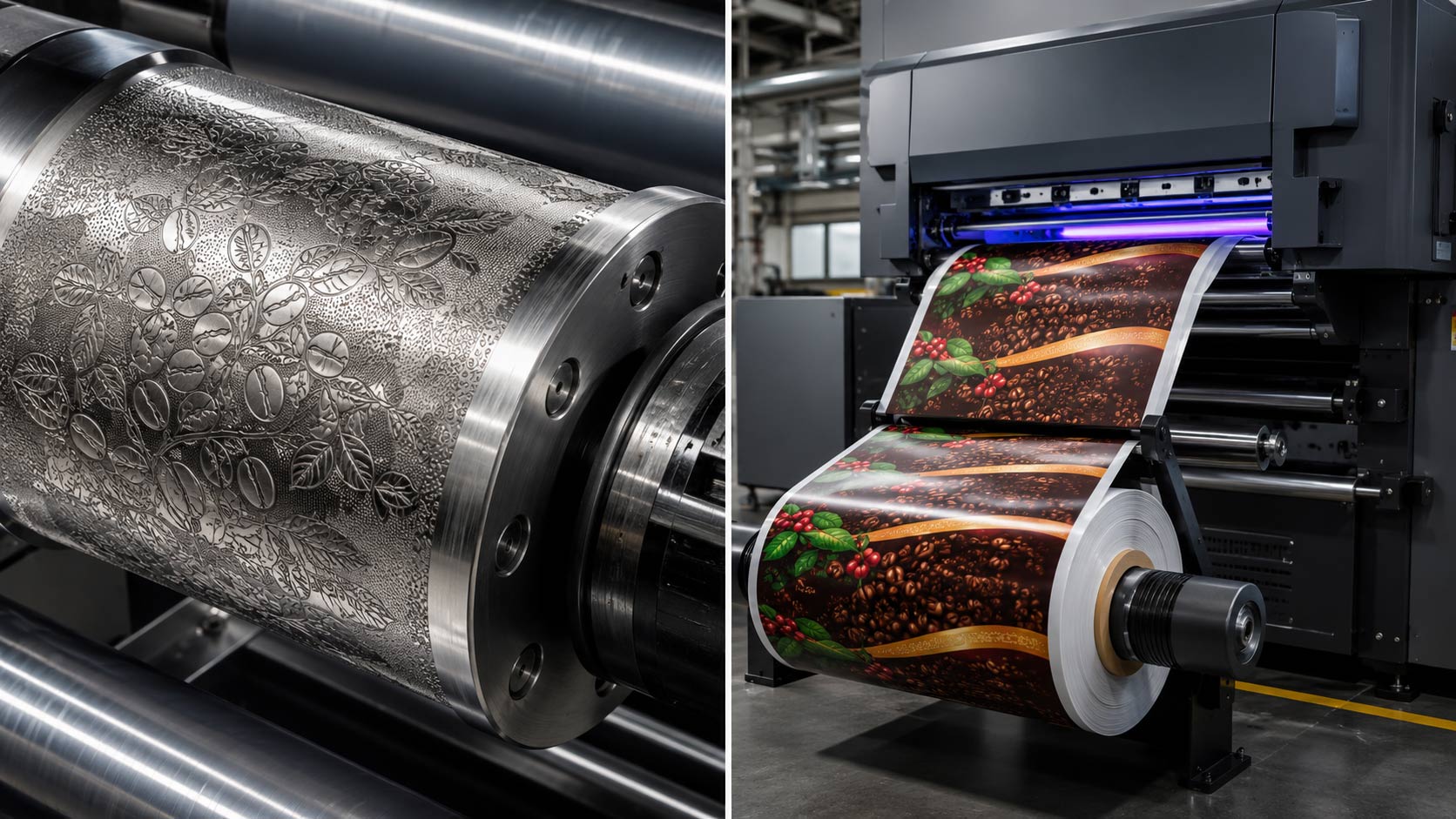
The top tier is rotogravure, and its minimum order quantity of about 10,000 units is the highest of the three for a clear reason. Rotogravure prints using laser engraved metal cylinders that are custom built for your exact design. Those cylinders cost real money to make, so the printer needs a large run to spread that setup cost thin enough to be worth it. That is the whole reason the minimum is so high. In return,
rotogravure printing delivers the lowest cost per bag of any method, along with rich, consistent, premium print quality that holds up beautifully across a huge run.
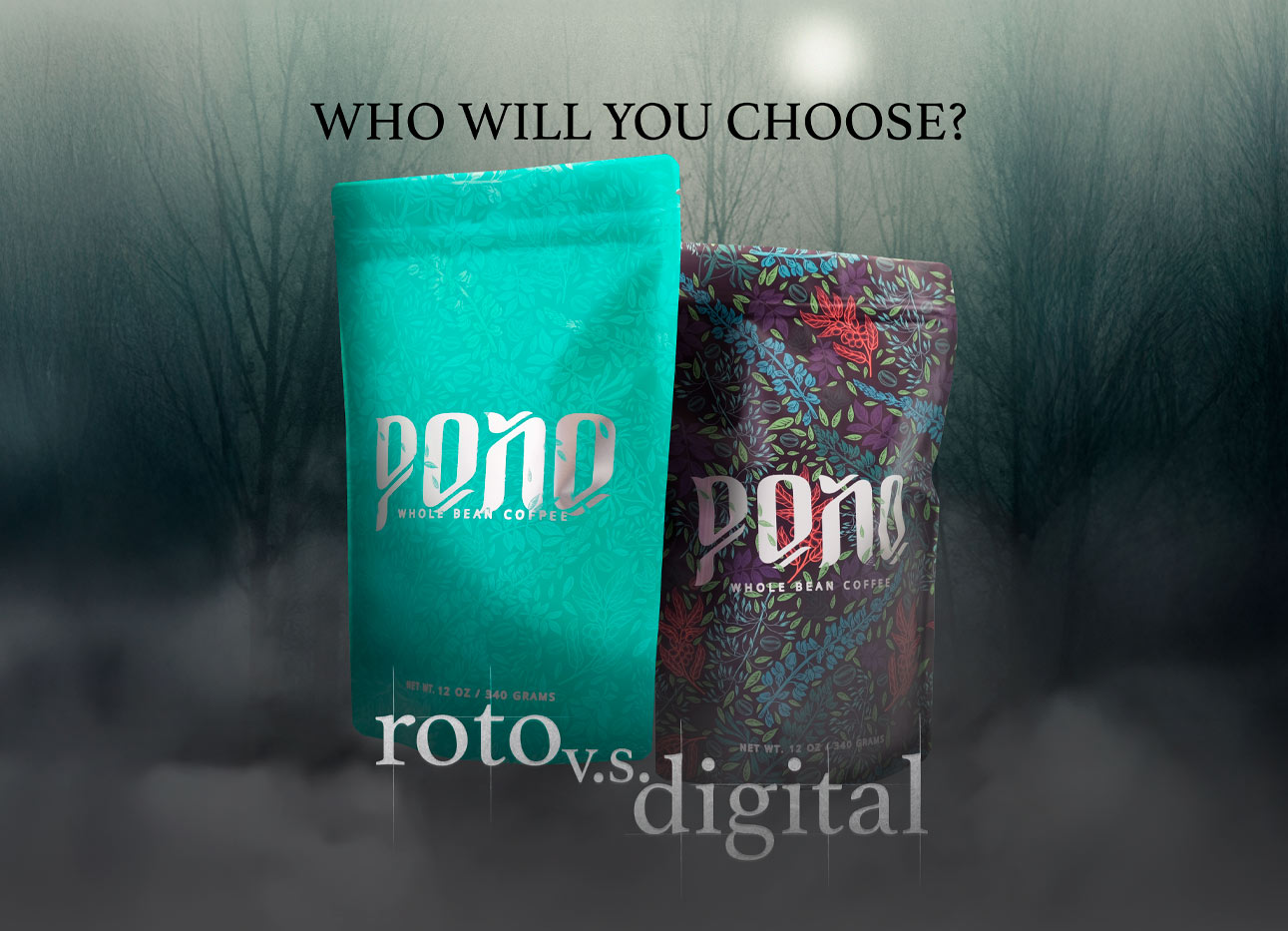
Rotogravure is the natural home for a proven, high volume design. Once your brand is selling steadily and your artwork is locked in, the top tier rewards you with the best price per bag you can get. There are two catches to plan around. The lead time is the longest of the three levels, often several weeks longer than digital, especially when bags ship by ocean freight. And because the cylinders are tied to your specific design, changing the artwork later means paying to engrave new ones. The upside is that after your first order, reorders of the same design skip the setup charge, so your per bag cost stays low run after run. If you are torn between the top two levels, our breakdown of
digital versus rotogravure compares them head to head.
How to Know Which Level You Are On
The fastest way to find your level is to answer three honest questions about your brand as it is today, not as you picture it a year from now. Start with volume, because that is what the whole ladder is built on. Then layer in your design needs and your budget.
- How much coffee do you actually sell in a few months? Custom digital starts at about 500 bags, so if you can sell through a few hundred bags of one design, a custom bag is within reach. If your volume per design is tiny or unpredictable, stock bags with labels keep you flexible.
- Do you need full color custom artwork, or will a clean raised print carry your brand for now? Full color means you are at digital or higher, while a raised print keeps stock on the table.
- Is your design final, or still changing? A locked, proven design that you sell in high volume is what unlocks rotogravure, while an evolving design is safer at the digital level.
Many brands move through these tiers over time. They may start on stock to stay flexible while they test the market, move to custom digital once they want a full color branded bag, which now takes just 500 units, and graduate to rotogravure once a winning design is selling in the tens of thousands. There is no prize for jumping to a big run too soon, and plenty of cash lost by doing it.
Moving Up the Ladder Without Wasting Money
The smartest roasters treat the three levels as a path, not a one time choice. When you are starting out, stock bags at 1,000 units let you get to market and learn what sells without gambling your budget on a big run. A popular move at this stage is to pair a stock bag with a custom printed box, which gives you a branded unboxing while your bag minimum stays low. As your sales steady and you commit to a look,
custom coffee bags at the digital level give you full color at a minimum you can actually sell through. Only when a design is proven and your volume is high does the jump to rotogravure pay off, because that is when the lowest cost per bag finally beats the cost of the tooling.
The costly mistakes almost always come from ordering for the brand you wish you were. Committing to 10,000 rotogravure bags of an unproven design can leave you sitting on inventory you cannot move, or worse, stuck with artwork you have outgrown but already paid to engrave. Matching your order to your real sales pace protects your cash and your freshness, since coffee bags do you no good sitting in a warehouse. Move up a level when your volume and your design are both ready, and each rung pays for itself.
Quick Answers to Common Coffee Packaging MOQ Questions
What is the minimum order quantity for custom coffee bags? Full color custom coffee bags start at about 500 units with digital printing. Stock bags have a higher minimum, around 1,000 units, but they take a raised print or applied labels rather than full color custom artwork.
Can I get full color artwork at the 1,000 unit stock level? No. Stock bags can only take a UV 3D raised print or applied labels. Full color custom artwork starts at the digital level, around 500 units. This is the most common misunderstanding about coffee packaging minimums.
Why is the rotogravure minimum so high? Rotogravure uses custom laser engraved cylinders that cost money to build before printing starts. The 10,000 unit minimum spreads that setup cost across enough bags to reach the lowest cost per bag.
Which level gives the cheapest price per bag? Rotogravure, at about 10,000 units, has the lowest cost per bag. The trade is a high minimum, the longest lead time, and tooling that is tied to one design.
Should a new roaster start with stock or custom? Either can be a smart start. Stock bags at 1,000 units keep you flexible with labels across many products, while custom digital now starts at just 500 units if you want a full color branded bag from day one.
Do reorders cost the same as the first order? With rotogravure, reorders of the same design skip the setup charge, so your per bag cost stays low. Changing the artwork means paying to engrave new cylinders.
Closing: Know Your Number, Then Design the Bag
Let Your Volume Choose Your Level
Coffee packaging looks like a design decision, but underneath it is a numbers decision, and that number is the minimum order quantity. Once you see the three levels clearly, the path stops being confusing. Custom digital at about 500 units unlocks full color artwork and custom sizes at the lowest custom minimum. Stock bags at about 1,000 units keep you flexible with a raised print or labels across many products. Rotogravure at about 10,000 units delivers the lowest cost per bag for a proven, high volume design. Find the level that matches how much coffee you truly sell today, order for that reality instead of a someday dream, and step up a rung only when both your volume and your design are ready. Know your number first, and the right bag follows.