What Is the Minimum Order Quantity?
This is the question that comes up more than any other, and it is one where a lot of confusion can happen if the answer is vague. The minimum order quantity depends on which service or product you are ordering, so here is how it breaks down.
For ready-to-ship stock bags, the minimum order is 1,000 units. Stock bags ship fast because there is no custom printing involved. You are ordering from an existing inventory, and the process is designed for buyers who need packaging quickly or who are just getting started and are not ready to commit to a custom run.
For custom digital printing through our SB5D service, the minimum order is 500 units. Digital printing is the most flexible custom printing method we offer. It does not require printing cylinders, which means lower setup costs and the ability to print smaller runs with sharp, full-color results. The 500-unit minimum is what makes it accessible to small and mid-sized brands who want a fully custom bag without having to commit to the volumes that rotogravure requires.
For rotogravure printing, the minimum order is 10,000 units. Rotogravure is a high-volume printing process that uses engraved cylinders to apply ink to the packaging film. The setup involves more upfront investment, which is why it makes the most sense for brands ordering consistently at high volumes. The payoff is exceptional color consistency, sharp detail, and a lower cost per unit at scale.
Here is a quick summary of those minimums: - Stock bags: 1,000 units
- Custom digital printing (SB5D): 500 units
- Rotogravure: 10,000 units
Knowing which category your order falls into is the first step in getting an accurate quote.
What Is the Difference Between Digital Printing and Rotogravure?
Both methods produce custom printed flexible packaging. The difference is in how the printing is done and what each method is optimized for.
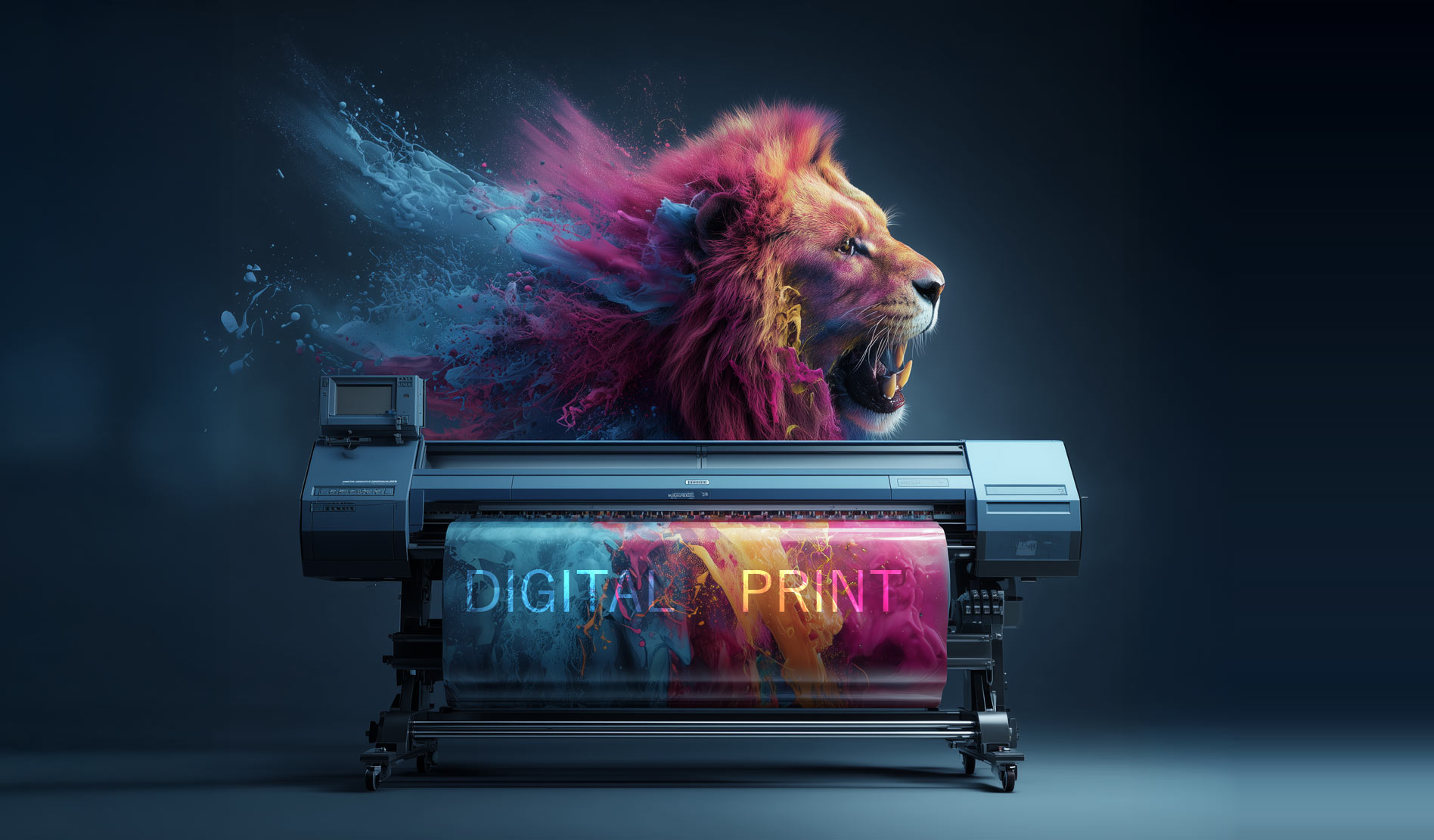
Digital printing works like a large, high-precision inkjet printer. It applies ink directly to the packaging film without any cylinders or plates. Because there is no setup hardware to create, the upfront cost is lower and the process is faster. You can print different designs in the same run, make changes between orders without fees, and get results that would not be possible with lower minimum quantities. This makes digital printing the right choice for most growing brands, seasonal products, limited editions, and anyone who wants to test a design before scaling.
Rotogravure uses engraved metal cylinders, one for each color in the design, to stamp ink onto the film at very high speed. The initial cylinder setup adds cost and time to the first order, but once those cylinders exist, the process becomes incredibly consistent and cost-effective at large volumes. The ink coverage is dense, the colors are precise, and the result looks polished across every single unit in the run. Established brands with locked-in designs and consistent high-volume orders benefit most from rotogravure.
The simplest way to think about it is this. Digital printing rewards flexibility. Rotogravure rewards volume. If you are still refining your brand, launching something new, or ordering under 10,000 units, digital is almost always the better starting point.
Digital printing is the right fit for: - Growing or newer brands still refining their look
- Seasonal products or limited-edition runs
- Orders under 10,000 units
- Anyone who wants to test a design before committing to a large run
Rotogravure is the right fit for: - Established brands with locked-in designs
- Consistent high-volume orders of 10,000 units or more
- Operations where cost-per-unit and color consistency at scale are top priorities
What Bag Styles Do You Offer?
We offer several flexible packaging styles that work for coffee, food, and specialty products. The two most common are the stand-up pouch and the quad seal box bottom.
The stand-up pouch is exactly what it sounds like. It has a bottom gusset that allows it to stand upright on a shelf, a front panel for your main design, and a back panel for product information and regulatory requirements. It is one of the most versatile and widely recognized packaging formats in the industry. Add a resealable zipper and a degassing valve if you are packaging roasted coffee, and you have a bag that handles both freshness and convenience.
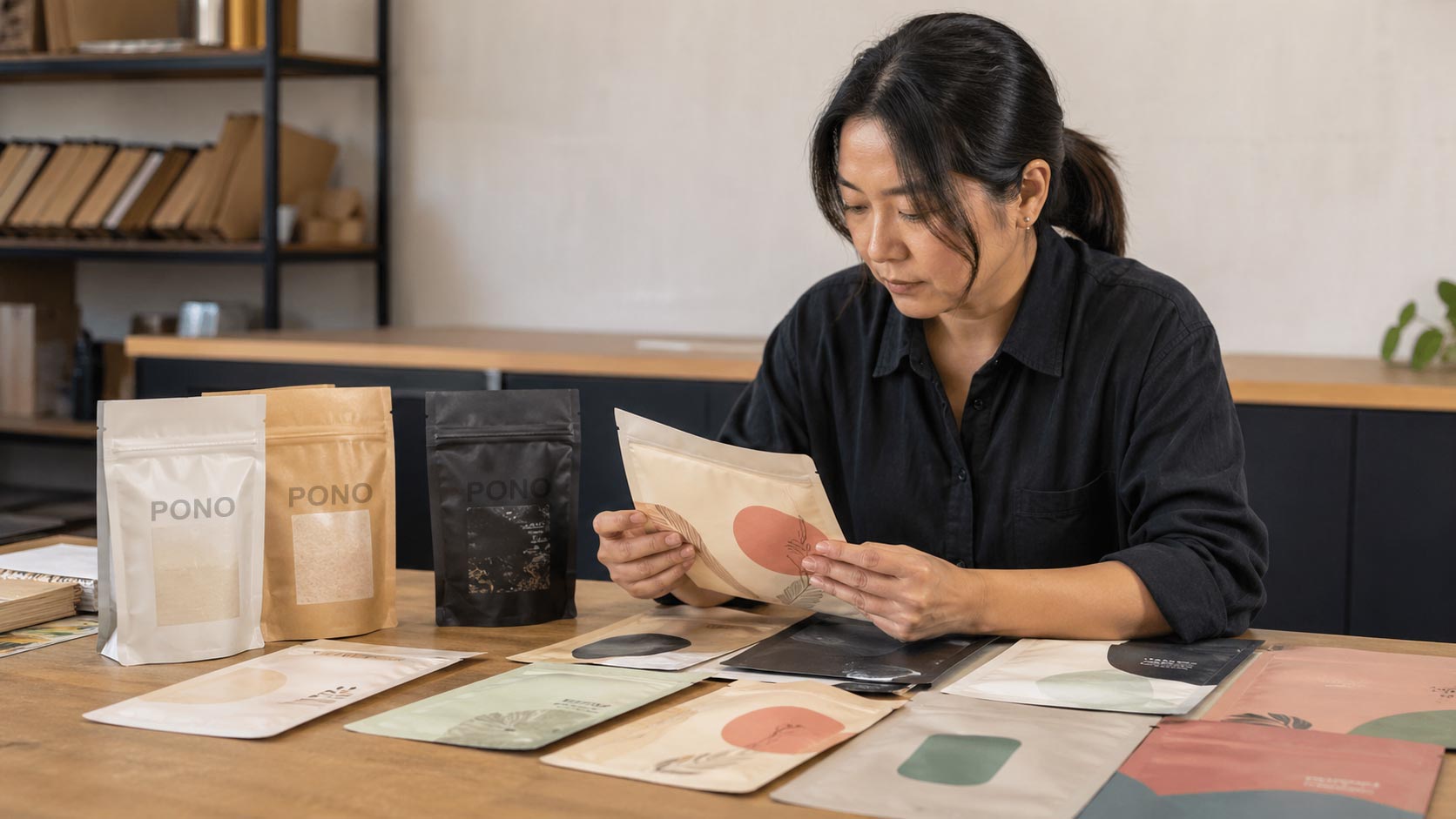
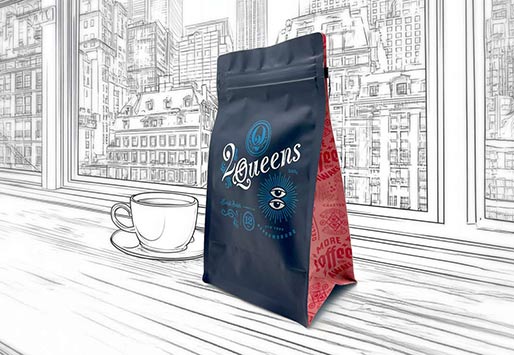
The quad seal box bottom pouch has a more structured, boxy shape with four sealed corners along the bottom. It stands very upright and has a wide, flat bottom that gives it a strong retail presence. It holds its shape well when filled and looks clean and premium on a shelf. This style is popular for coffee brands that want a distinctive silhouette, but it works just as well for tea, granola, protein powder, and other dry goods.
There are also flat pouches, side gusset bags, and other styles available depending on your product and retail context. Our team can walk you through which shape makes the most sense for what you are packaging and where you plan to sell it.
The flexible bag styles we offer include: - Stand-up pouch
- Quad seal box bottom
- Flat pouch
- Side gusset bag
It is also worth knowing what we do not currently offer. Rigid packaging formats like compartmentalized bento-style boxes, glass jars, plastic tubs, and bottles are not part of our lineup. We specialize in flexible packaging. If a customer comes in asking for a rigid container, we will be honest about that and suggest the flexible option that comes closest to what they are looking for.
Rigid formats we do not carry: - Compartmentalized bento-style boxes
- Glass jars
- Plastic tubs and bottles
Can You Package Food Products That Are Not Coffee?
Yes, and we do it regularly. Coffee is at the center of our business, but flexible packaging serves a wide range of food and specialty products, and many of our customers are not coffee roasters at all.
We have worked with brands packaging granola, granola bites, protein powder, dehydrated foods, sweet potato snacks, kimchi, cacao, spices, tea, and more. If it is a dry or semi-dry food product that benefits from a resealable flexible pouch, the conversation is worth having.
The most important variables for food products are barrier requirements, bag style, and size. Some products need a higher moisture or oxygen barrier than others. Granola, for example, goes stale quickly if the barrier is insufficient. Protein powders and dehydrated foods are similar. Getting the right film structure for your product is part of what we help you figure out during the quoting process.
The three things that matter most when quoting a food product: - Barrier requirements: how well the film needs to block moisture, oxygen, and light
- Bag style and format: which pouch shape works best for the product and the shelf
- Size and fill weight: how much product goes in and what dimensions make sense
If you are not sure whether your product is a good fit, reach out and describe what you are making, how long it needs to stay fresh, and where you plan to sell it. That is usually enough information to have a productive first conversation.
What If My Deadline Is Urgent?
This is an area where it pays to be upfront. A tight deadline is not automatically a dealbreaker, but it does change what options are available to you, and our team needs to know the real timeline from the start.
For ready-to-ship stock bags, turnaround is significantly faster than custom. If you need bags quickly and a stock option meets your needs, that is often the most realistic path for a very short window.
For custom digital printing, the production and shipping timeline is longer. Artwork needs to be finalized and approved, film needs to be printed and converted, and the finished bags need to ship to you. If your deadline is less than a few weeks out, the honest answer is that we need to look at the specific dates together before committing to anything. Do not assume that a general timeline statement means your specific date is achievable.
The best thing you can do with an urgent deadline is contact our team directly, give us the actual date, tell us what you need, and let us tell you whether it is possible. That conversation will save you time and help us find the fastest path to getting you what you need.
When time is tight, do these things first: - Contact our team directly, not through a general inquiry form
- Give us your actual ship date, not an approximate window
- Tell us exactly what you need: product type, quantity, and bag style
- Let us confirm the timeline before you assume it is possible
What About Stock Bags, Exactly?
Ready-to-ship stock bags are pre-made flexible bags that are available in standard sizes and styles. They are printed with a generic or brand-neutral finish, which means they are ready to ship without any design approval or production lead time.
Stock bags are a strong option for new businesses that are not yet ready to commit to custom printing, for roasters who need to fill a gap while waiting on a custom order, or for anyone who wants to test a product format before investing in a custom run. The minimum order is 1,000 units, and there are no setup fees.
Stock bags work best for: - New brands that are not ready to invest in a custom print run
- Roasters bridging a gap while a custom order is in production
- Anyone testing a bag format or size before committing to full custom
The important thing to understand is that stock bags are not infinitely flexible. You are choosing from what is available, not designing something from scratch. Most stock bags can be paired with a custom label, which is a cost-effective way to add your brand identity without the full commitment of a custom print run. Many brands start with stock plus a label, build their customer base, and then move to fully custom once their volume supports it.
Packaging Questions, Answered Straight
Getting clear answers before you order saves time, money, and stress. The questions in this post are the ones real buyers ask most often, and the answers do not change. Know your minimum order before you start. Understand what printing method fits your volume. Ask about what is and is not available. Be honest about your deadline. And if you are packaging something that is not coffee, do not assume the answer is no before you ask.
This is Volume 1. More answers are coming in future editions based on the questions we keep hearing. If your question was not covered here, reach out through our contact form and let our team know what you need.