A Bottle of Cold Brew Is Mostly Water
If you make cold brew in Hawaii, you already know the coffee is the part that matters. It is also the smallest part of what is in the bottle. A ready-to-drink cold brew is mostly water, and in Hawaii every ounce of water you package has to go somewhere by plane or by ship.
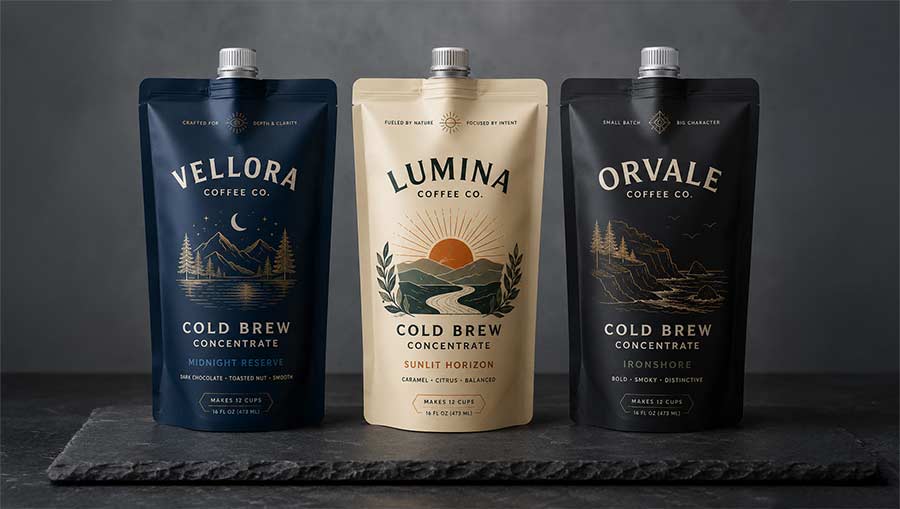
That changes the math on packaging in a way it does not for a roaster on the mainland. It is the reason more island brands are looking at a cold brew concentrate pouch instead of a bottle, and it is the reason a spouted pouch is worth a hard look before you commit to glass.
This post is about what a concentrate in a spouted pouch actually changes: what you ship, what you store, what the customer does with it at home, and what has to go on the label.
Concentrate Moves the Water to the Customer's Kitchen
A concentrate is the same coffee with most of the water left out. The customer adds water or milk at home at whatever ratio your recipe calls for. Every part of water they add is a part you did not have to bottle, pack, ship or carry.
For a brand selling to visitors, that is a practical difference. A guest flying home can only carry small liquids in a carry-on bag, so a full-size bottle goes in checked luggage, where a sealed pouch flexes and glass can break. A concentrate pouch makes more drinks for the space it takes in the suitcase.
For a brand shipping to mainland customers, it means fewer pounds in every box for the same number of drinks. And for a brand selling at farmers markets and local shops, it means a smaller package on a crowded shelf or in a crowded fridge door.
Empty Pouches Arrive Flat. Empty Bottles Do Not.
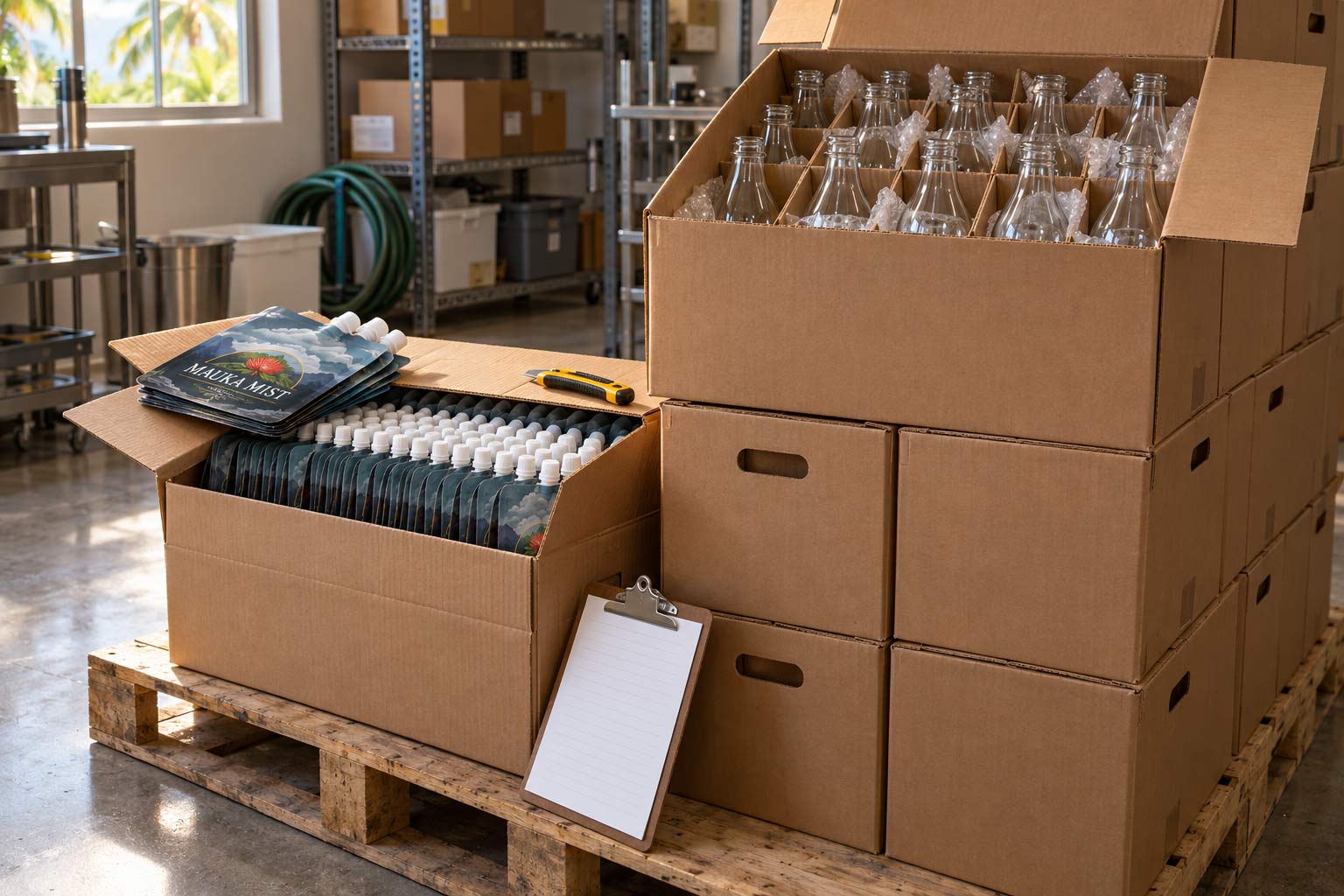
The same thing is true of the packaging before it is ever filled. Glass bottles are the same size empty as they are full. They take up their whole volume on the boat, they need dividers and padding so they do not break, and they take up that same room again in your storage.
Spouted pouches arrive flat, stacked tightly in a carton, with the spout and cap already fitted. A carton of empty pouches takes a fraction of the room a pallet of empty bottles would, which matters when your storeroom is small and your reorders cross an ocean. Lighter, flatter inbound packaging is one of the quiet reasons flexible pouches work so well for island brands.
The Pouch Shrinks as You Pour
Here is the part most people do not think about until they have used one. A bottle of concentrate fills with air every time you pour from it. By the last glass, the coffee left at the bottom has been sitting against a bottle full of air for days.
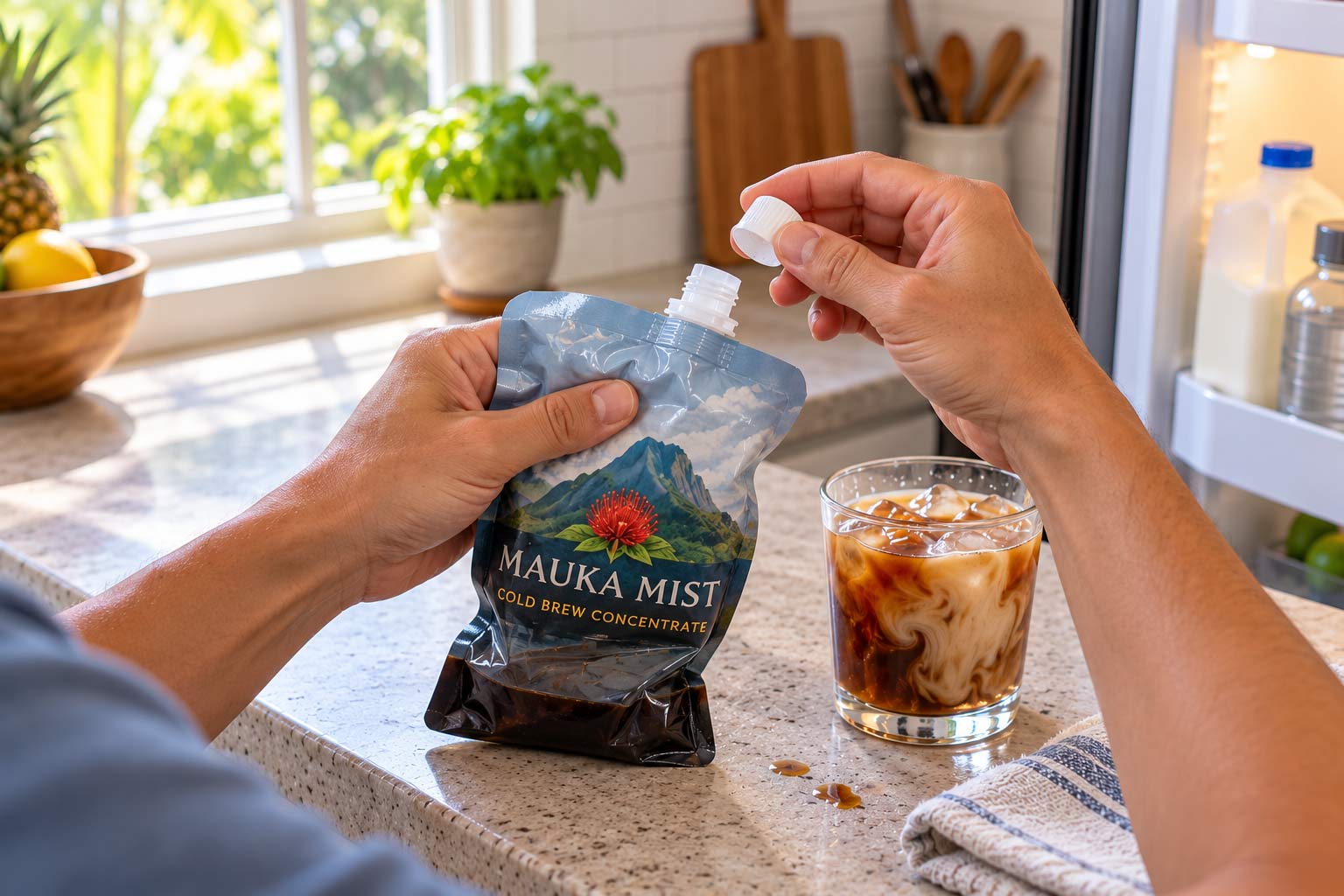
A spouted pouch does the opposite. It collapses as it empties, so there is very little empty space inside for air to fill. Better still, the customer can gently squeeze the air out before they put the cap back on. For a product that gets used a little at a time from the fridge over a week or more, that is a real advantage, and it is one you can tell your customers about on the pack.
What Changes on the Label
A concentrate asks more of its label than a ready-to-drink cold brew does, because the customer has to do something with it.
- Mixing directions. How much concentrate, how much water or milk, over ice or hot. This needs real room on the back panel and it needs to be easy to read in a kitchen.
- How many drinks it makes. Customers compare a concentrate to a bottle of ready-to-drink, so tell them what the pouch actually yields.
- Storage after opening. Refrigerate after opening, and how long to use it within. Your process and your testing set that number, not the pouch.
- The squeeze tip. A short line telling customers to squeeze out the air before recapping turns a packaging advantage into something they notice.
- Where the coffee is from. If your coffee is grown in Hawaii, say where, and keep the origin wording accurate.
Plan the back panel around those first, then fit the brand story into what is left. It is much harder to squeeze mixing directions onto a finished design than to design around them from the start.
The Pouch Does Not Make It Shelf Stable
This is worth saying plainly. A spouted pouch with a high-barrier film protects what is inside from oxygen and light, but it does not decide whether your concentrate needs refrigeration. Your recipe and your process decide that, along with your food safety authority.
What the packaging does is give your process the right container. We covered the film choices, foil laminate or a clear high-barrier film, in
custom packaging for cold brew and RTD coffee, and the cold side of the story, condensation and fridge doors, in
cold brew packaging that owns the fridge.
What a Spouted Pouch Order Looks Like at Savor Brands
We are based in Honolulu, and spouted pouches are part of the same custom printing we do for coffee bags.
- Minimum of 500 per design. The same low starting point as our digitally printed bags, so a new cold brew can launch without a storeroom full of pouches. We explained why the minimum sits where it does in what a 500-bag minimum is made of.
- Digital or rotogravure. Start on digital, and move a design to rotogravure once it is selling in volume.
- Stock spouts and caps in black or white. Custom cap colors are possible, but they carry a much higher minimum, so ask us before you design around one.
- Custom sizes. The pouch is sized to your fill, not the other way around.
- 9 to 12 weeks from artwork approval to your door, production plus shipping, the same as our custom bags.
Local farms already use our spouted pouches for fresh products, as you can see in
Kahuku Farms' spouted pouches. More on what we make for island brands is on our
Hawaii packaging page.
Wrapping It Up: Ship the Coffee, Not the Water
A Hawaii cold brew in a concentrate pouch sends less water across the ocean, takes up less room before it is filled, keeps the last glass closer to the first, and fits better in a suitcase on the way home. None of that needs a new recipe. It needs a different container and a back panel planned around how the customer will actually use it.
If you are working on a cold brew or a concentrate,
tell us what you are making and how you plan to sell it, and we will help you size the pouch and plan the label before anything goes to print.