Outdated Does Not Mean Unusable
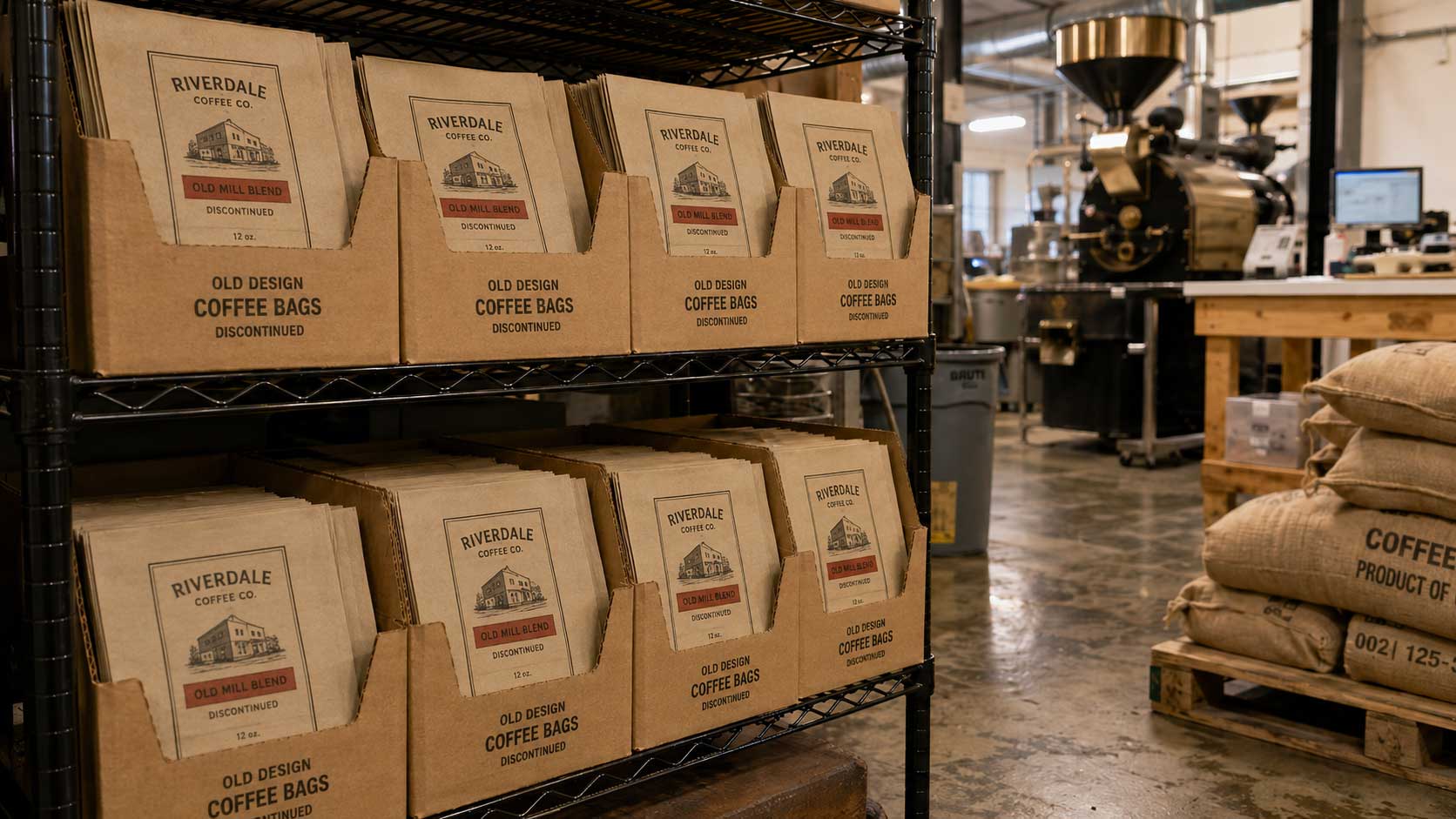
Every roaster who has been in business more than a couple of years ends up with the same pallet in the corner. Good bags, correct barrier, zipper and valve fitted, sitting in a box because something on the front is no longer true. A logo changed. The website moved. A certification lapsed or a new one arrived. Somebody finally fixed the spelling on the tasting notes.
The instinct is to write the whole run off, and that is almost always the wrong call. The bag is a piece of engineered film that cost real money, and most of what makes it feel outdated lives on the surface. Before you throw anything away, sort the pile into two groups: bags that are cosmetically wrong, and bags that are factually wrong.
Cosmetically wrong is the easy group. An old logo, a retired tagline, an address that has moved, a URL that redirects anyway. Nobody is harmed by any of it, and every fix below applies.
Factually wrong is the group that needs care. If the net weight is incorrect, if an allergen statement is missing, if an origin claim no longer matches what is inside, or if a certification mark is printed on a bag holding coffee that is no longer certified, you cannot sell that bag as it stands. A sticker over a required disclosure is not a fix, it is a bigger problem. Hawaii roasters have a sharper version of this, because the origin and percentage rules are specific about how those claims appear, and our guide to
labeling Hawaii-grown coffee covers what has to be right before the bag is filled.
Sort first. Then work through the six options below in order, because they run roughly from most value recovered to least.
One: Cover the Panel With a Belly Band
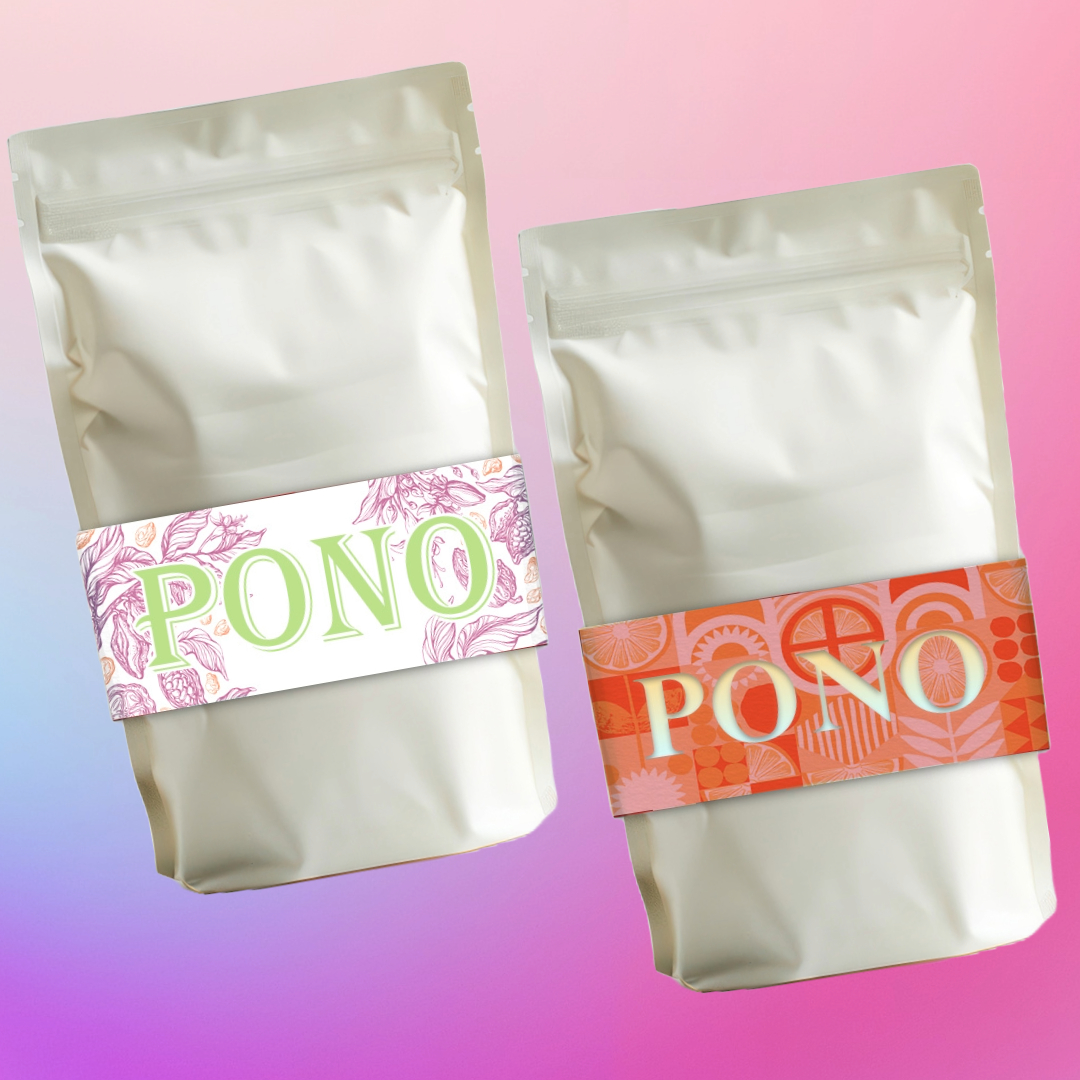
A belly band is a printed wrap that sits around the middle of the bag, and it is the fastest way to make an old bag current. It covers a wide horizontal strip of the front, which is usually exactly where the logo, the tagline, and the old brand furniture live. You are not hiding a flaw, you are adding a layer that reads as intentional, which is why plenty of roasters use bands on brand new bags.
Bands make the most sense when the change is a brand change rather than a detail change. New logo, new name after a merger, a rebrand that moved you from a script mark to a wordmark. Print the band with the new identity, wrap it, and the bag is back in the retail lineup.
- They cover a wide strip, so they suit logo and identity changes
- They run at low minimums, so you can band exactly the number of bags you have left
- They print fast compared to a full bag run, which matters when the coffee is already roasted
- They can carry seasonal or limited-lot messaging, so the fix doubles as a marketing asset
Our post on
low minimum belly bands walks through how they are sized and applied.
Two: Cover the Detail With a Sticker
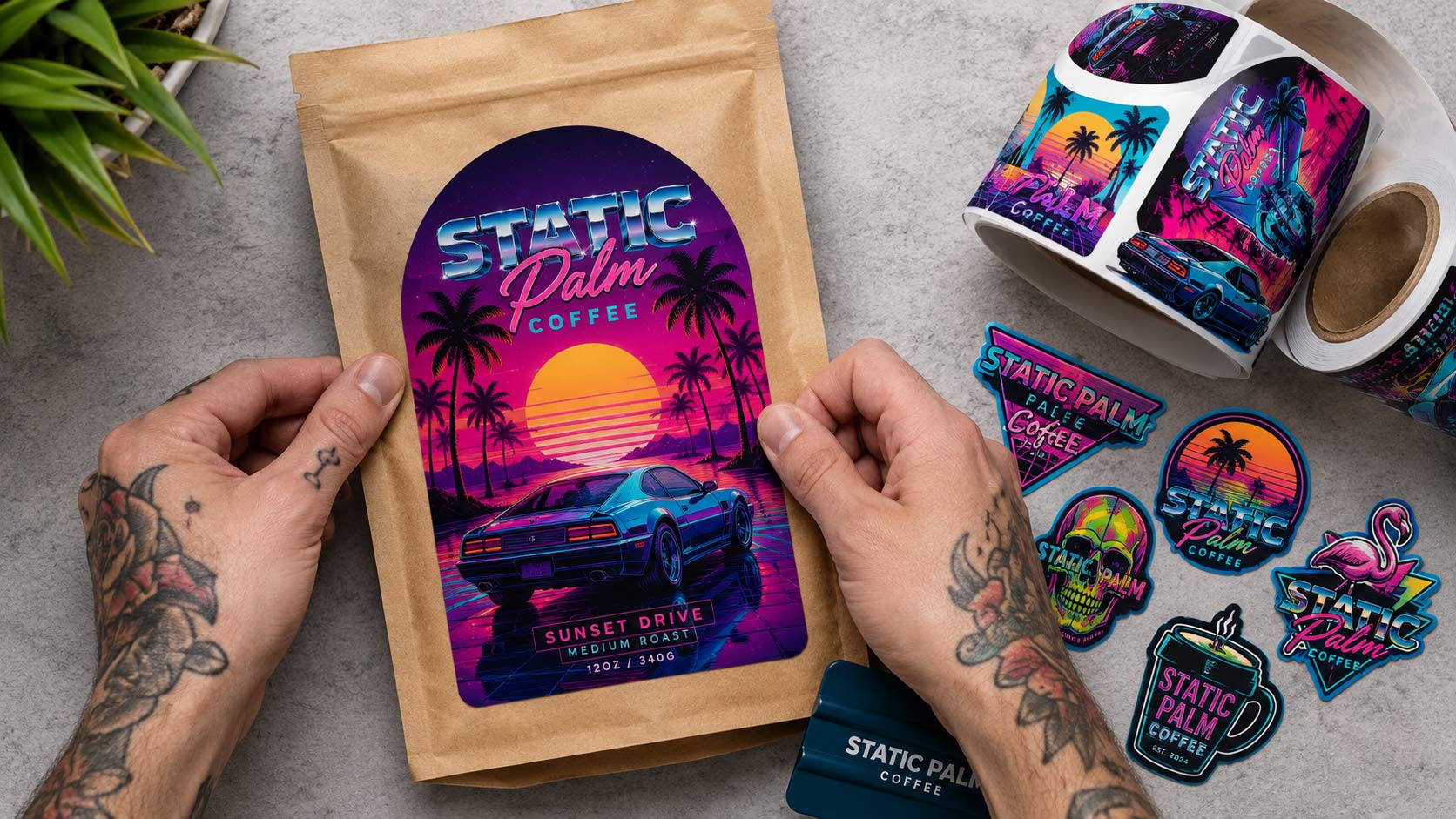
When only one small thing is wrong, a band is more than you need. A die cut label handles a single element cleanly: the old web address, a phone number, a lapsed certification mark, a roast name you retired. Labels also let you correct different problems across the same pile without ordering several versions of anything.
The craft matters here more than people expect. A label that is crooked, bubbled, or obviously covering something reads as a mistake, while a label that is square and sized to the element it replaces reads as design. Match the finish too. A glossy label on a matte bag announces itself from across the room. Our guide to
applying labels to stock coffee bags covers the technique, and it applies just as well to a custom bag you are correcting.
One rule worth holding: never stack a label over legally required information. Cover a logo, cover a URL, cover a tagline. Do not cover a net weight or an ingredient statement and call it fixed.
Three: Send Them Where the Shelf Does Not Matter
A retail shelf is the harshest place a bag ever stands, because it is the only place where it competes with forty other bags at once. Most of your coffee does not go there. Wholesale accounts, cafe back bars, office coffee programs, and restaurant supply all receive bags that get opened in a back room by someone who already decided to buy.
This is the highest value option on the list, because it uses the bag exactly as designed with no extra spend at all. Route the outdated run to your wholesale channel and put the new bags on the shelf where the branding is doing the selling. Tell the account what you are doing. Most of them will not care, and the ones who do will appreciate that you asked.
Four: Turn Them Into Samples and Event Bags
Farmers markets, festival tables, cupping samples, trade show giveaways, and the bags you hand a buyer at a pitch meeting all have something in common: they are gone within days and nobody is filing them on a shelf. A slightly outdated bag is a perfectly good sample bag.
There is a caveat. If the point of the event is to introduce the new brand, an old bag undercuts the whole exercise. Use them for volume giveaways and internal cupping, not for the launch table.
Five: Give Them a Job Inside the Business
Some of the pile can simply be used internally. Staff coffee, the beans you send home with employees, the bags you donate to a school fundraiser or a charity auction, the thank you lot you ship to a supplier. None of that needs current branding, and all of it would otherwise consume bags you paid full price for this year.
Donation deserves a note of its own. A local nonprofit running a raffle does not need your newest packaging, and a case of good coffee in slightly old bags is worth more to them than the branding is to you.
Six: Send the Rest Back Through R+R
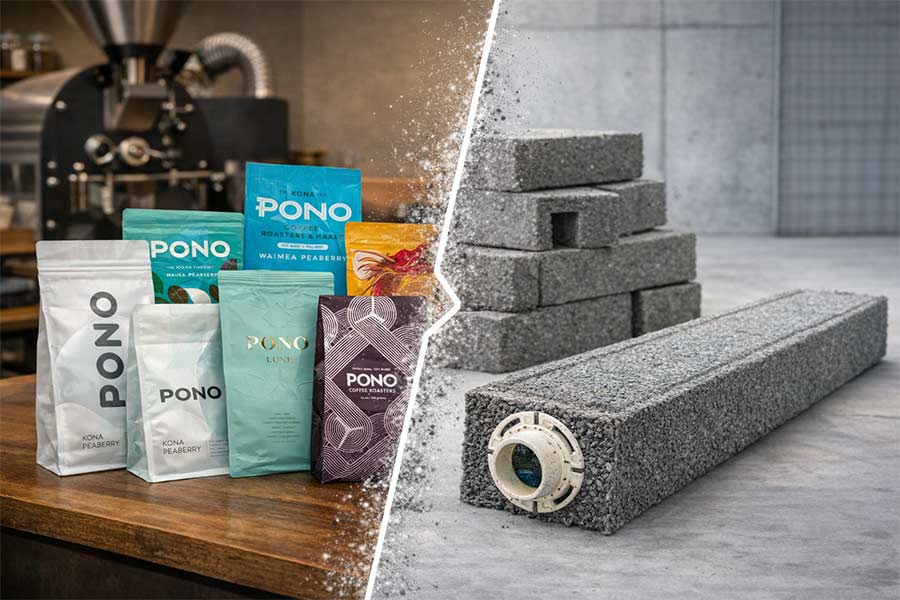
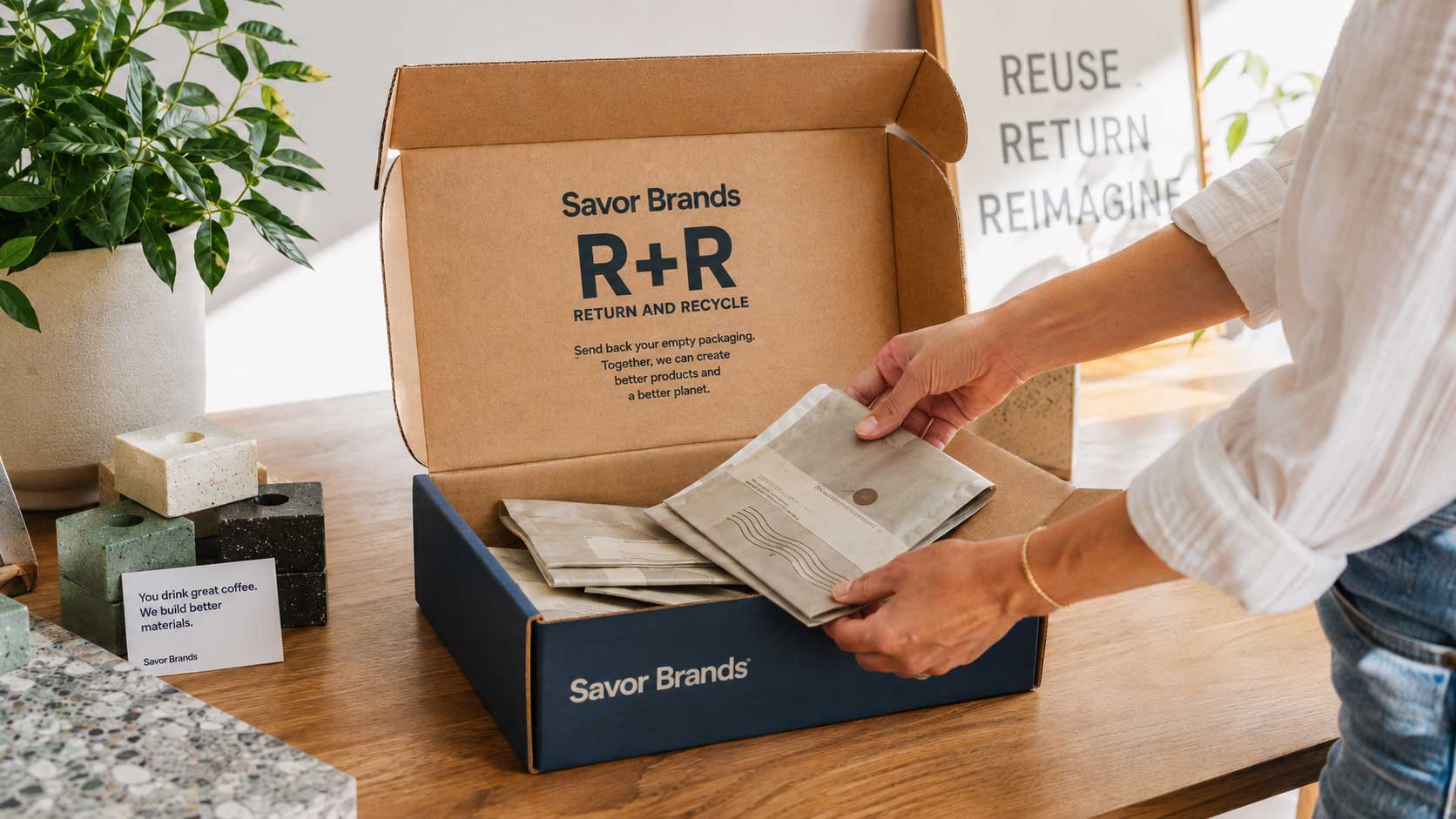
Whatever is left after the first five options is genuinely unusable, and that is what the R+R program is for. Bags go back and get upcycled into ByBlocks and HydroBlox rather than sitting in a landfill for decades, which is the whole reason the program exists.
HYDROBLOX: All boxes must be approved prior to shipment and must be packed in designated R+R boxes. Any boxes that are not in R+R boxes or do not have an approved label will not be accepted.
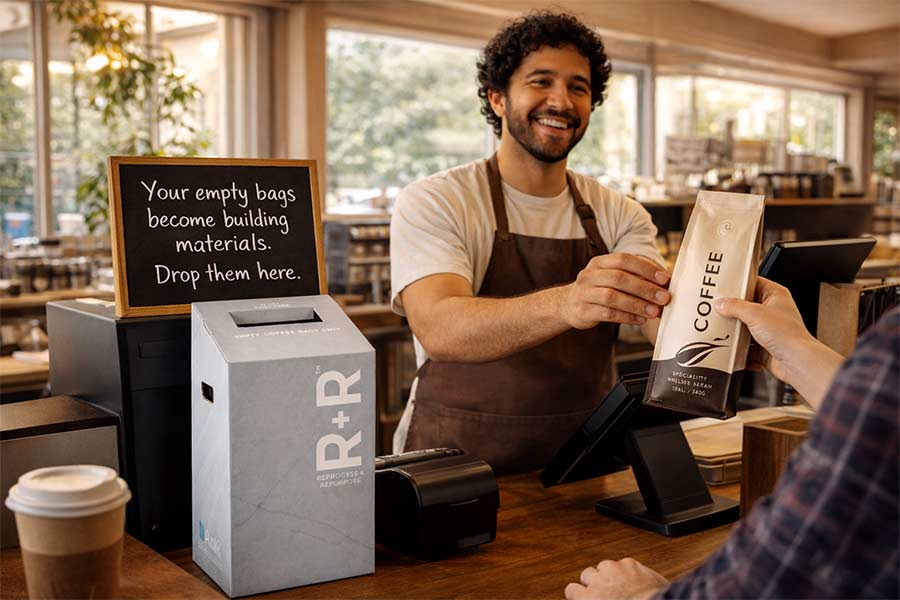
This is the last stop on purpose. Recycling a bag recovers the material but not the money, so it belongs after every option that puts coffee inside the bag. When you get there, the
R+R program explains how returns work, and the same program handles the empty bags your customers send back, which we covered in our post on
turning empty bags into a marketing asset.
Before You Rebrand, Count Your Coffee Bags
Everything above is cleanup. The better move is to not build the pile in the first place, and that comes down to one number most roasters do not have in front of them when they approve a new design: how many bags are actually left, and how fast are you going through them.
Custom bags run about four to six weeks in production after artwork approval, plus five to six weeks in transit, so nine to twelve weeks is the honest planning number. That window is your friend here. If you know you have roughly ten weeks of bags left, approving new artwork today means the new run lands about as the old one runs out, and the pile never forms.
- Count what is on the shelf before you approve anything, not after
- Divide by your weekly burn rate to get the real number of weeks you have
- Work backward from that date by nine to twelve weeks to set your approval deadline
- If the two numbers do not line up, plan the belly band into the rebrand budget from the start
- Time a rebrand to land right after a big run rather than in the middle of one
Roasters who run several roasts have a second lever. Because digital printing starts at 500 bags per design, you can retire one design at a time instead of changing everything at once, which turns a single large pile into several small ones you can actually absorb. Our post on
packaging minimum order quantities lays out how the tiers work.
Good Bags Deserve a Second Look
An outdated coffee bag is not waste, it is a bag with a surface problem and a perfectly good barrier underneath. Band the ones with a brand change, sticker the ones with a detail change, send the plain ones to wholesale and events, put some to work inside your own business, and return only what is truly finished.
Then set a calendar reminder to count your inventory before you approve the next design. The cheapest pile of outdated bags is the one you never created. If you want help sizing a band, a label, or the timing of your next run, our team at
Savor Brands works through this with roasters every week, and you can see what we keep ready to ship in
stock bags.