What Actually Changed on 12 August
The EU's Packaging and Packaging Waste Regulation, Regulation 2025/40, usually shortened to PPWR, entered into force on 11 February 2025 and began applying on 12 August 2026. It is a long regulation with milestones running into the 2030s, but the piece that switched on this August is the one with teeth right now. Food-contact packaging can no longer be placed on the EU market if it contains PFAS above a set of very low thresholds.
Those thresholds, from Article 5, are:
- 25 parts per billion for any single PFAS found by targeted analysis, with polymeric PFAS excluded from the count.
- 250 parts per billion for the sum of PFAS found by targeted analysis, again excluding polymeric PFAS.
- 50 parts per million for PFAS in total, this time counting polymeric PFAS.
Parts per billion is not a "use less of it" limit. That is a level you only clear if the chemistry was never intentionally in the material to begin with. In practice the EU has banned the deliberate use of PFAS in food-contact packaging and left a very small allowance for trace contamination.
What PFAS Was Doing in Packaging in the First Place
PFAS, per- and polyfluoroalkyl substances, are the chemicals you have heard called "forever chemicals." In food packaging their job has always been the same: repel grease and water. Coat a sheet of paper or a molded fiber tray with the right fluorochemical and a burger wrapper stops going translucent, a bakery bag stops soaking through, a microwave popcorn bag survives the microwave. For a long time nothing else was as cheap or as thin at doing that job.
They earned the "forever" nickname honestly. The carbon to fluorine bond does not break down in nature, and it does not break down in a compost windrow either. A fiber package sold as compostable could carry a coating that outlasts the fiber by a very long time, and that contradiction is a large part of why regulators came for packaging first.
Where Coffee Bags Actually Sit
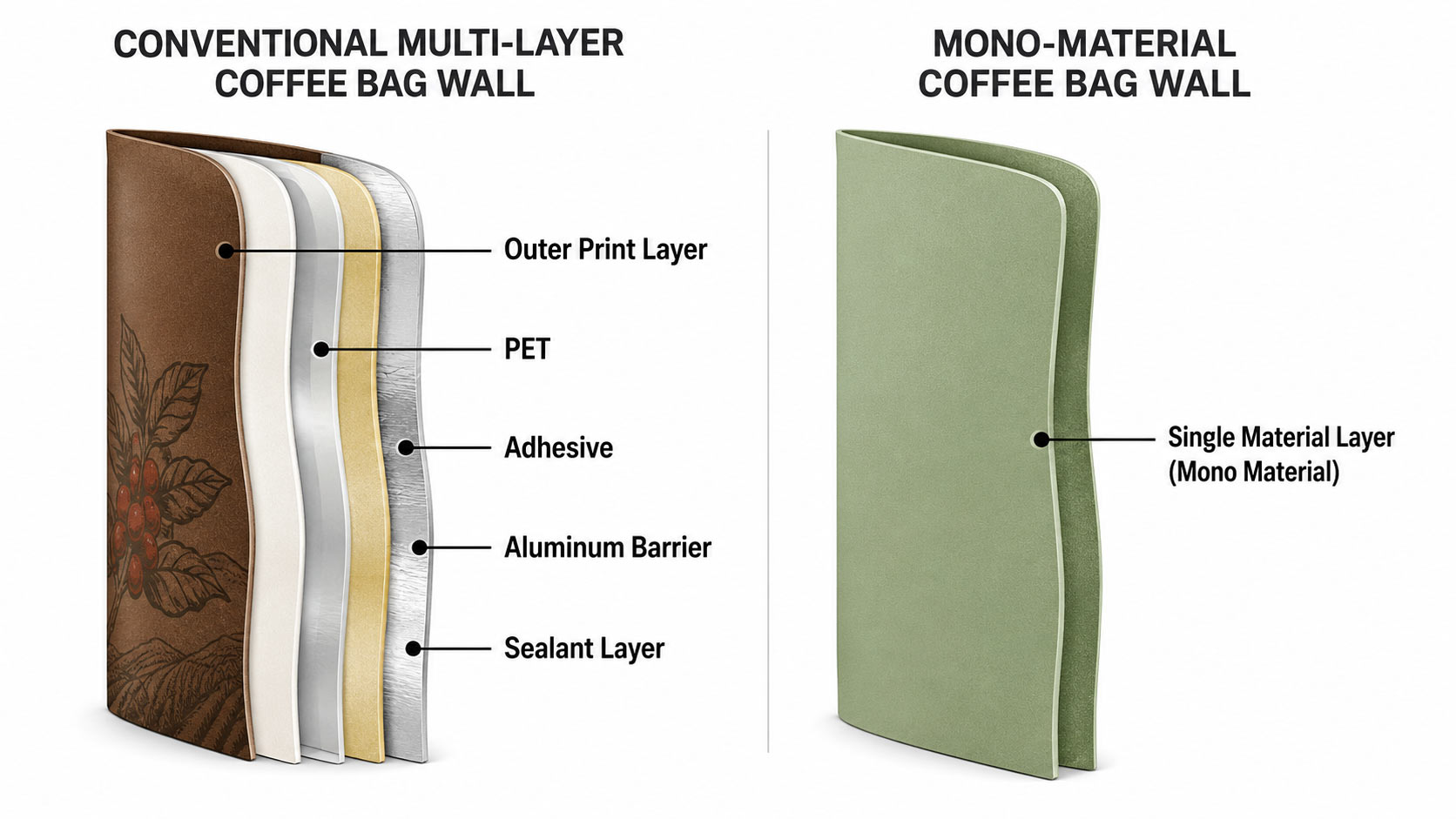
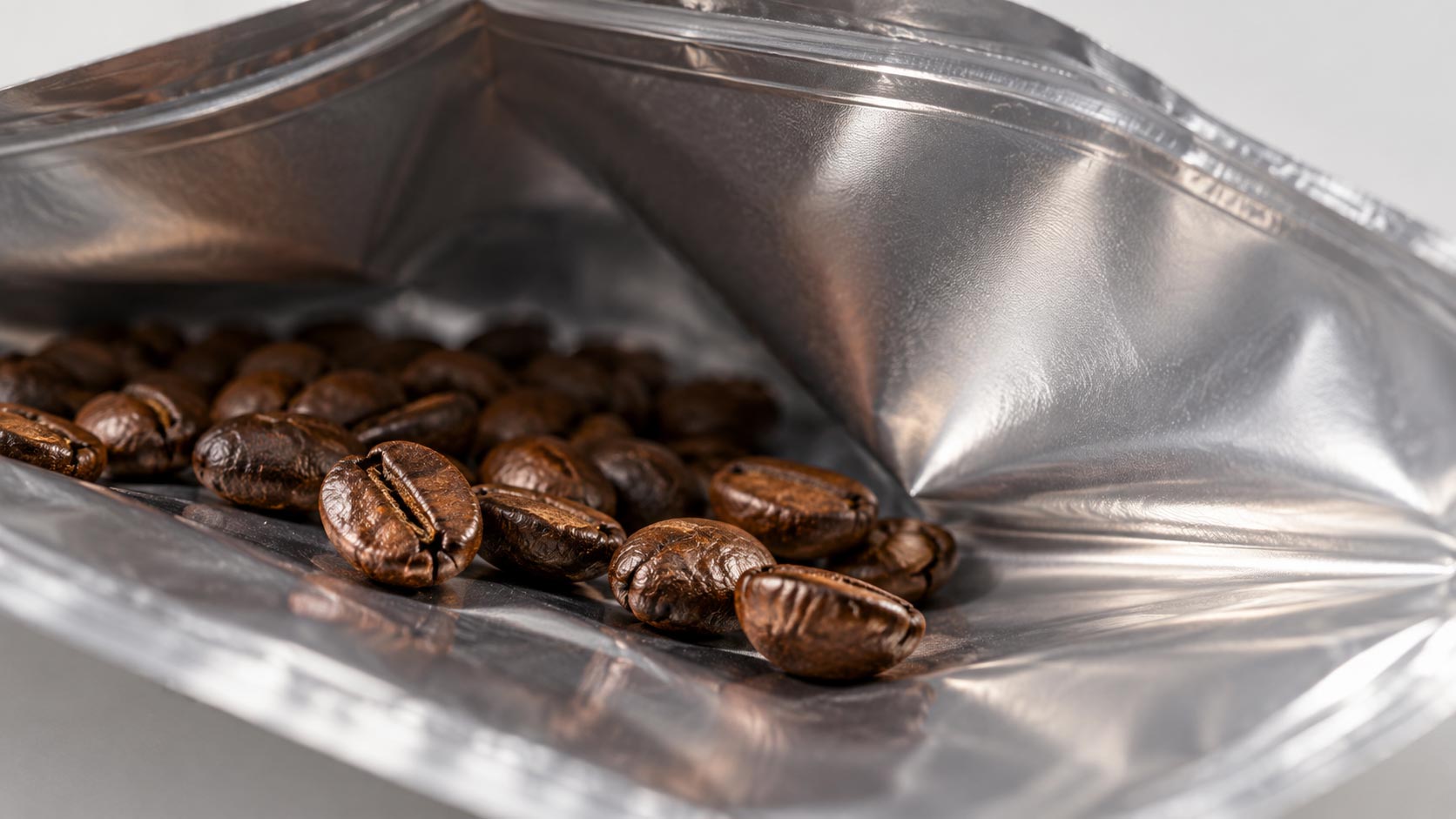
Here is the part most roasters want first, and the honest answer is better than you might be bracing for. Whole bean and ground coffee is not a greasy, wet food the way a fried sandwich is. Coffee needs an oxygen and moisture barrier, and the industry solved that decades ago with layers, not coatings. A PET, foil or metallized film laminated to a polyethylene sealant does the work structurally. A conventional laminated coffee bag has no reason to carry a fluorochemical grease treatment, because there is no grease problem to solve.
So the typical
custom coffee bag is unlikely to be the problem. Unlikely is not the same as verified, and unlikely is not a document you can hand a European buyer.
Where PFAS coffee packaging risk actually clusters is narrower than the headlines suggest, and it is worth knowing which shelf you are standing on:
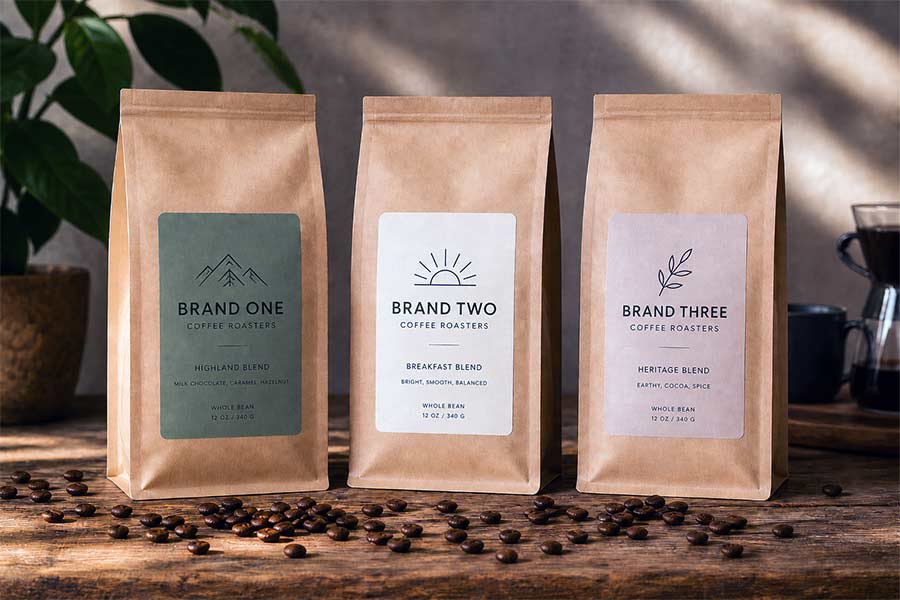
- Treated paper and kraft bags. Paper that has to resist oil or moisture on its own is the classic place a fluorochemical treatment turns up. If your bag is a paper outer with a laminated liner, the liner is doing the work and the paper is cosmetic. If the paper itself is treated, ask what it was treated with. Our guide to kraft coffee bags walks through how those structures are actually built.
- Compostable and plant-based films. The irony here is real. Some early compostable structures leaned on fluorochemistry to reach a barrier spec, which is exactly the combination the regulation was aimed at.
- Valves, labels, inks, adhesives and coatings. The restriction covers the packaging, not just the film. A degassing valve, a pressure-sensitive label, a matte varnish and the adhesive holding the laminate together are all part of what gets tested.
- Anything you cannot trace. If a component came through a broker and nobody upstream will put a number on paper, that gap is the finding.
If you have never looked closely at what your bag is made of, the layer-by-layer breakdown in
matching barrier materials to your product is the place to start, and
grease, oils and film barriers explained covers why coffee sits in a different category from oily foods in the first place.
If You Ship Coffee Into the EU, Here Is the Short List
This applies whether you export directly, sell through an EU distributor, or run a subscription with European customers. If the bag is placed on the EU market, the bag is in scope. Being a small roaster does not exempt you.
- Ask for a Certificate of Analysis, not a self-declaration. A supplier email saying "PFAS free" is a claim. A test result from an accredited laboratory is evidence. Regulators and serious buyers want the second one.
- Start with total fluorine screening. It is the inexpensive first pass. If total fluorine comes back under 50 parts per million, the sample is treated as compliant and you can stop there. Only a sample that fails the screen needs the more expensive targeted analysis.
- Test by packaging type, not by purchase order. Your 12 oz laminated bag and your kraft retail bag are two different materials and need two different results.
- Cover every layer, starting with the one that touches the coffee. The sealant film first, then the rest of the structure.
- Keep the paperwork attached to the SKU. The question comes back at reorder, at a buyer audit, and at the border.
What Lands Next, in 2028 and 2030
PFAS is the opening move, not the whole regulation. Two more waves matter to anyone planning artwork or a material change:
- August 2028, harmonized labelling. Packaging carries a standard sorting label so the shopper and the sorting facility read the same symbol across the EU. That is an artwork change, which means a file change and, on plated processes, a tooling change. It belongs in your next design cycle rather than in a scramble in 2028.
- 2030, the structural requirements. The Commission's stated goal is that all packaging on the EU market is recyclable in an economically viable way by 2030, with recycled content, packaging minimisation and reuse rules arriving in the same window. If recyclability is where you are heading anyway, mono-material coffee bags is the structure that gets you there.
One caution, and we would rather say it than have you plan around a bad number. The exact recycled content percentages and the minimisation thresholds have been widely misquoted in secondary coverage, and several are still moving through implementing acts. We are not going to print a figure here that a roaster could budget against and later find was wrong. If a specific percentage matters to your 2030 plan, take it from the regulation text or from your compliance counsel, not from a blog post.
What To Do This Quarter
The short version, in three lines. If your coffee ships to Europe in a laminated bag, you are probably already compliant and what you need is the certificate that proves it. If it ships in treated paper or a compostable structure, ask the question now rather than at the border. And if you are redesigning anyway, fold the 2028 sorting label into that redesign so you pay for the artwork once.
None of this is a reason to panic about your packaging. It is a reason to know what your packaging is made of, which is a good idea in any regulatory climate. If you are not sure what is in your current structure, or you want a spec built to clear these limits on paper,
talk to our team and we will go through it layer by layer with you.
Sources: Regulation (EU) 2025/40 on packaging and packaging waste, and the European Commission's packaging waste pages.