The Line Was Running Fine Until It Was Not
You are part way through a run. Bags have been coming off the machine clean for an hour. Then a few in a row come out wrong. A seal that will not close properly, a bag with a visible line running across the panel, maybe a jam. The operator pulls them, the line settles down again, and everything is normal for the rest of the roll.
Somebody writes it up as a defect. Somebody else calls the supplier.
What almost certainly happened is that a splice went through the machine. It was supposed to be there, it is a normal feature of roll stock, and nobody told you to expect it.
What a Splice Actually Is
Film is produced and converted as a continuous web, running through extrusion, printing, lamination, slitting and rewinding. A splice is a deliberate joint where two lengths of that web are bonded together, usually with a tape or adhesive across the full width.
It is a repair, and it is a controlled one. Somebody chose to put it there, recorded it, and carried on. What it is not is damage, and it is not the roll coming apart. The joint is typically stronger and stiffer than the film around it, which is exactly why your machine notices it.
The important distinction is that a splice is an artifact of how continuous film gets made, not a sign that something went wrong with your order.
Why a Roll Has Joints at All
There are only a few reasons a splice exists, and most of them are reasons to be reassured rather than annoyed.
- A web break during production. Film runs at speed through several processes. When it breaks, the ends are joined and the run continues.
- Defect removal. This is the big one. Inspection finds a flaw, that section is cut out, and the good film either side is spliced together. The splice is the evidence that a defect was caught and removed before it reached you.
- Reaching the ordered length. Making one long roll sometimes means joining shorter lengths rather than scrapping perfectly good film.
- Process changeovers. Material moves between machines, and the start and end of each pass has to be joined to the next.
Read that list again with the second item in mind. A roll with a splice in it is often a roll that went through quality control and had its problems taken out. A roll with no splices is not automatically better film.
What It Does When It Reaches Your Machine
A form fill seal line does not care about the reason. It cares that the material changed for a few inches.
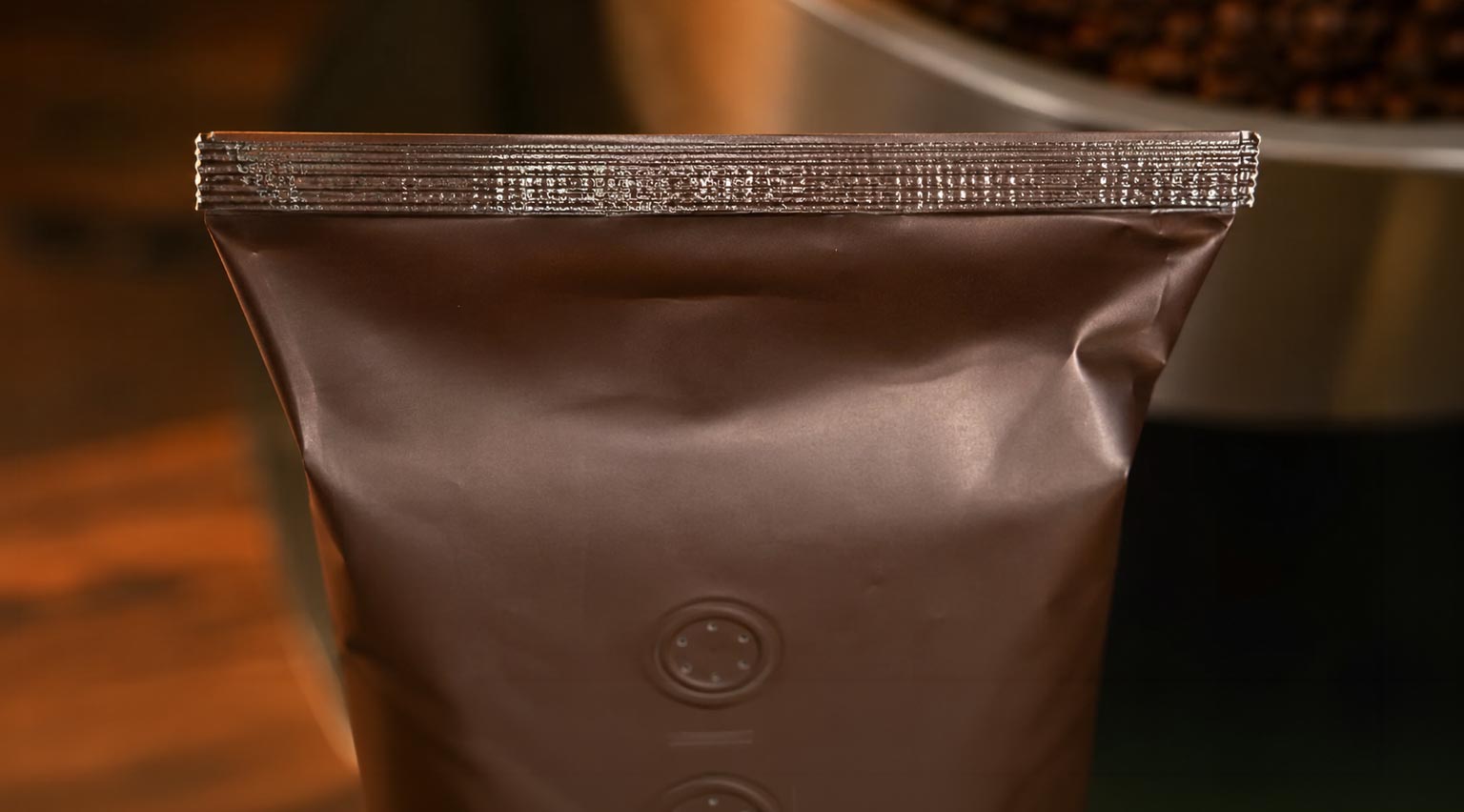
The joint is thicker than the film, often by a noticeable amount, and it is stiffer. Sealing jaws set for your film will not make a proper seal through tape and a double thickness. Print registration across the joint is meaningless, because the two lengths were not printed as one continuous piece. Tension control can hiccup as the stiffer section runs through. So the bags formed across the splice are not sellable, and a handful either side may not be either.
That is the whole event. A few unusable bags, a brief disturbance, and then the line carries on exactly as before.

Why It Reads as a Defect
The reason this causes arguments is that every signal points the wrong way.
It arrives without warning in the middle of an otherwise clean run, which feels like something breaking rather than something planned. The bags it produces look genuinely bad, because they are. The rest of the roll is perfect, so it is impossible to call the whole roll faulty, which makes it look like an intermittent fault instead of a known event. And unless somebody has explained splices, there is nothing in anyone's mental model of a roll of film that accounts for a joint being in there on purpose.
So it gets logged as a quality problem, and the actual quality problem it represents was solved before the film ever shipped.
What Is Reasonable, and What Is Not
Splices being normal does not mean anything goes. There is a clear line between a well made roll and a badly made one.
Reasonable looks like this. Splices are flagged, with a visible marker at the edge of the roll so the operator can see one coming and is not surprised. The number of them in a roll is limited and consistent. They are positioned away from the very start and end of the roll, where they are hardest to deal with. And the quantity of film you receive accounts for the fact that some of it will be lost at each joint.
Unreasonable is the opposite. Unflagged splices that nobody can anticipate. A high or unpredictable count. Joints clustered near the ends. And a delivered quantity that quietly leaves you short once the splice losses are counted.
Those are fair questions to put to whoever supplies your film, and a straight answer to them tells you a lot about how a plant runs.
What to Build Into Your Planning
Once you expect splices, almost all of the pain goes away. The planning is simple.
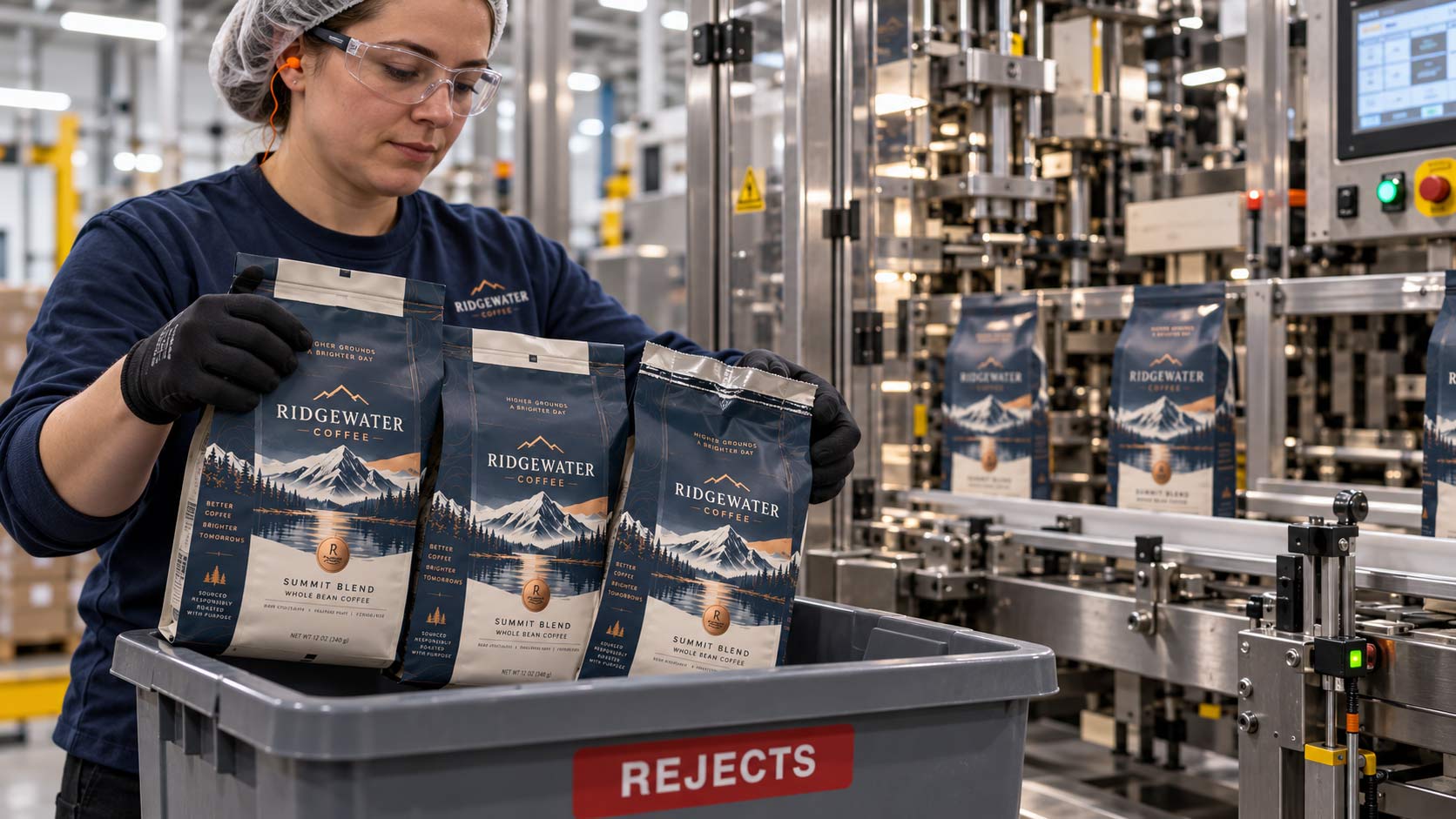
- Brief the operator. Somebody who knows what a flag means will slow down, pull the affected bags, and carry on. Somebody who does not will stop the line and start an investigation.
- Count on some loss. Build a little headroom into the film quantity so a few joints do not leave you short on the last pallet of a run.
- Log where they happen. If splice losses are consistent, they are a planning number. If they suddenly jump, that is worth a conversation.
- Keep the bad bags. A bag formed across a joint is proof of what happened, and it is much easier to discuss with a sample in hand.
- Ask before the first run, not after. Flagging and splice limits are easy to agree up front and awkward to raise mid-order.
If you are new to roll stock in general, our guide to
roll stock coffee packaging covers what it is and when it makes sense, and
the co-packer route walks through running it without owning the machine.
Why It Is Worth Knowing
This is a small piece of production literacy that changes how a bad ten minutes gets interpreted.
Without it, a splice is an unexplained fault in the middle of a good run, and the natural response is to stop, investigate, and suspect the material. With it, a splice is a flagged, expected event that costs you a few bags and tells you the film was inspected properly on its way to you. Same ten minutes, completely different meaning, and one of them ends with a phone call that did not need to happen.
It is also worth separating from the failures that are real. A seal that fails without any joint present is a different problem entirely, and
why coffee bag seals fail covers what to look at there.
If you are planning a roll stock order and want to know how splices will be handled on it,
ask us before the run rather than after the first one.