The Pallet Came Off a Cold Truck and the Bags Started Splitting
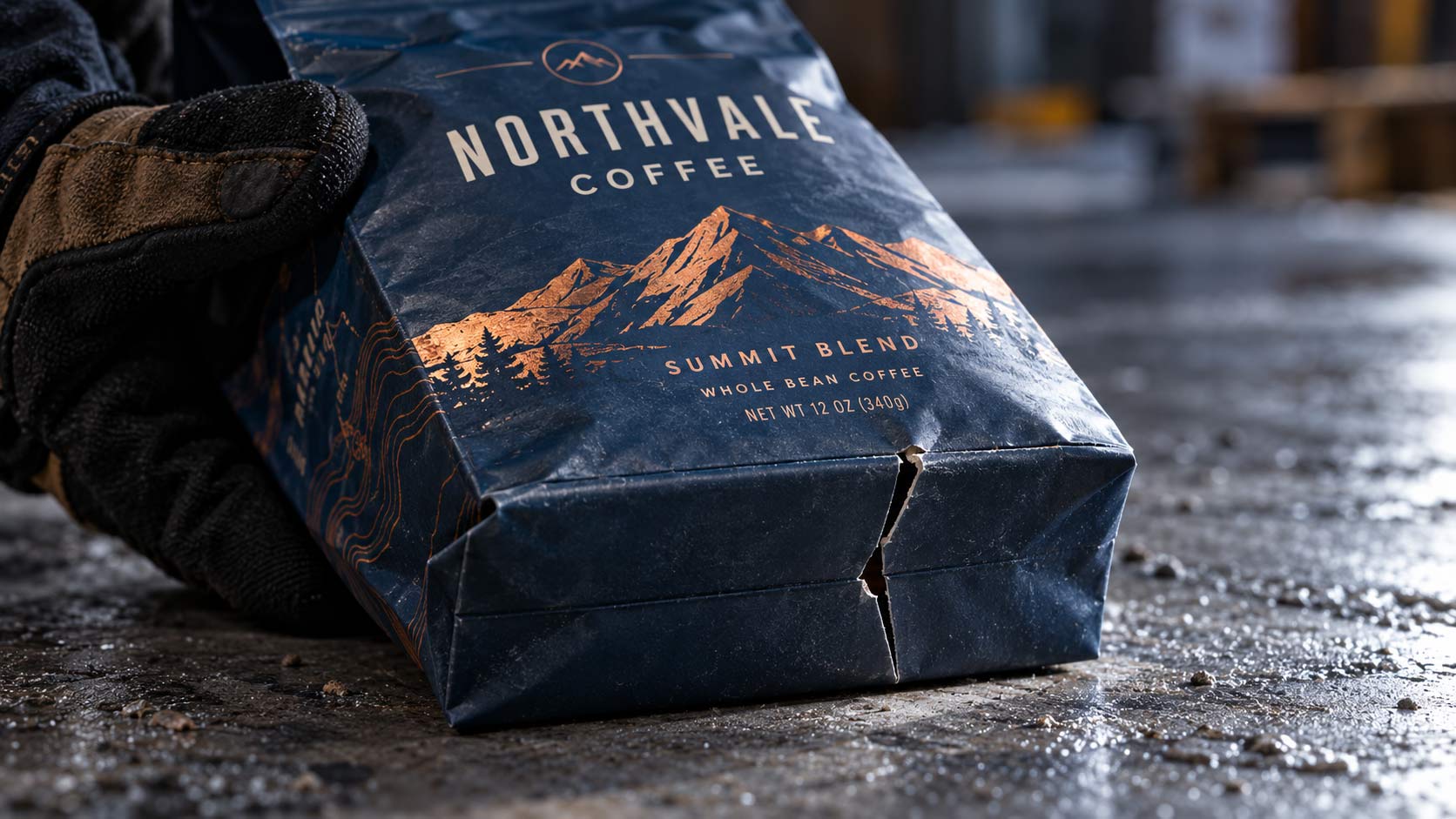
A delivery lands on a January morning. The pallet has been in an unheated trailer overnight. Somebody cuts the wrap, carries cartons inside, and within the hour there are bags with split gussets, cracked corners, and a zipper track that tore clean through when it was opened normally.
The obvious conclusion is that the carrier threw the pallet around, or that this batch of bags is thinner than the last one. Neither is usually true.
The bags are the same bags. They are just cold, and cold film is not the same material as warm film.
Cold Does Not Weaken Film. It Changes How Film Behaves.
A plastic film at room temperature is ductile. Push it and it stretches, absorbs the energy, and springs back or deforms without breaking. That ability to stretch rather than snap is most of what makes a bag survive handling at all.
As temperature drops, the long polymer chains in the film lose mobility. They cannot slide past one another as easily, so the material gets stiffer and its impact strength falls. Past a certain point the film stops responding to a sudden force by stretching and starts responding by fracturing. Same bag, same thickness, same spec sheet, completely different behavior in your hands.
There is a second thing happening in a laminate. A laminated bag is several different materials bonded together, and they do not all shrink at the same rate as they cool. That mismatch puts stress into the structure on its own, concentrated exactly where the layers are already working hardest, which is the folds and the seals.
What Fails First
Cold does not break a bag in the middle of a flat panel. It finds the places that were already carrying stress.
- Gusset folds. The film is permanently creased there, so the material is thinner and already strained. It is the single most common cold split.
- Bottom corners. Where folds meet seals, the structure is thickest and least forgiving.
- The zipper track. A rigid extruded profile in a stiff film, opened with normal force, concentrates all of that force at one line.
- Seal edges. A seal that is perfectly sound warm can crack beside the weld when the film next to it has nowhere to flex. More on seals in why coffee bag seals fail.
- Anything dropped. A carton knocked off a bench at waist height is a nothing event in July and a split seam in January.
Notice that all five are handling failures. That is why this gets blamed on people rather than on physics.
Why It Looks Exactly Like Bad Handling
This is the part that makes the problem hard to see.
Nobody handled the pallet differently. The forklift driver, the courier, and the person carrying cartons all did what they always do. What changed is the amount of force the bag could absorb before failing, and that dropped quietly somewhere on the road.
So the evidence points at everyone except the temperature. The damage is physical and localized, exactly the pattern you would expect from rough treatment. The bags from the same production run that stayed in your warehouse are fine, which seems to prove the shipment was mishandled rather than that it was cold. And by the time anyone looks closely, the pallet has warmed up and the film is ductile again, so you cannot reproduce it.
Conditioning Is Just Time at Room Temperature
The fix is almost embarrassingly simple, and it costs nothing but patience.
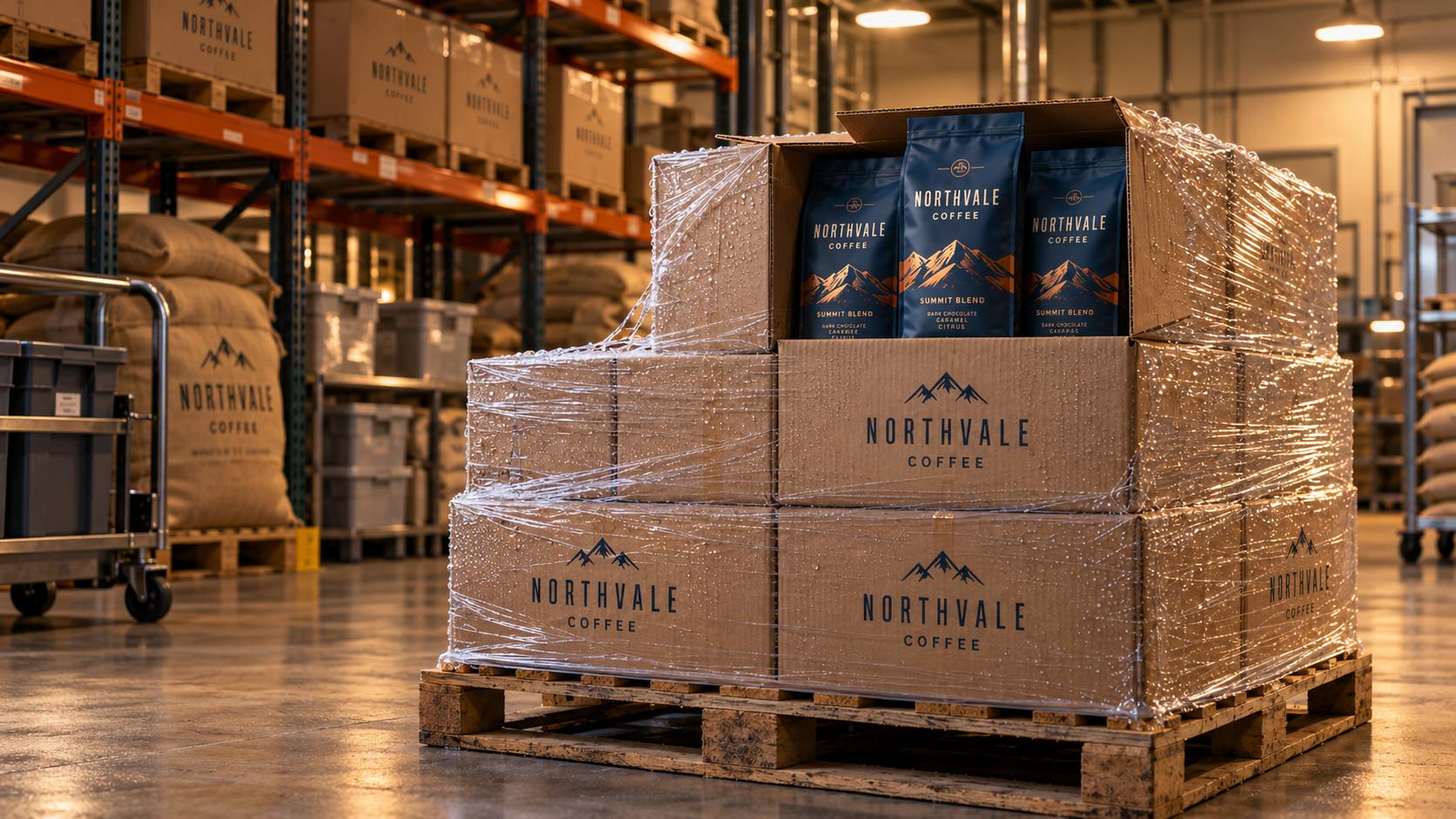
Let the pallet come up to room temperature before you open it, move it around much, or fill from it. Film that has warmed through behaves like film again. There is no equipment to buy and no process to redesign. There is only the discipline of not touching a cold pallet the moment it arrives.
One detail matters while it warms. Leave the wrap and the cartons closed. A cold surface in a warm room pulls condensation out of the air, and you want that moisture forming on the outside of the wrap rather than on the bags themselves. Water on the film is its own problem, because it ends up in the seal area, and a wet seal is a weak seal. Opening a cold carton immediately gives you the worst of both: brittle film and condensation at the same time.
If the bags also travelled fast and arrived charged, the same rest period fixes that too, which we covered yesterday in
your bags are not stuck together, they are charged.
Why Our Timeframe Already Allows for This
Worth saying briefly, because it connects to how we quote.
We build enough time into our schedule for bags to settle and condition rather than moving straight from one stage to the next. That is the same reason our lead time can look longer than a quote built purely on machine hours, and it is a deliberate choice rather than an oversight. A bag that has been allowed to reach a stable, normal condition before it ships is a bag that behaves predictably when it reaches you.
It does not make your receiving dock irrelevant. Whatever we do, a pallet that sits in a freezing trailer overnight arrives cold. But it does mean the bags are not already starting from a disadvantage.
What to Do in the Cold Months
None of this requires a winter process. It requires a winter habit.
- Let it warm before you open it. Give a cold pallet time indoors, wrapped, before anyone cuts into it.
- Do not fill the day it lands. Especially if the truck came a long way in hard weather.
- Handle cold stock gently if you must handle it. No drops, no dragging cartons off a tailgate.
- Watch the first bags of a winter run. If gussets are splitting, stop and check the temperature of the stock before you blame the line.
- Plan storage, not just delivery. An unheated back room keeps bags cold for weeks, not hours.
If you are also planning seasonal packaging, our guide to
planning your winter boxes and bags covers the format side, and
hot trucks, sweaty bags is the same problem from the opposite direction.
Why It Is Worth Knowing
Temperature is the variable nobody writes on the incident report. A split gusset gets recorded as damage in transit. A torn zipper gets recorded as a defect. A bad morning of cracked bags gets recorded as a bad batch, and sometimes as a complaint to a supplier who did nothing wrong.
Knowing what cold does to film changes the first question you ask. Instead of who dropped this, you ask how cold was it and how long has it been inside. That question is free, it takes one second, and in the winter months it is right more often than any other explanation.
If you are seeing cracking you cannot account for,
tell us when the pallet landed and what the weather was doing, and we will help you work out whether temperature is the culprit.