Everything Else Is Already Right
By the time a bag reaches the sealer, every expensive decision has already been made and paid for. The barrier film is spec'd. The artwork is printed. The valve is fitted. The coffee inside is the thing you spent a year sourcing and roasting. All of that is now riding on a strip of melted plastic about a quarter of an inch wide across the top of the bag.
That strip is the only part of the package made in your building rather than ours, and it is the only part that gets made fresh on every single unit. A barrier film either has the right structure or it does not, and you find out once. A seal has to be made correctly a thousand times in a row.
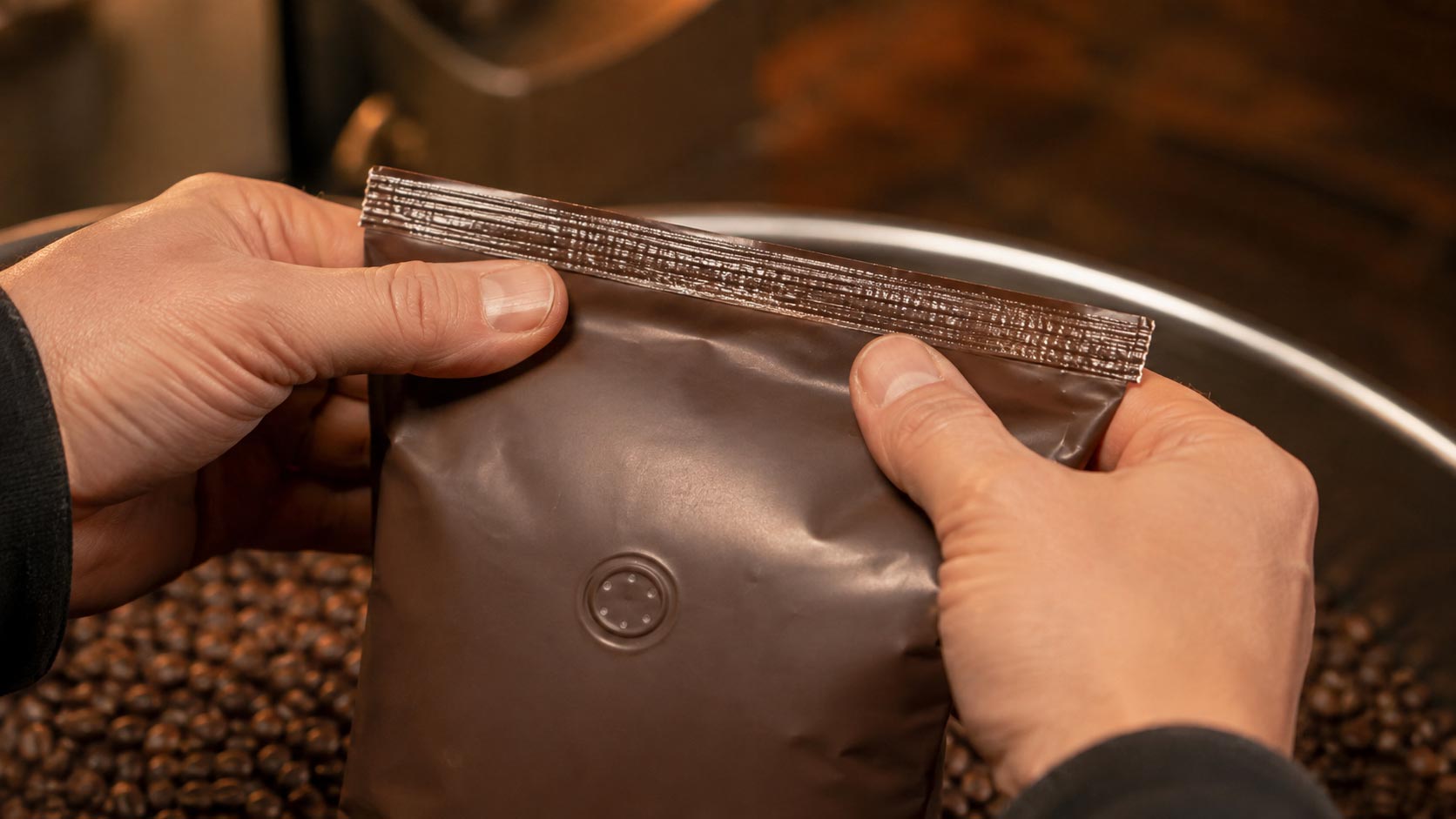
The frustrating part is that a bad seal usually looks fine. It is flat, it is straight, it holds when you pick the bag up. It fails three weeks later in somebody's kitchen, and by then it reads as a quality problem with your coffee rather than a process problem with your sealer.
What a Seal Actually Is
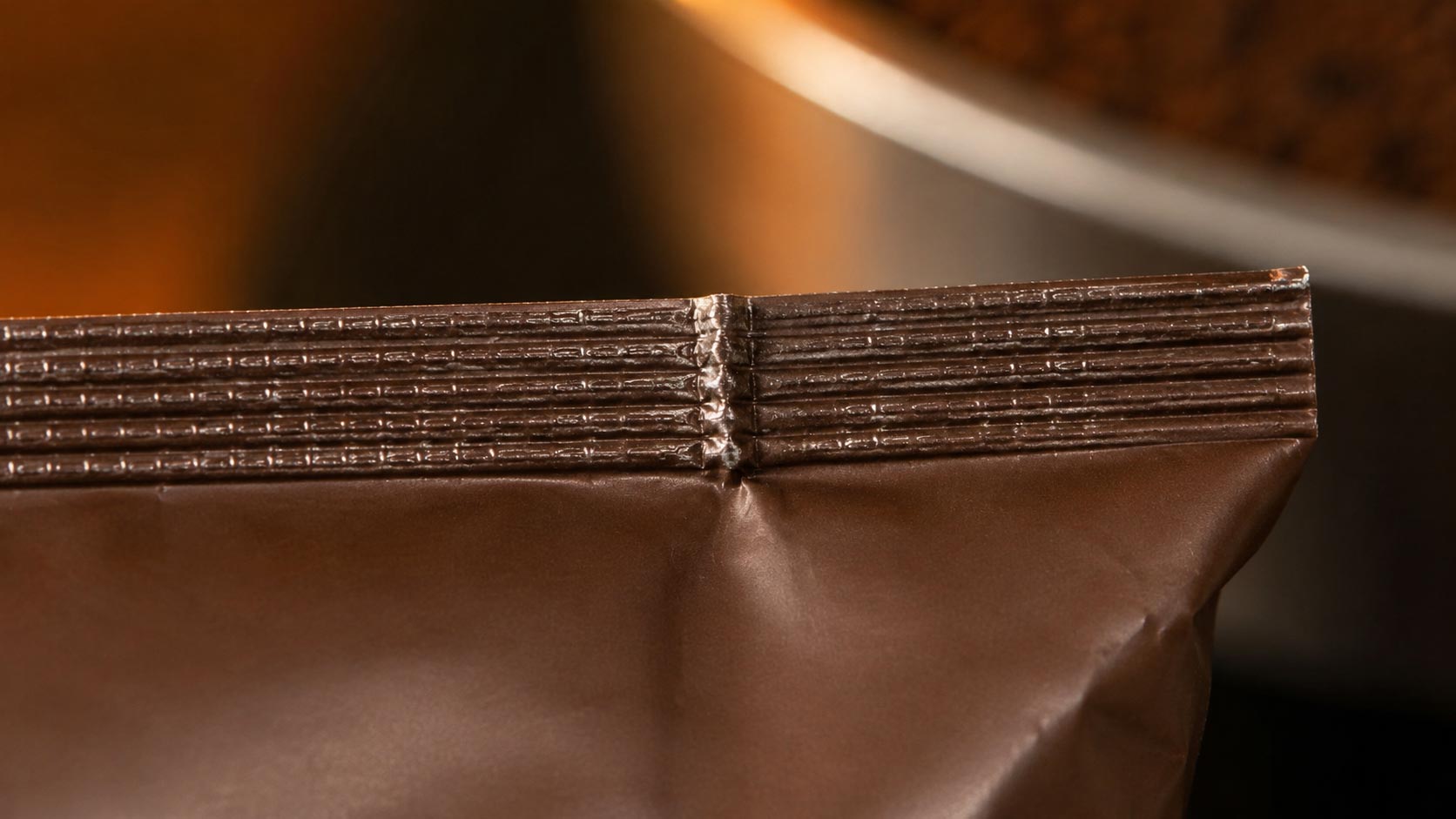
The inside surface of a coffee bag is a sealant layer, chosen so it melts at a lower temperature than the layers above it. When the jaws of a sealer close, they push heat through the film until that inner layer softens on both faces and the two sides fuse into one. Let it cool under pressure and you have a weld.
Three things have to be right at once for that to happen, and they trade against each other.
- Heat, enough to soften the sealant layer through the full thickness of the film
- Time, the dwell the jaws stay closed, because heat needs a moment to travel through
- Pressure, enough to hold the faces together while the melt happens and while it cools
Run hotter and you can go faster. Run cooler and you need to dwell longer. Get any one of them badly wrong and the other two cannot save it. Too little of everything and the layers touch but never truly fuse, which is the seal that looks perfect and peels apart in a week. Too much and you burn through the sealant into the barrier layers above it, thinning the film exactly where it needs to be strongest.
We are deliberately not printing numbers here. The right settings depend on your film structure, your bag size and your specific machine, and a number that suits an aluminum laminate will be wrong for a compostable one. Ask us for the settings that match the film you actually bought.
The One That Causes Most Failures: Contamination
If a seal fails and the machine settings are correct, the cause is almost always something that was in the seal area when the jaws closed.
Coffee is a difficult product for this. Whole bean carries fines and dust. Ground coffee is dust. Both carry oils, and darker roasts carry more. During filling, some of that lands on the inside faces at the top of the bag. When the jaws close on a few particles of ground coffee, the sealant cannot fuse where the particle sits, and you get a pinhole. When it closes on an oil film, the sealant fuses weakly across a wide area, which is worse because it looks completely normal.
- Fines and dust settling on the seal faces during filling
- Oils from dark roasts coating the inside surface
- Static holding particles in place exactly where you do not want them
- Dust picked up from an open carton before the bag was ever filled
That last one is why storage matters. A bag stored open on a shelf collects dust on the seal area before it ever reaches the filling line, which we covered in our post on
storing bags before you fill them.
The Channel Leak
The second common failure has nothing to do with dirt. If the film is not lying flat when the jaws close, a wrinkle gets sealed into the weld. The seal closes on either side of that wrinkle but not through it, leaving a tiny open tunnel running from the inside of the bag to the outside.
This is the one that will fool you every time. The bag holds coffee. It holds its shape. It passes a squeeze test. But air moves through that channel slowly and steadily, and the coffee inside goes stale on a schedule that has nothing to do with the barrier film you paid for. A roaster chasing a freshness complaint will usually blame the material long before they think to look for a wrinkle.
Wrinkles come from the bag being pulled crooked into the jaws, from a gusset that was not squared before sealing, and from film that curled in storage. On a quad seal or box bottom bag, the corners are where the film is thickest and least willing to lie flat, which is why channel leaks show up at the ends of a seal more often than in the middle.
Checking It Without Any Equipment
You do not need a lab to catch most of this. You need to actually look, and to do it on the first bag of every run rather than the last.
Seal one bag and pull it apart with your hands. A good seal resists, then tears the film rather than opening along the weld. If it peels cleanly apart along the seal line and both faces come away smooth, the layers never really fused. That bag was going to fail.
- Hold the seal up to a light and look along its length for gaps or a wrinkle running through
- Pull a test seal apart by hand: it should tear the film, not peel at the weld
- Press a filled bag firmly and listen and smell at the seal for escaping air
- Run a finger along the seal for grit you can feel through the film
- Check the corners specifically, because that is where channels form
Do that on the first bag, then again partway through the run when the machine is fully up to temperature and behaving differently than it did cold. Our
fill testing guide covers the other half of this, whether the bag holds the weight you think it does.
What Is Not a Seal Problem
Some things get blamed on the seal that are really something else, and fixing the wrong thing wastes a lot of time.
A bag that swells and bursts is usually a headspace problem, not a seal problem. Fresh coffee releases CO2, and if you filled the bag too full there is nowhere for that gas to go except against the weld. The seal is simply the weakest point of a package that was overloaded. Our post on
headspace covers how much air gap the coffee actually needs and why a valve matters.
A bag that goes stale despite a good seal and correct headspace is a barrier question. That is the film, not the weld, and our guide to
barrier materials lays out what each structure buys you in months.
The Cheapest Quality Check You Will Ever Run
Pulling one seal apart with your hands costs a bag and about a minute. Finding out from a customer costs the coffee, the shipping, the replacement and some part of the reason they bought from you instead of somebody else.
The seal is the one part of the package you control completely, and it is the one part that has to be made right on every unit rather than specified right once. Treat it that way. If you want the sealing settings that match the exact film you are running, our team at
Savor Brands can pull them for your structure, and you can see the range we hold ready in
stock bags.