The One Thing You Cannot Print
Your bag is printed weeks or months before it holds any coffee. The artwork, the colors, the net weight, the barcode, all of it goes down on film in one run and then sits in a carton waiting.
The roast date does not work that way. It happens on a Tuesday morning, and it is different on Wednesday.
So the single piece of information specialty customers look for hardest is the one piece that cannot be in your printed artwork. It has to be added later, at the moment the bag is filled, by a completely different process. Most roasters do not think about this until the bags are already stacked in the warehouse and someone asks how the date is going on.
Why It Catches People Out
Here is the honest reason this gap exists, and we are part of it.
Our own posts on
co-packing,
co-packing versus private label and
roll stock film all list date coding as something the co-packer handles. It shows up in the service list, between nitrogen flushing and case packing, and then nobody explains what it actually is or what it asks of you.
It is not a step you can skip, and it is not one your printer does. Date coding belongs to whoever fills the bag, which is either your own operation or your co-packer, and the choice you make there has to be reflected in artwork you approve months earlier.
The Four Ways the Date Gets On
In practice there are four routes, and they trade off speed, tidiness and cost:
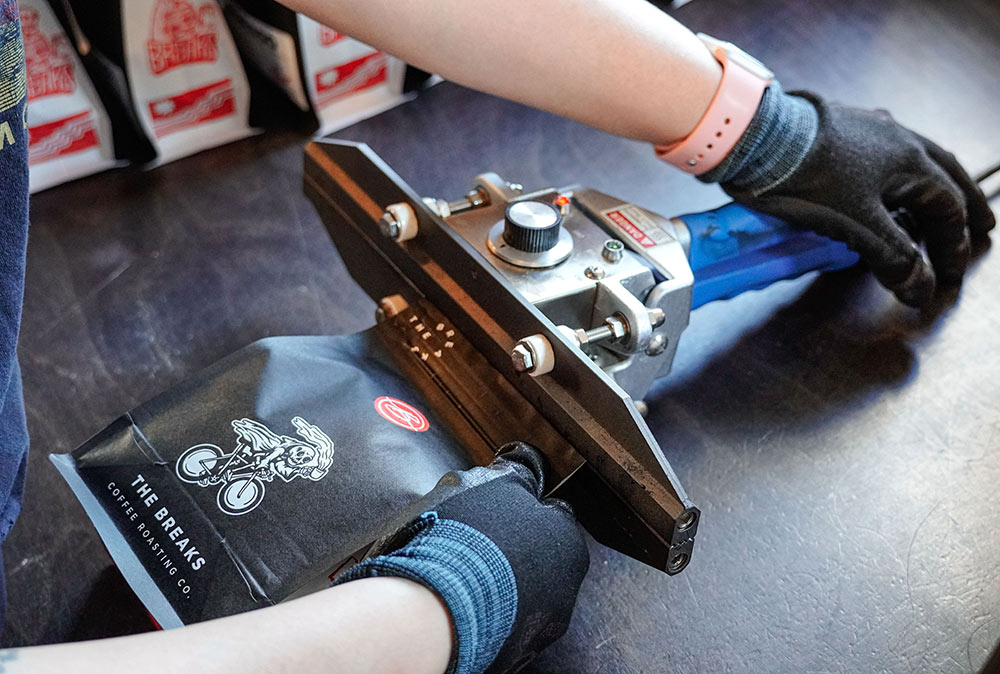
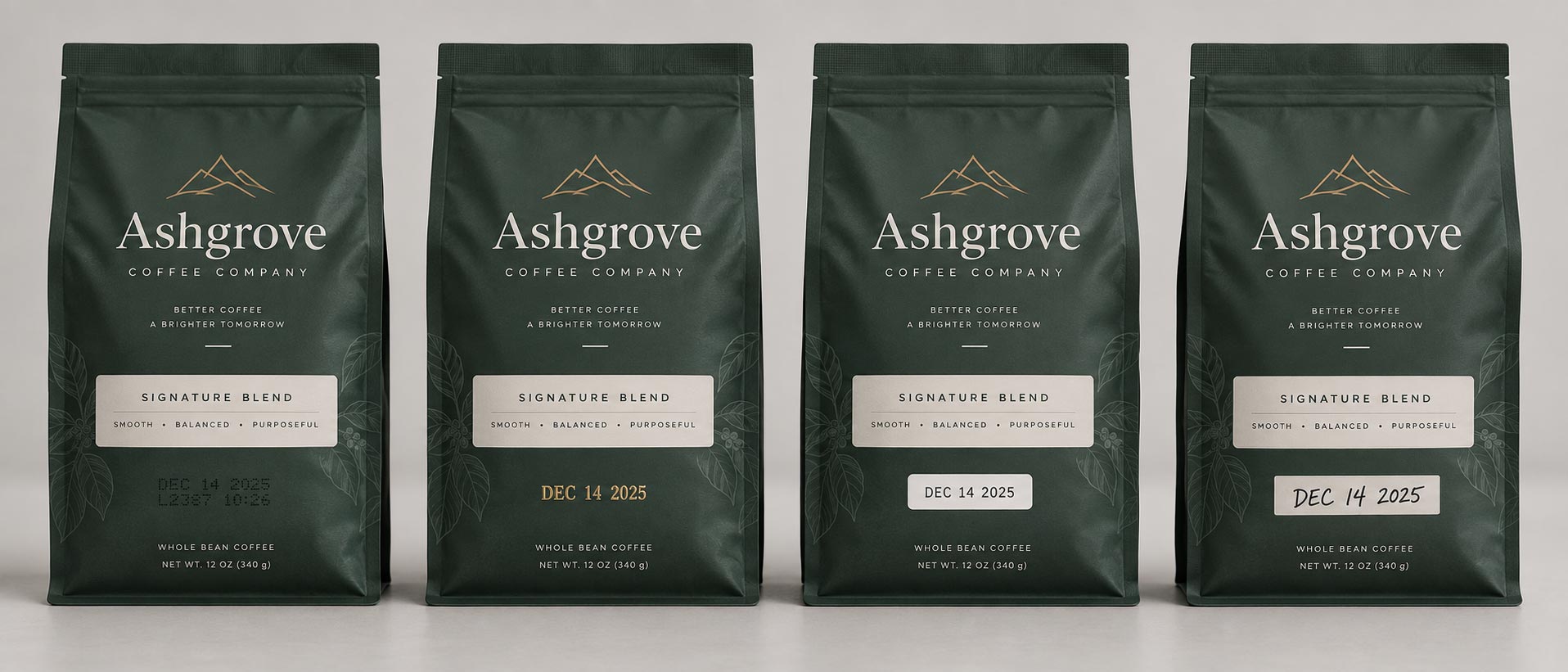
- An inline coder. A small printer on the fill line that sprays or prints the date onto each bag as it passes. Fastest at volume, no extra handling, and the result is small and neat. It is equipment, so it suits an operation already running a line or a co-packer who has one.
- A hot stamp. A heated die presses the date into a foil ribbon against the bag. Crisp and durable, and it looks deliberate rather than added. Slower, and it needs the bag presented flat to the stamp.
- A printed label. A small date label applied after filling. No line equipment needed, easy to change, and it doubles as a place for lot codes or a small batch note. The trade is one more touch per bag, and a label that has to look like it belongs.
- A blank panel, written by hand. Genuinely common for small roasters and not a compromise if it suits the brand. A stamp pad or a paint pen on a reserved area reads as craft rather than as a gap, as long as the area was designed for it.
Your Artwork Has to Leave Room
Whichever route you pick, it needs somewhere to land, and that is a decision made at design time.
We wrote recently about
what filling a bag does to your artwork, and the same logic applies here with one addition. A date coding area needs to be:
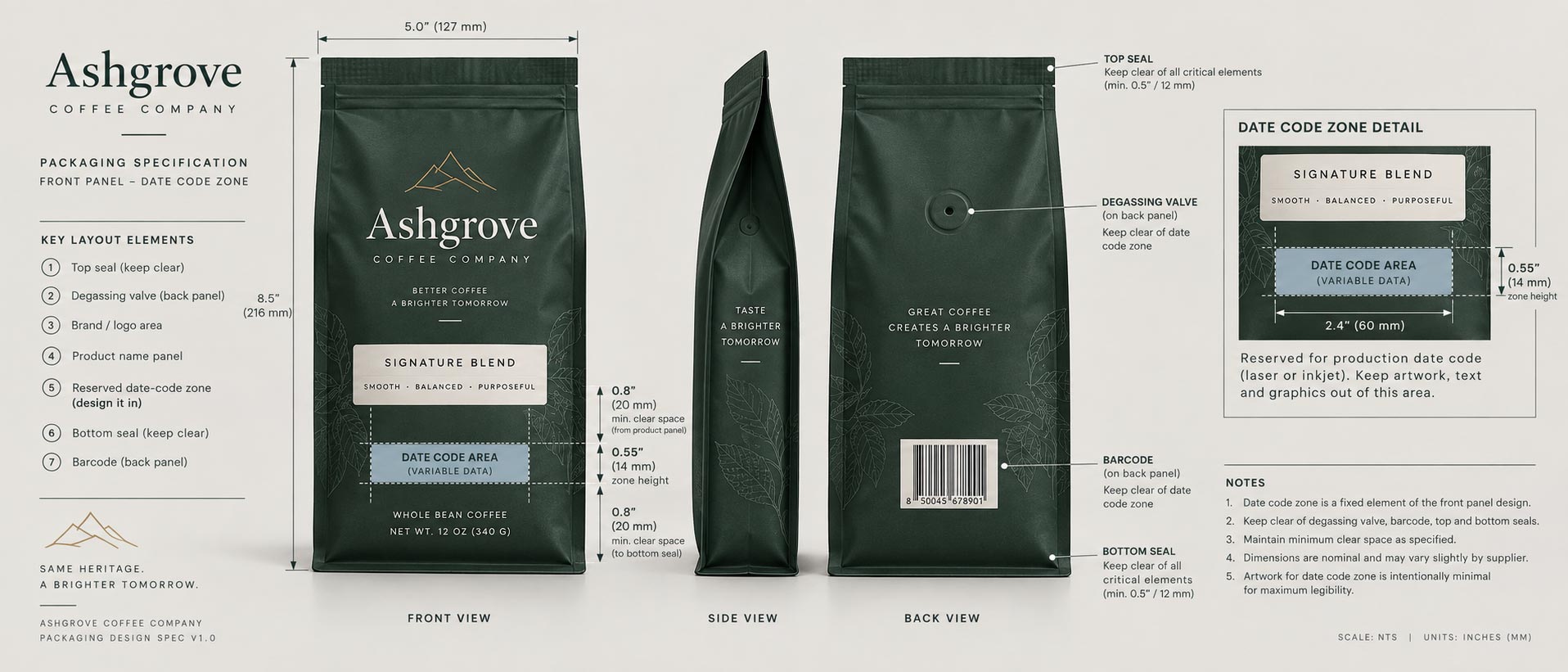
- Flat and forward. Not on a gusset, not across the base fold, not on a curve. A coder needs a stable surface and so does a human with a stamp.
- Light and quiet. A date printed onto a dark, busy panel is unreadable. Leave a pale area, or a clean block of a single color.
- Clear of everything else. Away from the valve, away from the barcode, away from the seal. The valve especially, since it is a raised object and nothing prints over it cleanly.
- Deliberate. Sized to the code you will actually apply, not a gap you hope will work.
The bags that look worst are not the ones with a handwritten date. They are the ones where nobody reserved a space and the date ended up wherever there happened to be room.
The Finish You Chose Affects What Sticks
This is worth raising before you approve a finish rather than after.
Ink has to adhere to whatever surface it lands on, and a soft touch matte, a gloss varnish and a bare film do not behave the same way. A code that looks perfect on one finish can smear or sit on the surface and rub off on another.
We are not going to publish a table of which ink works on which film, because that depends on your exact structure, your finish and the coder being used, and a guess here would be worse than no guidance. The practical answer is simple:
ask for the date to be tested on your actual film before the full run, the same way you would test a seal or a fill. Whoever is doing your coding will know their equipment; they just need a sample of your material.
Roast Date or Best By
One more decision that belongs in the same conversation.
Specialty convention is a roast date, because the audience understands that fresher is better and wants to judge for themselves. Grocery and many retail buyers want a best by date instead, because that is what their systems and their shoppers expect. Some brands carry both, which means reserving room for two pieces of information rather than one.
There is no universally right answer, and it depends on where the bag is going to sell. What matters is deciding before the artwork is locked, because both options need space and one needs more of it. Our guide to
coffee packaging shelf life covers how the bag itself determines what a best by date can honestly say.
Decide It Before the Artwork, Not After
Date coding is a small thing that becomes an expensive thing in exactly one situation, which is when it is considered after the bags are printed. At that point your options narrow to whatever fits in the space you happened to leave.
Considered early, it is five minutes of conversation. Pick how the date goes on, reserve the right area for it, choose between roast date and best by, and have the code tested on your actual material before the run.
If you are designing a bag now and are not sure how much room to leave or where to put it,
send us your artwork and we will mark the area on the dieline before anything goes to press.