The Fruit Nobody Pictures
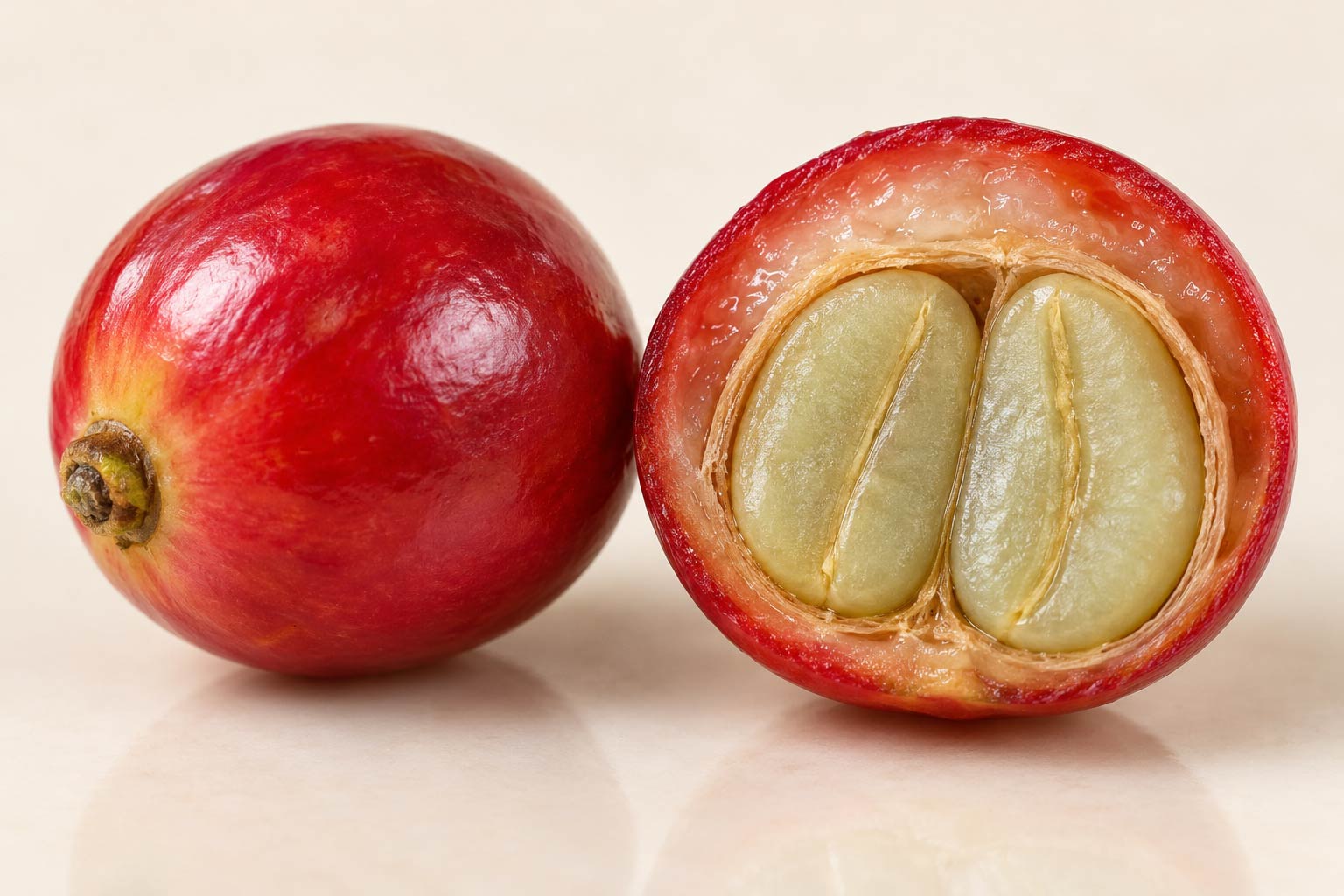
Ask someone to picture where coffee comes from and they usually picture a bean, maybe a burlap sack, maybe a roaster. Almost nobody pictures fruit. Yet that is exactly what coffee is. It grows as a small, round, cherry-like fruit on a shrub, it ripens from green to a deep glossy red, and the part you eventually drink is the seed hidden at its center. Coffee people even call the fruit a cherry, because that is what it looks like.
Everything about how your coffee tastes, how fresh it is, and why it is packaged the way it is traces back to that fruit. So it is worth meeting it properly.
What Is Actually Inside a Coffee Cherry
A coffee cherry is built in layers, like most fruit. On the outside is the skin. Under that is a layer of sweet, slippery pulp, the part that makes it something you could almost eat. Inside the pulp sits a thin parchment shell, and inside that are usually two seeds pressed flat against each other. Those two seeds are what we call coffee beans.
So a bean is not a bean at all in the botanical sense. It is a seed, the way the pit of a peach is a seed. The thing you grind is the pit of a fruit, cleaned up and roasted.
Yes, There Is a Harvest Season
Because coffee is a fruit, it is farmed like one. The tree flowers, the flowers become green cherries, and over months those cherries ripen to red. When they are ready, they are harvested, often one by one by hand, picking only the red ones and leaving the green to finish.
That means coffee has a season, the same as apples or grapes. A region brings in its crop once or twice a year, and everything after that is working through that year's harvest. The coffee in your cup is an agricultural product with a vintage, not something manufactured on demand whenever you want it.
How the Fruit Becomes a Bean
The moment a cherry is picked, the clock is already running, because the fruit around the seed starts to break down. So the fruit has to come off, and how it comes off is a real decision that shapes the flavor.
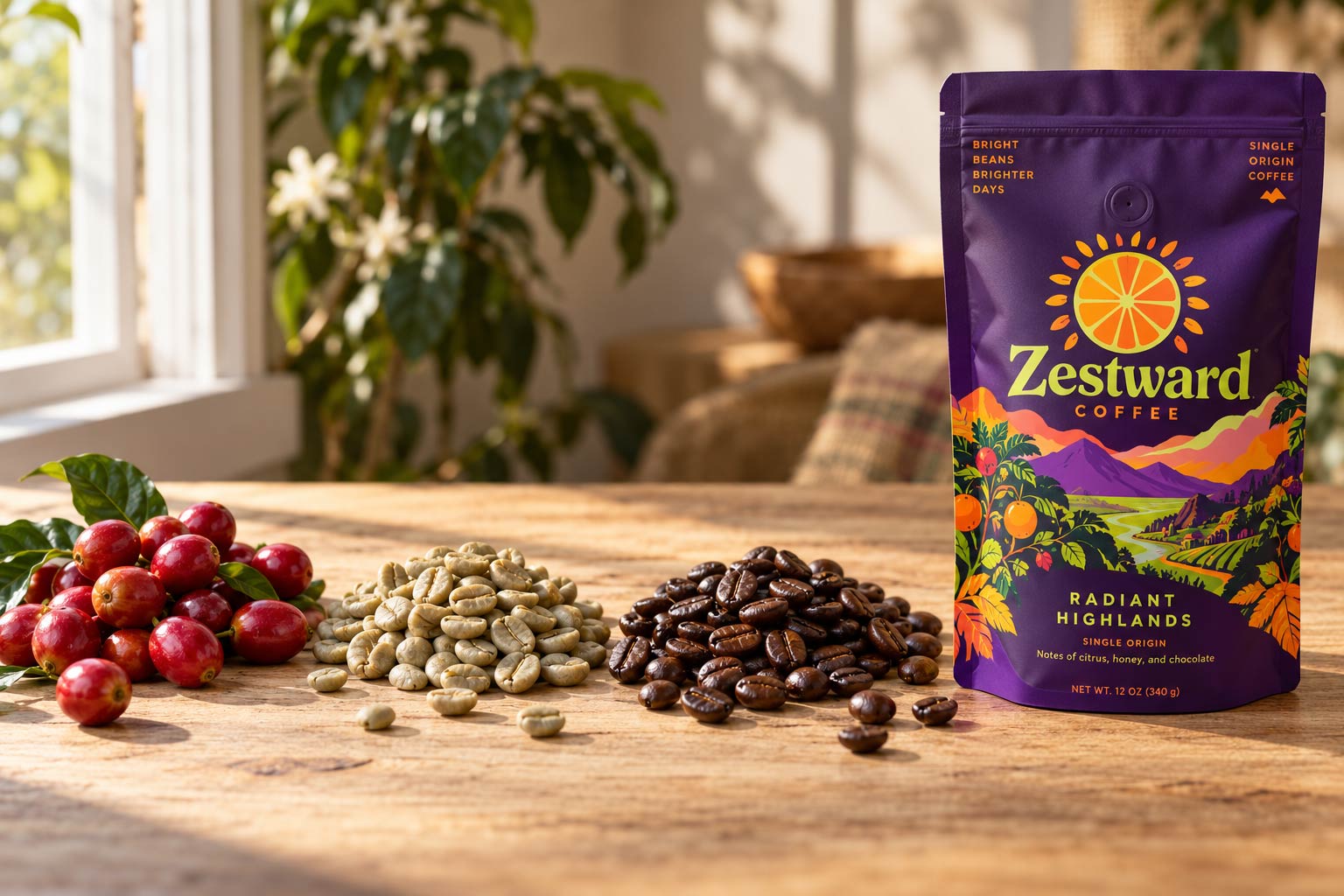
Washed coffees have the pulp stripped away quickly and the seed rinsed clean. Natural coffees are dried with the whole fruit still on, so the seed soaks up more of the fruit's sweetness. Honey coffees sit in between. Whatever the method, the result is the same object: a hard, pale green seed that smells nothing like coffee at all. Green coffee is not yet coffee. It is a dried seed waiting for heat.
Everything After Picking Is a Clock
Here is the thread that ties the whole story together. From the moment a cherry is picked, coffee is on a timeline, and every step is a race against it.
The fruit has to be removed before it spoils the seed. The green seed is then stored, stable for a while but not forever. Then it is roasted, and roasting flips the switch: a bland green seed becomes the aromatic, fragile, fast-fading thing we love, and now the clock speeds up. Roasted coffee is at its best for a matter of weeks, not years, because the same roast that created the flavor also started it leaking away. For more on that last stretch, our post on
roasting to order walks through what it changes.
Where Your Bag Joins the Story
This is the part that matters if you make or sell coffee, because the bag is the last link in that chain and the only thing standing between the roasted seed and the air.
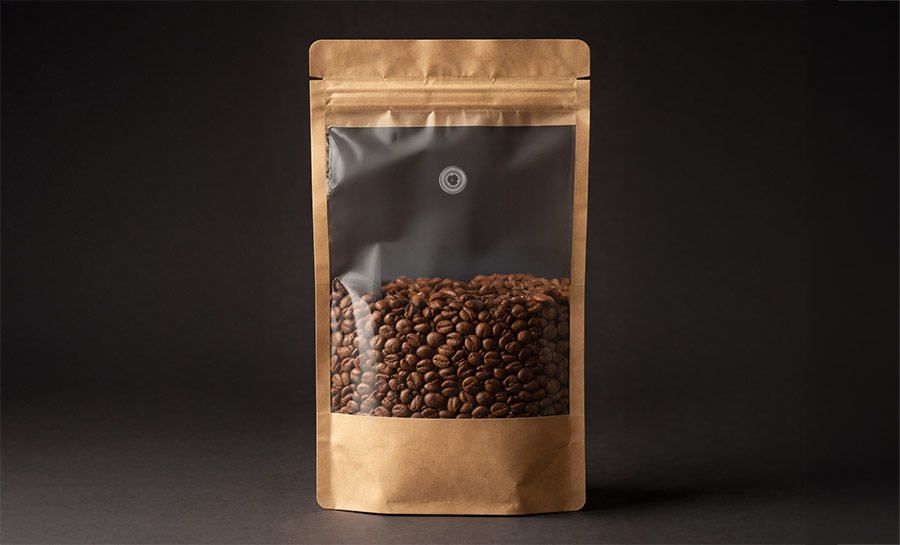
Everything the farm and the roaster did to protect the fruit's potential can be undone in the bag if it lets oxygen, moisture and light back in. That is why coffee bags have the features they do: a barrier film to hold staleness off, a one-way valve that lets the freshly roasted seed breathe out its gas without letting air back in, and enough care about
the air left inside to keep the clock slow. The package is not an afterthought stuck on a food product. It is the final step of a year-long agricultural process.
It is also where the story gets told. A
custom coffee bag is where a roaster puts the farm, the region, the varietal and the harvest in front of the customer, and with
digital printing even a single-origin micro-lot can get its own short run of packaging that names exactly which fruit, from which hillside, is inside.
Taste the Fruit You Never Saw
The next time you open a bag of coffee, it is worth remembering what you are actually holding: the roasted seed of a red fruit that grew on a tree, was picked ripe, had its fruit carefully removed, crossed an ocean as a green seed, and was roasted into the thing in your hand. The bean was never a bean. It was always a cherry.
Knowing that changes how the whole package reads. The barrier, the valve, the harvest date on the back, the origin printed on the front, all of it is there to carry one fruit's short, bright life from a farm to your cup. If you are putting your own coffee into a bag and want the packaging to do that story justice,
tell us about the coffee and we will help you build a bag worthy of the fruit inside it.