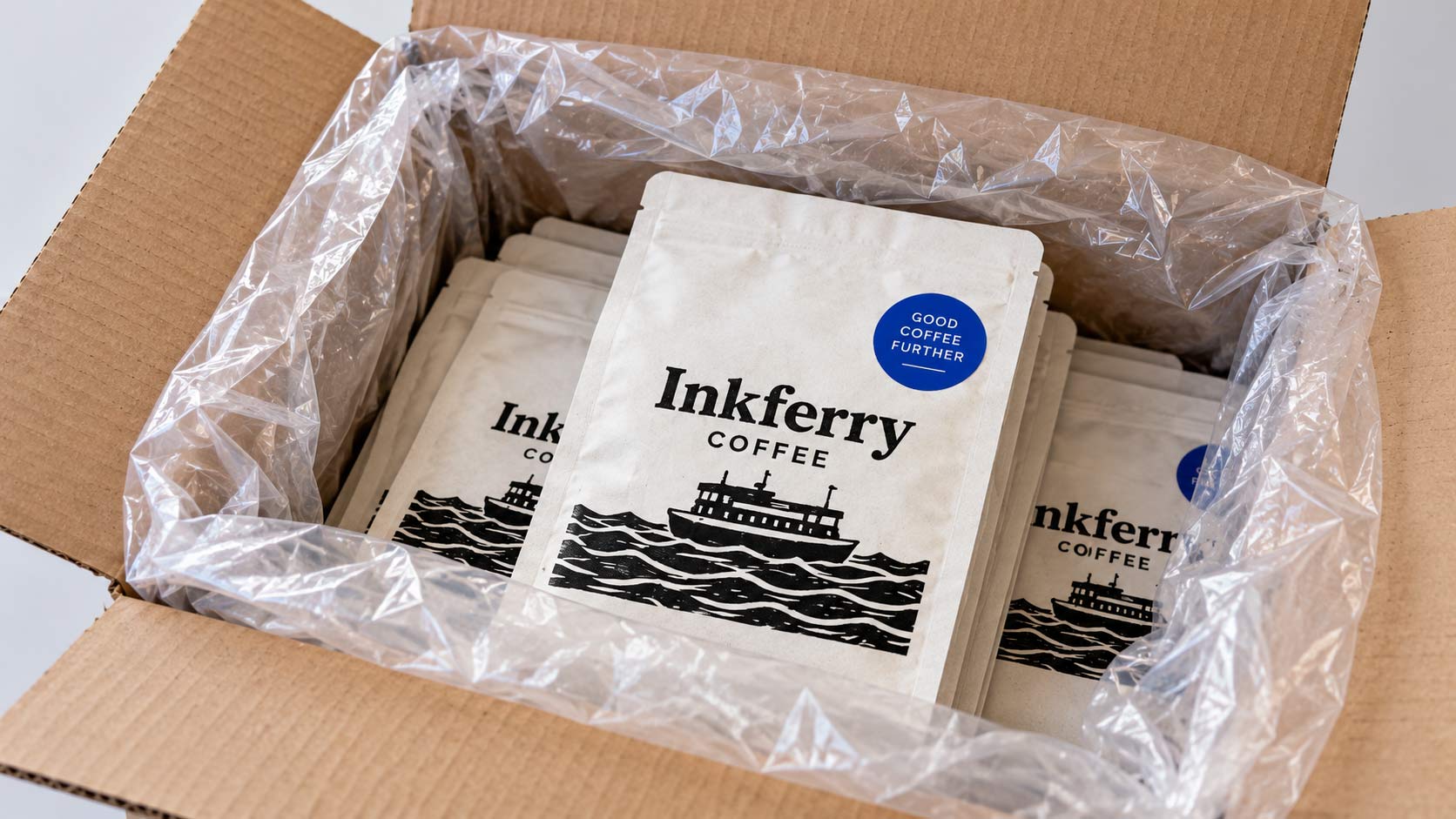
Open a Carton of New Bags and Put Your Nose In It
There is usually something there. Not strong, not unpleasant exactly, but a faint chemical note that is clearly not coffee and clearly not paper.
Most roasters notice it once, decide it is nothing, and fill the bags that afternoon. A few notice it and panic, convinced the whole run is defective.
Neither reaction is right, and the reason matters, because coffee is one of the most absorbent things you could possibly put in that bag.
Where the Smell Comes From
A laminated bag is several layers bonded together with adhesive, and some adhesive systems are carried in a solvent. The solvent is supposed to leave during manufacturing. That is part of what the cure is for, which we wrote about in
why your bags spend more time curing than printing.
A tiny amount can stay behind in the finished film. It is called residual solvent, it is normal in small quantities, and it keeps leaving slowly after the bags are made. What you are smelling in a fresh carton is that process still finishing.
Two things make it more noticeable. A bag that was converted early, before the laminate had fully cured, starts with more of it. And bags ship sealed inside a poly liner inside a closed carton, which is exactly the condition that stops it escaping.
Why Coffee Specifically
This would barely matter for a bag of screws. Coffee is a different problem.
Roasted coffee is porous and full of oil, and oil is a solvent for aroma compounds. That is the same property that makes coffee pick up the smell of a garlic snack stored beside it, which we covered in
odor barrier packaging. A bag is supposed to be the thing protecting your coffee from outside smells. It should not be contributing one.
The failure mode is quiet. Nobody tastes solvent. They taste a cup that is slightly flat, slightly off, slightly not what the roast profile should be giving them. Then they go looking at the green, the roast curve, the grinder and the water, because the bag is the last place anyone looks.
What Actually Reduces It
There are four levers and they are not equally strong.
- The print and ink system, which is the root of it. Digital printing uses UV-curable or water based ink systems with no solvent drying phase at all, which we go through in the carbon footprint case for digital printing. Less solvent in the process means less of it to linger.
- A full cure. A laminate that was given its proper cure window has already released most of what it is going to release. Rushing conversion does not only risk delamination, it ships you a bag that still has more to give off.
- Air, which costs nothing. Open the poly liner. Stand the carton somewhere ventilated and not hot, and leave it a few days before you fill. Airflow and time do almost all of the work.
- Not storing them hot and sealed. A closed liner in a warm back room is the worst case. It holds the smell in and heat keeps generating it. Our post on storing unfilled bags covers the rest of what empties need.
The Ten Second Check
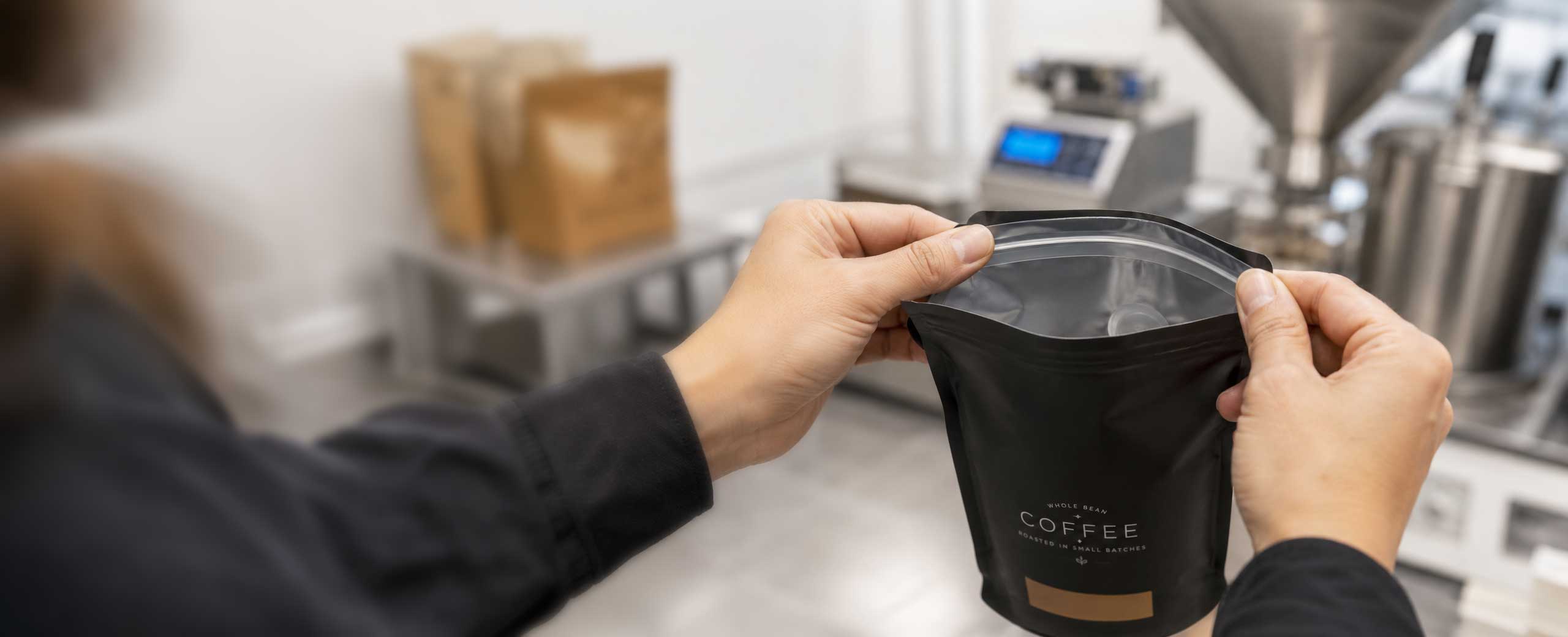
Before you commit coffee to a new delivery, pull one bag out of the carton, open it, and smell inside it rather than outside.
Faint and neutral means fill them. A clear chemical smell means open the liners and give the lot a few days of air before you do. That is the whole test. It costs nothing, it takes less time than reading this paragraph, and it is the difference between finding this out now and finding it out from a customer.
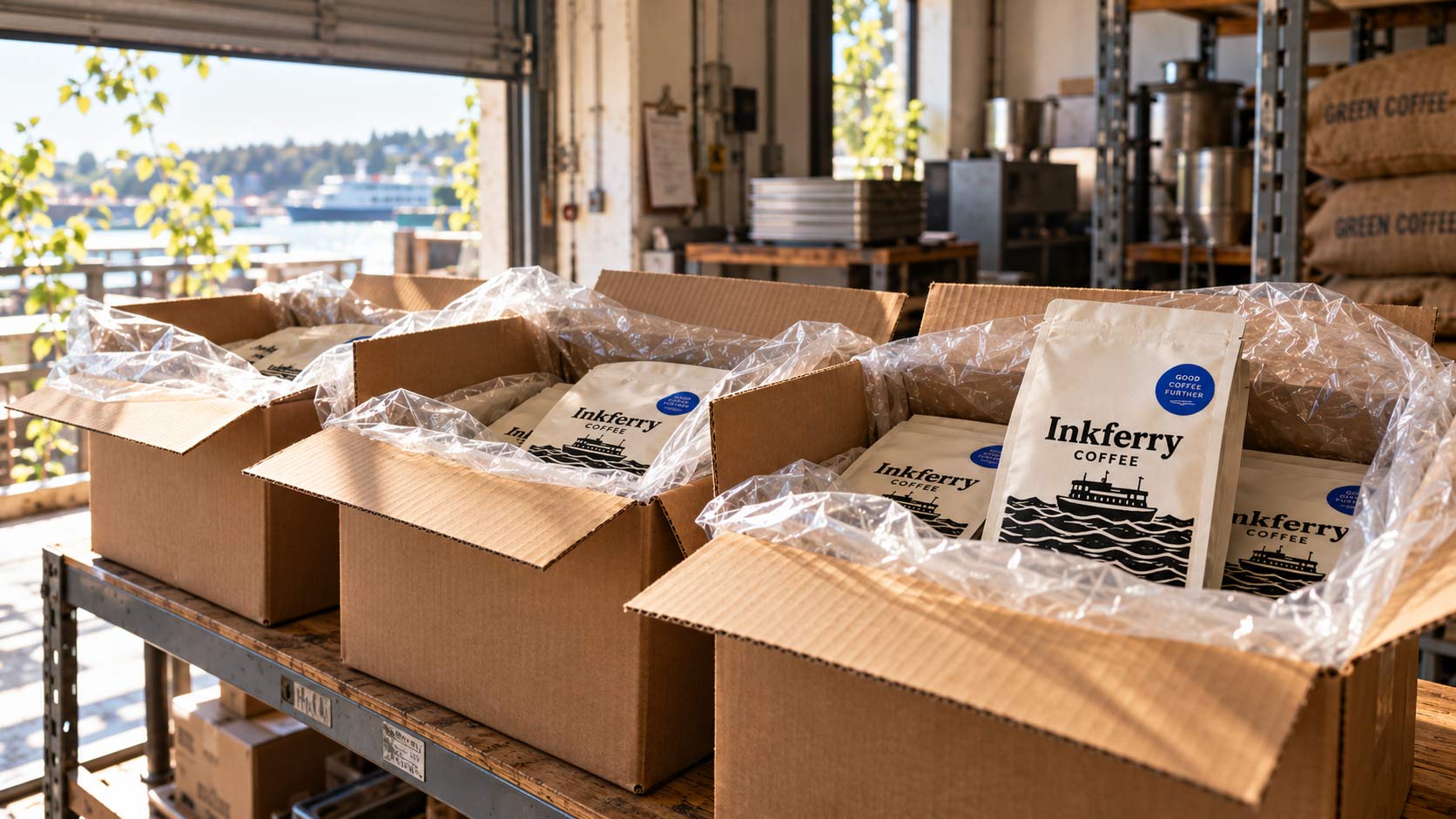
If you are filling straight off the delivery truck on the same day the pallet lands, that is the habit worth changing, especially if the bags went from a hot truck into a hot room.
When It Is Not Normal
It is worth drawing the line clearly, because everything above assumes a faint smell that fades.
A strong solvent smell is not something you air out. Neither is a smell that is still obvious after a week of open cartons in moving air, or one that gets worse rather than better, or one that is in some bags from a run and not others. Those are not a cure-window issue, they are a conversation with whoever made the bags, and they are worth having before the whole order goes into product.
Keep one bag back from each delivery, sealed and dated. If you ever do need that conversation, a reference sample from the lot is worth more than a description.
Why It Is Worth Knowing
This is a small thing that hides behind big things. The symptoms look like a roasting problem or a sourcing problem, and both of those are expensive to go chasing.
It is worth knowing for three reasons. It gives you a ten second check that rules the packaging out before you start tearing apart your roast profile. It tells you why the cure window on your order exists, rather than it just being a delay. And it means a faint smell in a new carton stops being alarming, because you will know what it is and what to do about it.
If something in your cup changed after a packaging delivery and you cannot place it,
tell us the lot and when it arrived and we will help you work out whether the bag is involved.