Where Does a Coffee Spouted Pouch Usually Leak?
At the spout. When a cold brew concentrate or liquid coffee pouch turns up sticky in the box, the first thing most brands suspect is the film. They picture a pinhole or a weak spot in the material and start shopping for something thicker. Most of the time the film is fine. The leak starts where the spout is welded into the pouch, or at the cap that screws onto it.
It is an easy mistake to make, because the wet spot is rarely where the leak begins. Liquid runs down. A slow seep at the top of a pouch standing upright ends up as a puddle at the bottom gusset, so the bottom looks like the problem. Before you change your film, it pays to know how a spout is built.
What Is Different About the Seal Around the Spout?
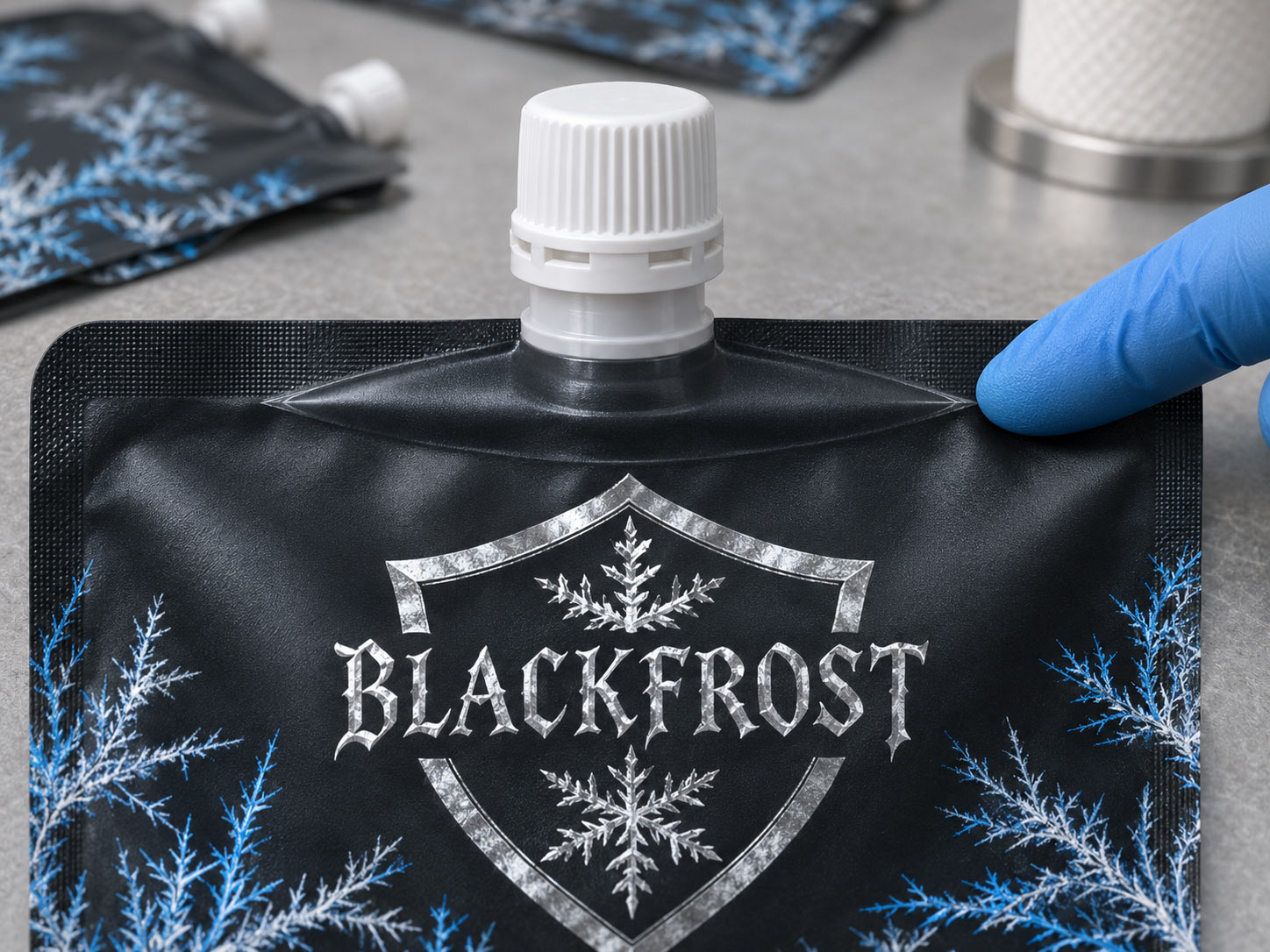
A spout is not printed or folded into the pouch like everything else. It is a separate molded plastic part: the round neck you pour from, sitting on a flat base shaped a bit like a small boat or canoe, pointed at both ends. That boat-shaped base, often called the fitment, goes between the two layers of film at the top or the corner of the pouch, and the films are heat sealed around it.
That makes it the hardest seal on the whole package, for three reasons.
- It is much thicker than the film. Everywhere else, film is sealed to film. Here, two thin films have to wrap and bond to a solid piece of plastic many times their thickness.
- It is curved. The film has to follow the rounded sides of the boat and then meet itself again at the pointed tips. Those tips, where the seal goes from wrapping a thick shape to lying flat, are where tiny gaps are most likely to form.
- The two plastics have to get along. The inside layer of the film and the plastic of the fitment must be materials that melt and bond together. The sealing tools are also shaped to match the fitment, and need more heat and time than a flat seal.
Get any of that wrong and the pouch can hold liquid perfectly well on the day it is filled, then seep slowly at the ends of the spout base over the following days.
What Else Makes a Spouted Pouch Leak?
The fitment weld is the first place to look, but it is not the only one. These are the others, roughly in the order we would check them.
- The cap was not seated. A cap that is a little loose, cross threaded or sitting on a drop of dried product will drip. Coffee concentrate and coffee syrups dry sticky on the threads, which keeps the next cap from closing fully.
- The cap and spout are not a matched pair. A cap from a different spout family may screw on and still not seal. Spout and cap are designed together, and they should be ordered together.
- The spout carried the load. The neck where the rigid spout meets the flexible pouch takes all the stress when a full pouch is lifted by its cap, dropped on its top or packed spout down with weight on it. Repeated bending there can open the seal or crack the neck.
- The pouch went out too full. With almost no room at the top, every squeeze in transit pushes liquid straight against the spout seal and the cap.
Is It Really Leaking?
Sometimes it is not a leak at all. A pouch of cold brew concentrate taken out of a cold fridge into a warm room sweats, and the water that beads on the outside runs down and pools at the bottom just like a leak would. If the pouch weighs the same as when it was filled and the moisture is clear and tasteless, it is condensation. We covered how cold packaging behaves in
cold brew packaging that owns the fridge.
How Do I Find Where It Is Leaking?
You do not need any special equipment.
- Dry it completely. Wipe the pouch, the spout and the cap dry, including under the cap's edge.
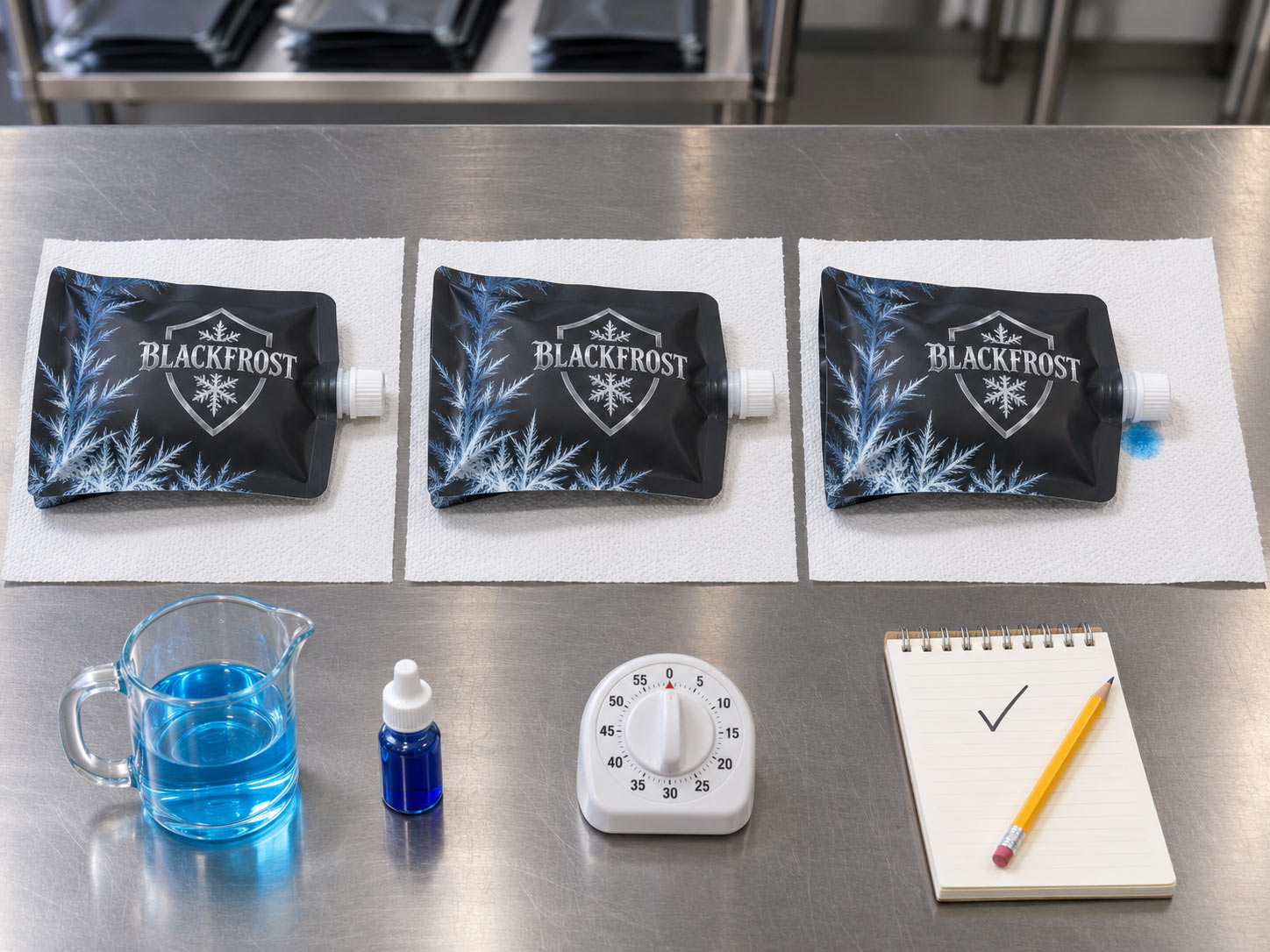
- Lay it on a white paper towel. Set the pouch on its side for an hour or two, then turn it to the other side. A leak at the spout will mark the towel near the top, not at the bottom.
- Test with colored water. If you are testing empty samples, fill them with water and a few drops of food coloring, cap them the way you normally would and repeat. The color shows exactly where the liquid gets out.
- Press gently near the spout base. Squeeze the pouch lightly while watching the pointed ends of the fitment. A bead forming there points to the weld. A bead forming under the cap points to the cap.
How Do I Stop My Spouted Pouch From Leaking?
Most of the fixes are simple, and they work best when they are planned before the first run.
- Order the spout and cap as one set. Do not mix caps from another supplier onto your spouts. Keep the same pair on every reorder.
- Keep the threads clean when you fill. Wipe any concentrate off the spout before capping, so the cap closes on clean plastic.
- Cap every pouch the same way. Whether caps go on by hand or by machine, every pouch should be closed to the same firm, full turn. One person rushing the last case is enough to cause a complaint.
- Leave a little room at the top. Size the pouch so the fill sits below the spout with some space to spare. Our post on cold brew concentrate pouches explains why the pouch is sized to the fill.
- Do not let the spout carry the weight. Pack pouches so nothing presses on the caps, keep them snug in the case so they cannot flex and slide, and tell customers to lift the pouch by its body, not its cap.
- Test with your real product. Fill sample pouches with your own concentrate, cap them the way you will in production, lay them on their sides overnight, then ship a few to yourself. That is the test that matters.
How Savor Brands Helps You Get It Right
A leak that reaches a customer's fridge costs you far more than a few test pouches, so we would much rather you find any weak spot before a full run.
- The spout and cap come as a set. Our spouted pouches ship with the spout and cap already fitted, in stock black or white. Custom cap colors are possible at a much higher minimum, so ask before you design around one.
- The pouch is sized to your fill. Tell us how much concentrate goes in, and we will help you choose a pouch size that leaves room at the top instead of one that is filled to the neck.
- Your dieline shows where the spout goes. Your artwork is built around the spout and its seal, so nothing important sits where the fitment is welded in.
- You can test before you commit. Ask us about packaging samples so you can run the leak test above with your own product and your own capping, and start small with a minimum of 500 per design on digital printing.
Wrapping It Up: Check the Spout Before You Blame the Film
When a coffee spouted pouch leaks, the film is rarely the cause. The weld around the boat-shaped spout base is the thickest, most complicated seal on the package, and the cap that sits on top of it is the next most likely suspect. Find the leak first with a dry pouch and a paper towel, then fix the cause: a matched spout and cap, clean threads, consistent capping, room at the top and a case that does not lean on the spout.
For more on what makes any seal fail, see
why coffee bag seals fail. If your cold brew or liquid coffee pouches are leaking now,
send us a photo of where the wet spot shows up, and we will help you track it down and plan your next run of
custom coffee packaging.