The Container Is Already in Your Kitchen
There is a whole industry built around selling people a nice container and then selling them thin refill packets to keep filling it. Coffee does not need that, because the bag your coffee already comes in is the container. A quality bag is a sealed, light-proof, resealable vessel with a valve in it. The only reason it gets thrown away after one use is habit.
A refillable coffee bag breaks that habit. You buy the coffee once in a bag built to protect it for close to a year, then you carry that same bag back to your roaster each time you run low. They fill it, you take it home, and the bag does the exact job it did on the first day. It keeps doing that job for months, and when it is genuinely finished it goes into an R+R box instead of a trash can. That is the entire loop, and nothing in it requires buying a second piece of packaging.
Why an Aluminum Bag Can Take a Year of Refills
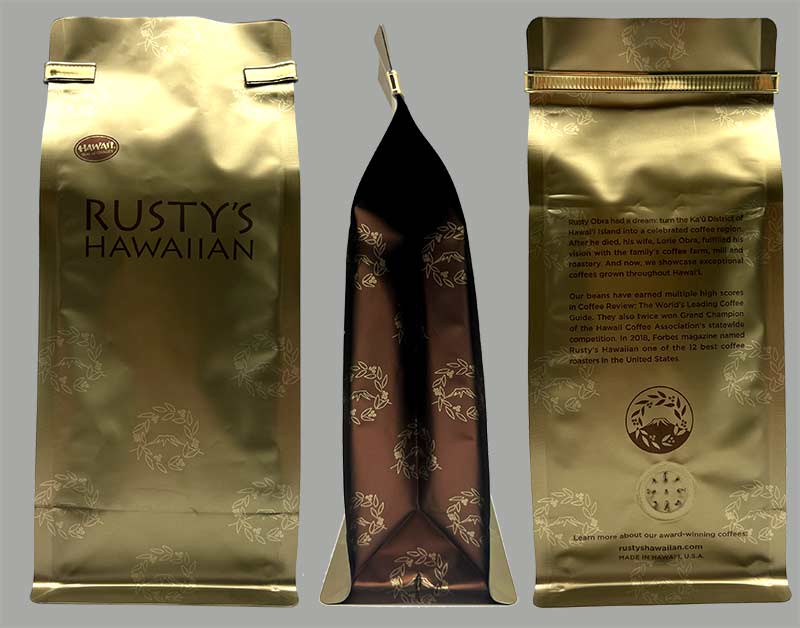
Not every bag is a candidate for this. The one that is, is aluminum. An aluminum barrier bag protects roasted coffee for roughly nine to twelve months, which is the strongest window of any flexible material we make, and our guide to
coffee bag barrier materials lays out how the other options compare. To be precise about what that number means, nine to twelve months is the protection window for sealed coffee inside the bag, not a wear rating stamped on the zipper. But a bag engineered to that standard is a serious piece of packaging, and that is exactly why it holds up to being opened, closed, and refilled all year.
- Aluminum is a true light block, and it stops oxygen and moisture better than any other flexible film we offer
- The zipper cuts down oxygen every time it closes, which is why the last cup tastes close to the first
- The one-way valve keeps venting carbon dioxide from freshly roasted coffee after every single refill
- Refilling does not weaken the wall, because the barrier is the film itself, not a coating that rubs off
The mechanics of that closure are worth understanding, and our post on
resealable coffee bags with an air tight valve explains how the zipper and valve work together. The short version is that a bag doing this much work was never meant for a single trip home.
How the Refill Actually Works at the Counter
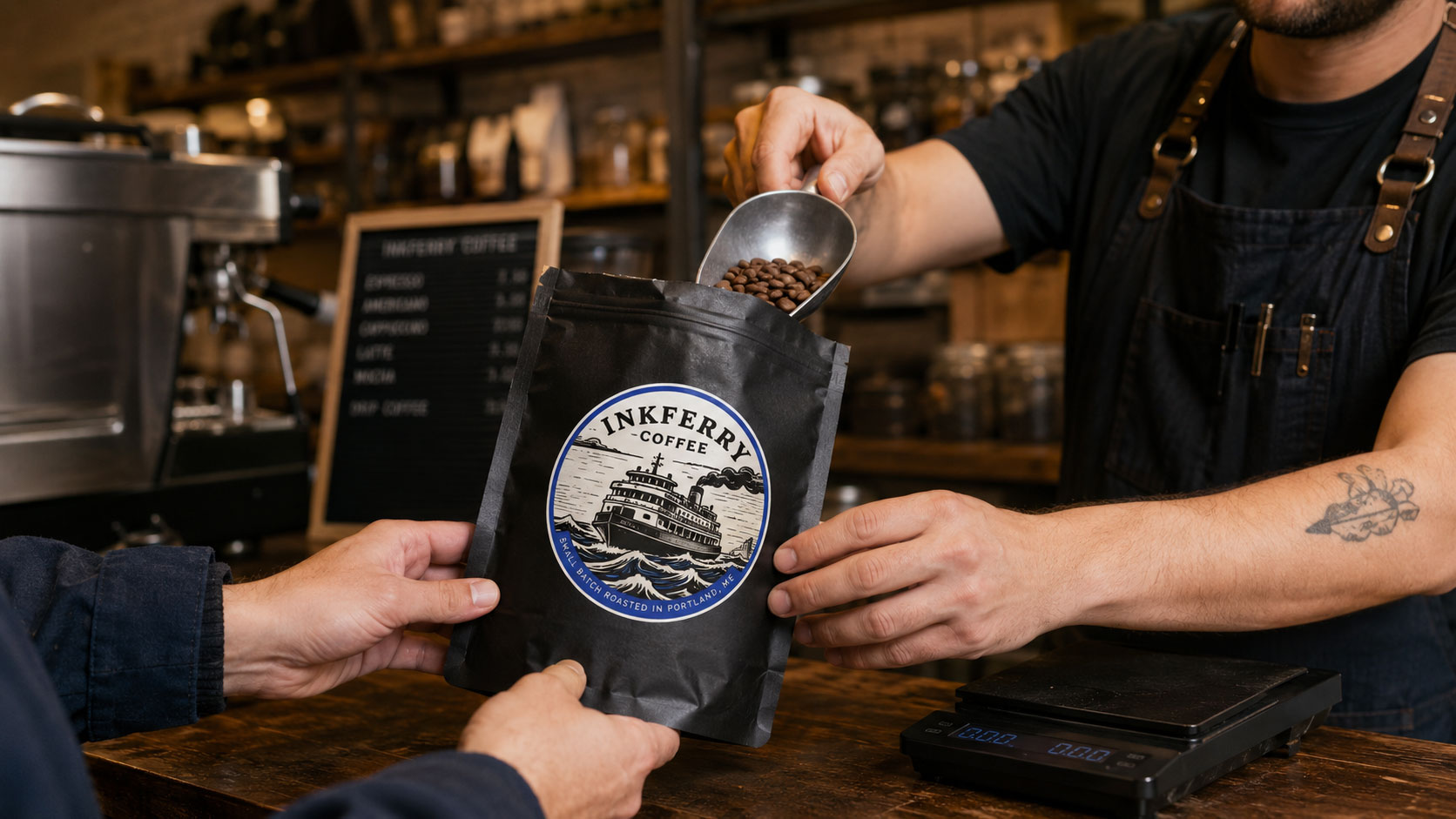
The customer side is easy. Bring the empty bag, hand it over, walk out with the same bag full again. The roaster side takes about thirty seconds and a scale. The bag goes on the scale empty so its weight is zeroed out, which means the customer pays for coffee and not for packaging. Then it gets filled to the same net weight the bag was printed for, so the number on the label stays true.
- Tare the empty bag on the scale first so the customer is only paying for coffee
- Fill to the same net weight printed on the bag so the label stays accurate
- Add a small sticker with the coffee name and the new roast date
- Brush grounds out of the zipper track, since a few beans in the teeth are what stop a zipper from sealing
- Retire the bag into the R+R box if it starts to smell stale inside, or if the zipper or the bottom seal stops holding
Two honest cautions belong here. Coffee is a dry, low-risk product, but rules about filling a container a customer brought in are set locally, so check with your health department before you launch a refill station. And oils do build up inside any bag over time, so treat a stale smell as the signal that this particular bag has done its year and earned its trip to R+R.
One Bag Instead of Twelve
Here is the math that makes the idea worth doing. A customer who buys a twelve ounce bag once a month goes through twelve bags a year. A customer who refills one bag goes through one. That is eleven bags that never got manufactured, printed, shipped, or thrown away, from a single habit change that costs nobody anything.
We should be careful about what that claim is, though, because packaging is not where most of coffee's footprint lives. Growing, milling, shipping, and roasting account for far more than the bag ever will. Refilling does not erase the footprint of the coffee itself, and any brand telling you otherwise is selling you a feeling. What it does is remove eleven pieces of packaging from the year, which is a real, specific, defensible thing to tell your customers. Honest claims age better than big ones.
Why We Are Not Selling You a Refill Pouch
The fashionable version of this idea is different: sell a premium tin or a fancy bag once, then sell thin refill pouches forever after. For coffee, that is a step backward on almost every count. You would be adding a second design, which means a second order minimum, and asking that flimsy pouch to protect coffee with a weaker barrier than the bag you already had. Then you throw the pouch away, which is what you were supposedly trying to avoid.
- A refill pouch is a second SKU, so it carries its own order minimum and its own artwork
- Lighter refill films land closer to four to six months of protection instead of nine to twelve
- The pouch is still single use, so the waste moved around rather than went away
- Your existing resealable bag does the whole job with nothing else to buy
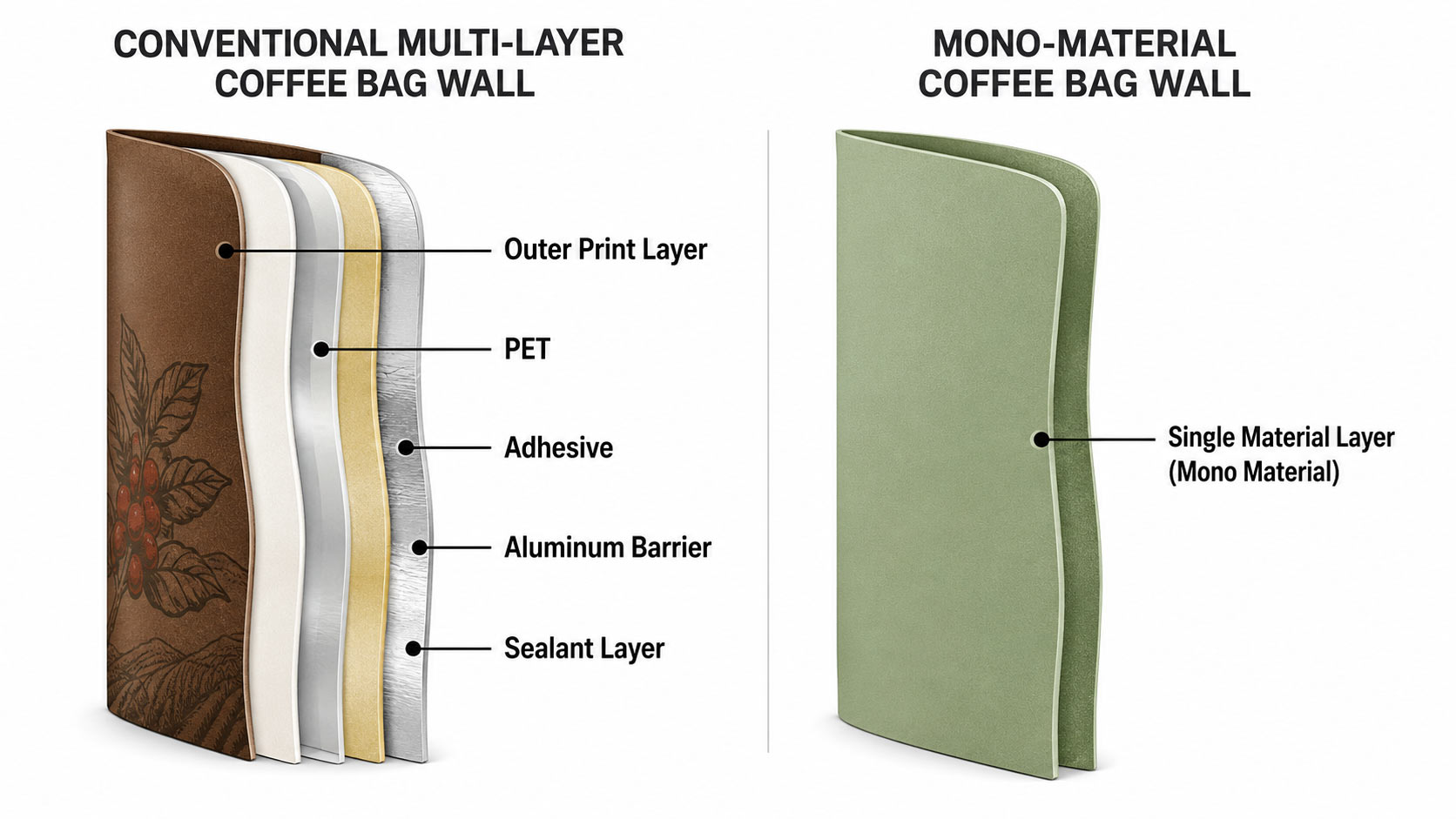
If recyclability is the goal that pushed you toward refill pouches in the first place, there is a better answer that does not add a SKU, and our post on
mono-material coffee bags covers how single-plastic construction changes what happens to a bag at the end. Refilling and recyclability are separate decisions, and you can make both without buying two bags.
Then the Bag Goes in the R+R Box
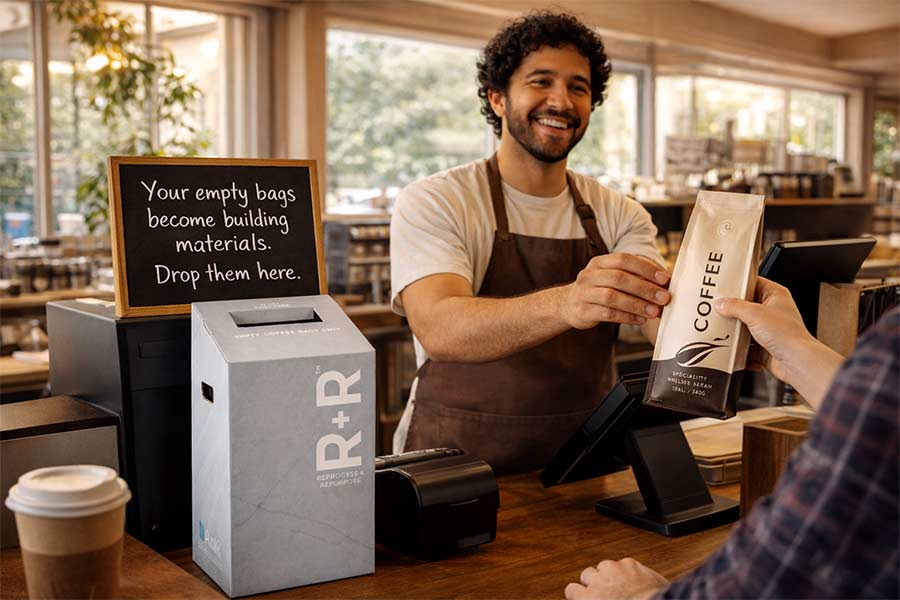
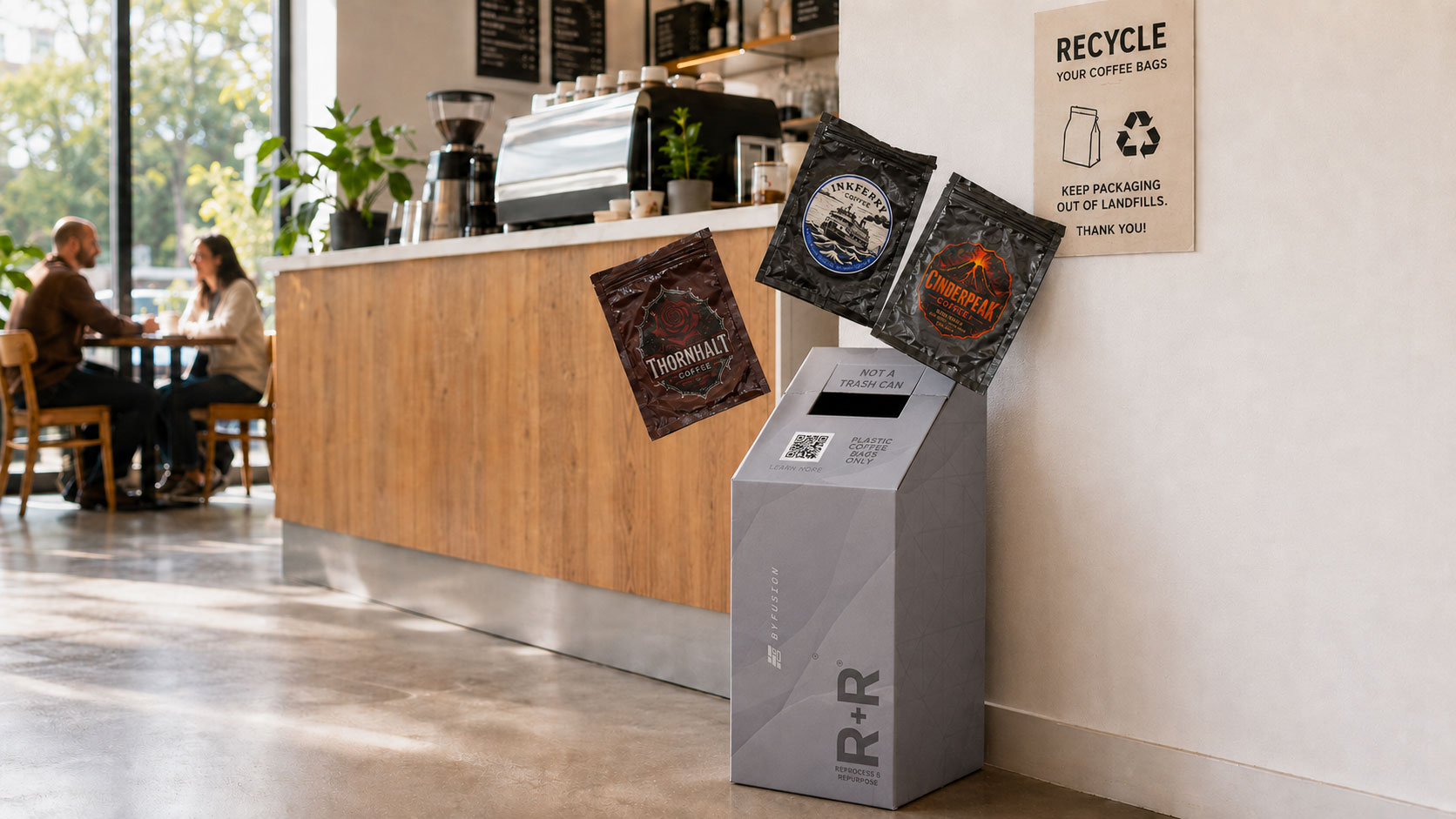
A refillable coffee bag still reaches the end of its life eventually, and that ending is the part most packaging programs never solve. Our R+R Upcycle Program exists for exactly that moment. It takes paper-free, non-compostable coffee packaging off your hands and routes it to partners who turn it into something physical instead of burying it. ByFusion converts collected packaging into ByBlocks, a construction-grade building block used for sheds, accent walls, and furniture. HydroBlox turns multilayer film waste into drainage material.
HYDROBLOX: All boxes must be approved prior to shipment and must be packed in designated R+R boxes. Any boxes that are not in R+R boxes or do not have an approved label will not be accepted.
That means the bag does not just avoid the landfill, it becomes a building product. It is also the piece of the story your customers remember, because a used coffee bag becoming a wall is a much better line than a recycling triangle nobody trusts. Roasters and cafés already use it that way, and our post on
turning empty coffee bags into a marketing asset shows how they build signage and social content around it. You can see the rest of our
sustainable and compostable packaging options alongside it.
What the Roaster Gets Out of It
This is not charity, it is traffic. A refill program gives a customer a specific reason to walk back through your door on a schedule, in person, where they smell the roast and see the pastry case. It builds the kind of repeat visit that a subscription box quietly removes from your shop. And it does all that without a single change to what you order from us.
- A refill is a standing reason for a regular to come back every month
- The sustainability story is true and easy to explain, with no claim you have to defend
- There is no new SKU, no second minimum, and no redesign of your artwork
- A small refill discount costs you less than the bag you did not have to use
It works with whatever you already run. If you print
custom coffee bags, nothing about your order changes, the bag simply lives longer in your customer's hands. If you use labeled
stock bags, the same thing applies, since the barrier comes from the film and not from how the artwork got on it. Either way, put a sign at the register, because a program nobody knows about gets no refills.
One Bag, One Year, Nothing Wasted
The best packaging decision here is not a new product, it is using the one you already have the way it was built to be used. An aluminum bag protects coffee for close to a year, reseals every day, vents gas after every refill, and finishes its life as a building block. Ask a thin refill pouch to do that and it fails at all four.
So keep the bag. Refill it at your roaster, add a fresh roast date sticker, and enjoy the coffee the way it was meant to be enjoyed, which is fresh and often. When the bag has finally earned its retirement, drop it in an R+R box and start again. One bag, one year, nothing wasted.