What Rotogravure Printing Actually Is
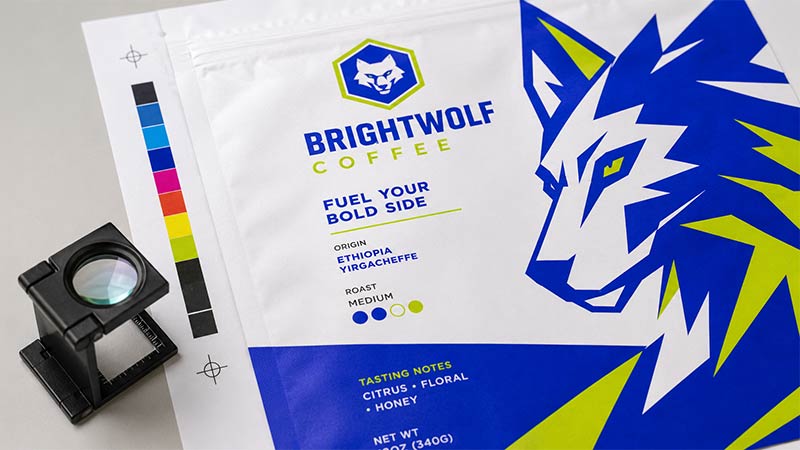
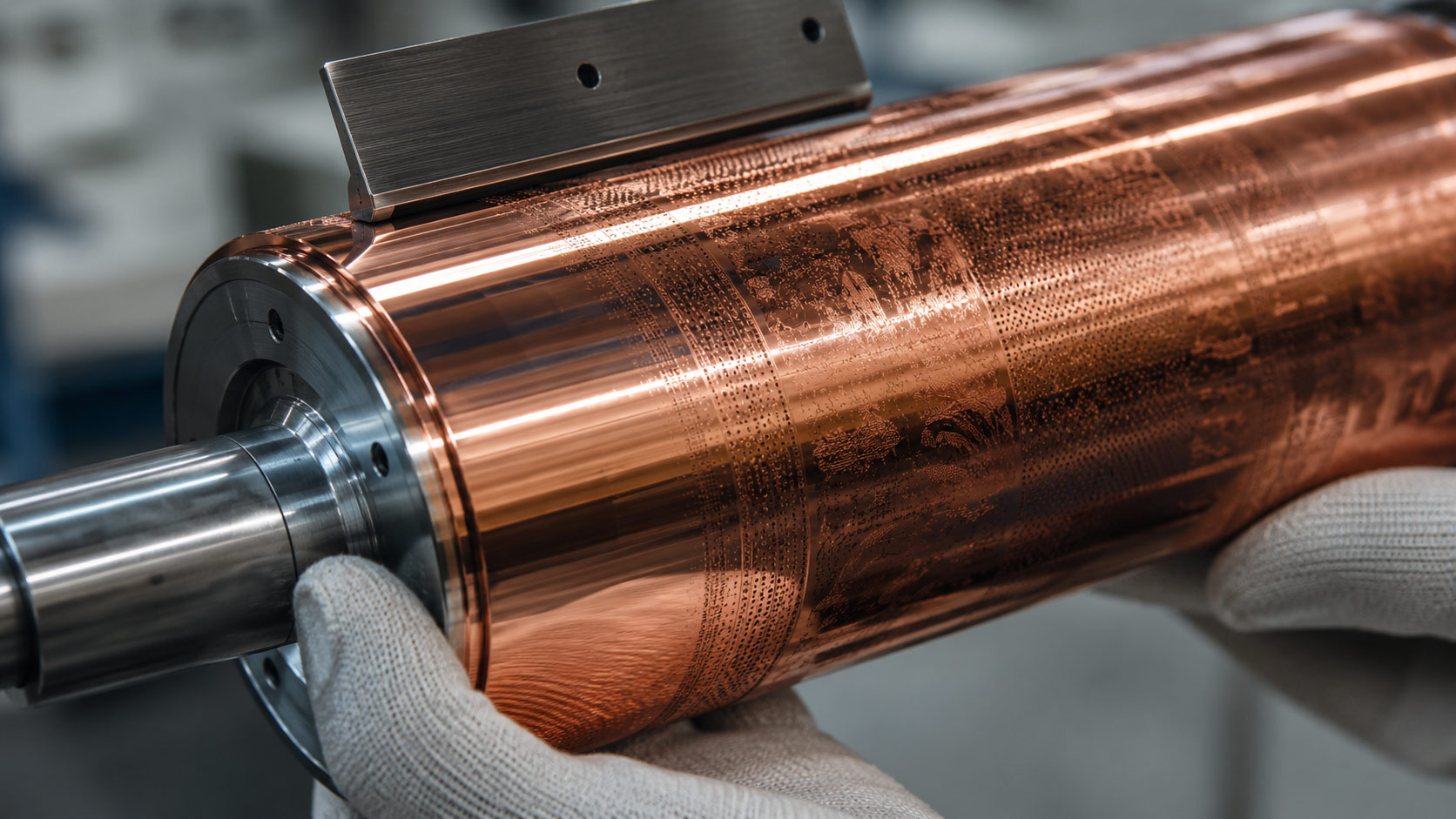
Most printing you know works by spraying or pressing ink onto a flat surface. Rotogravure works the opposite way. The image lives inside a metal cylinder. Engravers cut millions of tiny wells, called cells, into the surface of a polished copper cylinder, and the pattern of those cells is your artwork. As the press runs, the cylinder spins through a bath of ink, the cells fill, and a thin steel blade called a doctor blade wipes the smooth surface clean so ink stays only in the wells. A long roll of film, the same barrier film your coffee needs, presses against the cylinder, and the ink lifts out of the cells onto the film. One cylinder lays down one color, so a line of cylinders stacks the colors into a finished design, printing hundreds of feet per minute.
That is the short version of rotogravure printing coffee packaging: a precise, high-speed press built to print the same thing, beautifully, over and over.
The Cylinders Are the Whole Story
Here is the part that decides everything about cost. Those engraved cylinders are tooling. Someone has to cut them before a single bag prints, one cylinder for every color in your design, and that engraving is a real, upfront expense that exists whether you print one bag or one million.
That single fact explains why rotogravure is a mass-production method and not an everyday one:
- The cylinders are made once, then they print your run and get stored for the next one.
- The engraving cost does not shrink on a small order, so a tiny run would carry a painful cost per bag.
- The press itself is built for long, continuous rolls, not quick little jobs.
This is exactly why
digital printing exists as the on ramp. Digital has no cylinders and no plates, so it can start at 500 bags per design. Rotogravure asks you to commit to the tooling first, which is why it lives at the top of the ladder at a ten thousand unit run.
The 10,000-Bag Payoff
Now the tooling cost turns into your advantage. Spread the one time engraving across 500 bags and it stings. Spread it across ten thousand and it nearly disappears into the price of the film and ink. The more bags the cylinders print, the thinner that fixed cost is sliced, and the lower your price drops per bag.
At volume, rotogravure delivers the lowest cost per unit of any coffee bag printing method. That is the wholesale story in one sentence. If you are moving serious volume, roasting for retail chains, subscription boxes, or private label partners, the per bag price at a rotogravure run is hard for any other method to beat. It is the difference between a bag that is a proud one time expense and a bag that quietly protects your margin on every unit you sell. If you are still weighing where your order sits on that curve, our guide to
coffee packaging minimum order quantity lays out the tiers side by side.
The Look You Cannot Fake
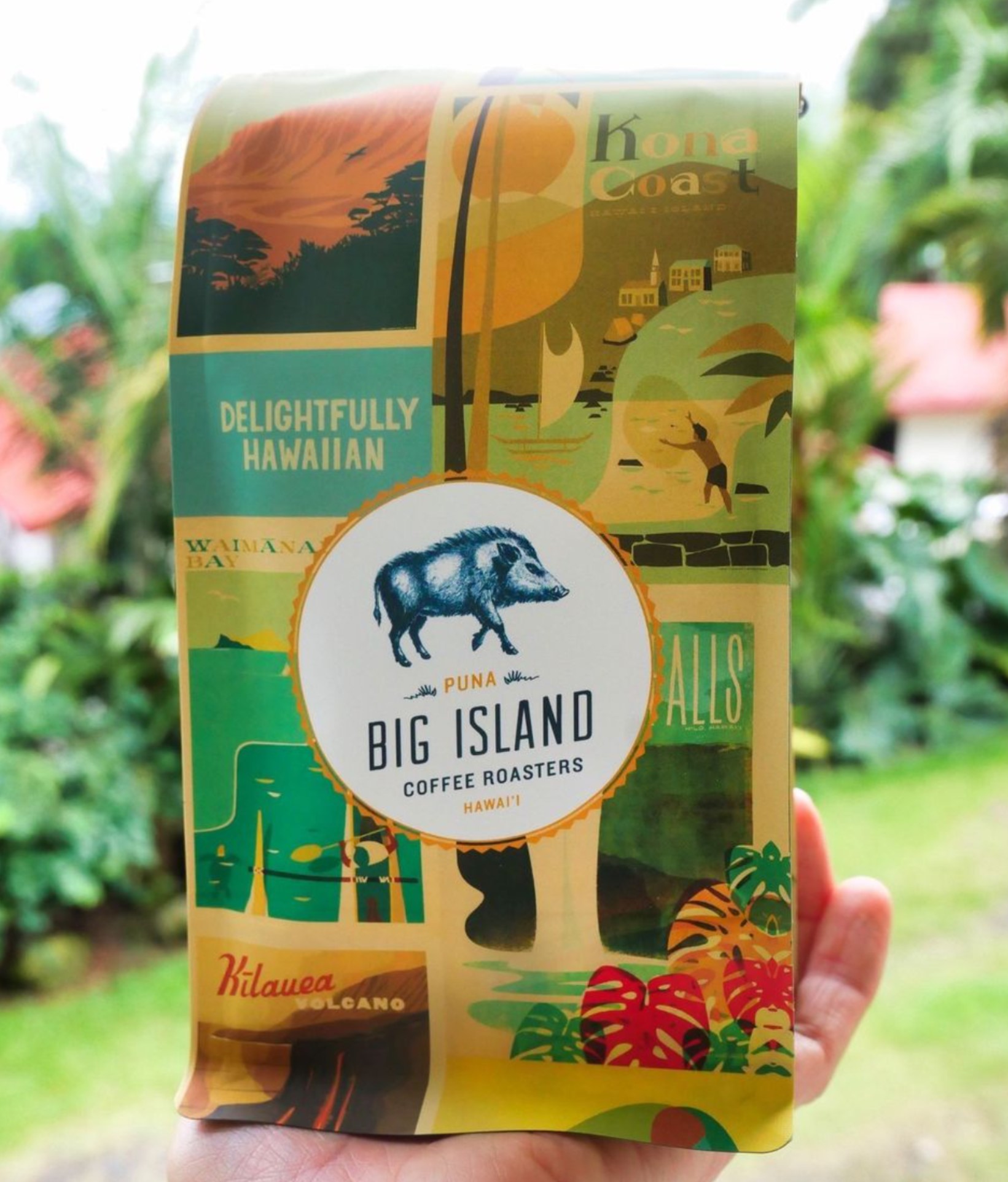
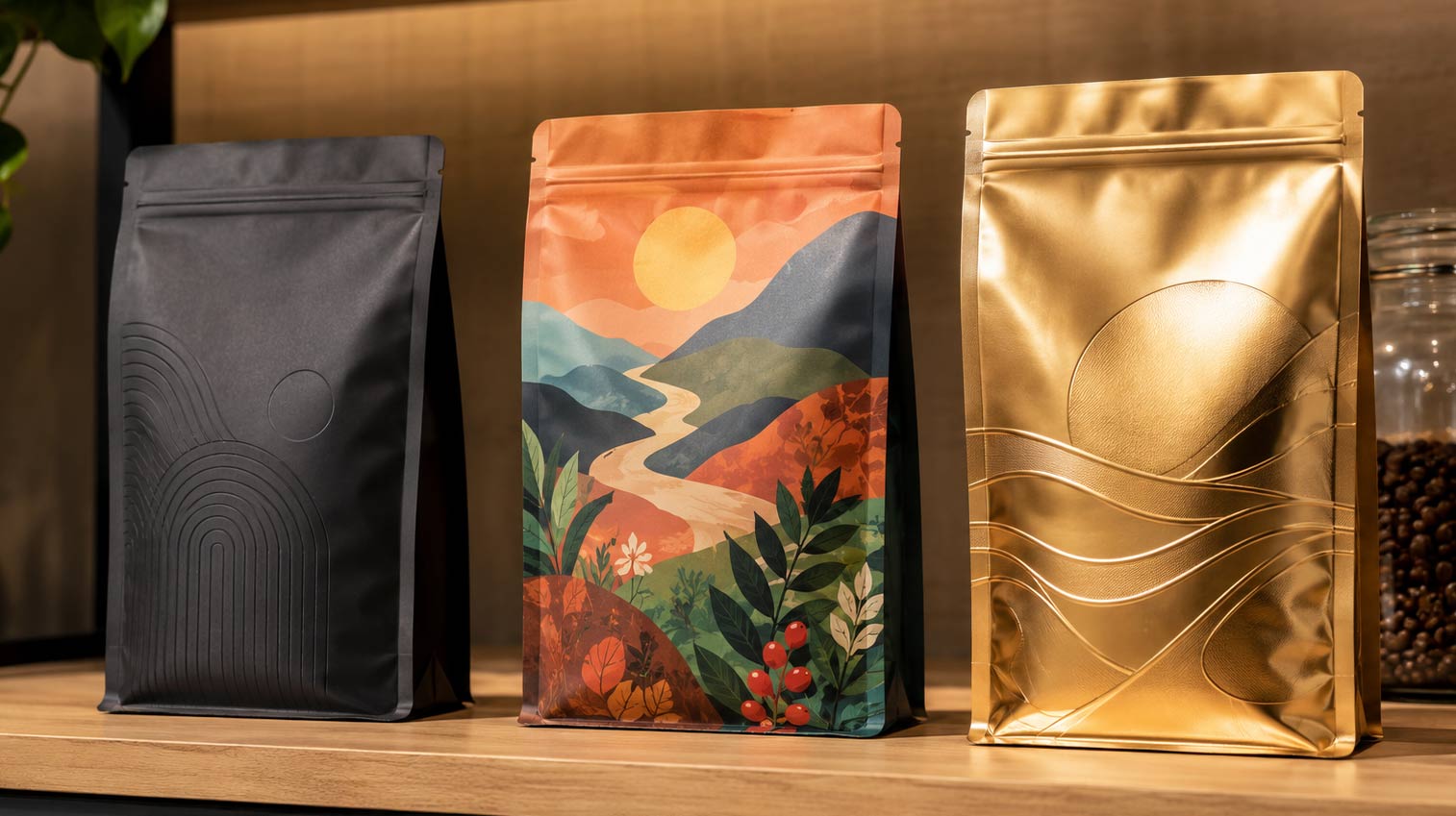
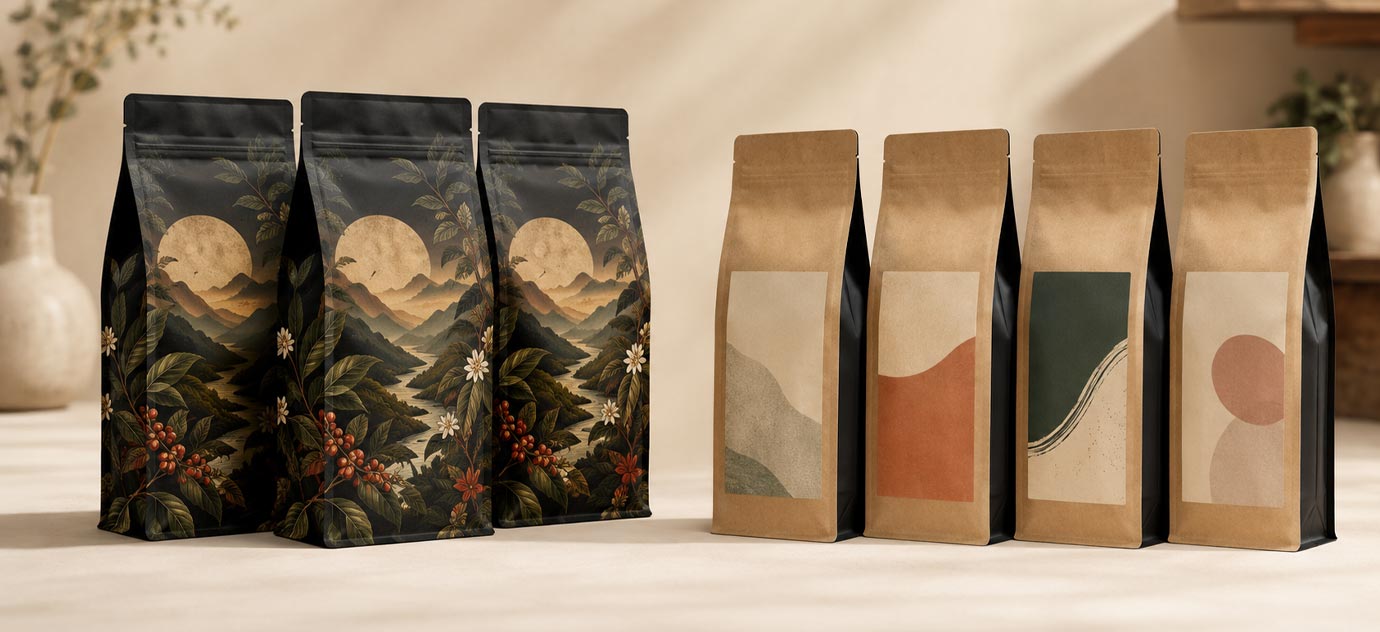
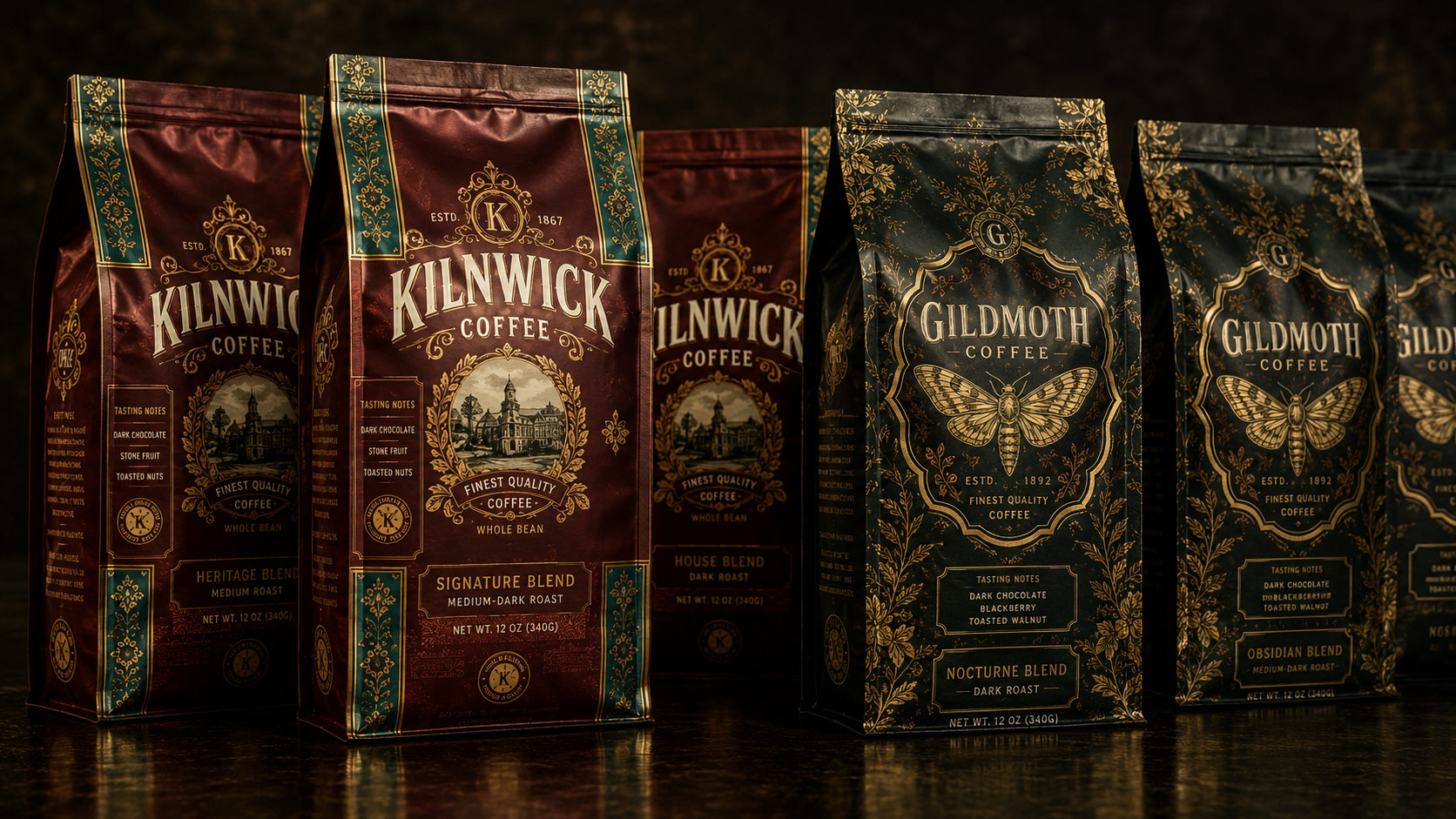
Volume is only half of why the biggest names print this way. The other half is on the shelf. Because rotogravure transfers more ink than almost any other process, the color comes out richer and deeper, and it stays consistent from the first bag to the last. Fine detail holds, and registration, the way each color lines up, is tight enough for crisp small type and sharp edges. The process also handles the finishes that read as premium the second a customer picks the bag up:
- Metallic and gold foil effects that catch the light.
- Deep, saturated solids without streaking.
- Matte and gloss areas placed with intent, not by accident.
This is the quality tier your
custom coffee bags reach when the design is locked and the run is large. It is why a national brand and a proud regional roaster can sit on the same shelf and you can tell, without reading a word, which one invested in the print.
When Your Brand Is Ready for Rotogravure
Here is the honest guardrail, because tooling cylinders for a small run is a mistake we will talk you out of. You are ready for
rotogravure bags when three things are true at once:
- Your design is settled and you are not going to keep tweaking it, because the cylinders are engraved for that exact art.
- Your volume is genuinely at the ten thousand plus level, so the tooling pays for itself.
- You are selling through what you order, so a lower cost per bag turns into real profit instead of a closet full of unsold packaging.
If any of those are not true yet, that is not a problem, it is a stage. Start with stock bags or a 500 bag digital run, prove the design in the market, grow the volume, and step up to rotogravure when the numbers line up. For the full head to head on that decision, we broke it down in
Rotogravure or Digital Printed Coffee Bags?.
The Machine Behind the Shelf
Rotogravure is not magic, and it is not for everyone, at least not on day one. It is a volume machine, built around engraved cylinders that cost something to make and then earn their keep by printing beautifully, cheaply, and consistently at scale. Understand the cylinders and you understand the whole method: why it looks that good, why it costs what it costs, and why the payoff waits for you at ten thousand bags. When your design and your numbers are ready, our team will help you make the jump to
rotogravure coffee bags.