The Date Most Roasters Have Wrong
The EU Deforestation Regulation, Regulation (EU) 2023/1115 as amended, has been delayed twice and most coffee people have filed it under "next year's problem." Worth checking that assumption, because the headline version circulating is not quite what the rules say.
The common summary is that big companies comply in December 2026 and small ones get until June 2027. The European Commission's own breakdown is more specific than that. **30 December 2026** covers downstream operators and traders **of all sizes**, along with large and medium operators. **30 June 2027** applies to natural persons and micro-enterprises, for the remaining products.
If you buy roasted or green coffee that someone else has already placed on the EU market and you sell it on, "of all sizes" is a phrase worth reading twice. Plenty of roasters who assume they have until summer 2027 are looking at December.
We are a packaging company, not your compliance counsel, so confirm your own category properly. What we can tell you is what this does to the bag.
Your Bag Is the Public Claim
Here is the part nobody in the coffee press is covering, because they are all rightly focused on the supply chain end.
EUDR is a regulation about the coffee. But the place your origin claim is written down, permanently, in front of a customer, is the
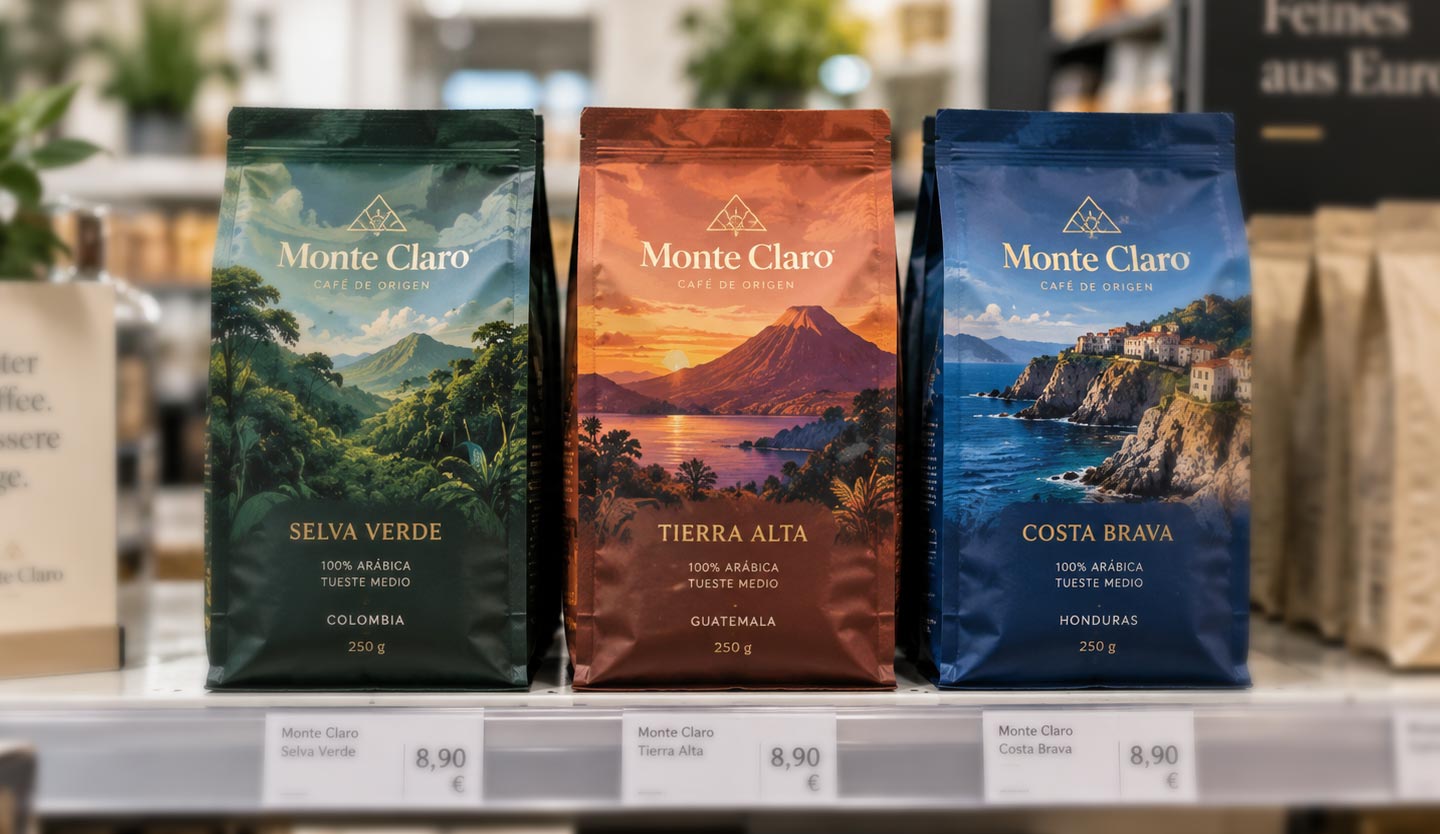
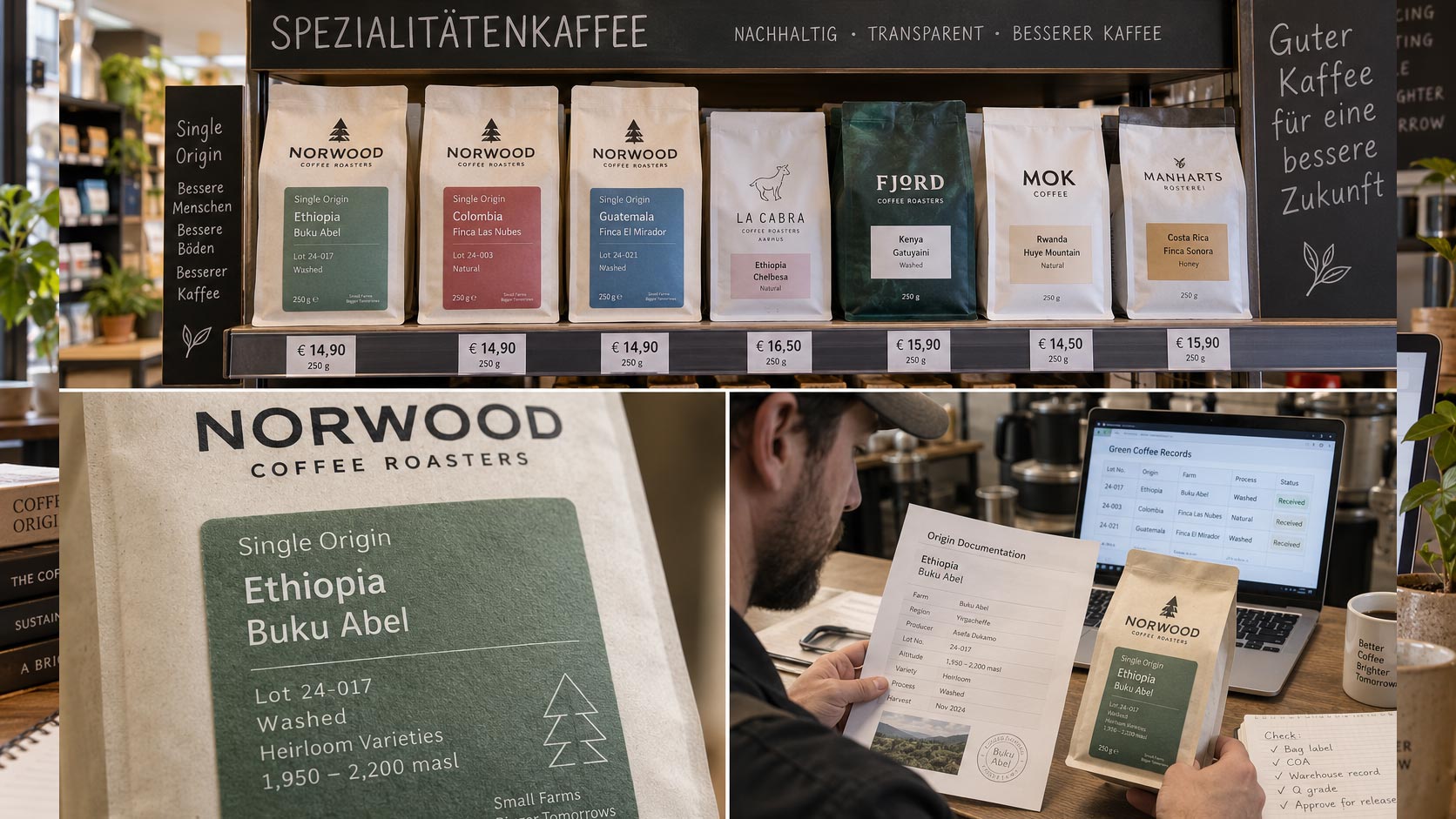
bag. Single origin. A region. A farm name. A lot number. Those are not decoration, they are assertions, and they are the version of your sourcing story that a regulator, a retail buyer or a customer can actually hold.
A vague bag is not a solution either, and we are not suggesting one. The point is narrower: every specific origin claim you print is a claim you should be able to evidence, and the compliance calendar has just put a date on when that matters.
What the Regulation Actually Asks For
Stripped to the essentials, and with the caveat that the detail is the part you take to someone qualified:
- A cut-off date. The commodities in scope may only enter the EU market if they were not grown on land deforested after 31 December 2020. Coffee is one of seven commodities covered, alongside cocoa, cattle, oil palm, rubber, soya and wood.
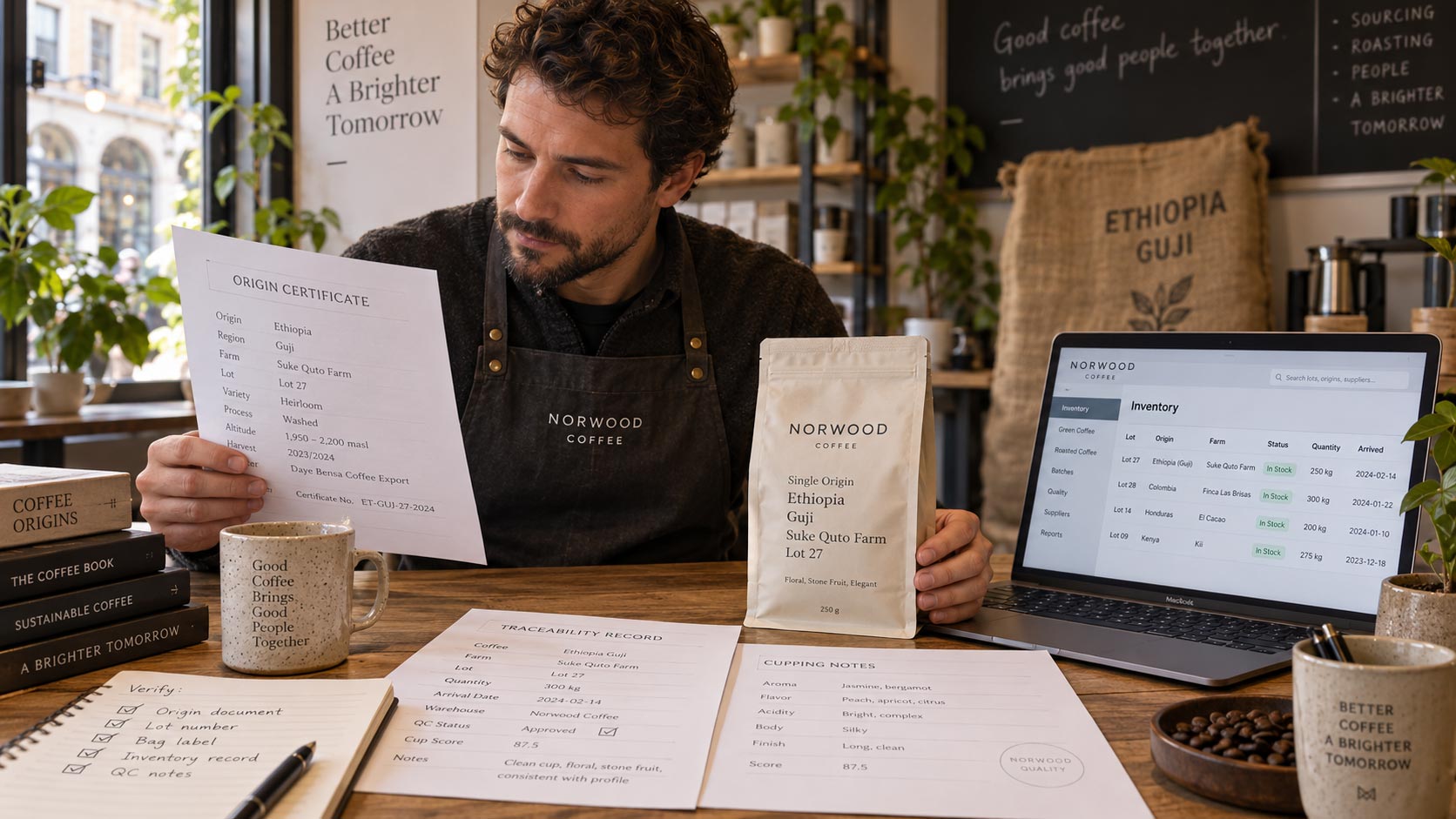
- Geolocation of the plots. Geo-coordinates for each plot of production land, to at least six decimal places. That is farm-level precision, not a country of origin.
- A due diligence statement. Filed in the EU's TRACES system, which issues a unique reference number for it.
- Reference numbers down the chain. Under the simplifications adopted, only operators placing products on the market first submit the statement. Downstream actors collect the reference numbers instead.
There are real easements in there. Micro or small primary operators in low-risk countries file a single simplified declaration rather than full statements, and downstream operators and traders other than SMEs only have to register in the information system. The direction of travel has been toward less paperwork, not more.
Why Printed Is Different From Posted
This is where it stops being a supply chain story and becomes a packaging one.
If your origin detail lives on your website, it is a five minute edit. If it is printed on ten thousand bags, it is a decision you made months ago and are now committed to until the run is gone. We have written before about how
every design carries its own minimum, and about how
combining designs to reach a volume locks you in harder still. The same arithmetic applies to the words on the bag, not just the artwork.
So the practical risk is not a regulator knocking. It is ordering a year of bags naming a specific farm in the months before your documentation for that farm is settled.
What to Settle Before the Next Run
None of this requires a redesign. It requires the artwork and the paperwork to agree:
- List every origin claim your current bag makes. Not just the front panel. The back, the story copy, the lot field, anything naming a place or a producer.
- Ask which of those you can evidence today, and which depend on a supplier sending something they have not sent yet.
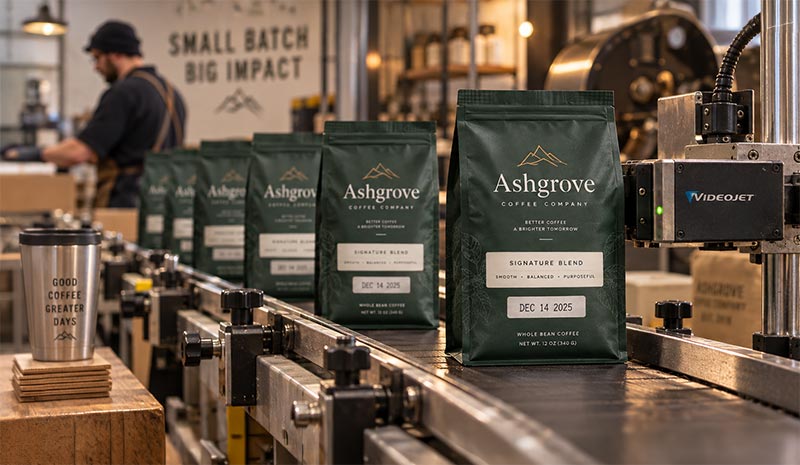
- Decide what belongs on the printed bag and what belongs on a label or a QR destination. A farm that changes lot to lot is a poor candidate for something printed ten thousand times. That is the same logic as putting the roast date on at fill time rather than in the artwork, which we covered in date coding.
- Time your reorder around your documentation, not the other way round. If a claim is not settled, print the bag that does not depend on it.
The Second EU Date on Your Calendar
This is the second EU regulation in a month that lands on coffee packaging from a direction roasters were not watching. In August it was the
PFAS restriction on food-contact packaging, which was about what the bag is made of. This one is about what the bag says.
Neither is a reason to panic and both are reasons to plan a print run with slightly more care than last year. If you sell into Europe and you are about to commit to artwork,
talk to our team about what to print and what to leave flexible, and take the compliance detail to someone qualified to give it.
Sources: the European Commission's Access2Markets update on EUDR implementation, and the European Coffee Federation. Dates and obligations are summarised here for packaging planning and are not compliance advice.