The Offer That Sounds Like Free Money
You have two coffees you want in custom bags. Rotogravure gives you the lowest cost per bag of any printing method, but it wants about 10,000 units, and neither coffee sells 10,000 on its own. So someone suggests the obvious fix: put both designs on the same run. Five thousand of each, ten thousand total, volume pricing on both. Two bags for the price of the tier you could not reach alone.
On the quote, it looks like free money. The trap is not in the quote. It is in the reorder, and almost nobody sees it until they are standing in it.
What a Shared Run Physically Is
To understand why, you have to know what is actually happening on the press, because this is a physical constraint and not a scheduling preference.
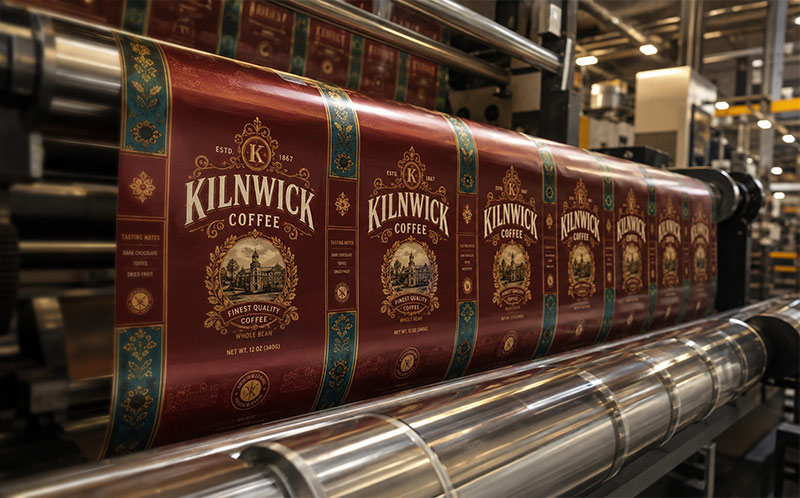
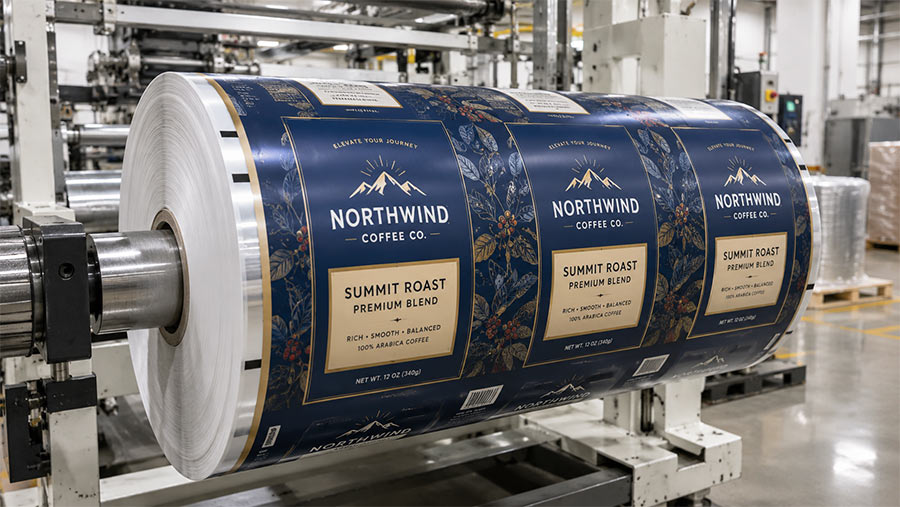
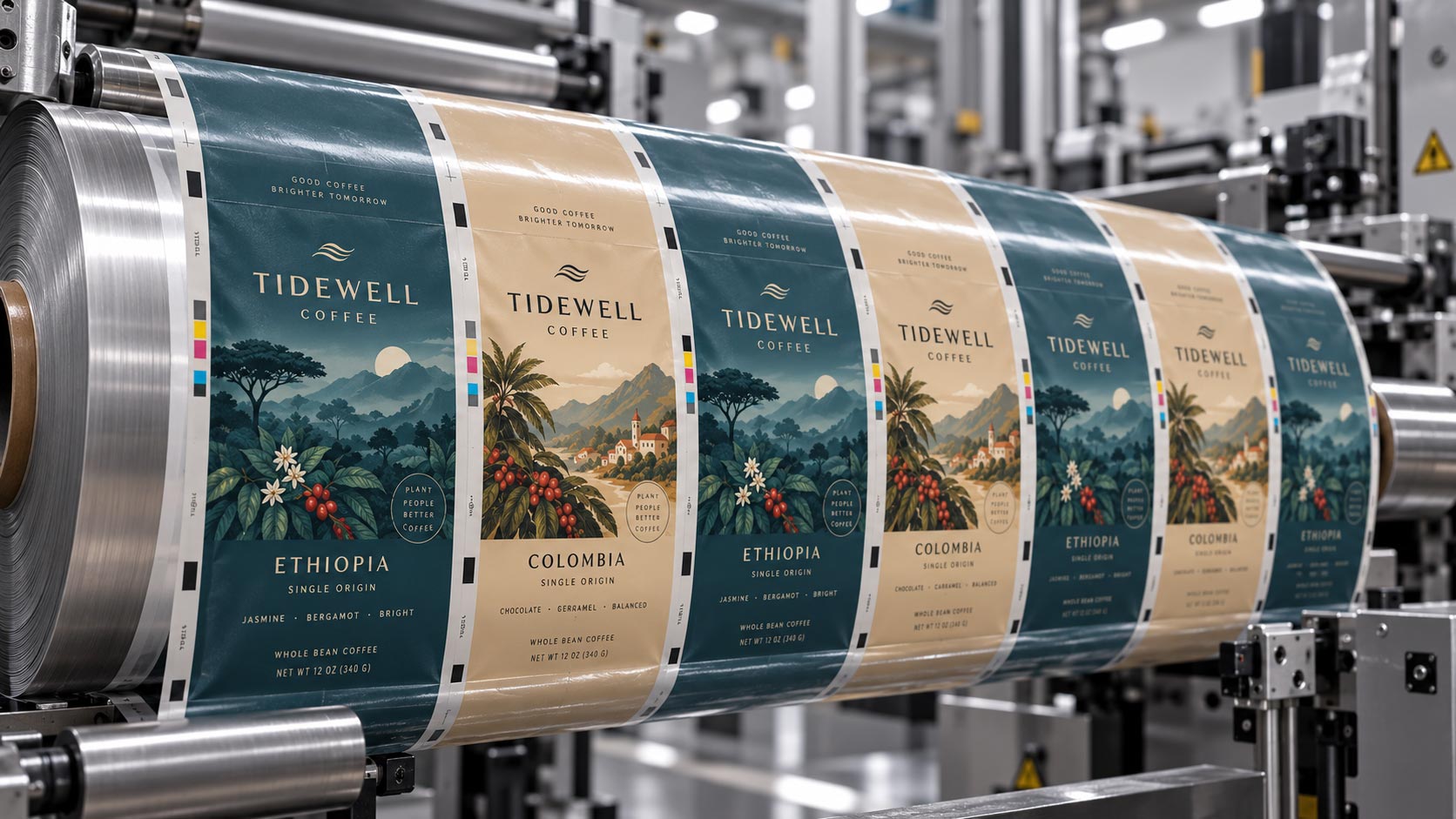
Rotogravure prints onto roll stock, which is a continuous sheet of film printed and wound onto a large spool. It is not a finished bag yet. That web later runs through a form-fill-seal machine, or gets converted into pre-made pouches. Our
guide to roll stock film covers the format in full.
The image on that web comes from engraved copper cylinders, and the cylinders are made as one set. When two designs share a run, both designs are engraved into that same set, and they repeat along the web in a fixed ratio. Design A, design B, design A, design B, for ten thousand units.
Read that again, because it is the whole article. The two designs are not two jobs that happen to run on the same day. They are one job. There is no setting on the press that prints only design A, because design A does not exist independently. It exists as half of a pattern cut into metal.
The Reorder Is Where It Turns
Six months later you have sold through your Ethiopia. It moved faster than anything else you carry and you want more, now.
Your Colombia did not move. You still have most of it sitting in the back.
You call to reorder Ethiopia. You cannot order Ethiopia. You can only order the run, and the run is both designs in that fixed ratio. To get 5,000 more Ethiopia bags, you take 5,000 more Colombia bags with them, on top of the Colombia you already could not sell.
That is the whole trap in one sentence:
the discount you took at the start quietly removed your ability to reorder your winner by itself. The saving was real and one time. The constraint is permanent, and it applies to every reorder for as long as those cylinders are your cylinders.
The Second SKU Is Not Free Just Because It Was Cheap
It is tempting to shrug at the extra bags. They were discounted, after all. But a bag you did not want carries costs that never showed up on the quote:
- Cash. Capital sitting in film for a coffee that is not selling is capital not buying green, not paying a roaster, not funding the SKU that is working.
- Space. Five thousand pouches is not a shelf. It is pallet space you are heating, cooling and insuring.
- Time. Unfilled bags do not last forever. Films age, and a bag printed for a coffee you have discontinued is not inventory, it is a write-off waiting to be admitted.
- Your own flexibility. The worst cost. You now have a reason to keep selling a coffee you would otherwise retire, because you have 8,000 bags for it.
What to Do Instead: One Design, SKUs by Label
The alternative is not to give up volume pricing. It is to reach the volume with one design instead of two.
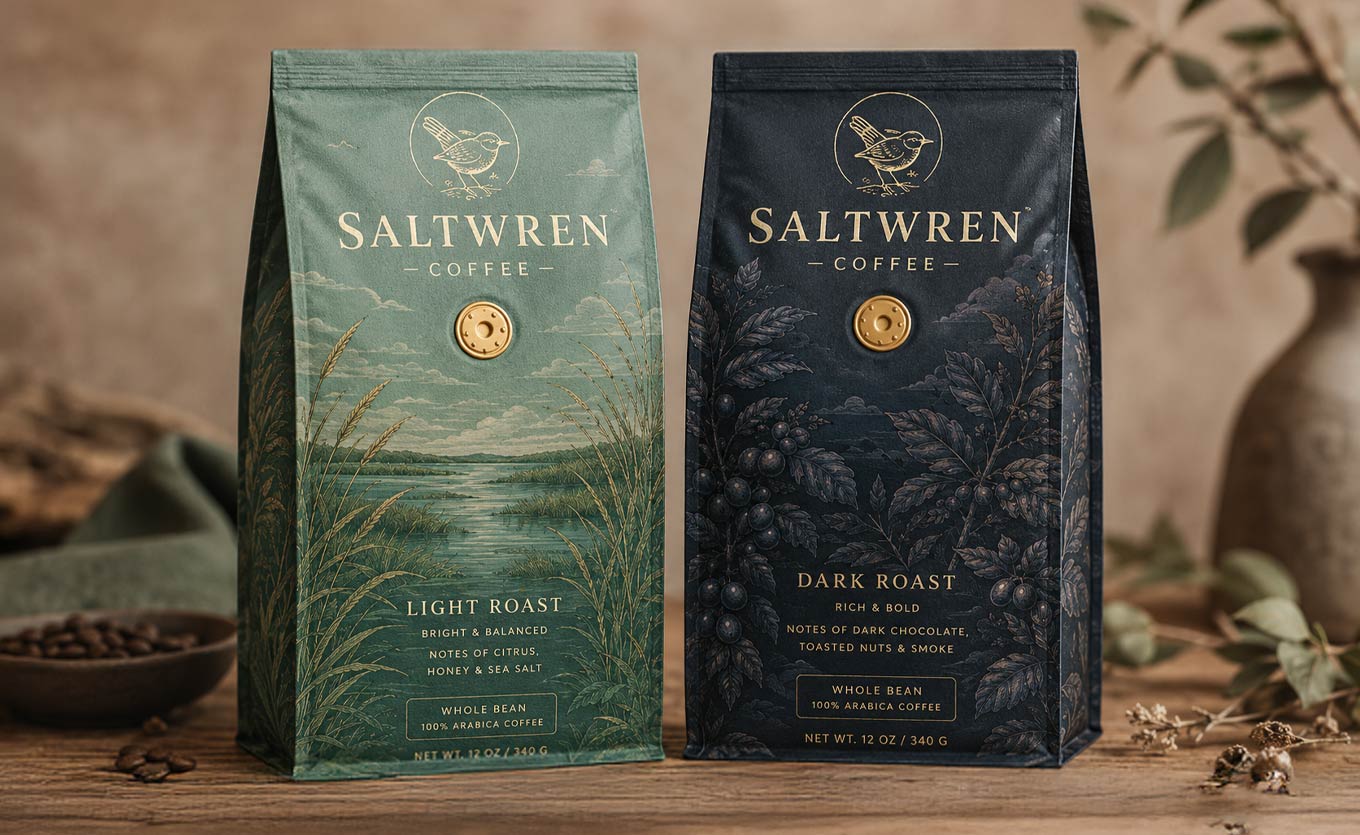
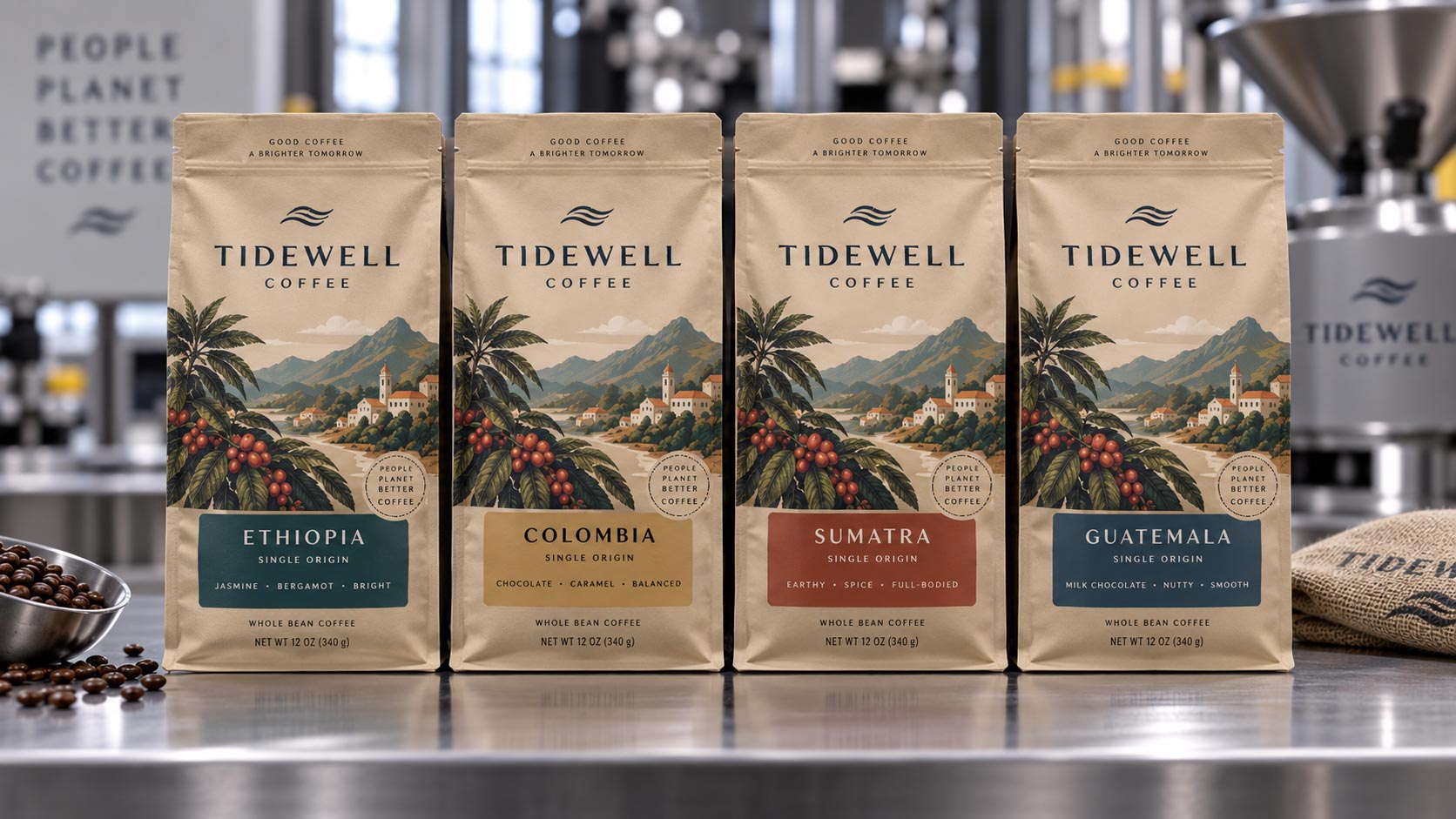
Print 10,000 of a single bag. One set of cylinders, one artwork, one SKU as far as the press is concerned. That bag carries everything about your brand that does not change from coffee to coffee. Then you differentiate the individual coffees with labels.
Now run the same scenario. Ethiopia sells out. You pull base bags from the same stock you already have, print Ethiopia labels in whatever quantity you actually need, and you are done. Colombia stays at whatever level Colombia deserves. Nothing forces you to make one decision on behalf of two coffees ever again.
You also gain something the shared run could never give you: you can add a third coffee, or a seasonal, or a single-origin you bought two bags of, without touching the press at all.
What Goes on the Bag, What Goes on the Label
The split is the only design work this approach really asks of you, and it is worth doing carefully up front.
- On the printed bag: your logo, brand colors, the structure and finish, your story or mission copy, your website and social handles, the recycling or compostability marks, and anything else true of every coffee you sell.
- On the label: the coffee name, the origin, the roast level, tasting notes, process, the roast or best-by date, and the weight if it varies.
Two practical warnings. Leave a deliberate, clean area in the artwork for the label to land, sized and positioned on purpose, rather than hoping a sticker looks intentional on top of a busy panel. And make sure the label stock and finish suit the bag: a glossy label on a soft touch matte bag reads as an afterthought. Our guides to
labeling your coffee bags and
applying labels straight and smooth cover both.
Where This Does Not Apply
This is a rotogravure problem, and being precise about that matters more than making the warning sound universal.
Digital printing has no plates and no cylinders. There is no shared tooling to lock two designs together, which is exactly why digital can start at about 500 bags per design. If you print two designs digitally, they are two genuinely separate jobs and you can reorder either one alone.
Digital has its own version of the same arithmetic, though, and it is worth naming. The 500 is
per design, not per order. Five coffees means five separate 500s, so 2,500 bags on your shelf before you have sold one. The mechanism is completely different from a shared cylinder set, but the conclusion lands in the same place: every design you add is a minimum you have to sell through. Our breakdown of
coffee packaging minimum order quantity puts the tiers side by side.
When Two Designs Really Are Worth It
None of this means one design is always right. It means combining designs to reach a minimum is the wrong reason to have two.
If a coffee reliably sells through 10,000 bags on its own, it has earned its own run, its own cylinders and its own reorder schedule, and it should have them. Two independent runs cost more up front than one shared run and are worth every dollar of the difference, because each one can be reordered without dragging the other along. If you are planning a full lineup,
designing a coffee bag product line works through how to keep several designs looking like one brand.
The honest test is simple. Ask whether each design can carry its own minimum. If yes, run them separately. If no, do not solve it by welding them together. Solve it with one design and labels.
Reach the Volume, Keep the Flexibility
A shared roll stock run is not a scam and nobody is hiding it from you. It genuinely lowers your cost per bag, and for a roaster with two coffees that both sell steadily and predictably forever, it might even be fine.
But coffee does not sell steadily and predictably forever. One origin becomes the thing everyone orders and another quietly stops moving, and when that happens you want to be able to chase the winner without buying the loser again. One design plus labels gets you the same volume pricing and keeps that door open.
If you are weighing a shared run right now,
talk to our team before you approve the artwork. Once the cylinders are engraved, the decision is made in metal.