The Number That Made Your Bag Smaller
In 2025 green coffee went somewhere it had never been. Arabica pushed above four dollars a pound, and roasters everywhere ran the same unpleasant arithmetic: raise the shelf price and watch people put the bag back down, or keep the price and give them less coffee.
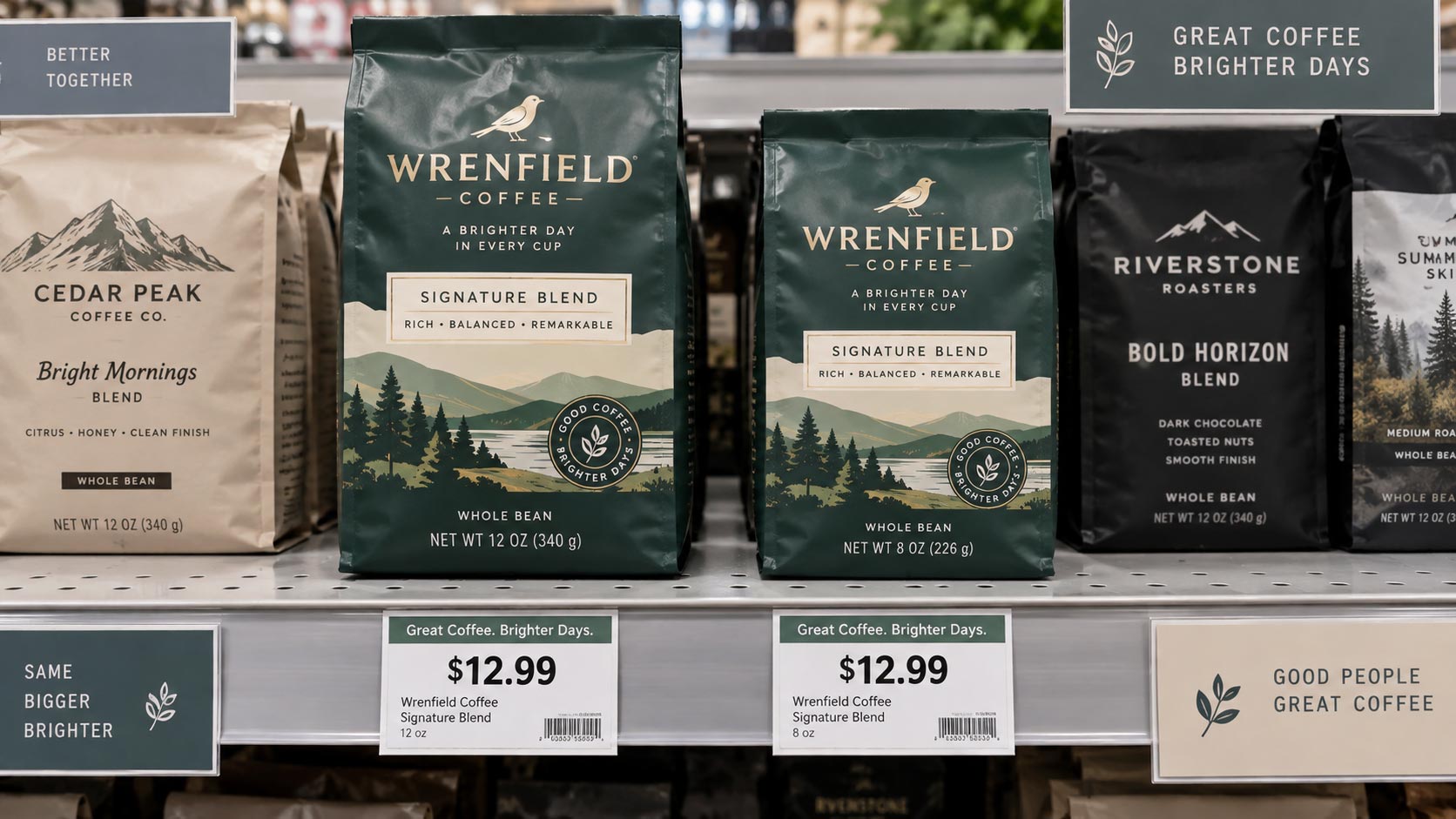
Most chose the second one. That is why 12 oz quietly became 10, then 8, and in some cases 6. We wrote about the mechanics of that shift in
the shrinking coffee bag, back when the direction of travel was only one way.
The direction of travel has changed. The bag has not, and it is not going to. Here is why.
What the Market Actually Did Next
Green has come a long way off the peak. Arabica closed at about $2.93 a pound on 4 September 2026, down roughly 10 percent in thirty days, and the supply picture behind that is genuinely better. The USDA's Foreign Agricultural Service is forecasting a record Brazilian 2026/27 crop of 71.9 million bags, up about 14 percent year on year, and the ICO's composite indicator has been drifting down month on month.
If you only read that paragraph, the obvious conclusion is that the pressure is off and the 12 oz bag can come home.
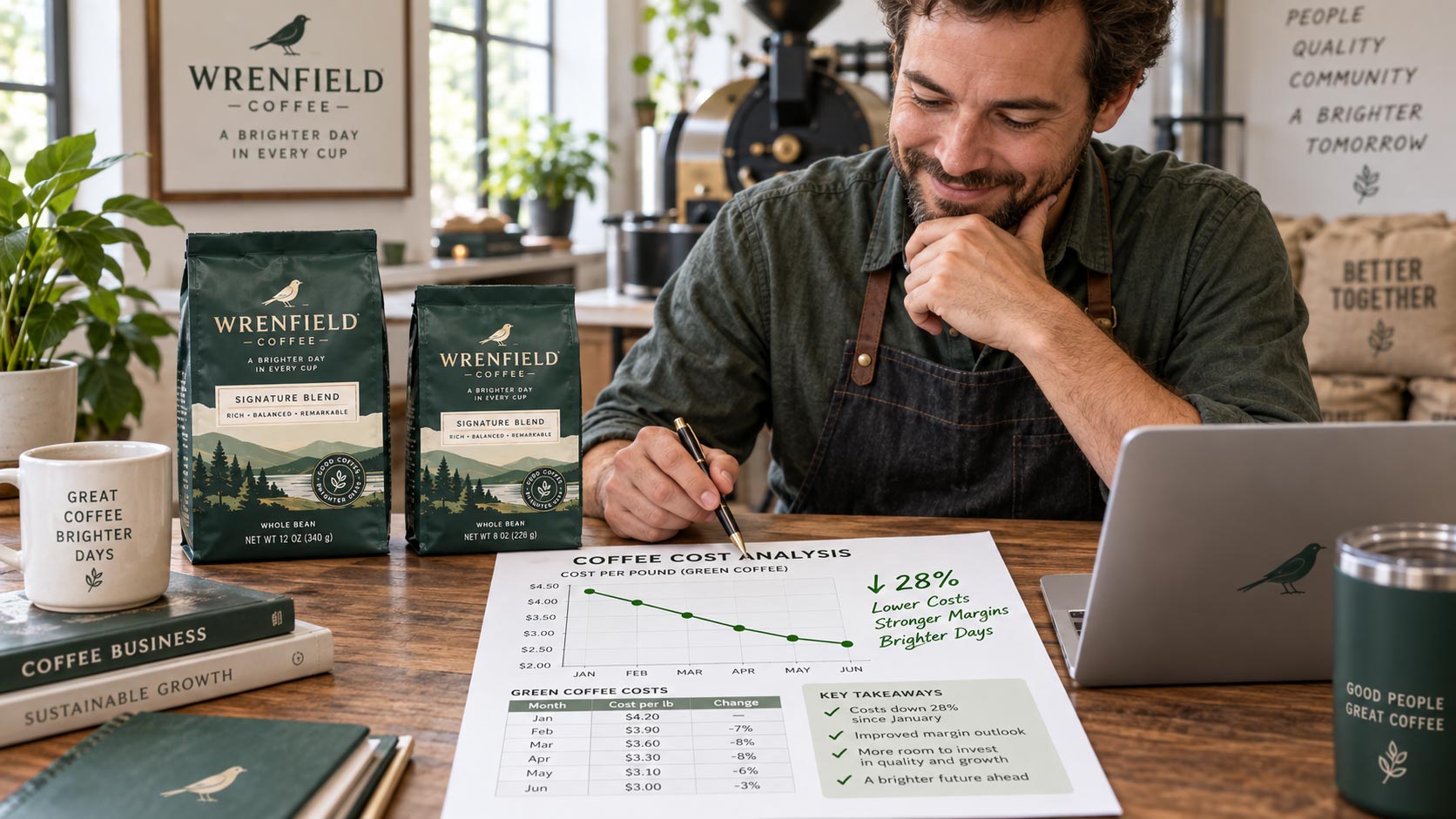
Now look at how it got here. Arabica fell to roughly $2.39 in early June, then rallied hard to somewhere around $3.20 to $3.40 by the middle of July, then came back down to $2.93 by September. That is a 38 percent fall and a 40 percent rally inside about four months.
Falling Is Not the Same as Stable
This is the part that decides the question, and it has nothing to do with the current price being low.
Packaging is a slow, committed decision. A size change means a new dieline, new artwork, and a new print run, and on a plated process it means new tooling. You are not adjusting a number in a spreadsheet, you are buying a physical object in quantity, months ahead, and then living with it.
So the real question is not "is green cheaper today." It is "am I confident enough about where green sits a year from now to buy several thousand bags against it." A market that moved 38 percent down and 40 percent up in a single summer is not offering you that confidence. Resize on this September's number and you may well be filling those bags during the next spike.
Five Reasons the Small Bag Stays
Even set the volatility aside and the economics still do not point backwards:
- The margin is real and nobody gives it back. Roasters held the shelf price and reduced the fill. That gap became margin at exactly the moment margin was hardest to find. Voluntarily handing it back requires a reason better than "green got cheaper."
- Shelf prices move one way. Cutting a price is easy and raising it is brutal. Going from 8 oz back to 12 oz at the same price means absorbing the difference yourself, and charging more for the bigger bag means asking a customer who has settled at one number to accept a higher one.
- The tooling is already bought. Dieline, artwork and a print run were all paid for at the new size. Reverting means paying for all of it again, and every size is its own minimum, as we covered in coffee packaging minimum order quantity.
- Retail locked it in. Buyers built shelf plans around the size you gave them. Space on a planogram is not returned on request, and a taller bag can simply stop fitting the shelf you were assigned.
- It turned out to work. This is the one nobody predicted. A smaller bag is a lower barrier for someone trying you for the first time, and it gets finished while the coffee is still good instead of going flat in the last third of a 12 oz bag.
The Honest Case for Going Back
There are roasters for whom the bigger bag is still right, and pretending otherwise would be lazy.
- You sell to people who count ounces. Heavy daily drinkers and value buyers do the math per pound, and for them a smaller bag reads as worse value however you present it.
- You run a subscription. When the customer sees the same charge every month, the perceived value of what lands on the doorstep matters more than the shelf price, because there is no shelf.
- Your 12 oz assets still exist. If the dieline and artwork are sitting there and your volume clears the minimum, the cost of going back is far lower than it is for someone starting fresh.
- You went too small. Six ounces is a genuinely awkward size for a household that brews daily, and some brands overshot.
If two or more of those describe you, size is worth revisiting. If none do, cheaper green is not on its own a reason.
A Better Use for the Breathing Room
Lower input costs are real money. The question is where it does the most good, and resizing is rarely the best answer:
- Put it in the bag rather than in the fill. A better barrier, a matte or soft touch finish, a cleaner closure. The customer registers all of that immediately, and unlike a size change it is not a promise you have to keep forever.
- Hold the price and keep the margin. Rebuild the cushion the last two years took out of you. That is not cynical, it is what lets you absorb the next spike without touching the bag at all.
- Add a size rather than replace one. If you want a bigger format, run it alongside the small one and let customers vote. Just remember every design carries its own minimum, so plan it as a real SKU and not an experiment.
- Buy your reorder cushion. Order the next run earlier than you need it. Lead times, not green prices, are what actually cause a stockout.
Size Is a Brand Decision Now, Not a Cost One
The interesting thing about this whole episode is what it revealed. The small bag arrived as a defensive move against a price shock, and it stayed because it turned out to be a decent format on its own terms, sold at a price people are comfortable paying, finished while the coffee is still fresh.
Green will keep moving, because green always does. Your bag should not move with it. Pick the size that suits your coffee, your customer and your shelf, then let the commodity market do whatever it is going to do without dragging your packaging along.
If you are weighing a size change for your next run,
talk to our team before you commit to tooling. We will walk through what your current
custom coffee bags would cost to change against what the same money buys if you leave the size alone.
Sources: ICE arabica settlement and 30-day change via Barchart; Brazil 2026/27 crop forecast from the USDA Foreign Agricultural Service; composite indicator movement from the ICO Coffee Market Report.