The One Coffee Bag Spec Nobody Talks About
When you order coffee bags, you pick a size, a bag style, a finish, and a barrier. Thickness almost never comes up. It should.
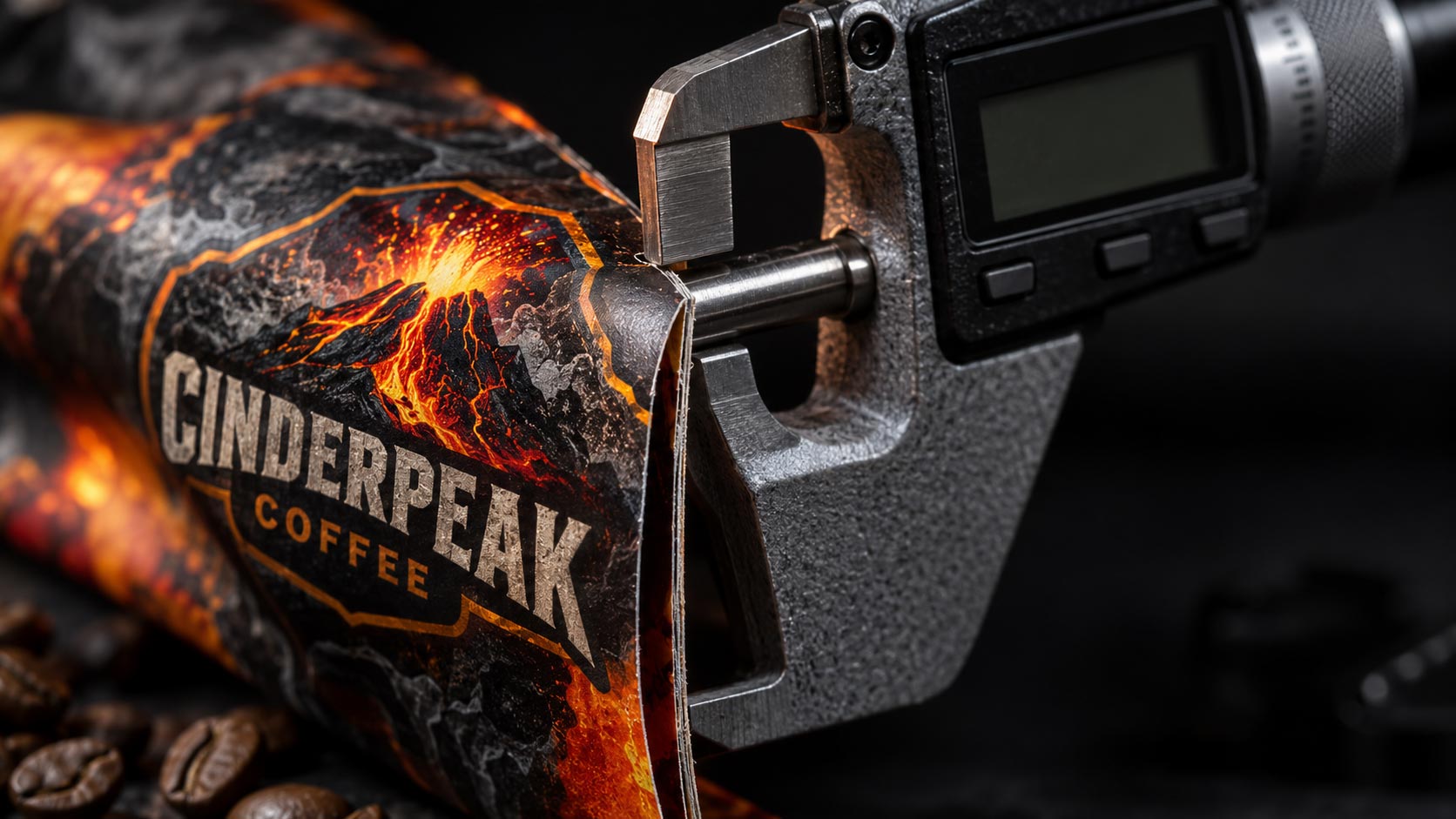
Thickness is the quiet spec that decides whether your bag arrives crisp and full or shows up creased, split at the seam, or slowly leaking air. Two bags can look identical on a screen and feel like completely different products in your hand, and the difference is usually thickness.
The tricky part is the language. Thickness gets measured three different ways, mil, micron, and gauge, and nobody explains which is which. Once you know those three words, you can read a spec sheet, compare two quotes fairly, and stop paying for a bag that looks the part but folds like a napkin.
Mil, Micron, and Gauge: What the Numbers Mean
All three words describe the same thing, how thick the film is. They just use different rulers.
- A mil is one thousandth of an inch, or 0.001 inch. It is not a millimeter, which trips up a lot of people. One mil equals about 25 microns.
- A micron is one thousandth of a millimeter. Most suppliers spec the individual layers of a coffee bag in microns, because the layers are thin.
- Gauge is an older film term. For most flexible films, 100 gauge equals 1 mil, so an 80 gauge film is 0.8 mil.
If your quote lists microns and another lists mils, you are not comparing apples to apples until you convert. An easy way to keep it straight: 1 mil is about 25 microns, and higher numbers mean thicker film.
How Thick Is a Coffee Bag, Really?
Here is the part that surprises people. A coffee bag is not one sheet of plastic. It is a laminate, which means several thin layers bonded into a single wall.
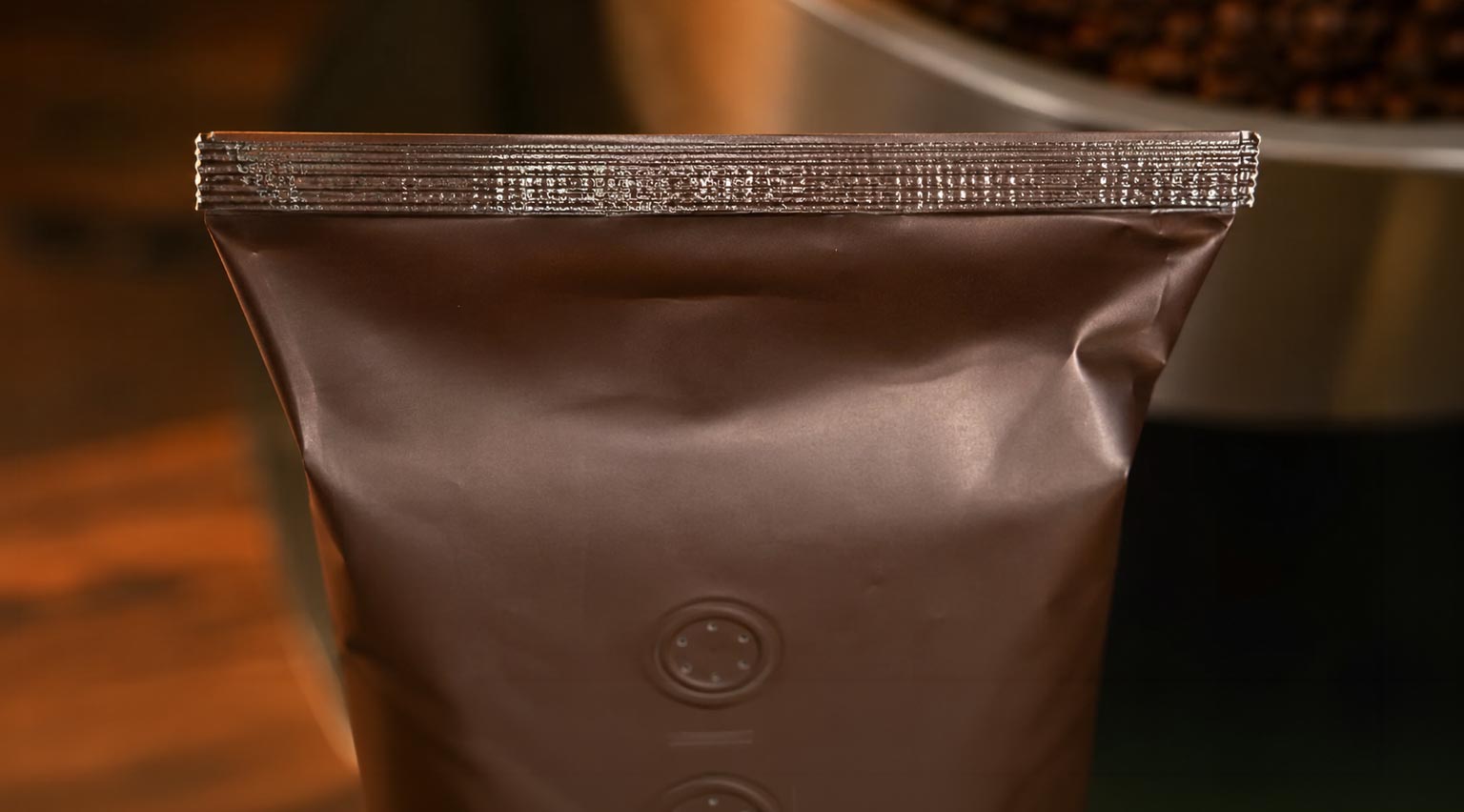
A typical bag has an outer print layer, a middle barrier layer, and an inner sealant layer, sometimes more. Each layer is measured on its own, then they add up to the total wall thickness. Across the food pouch industry, a finished coffee bag wall commonly lands somewhere in the 3 to 7 mil range, depending on the structure and the barrier. Those figures are typical industry ranges, not a fixed spec, so treat them as a guide rather than a promise.
What matters is that the total is built from layers that each do a job.
- The outer layer carries your print and takes the abuse of handling and shipping.
- The middle layer is the barrier that blocks oxygen and light, often a very thin foil or metallized film.
- The inner layer is the sealant that melts to form the seal at the top and bottom.
You can see all of it laid out in our
anatomy of a coffee bag, which labels every layer and part.
What Thickness Buys You
Thickness is not vanity. A thicker, well built wall gives you real, physical benefits.
- Puncture and abrasion resistance, so beans and box corners do not wear a hole in transit.
- A stronger, more reliable heat seal, because a thicker sealant layer welds with more margin for error.
- Stiffness and shelf presence, so a stand up pouch actually stands up straight and faces the customer.
- Less pinholing, since a fuller barrier layer is harder to crack when the bag flexes.
If your bags keep failing at the seam or arriving dented, thin film is one of the first things to check. A whisper thin bag can pass a quick glance and still fail the moment it is filled, shipped, and stacked, which is exactly the story behind
why coffee bag seals fail.
Why Thicker Is Not Always Better
Here is where a lot of buyers overcorrect. More mils is not automatically the answer, and chasing the thickest possible bag can backfire.
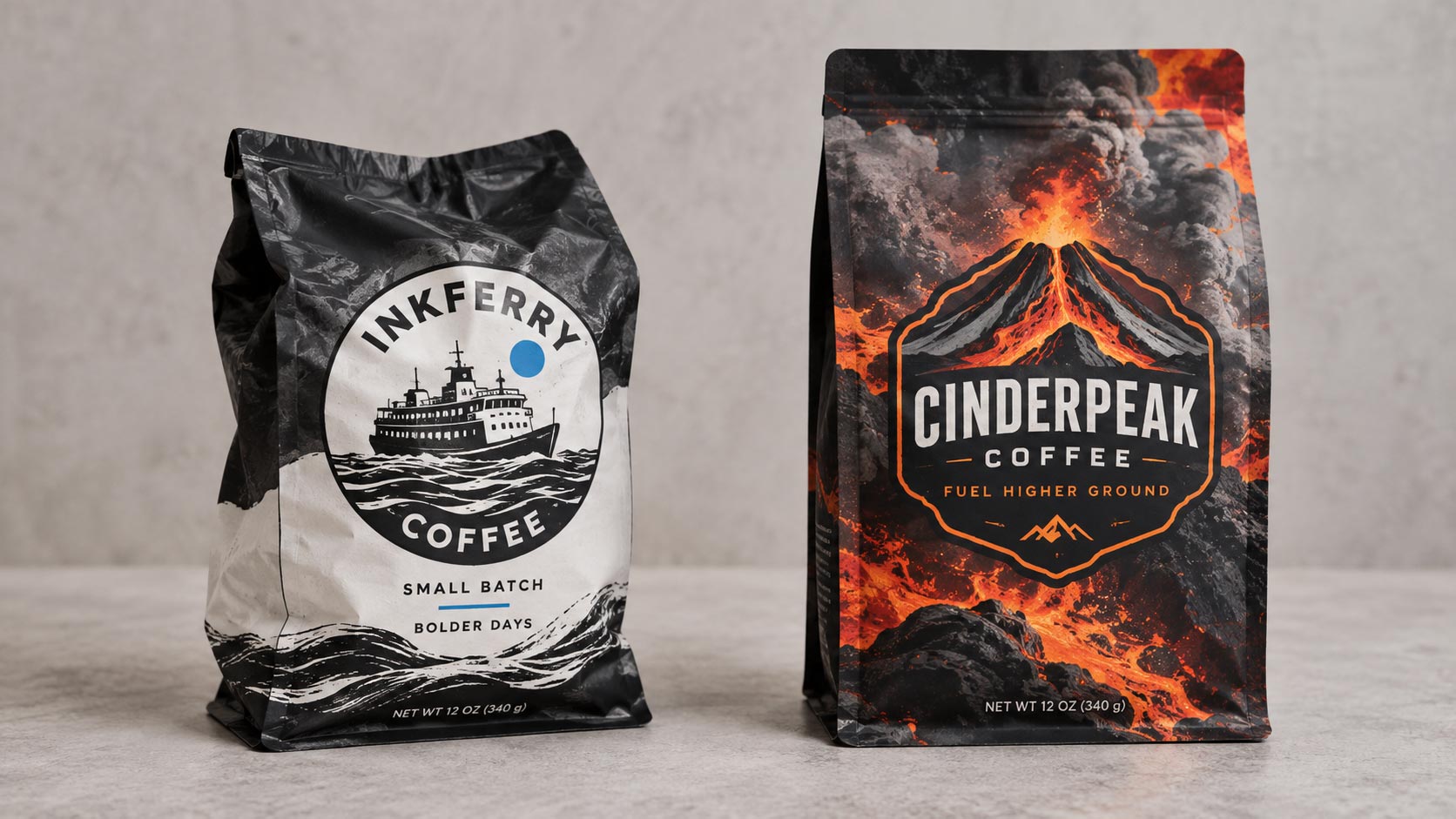
- A very stiff bag is harder to fold, form, and seal cleanly, which can create seal problems instead of solving them.
- Extra material means extra cost and more weight to ship, for protection you may not need.
- More plastic works against a sustainability story, and it adds to what your customer throws away.
The goal is not the thickest bag. The goal is the right thickness for your coffee, your fill weight, and how far the bag has to travel.
Thickness and Barrier Are Not the Same Thing
This is the most common mix up, so it is worth stating plainly. Thickness is how much film there is. Barrier is how well that film blocks oxygen, light, and moisture. They are related, but they are not the same.
A thick bag with a weak barrier structure can still go stale, because freshness comes from the right barrier layer, usually foil or a metallized film, not from raw thickness. A thinner bag with a proper aluminum barrier can outlast a chunky bag that skipped it. If you want the freshness side of the story, that lives in the layers, and we break it down in our guide to
coffee bag barrier materials. When you spec a bag, ask about both the total thickness and the barrier layer, not just one.
How to Spec Thickness for Your Coffee
You do not need to become a film engineer. You just need to match the bag to the job.
- Match thickness to fill weight. A 5 pound wholesale bag takes more abuse than a 12 ounce retail bag and usually wants a heavier wall.
- Think about the trip. Bags that ship straight to customers or travel long distances earn their extra thickness.
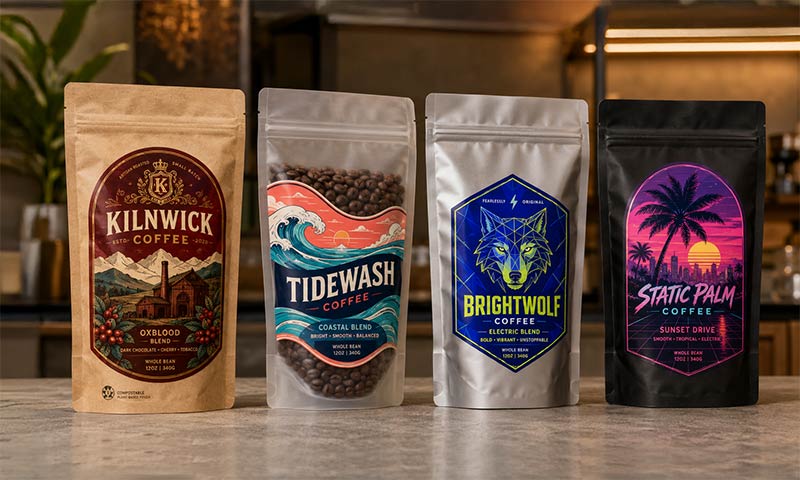
- Do not judge by the picture. A bag that looks premium on screen can be printed on thin film, so ask for the structure, not just the art.
- Remember the print method does not set the strength. Whether you go digital for a small run or rotogravure for high volume, the wall structure is what protects the coffee.
- Weigh thickness against your sustainability goals. If you run compostable or recyclable material, talk through how thickness and end of life fit together.
The easiest move is to tell your packaging partner what is going in the bag, how heavy it is, and how it ships, then let them recommend a structure. Thickness should be a decision, not an accident.
The Bottom Line: Thickness Is a Choice, Not a Guess
A coffee bag lives a hard life. It gets filled, sealed, boxed, shipped, stocked, and handled, and thickness is a big part of what carries it through.
Learn the three words, mil, micron, and gauge, know that your bag is a stack of layers and not one sheet, and remember that the right thickness beats the thickest every time. When you are ready, our team specs
custom coffee bags around your coffee, your fill weight, and your route, so thickness is chosen on purpose, not left to chance.