Ink Does Not Weld
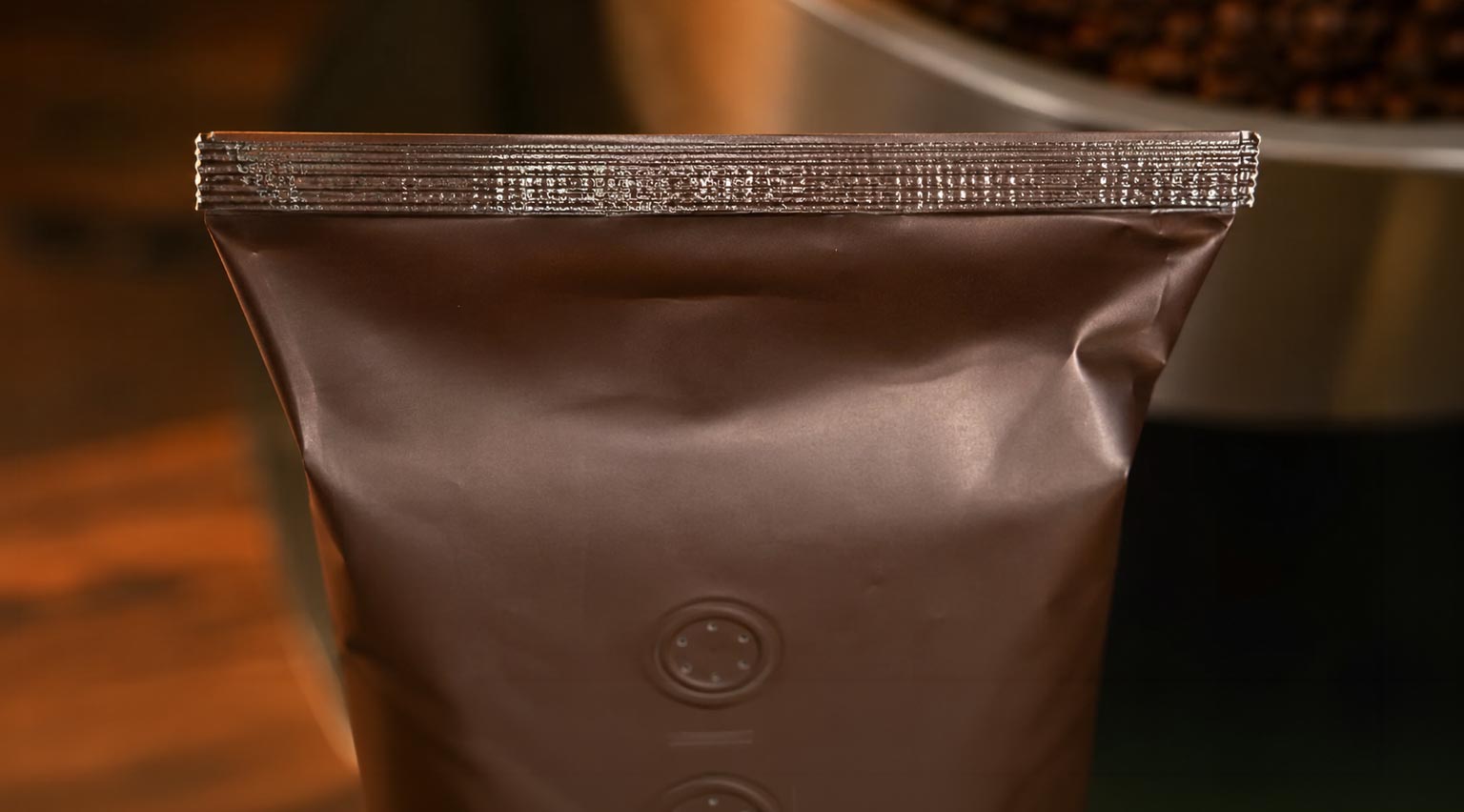
A heat seal is not glue and it is not pressure. It is a weld. The two inner faces of the film are heated until they soften, pressed together, and allowed to cool as one continuous piece of plastic. Done properly the joint is stronger than the film on either side of it.
That only works if the two faces can actually reach each other. Anything sitting between them does not melt into the weld, it sits inside it, and the seal forms around it instead of through it.
Most of the time the thing in the way is dust or product. Sometimes it is your own artwork.
The Seal Zone Is Not Printable Area
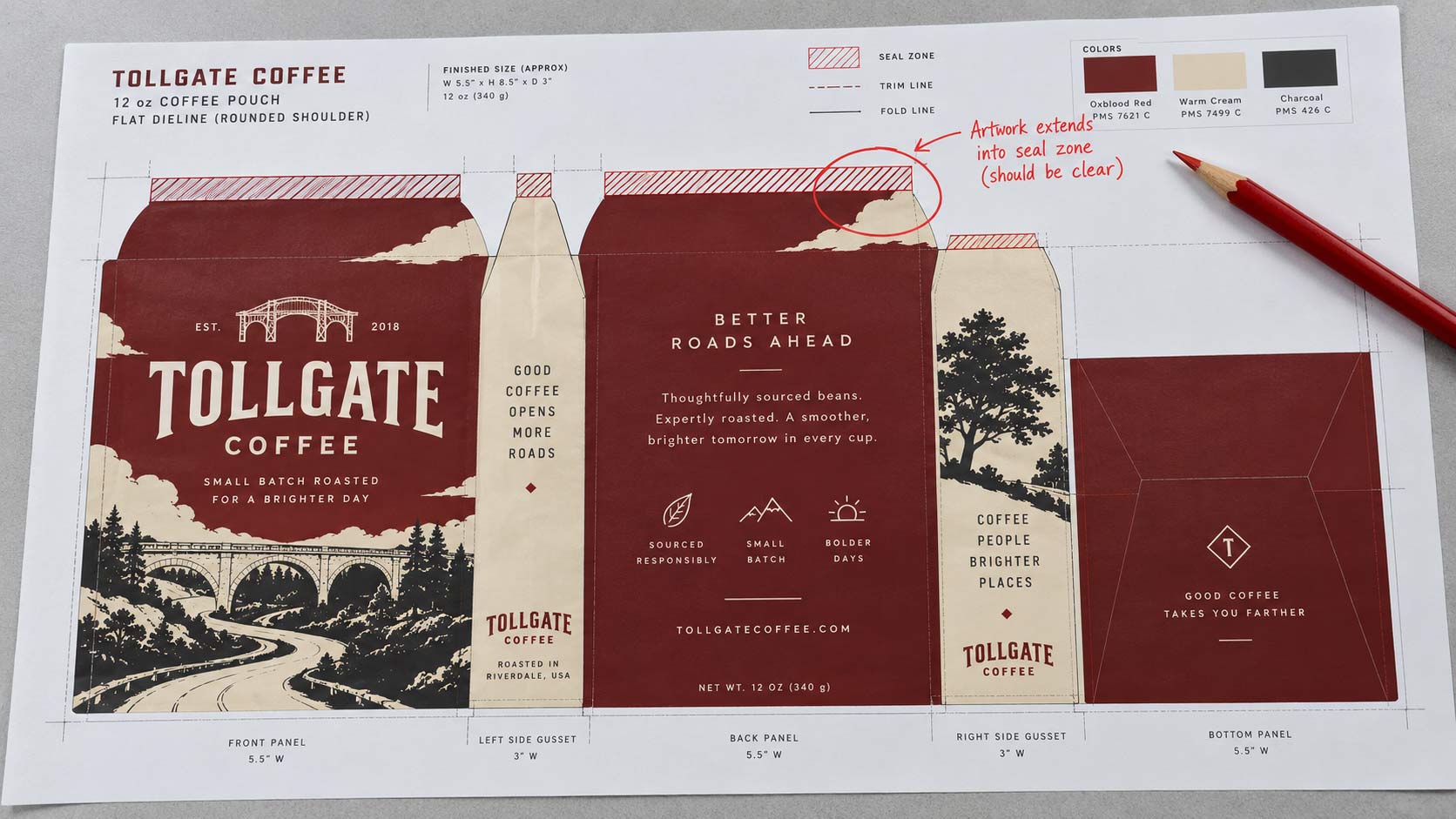
Every dieline has a strip along the top, the bottom and usually the sides where the bag will be sealed. It looks like ordinary surface on a flat file, and that is exactly the problem. On screen there is nothing to distinguish it from the rest of the panel, so a background colour gets extended to the edge, or a graphic gets nudged a few millimetres for balance, and part of the design now lives where the weld has to happen.
The bag is still made. It is still printed beautifully. It just has a seal with ink in it, which is a seal with a built in weakness running the full width of the bag.
This is the part that makes it so frustrating. Nothing went wrong in production. The press ran correctly, the laminate cured correctly, the sealing jaws were set correctly. The weakness was designed in and then faithfully reproduced across the entire order.
Why It Does Not Fail Immediately
A seal with ink in it is usually not an open seal. It is a weaker one, and weaker takes time to show.
The bag comes off the line looking right. It survives packing, because nothing is stressing it yet. It gets through most of distribution. Then somewhere later, under the weight of a stack, or a warm truck, or one firm squeeze by a customer, the compromised section lets go. By then the bag is a long way from the press, and the obvious suspects are the sealer, the film and whoever packed it.
The delay is the whole reason this gets misdiagnosed. If artwork in the seal zone opened bags at the filling line, somebody would find it in an afternoon.
Varnish and Heavy Coverage Count Too
It is not only ink. Several things can sit between the faces and none of them weld.
- Heavy ink coverage, especially a solid flood colour carried right to the edge of the panel.
- Varnish and coatings, which are specifically designed to sit on the surface and resist things, including bonding.
- Matte and soft touch finishes, which change the surface character exactly where you need clean film.
- Foil and metallic effects, which behave differently under heat than the film around them.
- A registration shift that moves artwork intended to stop short of the seal a little further than planned.
That last one matters more than people expect, because it means a design can be correct on the file and still end up marginal on press. Leaving real clearance rather than exactly enough is what absorbs normal variation.
Where Coffee Packaging Quality Actually Gets Decided
This is a good example of something we say often and that customers reasonably find hard to believe until they see it: most of the quality of a coffee bag is decided before anything is printed.
By the time a job is on press, the dieline is fixed, the seal zones are fixed, and the artwork either respects them or it does not. A supplier racing to the earliest possible date does not have a stage where somebody looks at your file against the dieline and asks whether that background should really run to the edge. A supplier with steps in their schedule does.
That is the same argument we make about
curing time, and it lands the same way. The parts of our process that make a date look longer are the parts that keep problems out of your filling room. Checking artwork against the seal zone costs nothing and takes a conversation. Discovering it after ten thousand custom coffee bags are printed costs an order.
How to Keep Your Artwork Out of the Weld
None of this is difficult. It is a handful of habits at the file stage.
- Work on the real dieline. Not a rectangle, not last year's file. The current dieline for the exact format you ordered.
- Keep the seal zones visible while you design, on their own layer, switched on. Most of these mistakes happen because somebody could not see the boundary.
- Leave genuine clearance. Stop the artwork short of the seal with room to absorb normal registration movement.
- Watch backgrounds and floods specifically. Logos rarely cause this. Full bleed background colour almost always does.
- Ask where the varnish goes. A coating applied across the whole panel reaches the seal zone even when the ink does not.
If you are preparing new coffee packaging artwork and are not certain where the seal zones fall on your format,
send us the file and the dieline together and we will mark them before anything goes to press.
How to Tell This Is What Happened
There is a quick way to separate this from the other reasons a seal fails.
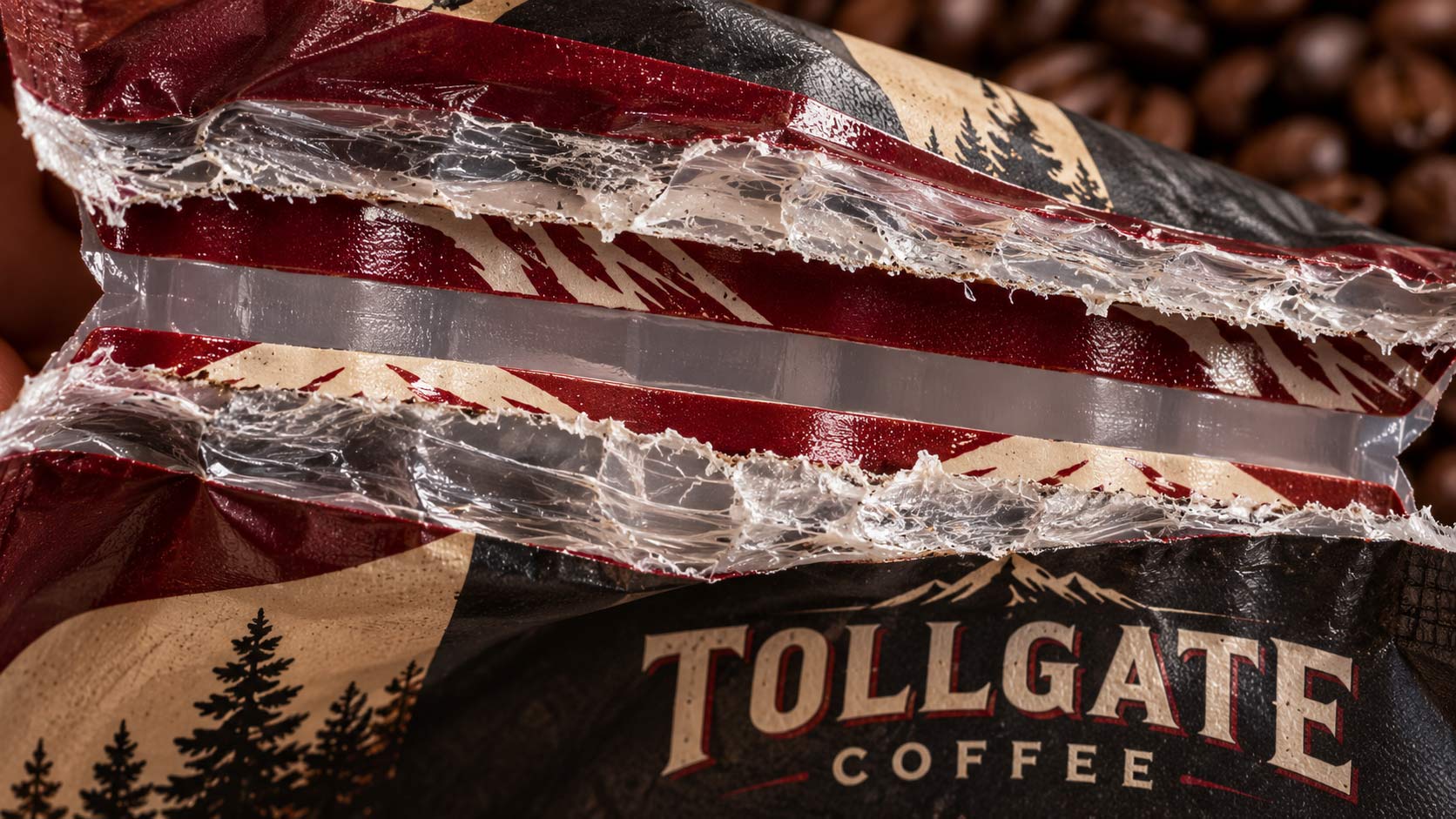
Peel a failed seal open and look at the surface. A seal that was contaminated by dust or product tends to fail unevenly, in patches, wherever the debris was. A seal compromised by artwork fails in a band, in the same place on every bag, with an edge that follows the shape of the printing. Consistency is the signature. If every bag in the run fails in the same strip, the cause was designed in rather than introduced on the day.
Once you have seen that pattern, compare it against the file. The shape of the weak band and the shape of the graphic will match, and that is the end of the investigation.
If the failures are scattered rather than consistent, you are looking at a different problem, and
why coffee bag seals fail covers the contamination side. If the artwork looks right flat but wrong on a filled bag, that is
approved flat, printed on a curve.
Why It Is Worth Knowing
The reason this one is worth your attention is that it is entirely preventable and completely invisible until it is expensive.
There is no inspection that catches it, because the bag is made correctly. There is no machine setting that fixes it, because the machine is fine. There is only the moment, months earlier, when somebody either looked at the artwork against the dieline or did not. A design decision became a structural one, and nobody noticed because the two live in different parts of the process.
Keep the seal zones switched on in your artwork file, leave real clearance at the edges, ask where the varnish lands, and treat the dieline as a drawing of a physical object rather than a frame around a layout. Those few minutes are the cheapest quality control available anywhere in custom coffee packaging, and they happen before a single bag exists.