Why Stock Bags Are an Inventory Decision
Packaging is one of the few things in a roastery that can stop the whole operation cold. Green coffee you can source, a roast you can schedule, but if the bags are not on the shelf, finished coffee sits in bins and orders go out late or not at all. That fear pushes a lot of roasters into the first mistake, which is buying a mountain of bags so they never have to think about it again. It feels safe, and sometimes it is, but it quietly locks up cash and floor space in a product that does nothing until coffee goes in it.
The second mistake is the opposite. A roaster buys a cautious little batch, sells faster than expected, and discovers that packaging does not appear out of thin air. Stock bags are the format built for exactly this problem, because they come out of existing inventory rather than a custom print run, which makes them the one kind of packaging you can genuinely manage like a stocked supply. That also means the real question is not which bag to buy, it is how many stock bags to keep on hand at any given moment.
Start With How Fast You Actually Sell
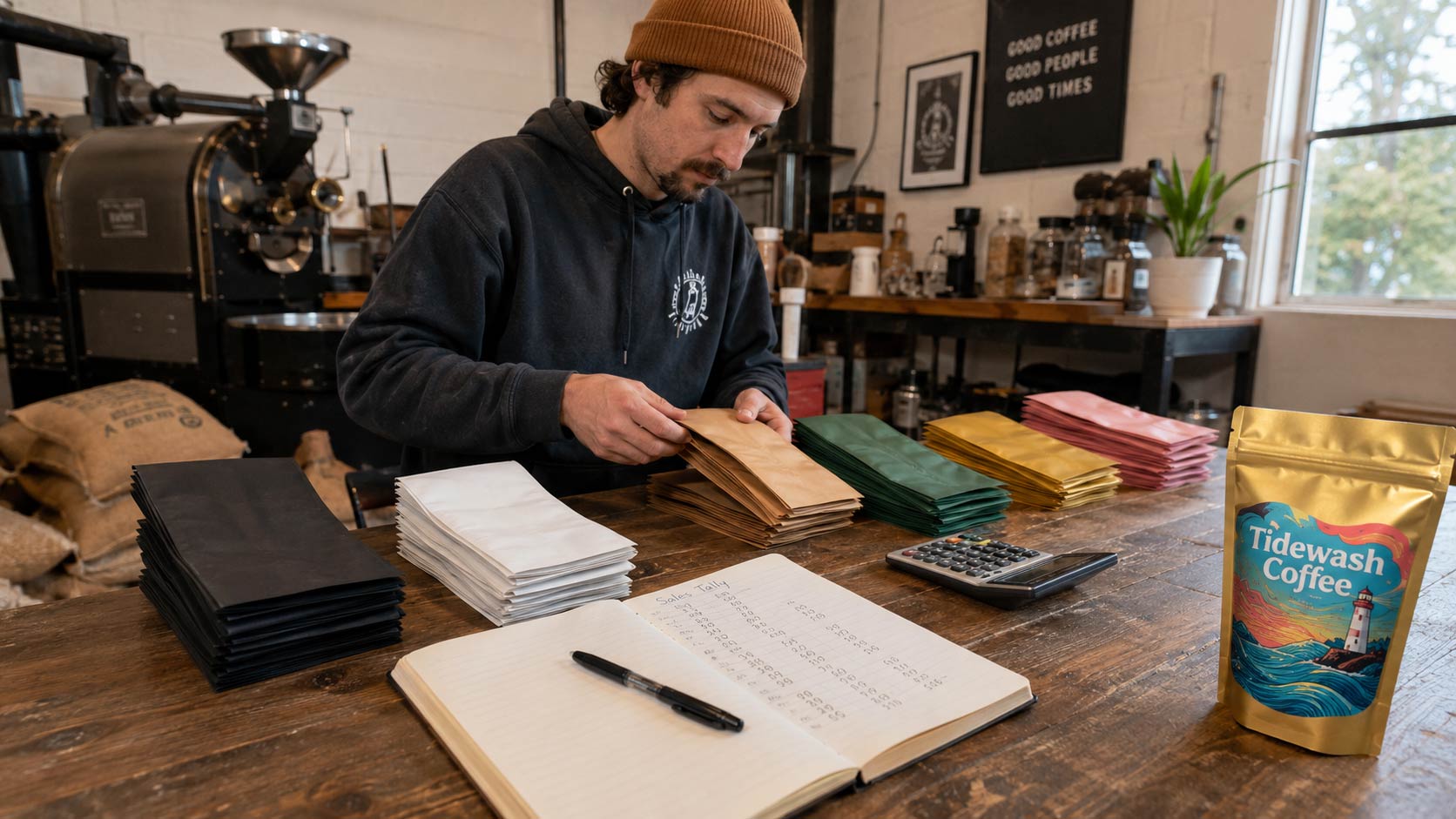
Every useful number starts with your sales speed, which inventory people call velocity. All it means is how many bags of one coffee you move in a typical week. Not your best week, not the week you did a festival, a normal week. If you have been selling for a few months that number is already sitting in your sales reports, and if you are brand new you will have to estimate it and correct it after your first real month.
The important detail is to run this per product, not for your whole business. A house blend that moves steadily and a limited single origin that trickles out need very different bag counts, and averaging them together hides both truths.
- Count bags sold per week for each coffee separately, using a normal week rather than a peak
- Note your seasonal swings, since holiday and gifting months can lift volume sharply
- Separate your channels, because wholesale accounts reorder in predictable rhythms while walk-in traffic wanders
- Track how often you launch a new coffee, since every new product pulls from the same blank bag supply
Once you know that weekly number, the rest is arithmetic. If you are still deciding which sizes you sell at all, our guide to
stock coffee bag sizes is the place to settle that first, because size decisions change every count that follows.
The Reorder Point, in Plain Numbers
A reorder point is simply the bag count that tells you it is time to buy more. Above it, you keep roasting. At or below it, you order today. It works because it accounts for the one thing gut instinct always forgets, which is that bags take time to arrive after you decide you want them. The formula is short enough to keep on a sticky note.
Weekly sales multiplied by the number of weeks it takes to get bags, plus a safety cushion, equals your reorder point. Say you move 100 bags a week and your resupply takes three weeks door to door. You will burn 300 bags during the wait, so 300 is your bare minimum trigger. Add a cushion of two to four weeks of sales for the surprises and you land closer to 500 or 600 bags as the number that should make you place an order rather than hope.
- Weekly sales times resupply weeks gives you the bags consumed while you wait
- A safety cushion of two to four weeks of sales absorbs a busy stretch or a shipping delay
- Add the two together and you have the trigger number for that specific bag
- Recheck it every few months, since growth quietly makes an old reorder point too low
Notice that this gives you two separate answers. One is when to order, which is the reorder point. The other is how much to order, which is enough to cover a comfortable stretch of selling without drowning in inventory.
Why Stock Bags Shrink the Waiting Half
Here is where the format earns its place in the formula. The lead time term is what makes reorder points big, and stock bags cut it down. Because they ship from existing inventory instead of a production run, the wait is short, and a shorter wait means a lower reorder point and less cash parked on your shelf.
Compare that to custom printing, which is a manufacturing run, not a shelf item. Standard production at Savor Brands typically takes about 9 to 11 weeks after your artwork is approved, and that clock does not start until the art is truly signed off. Plug 10 weeks into the same formula at 100 bags a week and your reorder point jumps to 1,000 bags plus a cushion. That is not an argument against
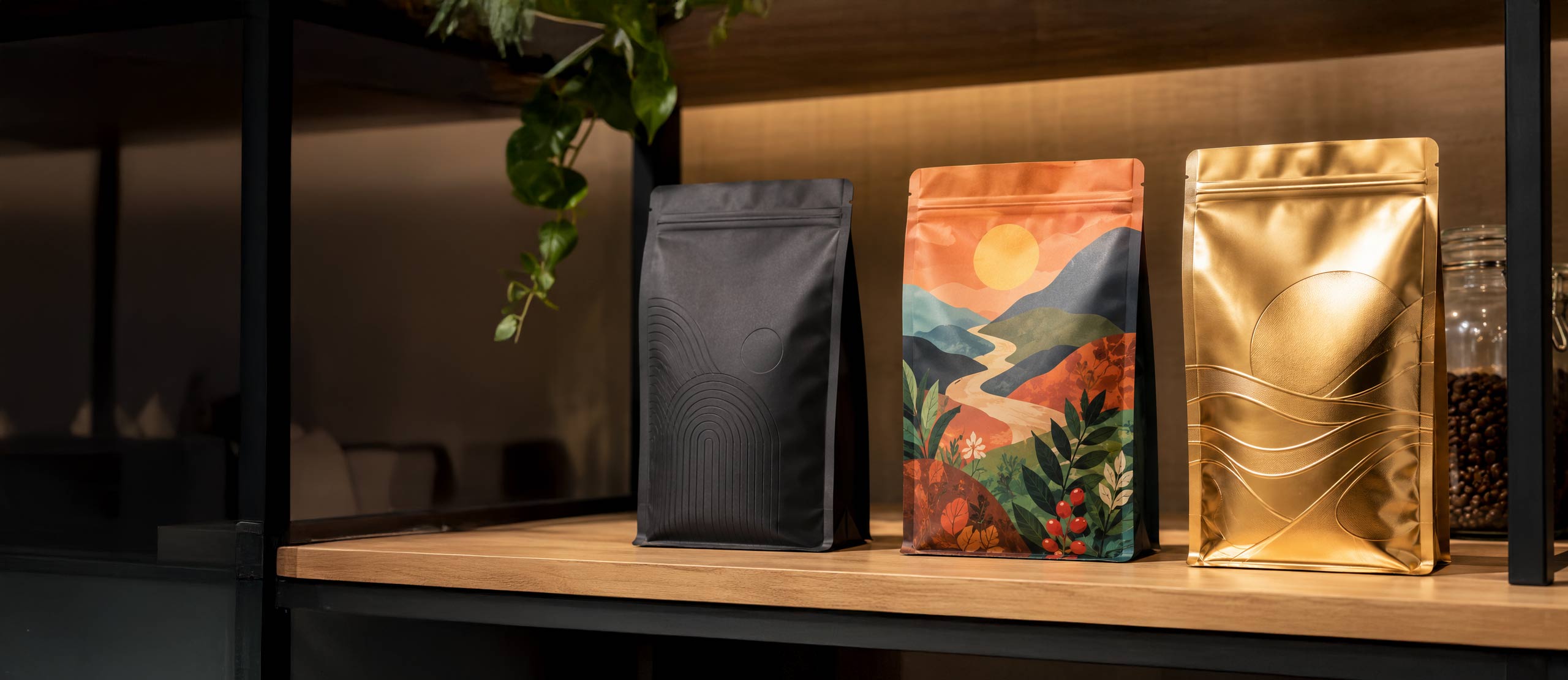
custom coffee bags, which are worth every week for the shelf presence they buy. It is the reason many roasters run both, keeping custom bags for their proven sellers and stock bags for everything still in motion.
The 1,000 Bag Minimum, Spread Across Your Lineup
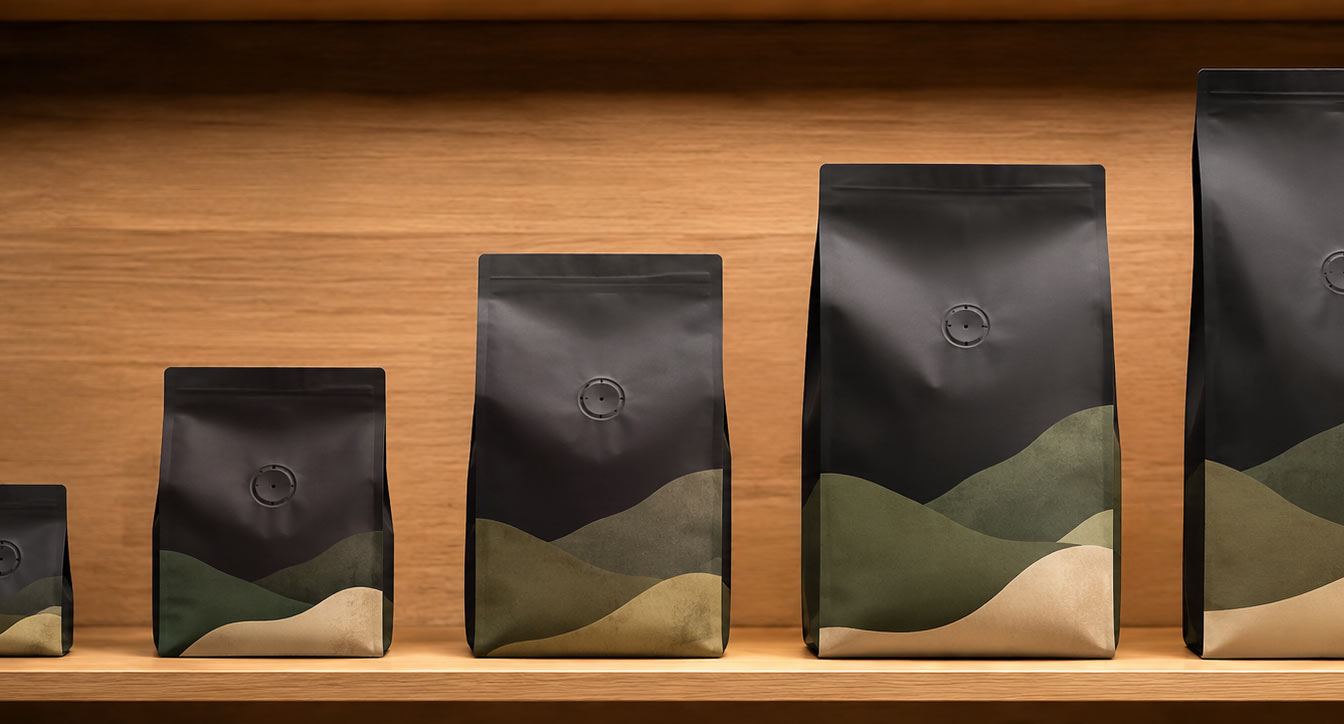
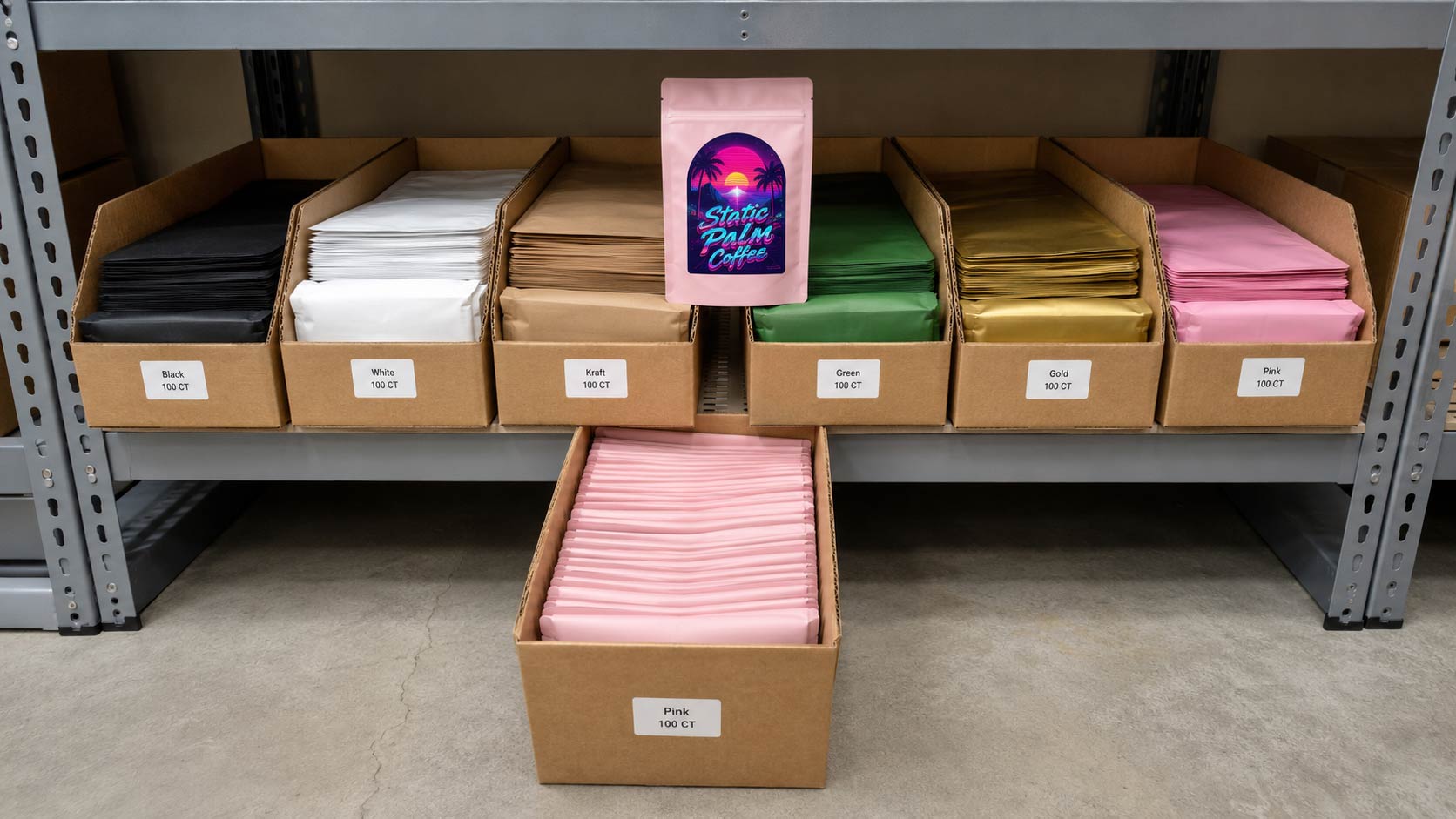
Ready-to-Ship stock bags start at 1,000 units and come in fixed, preset sizes, available with or without a one-way degassing valve. If you sell one coffee, 1,000 blank bags can look like a lot to sit on. The trick most roasters miss is that a blank bag is not tied to a single product, so that minimum is not really one product's inventory, it is your whole lineup's inventory.
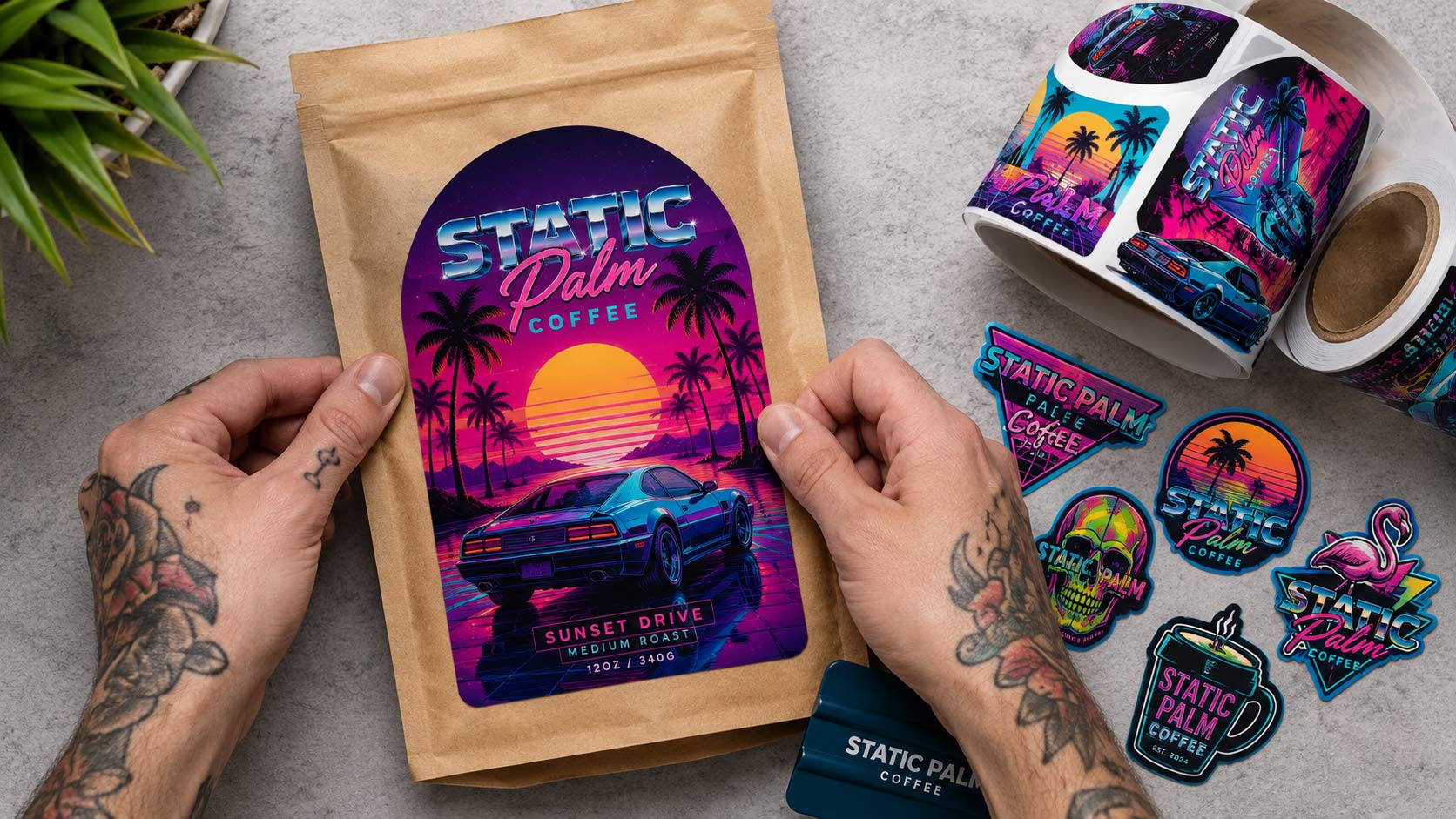
The only printing method on stock bags is UV 3D raised print, so full color artwork is not part of the picture. That is exactly where labels do the work. One stack of blank bags plus a different label per roast covers your entire range, and launching a new single origin becomes a label order instead of a packaging order.
- One blank bag serves many coffees when you finish it with a label per roast
- Fixed sizes only, so confirm your roast weight fits a standard size before you commit
- Valve or no valve is your call, based on how fresh the coffee is when you bag it
- Full color on the bag itself means custom digital printing, which starts at 500 units
That flexibility is the real reason to hold stock on hand. Our breakdown of
digital versus stock coffee bags covers which side of that line your brand belongs on, and the
coffee packaging minimum order quantity guide lays out all three tiers side by side.
What Over-Ordering Really Costs
Under-ordering has an obvious price, which is lost sales and late orders, so most roasters respect it. Over-ordering hides its cost, which is why it does more quiet damage. Every bag on your shelf is money you already spent on something that earns nothing until it is filled and sold. That money could have been green coffee, a second grinder, or payroll during a slow month.
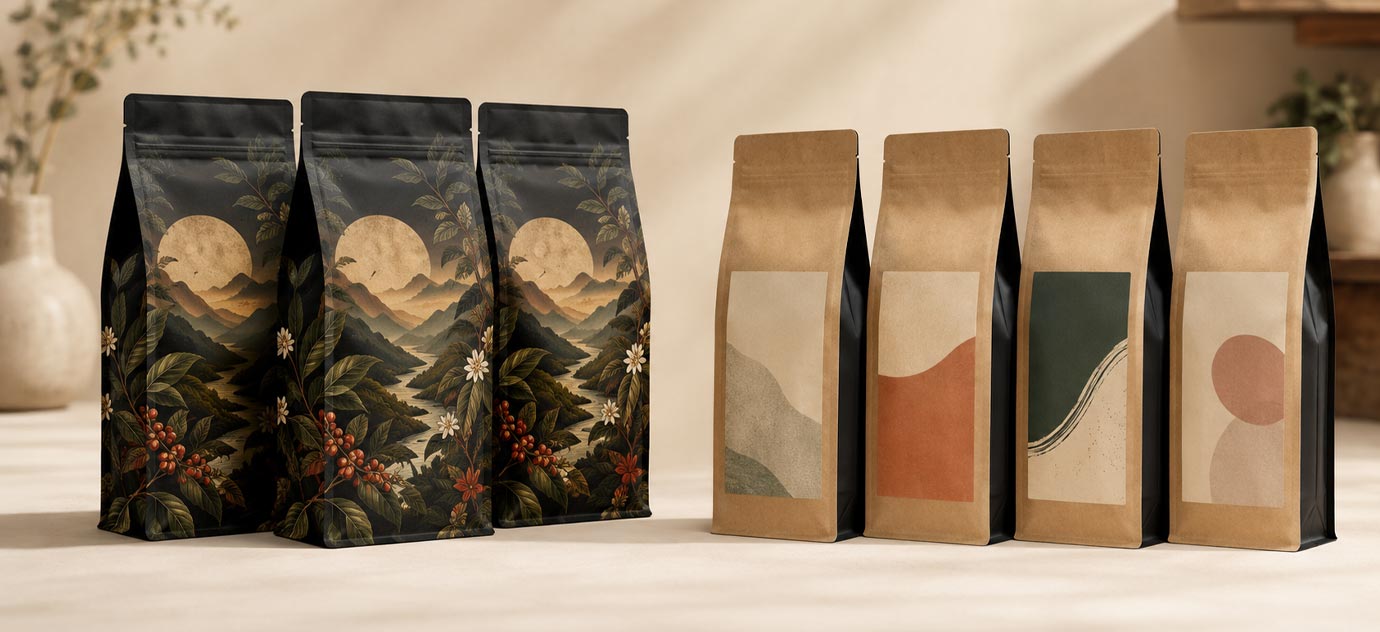
Blank stock bags are far more forgiving here than printed ones, which is worth understanding. A surplus of blank bags is still usable next season and for a coffee you have not invented yet. A surplus of printed bags carries your old logo, your old tagline, and one roast name, so a rebrand or a label change strands the extras. That difference is the whole argument for holding your flexibility in blank inventory and your commitment in printed runs.
- Cash sits idle in packaging instead of working somewhere in the business
- Storage space fills up, and clean dry space is not free in most roasteries
- Printed surplus traps you in old artwork, while blank surplus stays usable
- Damage and dust climb the longer bags sit, especially if they are stored badly
A good order quantity is the smallest number that keeps you comfortably stocked until the next reorder, not the largest number you can afford. Holding that balance is what makes
stock bags such a practical backbone for a growing lineup.
Store Them So the Inventory Survives
An inventory plan only works if the bags are still good when you reach for them. Packaging is tougher than it looks but it is not indestructible, and a stack that sat on a damp floor or in direct sun can hand you creased panels, dusty surfaces that labels will not grip, and gussets that no longer open square. Treat your bag inventory the way you treat green coffee, which means clean, dry, and off the floor.
- Keep bags flat in their cartons, away from moisture and direct sunlight
- Store them off the floor and out of traffic so corners and valves do not get crushed
- Use the oldest cartons first so nothing sits for years at the back
- Open one bag from a new carton and check the seal and finish before committing a full roast day to it
Those habits cost nothing and protect money you already spent. They also make your labeling cleaner, since a flat, dry, dust-free panel is exactly what a label needs to lie down smooth, which our guide to
applying labels to stock coffee bags gets into.
Turn the Guess Into a Number
Nobody can hand you a single figure for how many stock bags to keep on hand, because it depends on how fast you sell and how long resupply takes for you. What anyone can hand you is the method. Track weekly sales per coffee, multiply by your resupply weeks, add a cushion of a few weeks, and you have a reorder point that protects you without burying you. Then order enough to cover a comfortable run, not a decade.
Stock bags make that math kind to you. Short waits keep your reorder point low, blank inventory keeps your options open, and labels let one bag carry your whole lineup. Pair that with printed runs for the coffees you know will sell, and packaging stops being the thing that almost derailed your week.