Two Words That Change Your Whole Invoice
Every packaging order ships under agreed terms, and those terms decide where our responsibility ends and yours begins. The shorthand for that handoff point is FOB, and it is the single most useful thing to understand before you order from overseas. It is not fine print. It is the difference between a number you can budget against and a number that grows after the shipment leaves.
We run two standard arrangements, and which one applies depends on where you are.
- International orders ship FOB our production facility. You arrange and pay for transport from the facility, and you handle import customs clearance, duties, taxes, and final delivery in your country
- United States orders ship FOB delivery to your door. We coordinate the shipment all the way to your address, and the applicable freight, clearance, duties, and related import costs are already built into the price we quoted you
Read those twice, because they are opposite arrangements. In one, the quote is the beginning of your cost. In the other, the quote is your cost.
What FOB Actually Means, Without the Jargon
FOB marks the point where the goods become yours. Up to that point, getting them there is our job. Past it, moving them is your job. It has nothing to do with quality, warranty, or how well the bags are made. It is purely about custody, cost, and paperwork.
When we say an international order is FOB our production facility, we mean your ownership starts at our end. The bags are produced, packed, and made ready to go, and from there you or your agent take over the journey. That is standard practice in flexible packaging and in most manufactured goods, and it is not a way of pushing work onto you. It exists because you can almost always move freight into your own country more efficiently than a foreign supplier can, using your own broker, your own routing, and your own duty accounts.
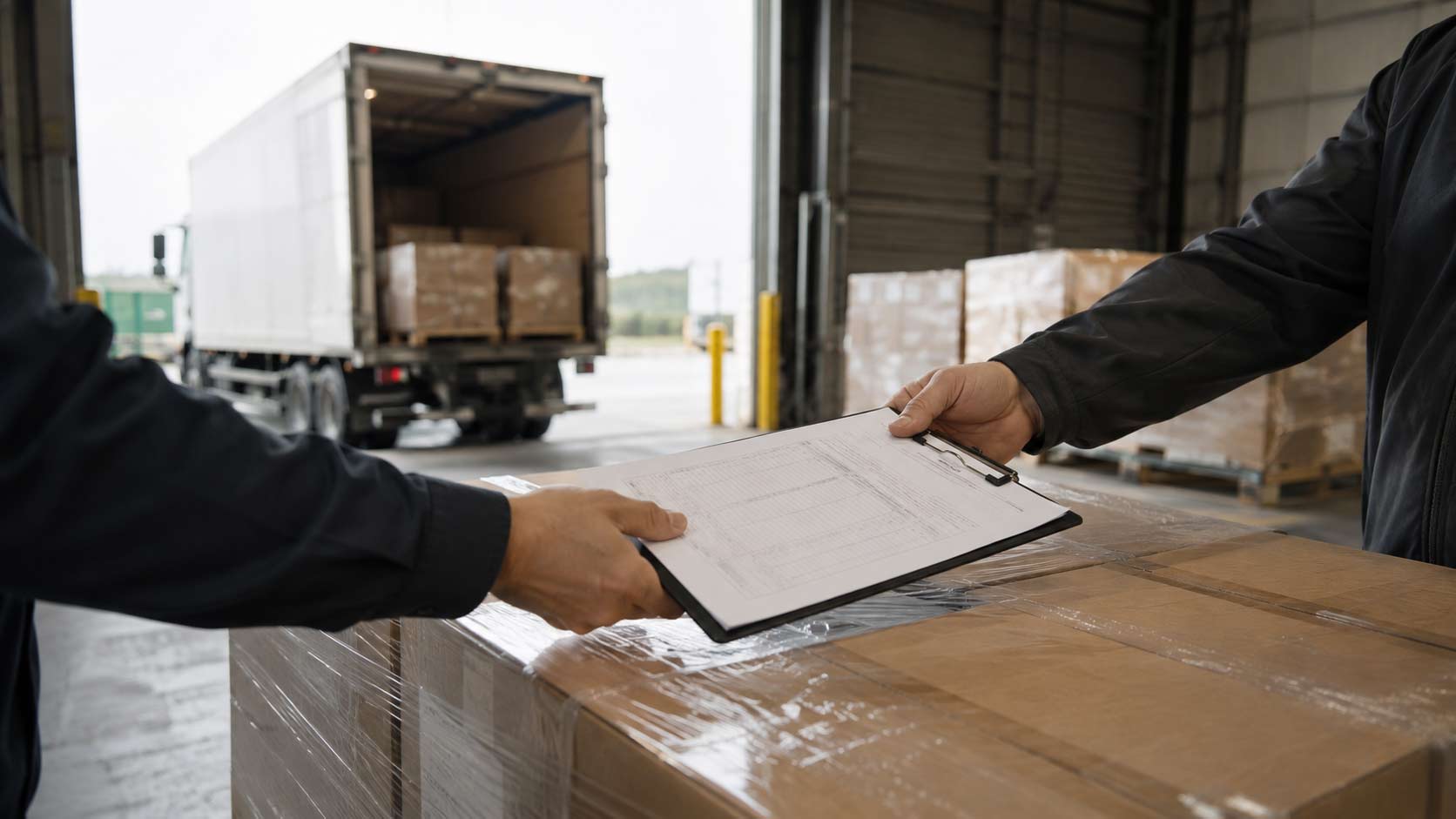
What You Own on an International Order
If you are ordering from outside the United States, budget for four things beyond the price of the bags. None of them are hidden, but none of them are in our number either, and the buyers who get surprised are the ones who assumed otherwise.
- Transport from our production facility to your country, arranged and paid by you
- Import customs clearance, filed by you or by your customs broker
- Duties and taxes assessed by your country on the shipment
- Final delivery from the arrival port to your roastery or warehouse
The practical version of all four is that you need a freight forwarder or an import broker. They book the transport, handle the filings, tell you what duty to expect, and arrange the last leg to your door. If you already ship green coffee, you likely have one, and they can move a pallet of packaging just as easily. If you do not have one, ask us. We can point you toward a forwarder, and in most international cases pickup directly from the shipping port is available depending on who you use.
If You Are in the United States, It Is Simpler
Domestic orders work the way most people assume all orders work. We coordinate the shipment through to your delivery address, and the freight, clearance, duties, and related import costs are incorporated into the pricing we quote. There is no separate freight bill arriving weeks later and no customs paperwork for you to file.
That is the whole domestic story in a paragraph, and it deserves its own longer treatment another day. The reason to mention it here is comparison: if a US roaster and an international roaster both get a quote from us for the same bags, those two quotes are not measuring the same thing. One includes the journey. One does not.
Why the Timeline Reads Differently Too
Our standard lead time is
9 to 12 weeks from the moment artwork is approved, made up of 4 to 6 weeks in production and 5 to 6 weeks of delivery to your door. That delivery half is a domestic figure. On an international order, production still takes 4 to 6 weeks, but the transit that follows belongs to your forwarder and depends on the routing, the service level, and how quickly clearance goes on your end.
So do not plan an international launch off the 9 to 12 week number alone. Plan off 4 to 6 weeks to ready, then ask your forwarder what their lane actually runs, and add clearance time. Build the calendar backward from the date you need product on the shelf, the same way you would for a seasonal release.
- Confirm your artwork early, because the clock starts at approval and not at inquiry
- Get a transit estimate from your forwarder before you commit to a launch date
- Ask your broker for a duty estimate on flexible packaging in your country
- Leave room for clearance, which varies far more than ocean transit does
What We Handle Regardless of Where You Are
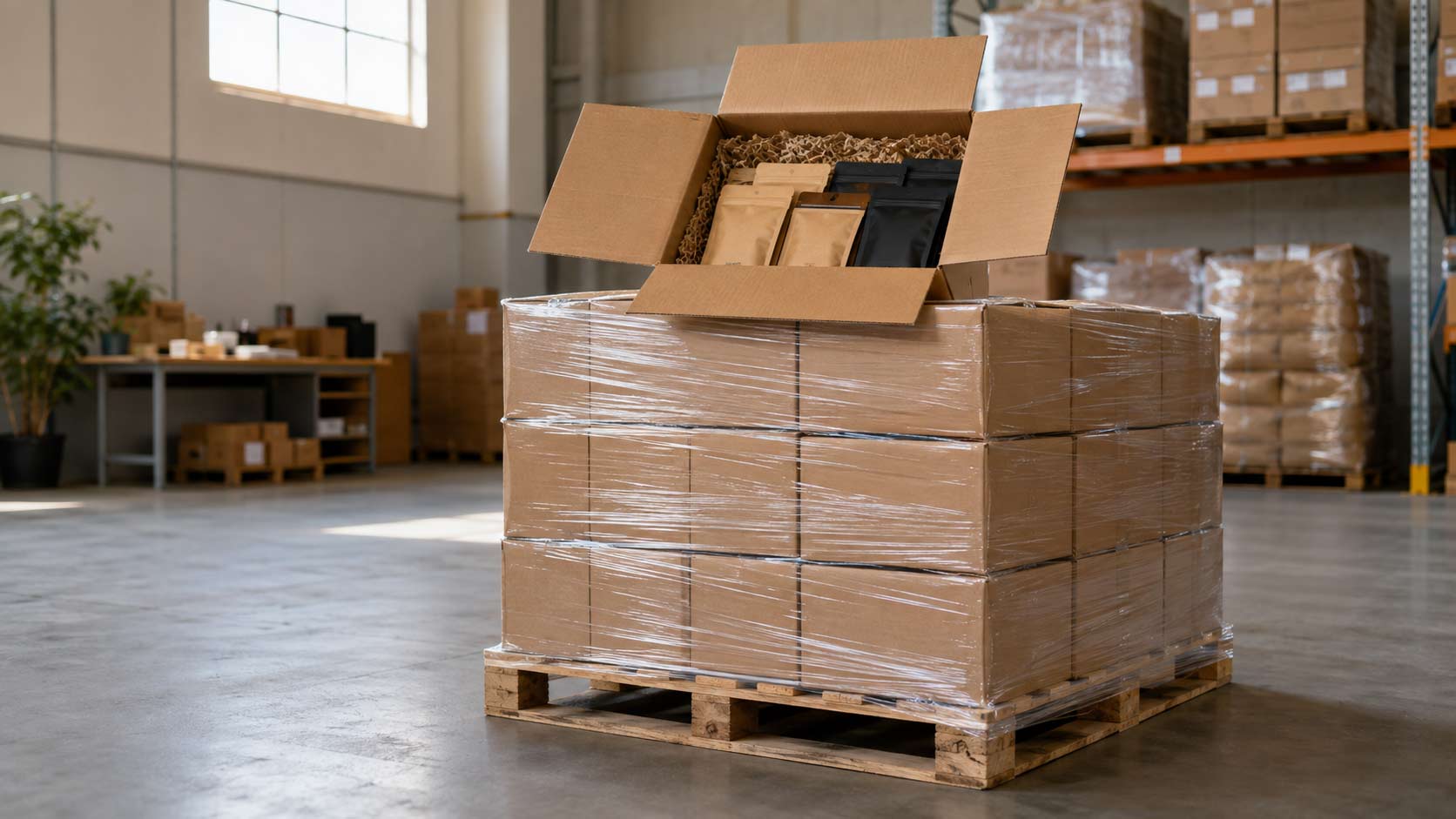
The terms change who moves the freight. They do not change how your packaging is built or protected. Every order is packed to survive the trip: films wound on cores, pouches packed flat in cartons with protective material, and palletized shipments available on larger runs. That matters more on a long international journey than on a domestic one.
You also get the same communication either way. We keep you posted at artwork approval, at production start, and at shipment, you get tracking once it ships, and you have a dedicated service contact the whole time. If a shipment does arrive damaged, keep all the packaging and materials and tell us immediately so we can work the claim properly, since discarded evidence makes that harder for everyone.
Questions Worth Asking Any Packaging Supplier
Whether you order from us or from someone else, these are the questions that turn a quote into a real number. A supplier who will not answer them plainly is telling you something.
- What are your shipping terms, and where exactly does the handoff happen?
- Does the quoted price include freight, clearance, and duty, or none of those?
- What is the lead time to ready, separate from the transit time?
- How is the order packed and palletized for the trip?
- What happens if it arrives damaged, and what do you need from me to file a claim?
The answers are also worth getting in writing at quote stage rather than at invoice stage. For a broader look at what trips up first-time buyers, our post on
what roasters get wrong when ordering custom coffee bags covers the rest of the list, and our
guide to ordering samples first is the cheapest way to avoid a costly full run.
Know Where the Handoff Is Before You Sign
International shipping is not complicated once you know the one thing that matters: where your ownership starts. Ours starts at our production facility for international orders, and at your door for domestic ones. Everything else, the forwarder, the broker, the duty, the final leg, follows from that single line.
Ask for the terms up front, get your forwarder involved before you approve artwork instead of after, and build your timeline from production ready plus transit rather than from one blended number. Do that and the bags show up when you expected, at the cost you expected. We ship
custom coffee bags,
stock bags, and
custom boxes to roasters in more than 50 countries, and the ones who plan the journey are never the ones chasing it.