Why a Labeled Stock Bag Puffs Up Like a Pillow
You fill a batch of stock bags with fresh roast, press a nice new label on each one and line them up on the shelf. A day later several of them have swollen tight, the zipper is straining and one bag feels like it might pop. It looks like a bad valve or a weak seal. Most of the time it is neither. The label is sitting on top of the valve.
It is an easy mistake to make, and it happens more on stock bags than on custom ones for a simple reason. On a stock bag, the valve is already built in at a fixed spot. You cannot move it, and when you design a label in a computer program, the valve is not on the screen. So the label goes where it looks best, and sometimes where it looks best is right over the one part of the bag that has to stay open.
What the Valve Does and Why a Label Stops It
Freshly roasted coffee keeps releasing carbon dioxide for days after roasting. A one-way degassing valve is a small disc set into the wall of the bag with a few tiny vent holes on the outside. Gas pushes out through the vents, and a thin membrane inside closes again so outside air cannot get back in. It is the only exit the gas has.
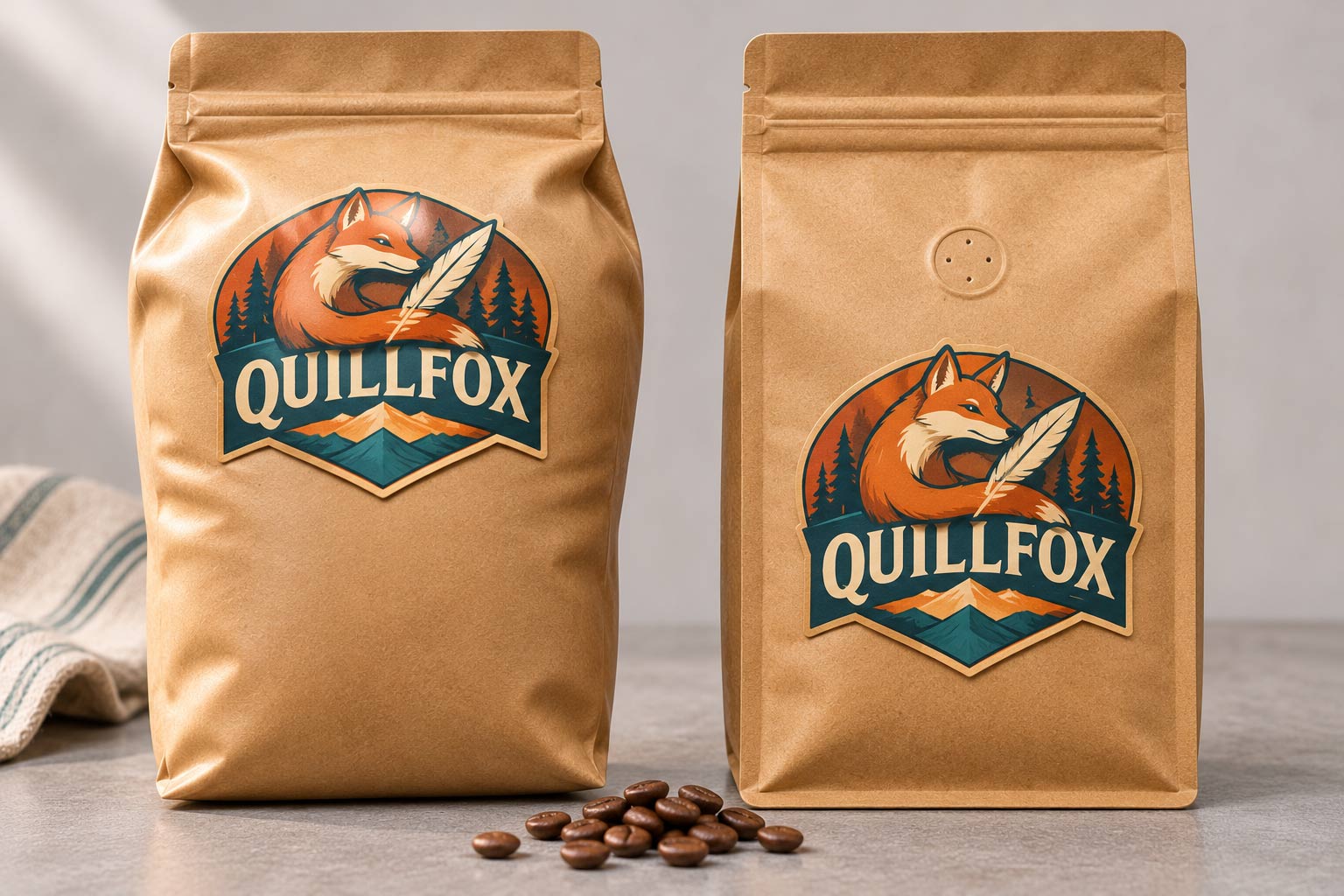
Put a label over those vent holes and the exit is closed. The gas keeps coming, so the bag inflates. If the coffee is very fresh, the pressure keeps building until something gives, usually the weakest seal or the zipper. Even a label that only covers part of the vents slows the valve down and can trap enough gas to puff the bag.
The adhesive adds a second problem. A sticky label pressed onto the valve can work its way into the vent holes and foul the membrane, so the valve may not seal properly even after the label is peeled off. Peeling also tends to leave residue right where you least want it.
How People Misread It
The puffed bag looks like a product failure, so that is how it gets diagnosed. Roasters blame the valve, the seal or the supplier, switch to a different bag or start leaving coffee to degas longer before bagging, which costs them freshness. Customers who receive a swollen bag often assume the coffee went bad. The real cause is a label in the wrong place, and it is the cheapest problem in coffee packaging to fix.
The quick test: find the valve on a puffed bag. If you cannot see it because a label is on top of it, you have your answer. Our post on the
squeeze and sniff test explains what a healthy valve feels like when it is working.
How to Place Labels Around the Valve on Stock Bags
The fix is to treat the valve as part of the label design from the start, not something you discover after the labels are printed.
- Find the valve on your exact bag size. Get a physical stock bag in the size and style you will use and mark where the valve sits. Measure from the top edge and the sides, and note which panel it is on.
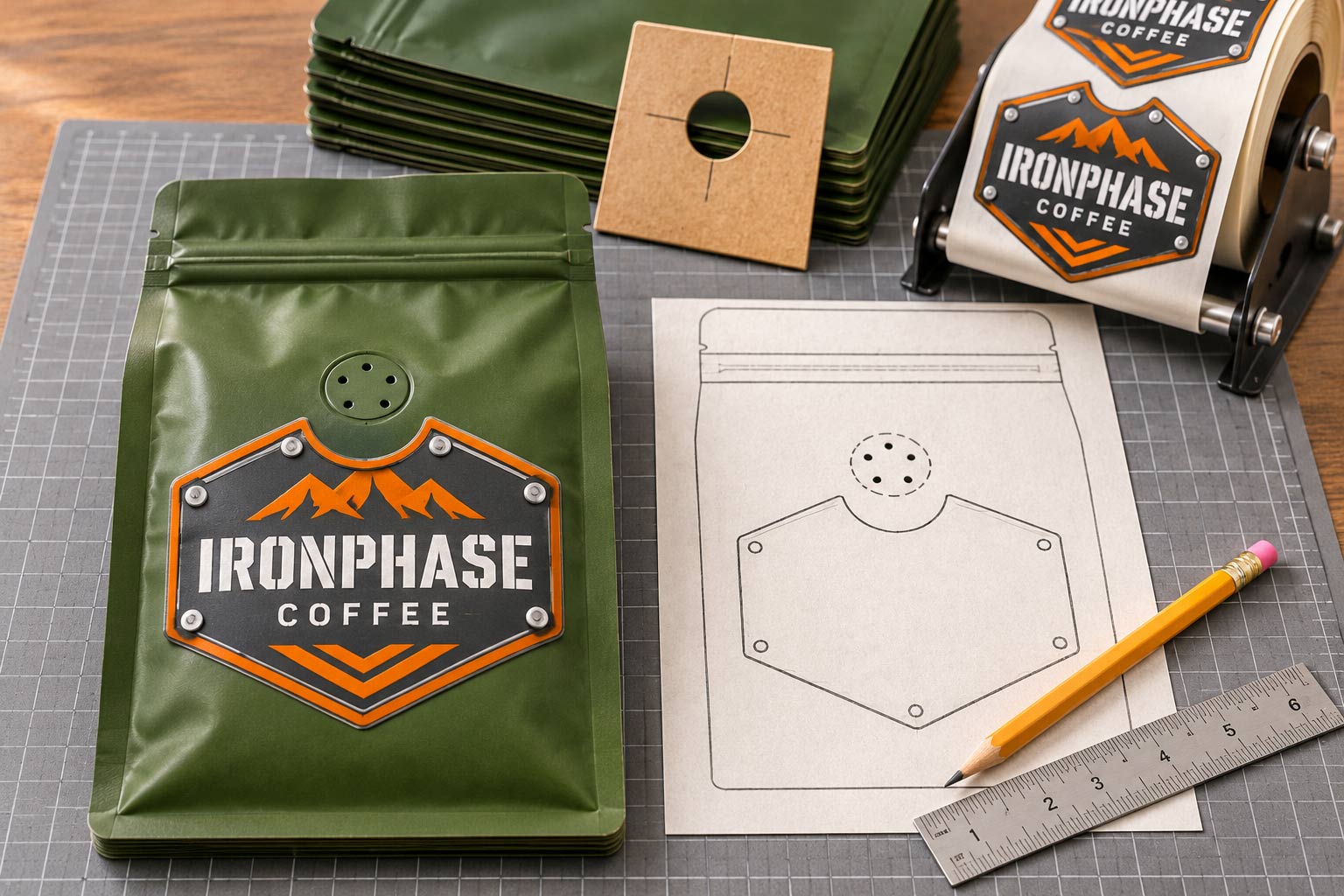
- Make a simple template. Trace the front panel on paper, mark the valve and a clear margin around it, and design the label inside the space that is left. Give that template to your designer before the artwork starts.
- Keep a clear ring around the valve. The label should not touch the vent holes at all. A little breathing room also stops the label edge from lifting where the valve disc creates a small bump in the film.
- Shape the label to fit. If the best spot for your label overlaps the valve, use a die-cut label with a notch or a cutout that leaves the valve open, or split the design into two smaller labels above and below it. Our post on die-cut coffee bags and labels shows what custom shapes can do.
- Build a placement guide for the packing table. A cardboard jig or a printed guide that sits over the bag and shows exactly where the label goes keeps every person on the line from guessing. Our step by step guide to applying labels to stock coffee bags covers the rest of the process.
- Check the first bags of every batch. Fill a few, label them and leave them overnight. Flat bags the next morning mean the valve is breathing. A puffed bag means something is covering it.
What About Printing Over the Valve on Custom Bags?
Custom printed bags work differently, and it is worth knowing why. On a printed bag the ink is part of the film itself, so artwork can run right up to and around the valve without blocking it. Designers even hide the valve inside a logo or illustration, which our guide to
coffee bag valve design explores. The problem only appears when something is stuck on top of the valve after printing, such as a label, a sticker, a price tag or tape.
That is also why some roasters move from stock bags with labels to
custom digital printing as they grow. The valve position is shown on the dieline, the artwork is designed around it from the beginning and there is no label to place by hand.
How Savor Brands Helps You Get It Right
A puffed bag on a store shelf is the kind of problem we would much rather help you avoid than help you diagnose.
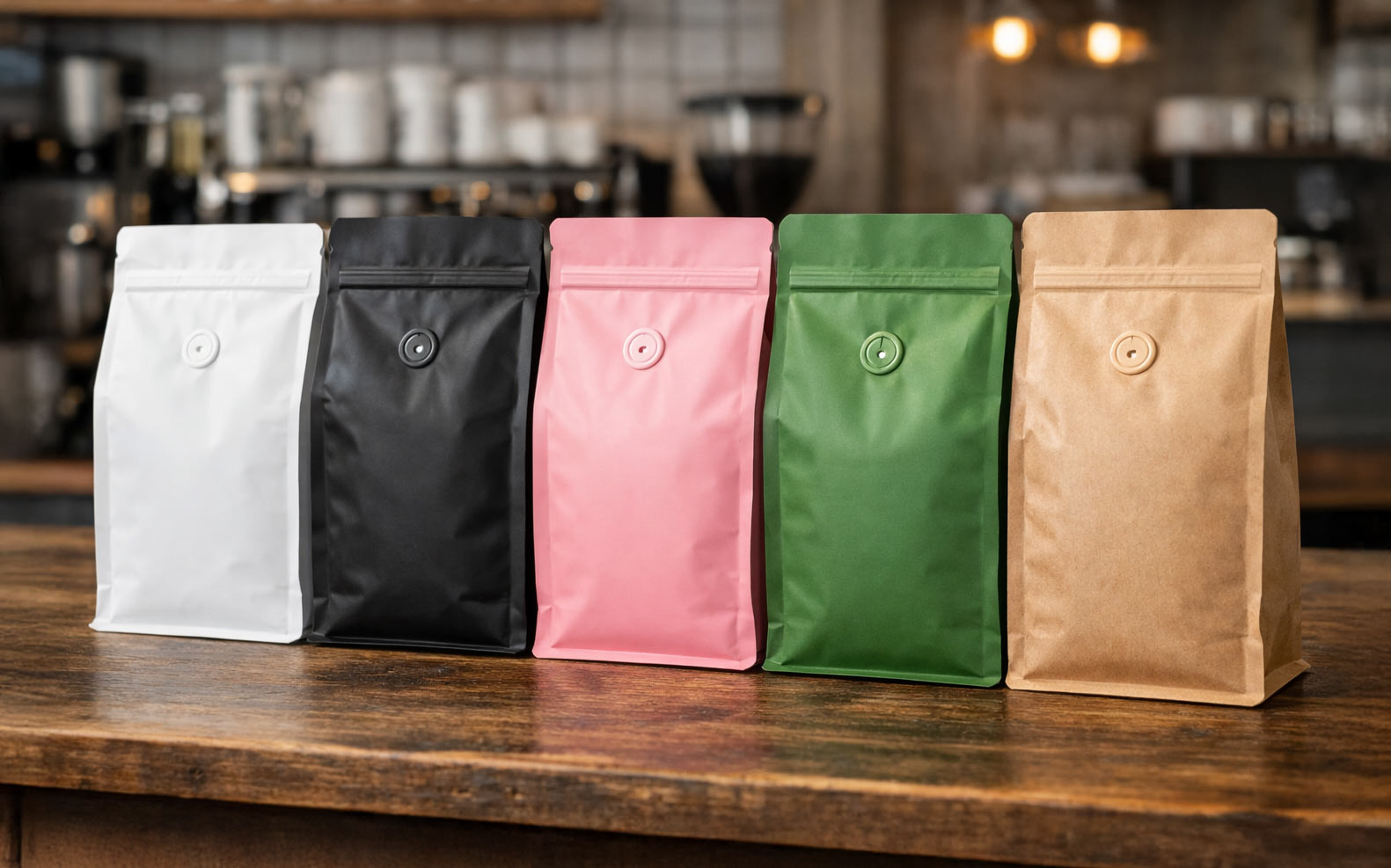
- Stock bags with or without a valve. Our stock bags come in six colors, with valve and no-valve options, so you can choose a valve wherever your coffee needs one.
- A sample bag to measure from. Ask us for a sample in the exact size and style you plan to use, so you can mark the valve and build your label template from a real bag instead of a guess.
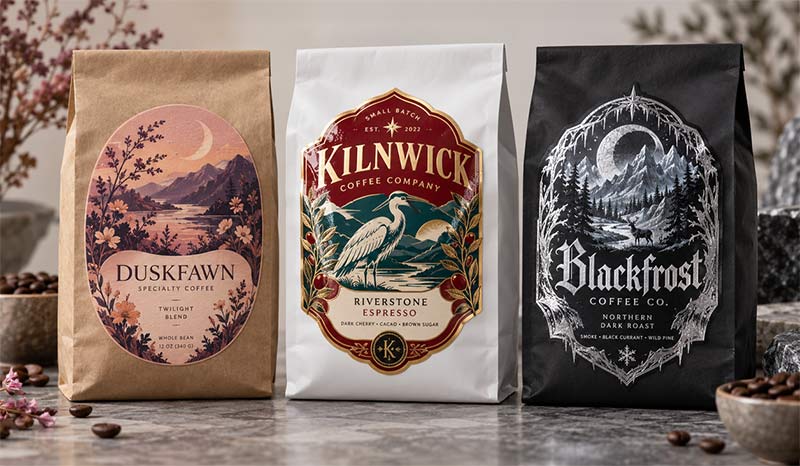
- Labels made to fit around the valve. We print labels in a range of materials and finishes, and we can die-cut them to the shape your bag needs, notch and all. Our post on coffee bag label materials covers the options.
- A path to printed bags. When you are ready to drop labels altogether, custom coffee bags start at 500 per design on digital, with the valve placed on the dieline before any artwork is printed.
Let the Valve Breathe
A stock bag that puffs up after labeling is almost never a bad valve. It is a label sitting on the one part of the bag that has to stay open. Find the valve on your exact bag, design the label around it with a clear margin, use a die-cut shape when the best spot overlaps it and check a few filled bags overnight before you run a whole batch.
It takes one sample bag and a paper template to get right, and it saves you from swollen bags, unhappy customers and a supplier switch you never needed. When you are planning your next batch of labels,
send us a photo of your bag and we will help you place them where the valve can breathe.