The Bag Is Not Just Sitting There
Most roasters treat an empty coffee bag as an inert object. It arrived, it went on a shelf, and it will be exactly the same bag whenever you get around to filling it. That is true for some materials and not true for others, and the difference does not announce itself. A bag that has been stored badly looks identical to a bag that has been stored well, right up until a seal fails on the filling line or a customer opens a bag that will not stay closed.
We wrote about the two clocks running on any bag, the freshness of the coffee inside and the life of the material itself, in our post on
whether compostable coffee bags expire. This is the other half of that story. Not how long the material lasts in theory, but what your stockroom is doing to it in practice.
The good news is that none of this requires equipment or money. It requires knowing which four things matter and then not doing the obvious wrong thing with them.
Heat Is the One That Bites You
A coffee bag is not one material. It is several layers laminated together, with a sealant layer on the inside that melts under the jaws of your sealer and bonds to itself. That sealant is doing a job that depends on it being in a known condition, and heat changes that condition.
Store bags somewhere hot and two things start happening. The sealant layer softens and can begin to block, which means adjacent bags in a stack lightly bond to one another and then tear when you pull them apart. At the same time the adhesive holding the laminated layers together is being aged, slowly, in a way that shows up later as delamination or as a seal that looks fine but peels under pressure.
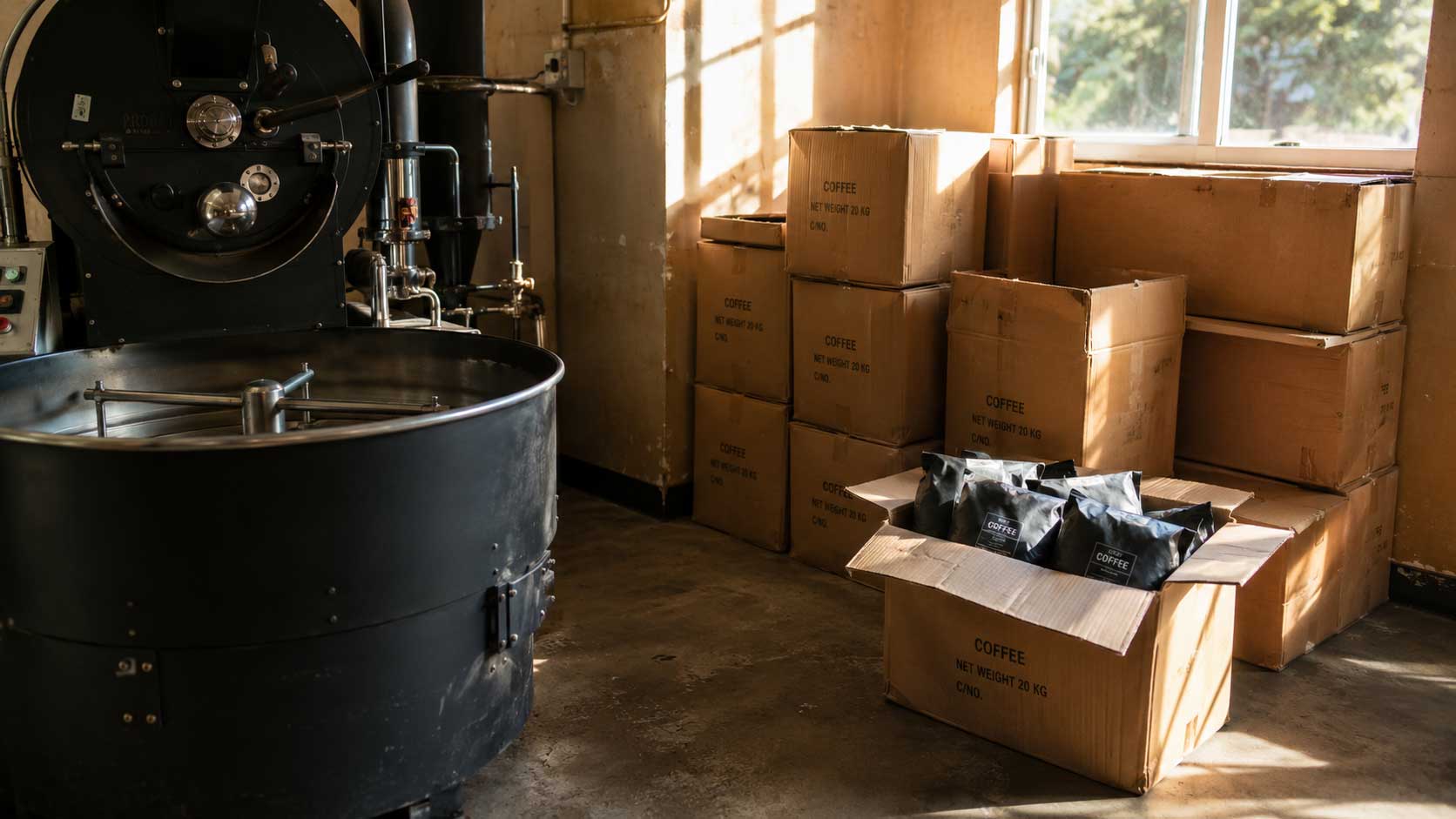
The practical version of this is short. Do not store bags in a hot warehouse corner, do not store them in a shipping container in summer, and above all do not store them above or beside the roaster. The mezzanine over the roaster is the warmest place in most roasteries and it is where the boxes always seem to end up.
- Keep cartons away from the roaster, the exhaust run, and any west-facing wall
- Interior shelving beats an exterior wall, which swings with the weather
- Never a hot vehicle, a shipping container, or an uninsulated attic
- If people are uncomfortable working there, the bags are not happy either
Humidity Swells What You Cannot See
Moisture is the quiet one. A high-barrier bag is very good at keeping moisture away from your coffee, which is the entire point, but that barrier is on the inside of the story. The outer surface of the bag is exposed to whatever your room is doing.
Kraft and paper-look outer layers are the most obviously affected because they will take on moisture, and a paper layer that has absorbed and released humidity a few times can curl at the edges, feel soft, and let print lift or scuff more easily than it should. Compostable films have a version of this too. They are designed to be broken down by moisture and biological activity eventually, so a damp stockroom is nudging that process along from the day the bags arrive.
There is a second problem that has nothing to do with the material. Damp cardboard cartons lose their strength, sag, and stop protecting the bags inside them. Plenty of bag damage is really carton damage that happened first.
Light Fades the Part You Paid For
You paid for the print. Ultraviolet light is what takes it away. Bags stored in direct sun through a window, or under strong daylight for months, will fade, and they do not fade evenly. The colors that go first are usually the ones you care about most, the reds and the deep blues that make a brand recognizable on a shelf.
Clear and frosted films have a second reason to stay in the dark, because sustained UV works on the film itself and not just the ink. Keeping cartons closed solves the entire problem for free. The bags arrived in a box for a reason, and the box is a light barrier.
Stacking, Dust, and the Seal Area
The last threat is purely physical, and it is the one most likely to cost you a run. Coffee bags have structure built into them, gussets that fold, a box bottom that squares up, a zipper track that has to stay straight. A tall stack of cartons with something heavy on top presses that structure flat and it does not always come back.
Dust is worse than it sounds. The inside surface at the top of the bag is the seal area, and anything sitting on it when the jaws close creates a weak point or a channel. Loose bags left open on a shelf collect exactly that. A bag stored in its original carton, or in a closed bin, does not.
- Store cartons upright, the way they were packed, not crushed flat
- Keep them off the concrete floor, on a pallet or a shelf
- Do not stack heavy inventory on top of bag cartons
- Keep loose bags in a closed container, never open on a shelf
- Handle the top of the bag as little as possible, because that is the seal
Where Compostable Is Genuinely Different
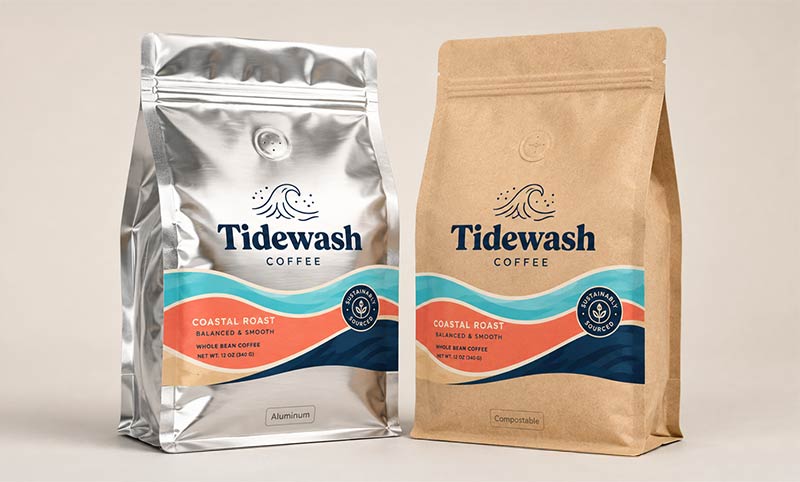
Everything above applies to every bag you own. This part does not. Aluminum barrier bags do not have a material end date. Stored sensibly, an aluminum bag you bought two years ago is the same bag it was on the day it arrived, which is why it is the standard for anyone holding inventory or shipping long distances.
Compostable film is a different proposition, and honestly so. Our Compost+ film runs about three to four months of functional life once it is holding roasted coffee, and roughly six to twelve months unused in ideal cool, dry, dark storage before the structure starts to weaken. That is not a flaw. It is the direct consequence of a material designed to break down instead of persisting for centuries, and it is the trade you are making on purpose.
What it means for your stockroom is simple: buy compostable to your burn rate, not to your discount. A price break on a year of compostable bags is not a saving if the last quarter of them has been quietly weakening on a shelf. Aluminum is where buying ahead makes sense. Our guide to
barrier materials lays out what each one buys you.
A Storage Routine That Takes Ten Minutes
None of this needs a system. It needs a shelf in the right place and a habit.
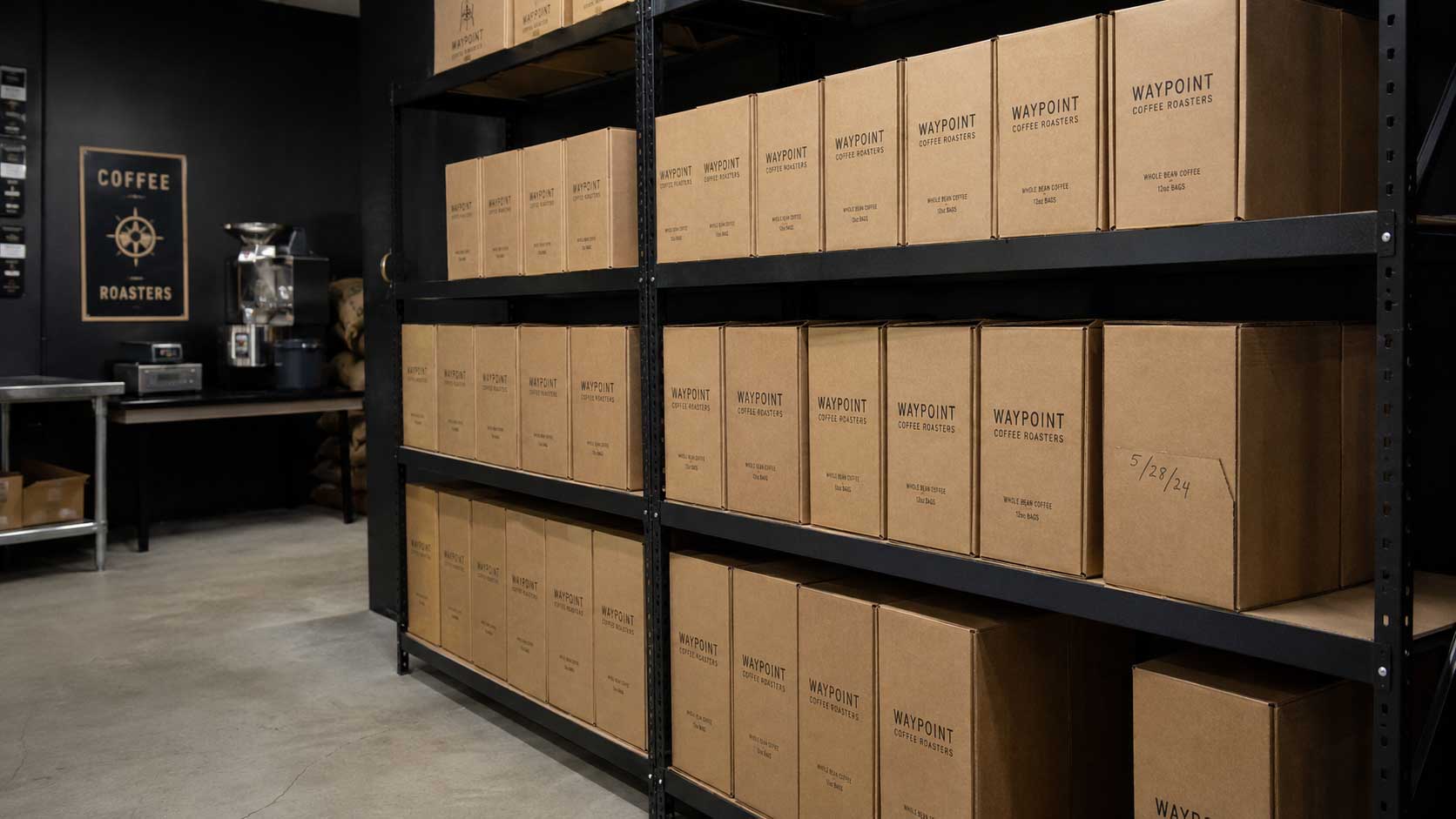
Put the cartons somewhere interior, off the floor, away from heat and out of direct light, and leave them closed until you need them. Write the delivery date on the carton with a marker when it arrives, then use the oldest carton first. That one habit does more than everything else combined, because it means nothing sits long enough to matter.
- Mark the delivery date on every carton the day it lands
- Use oldest first, always, and put new deliveries behind old ones
- Keep compostable stock separate and visible so it moves faster
- Before a big run off an older carton, seal one bag and pull it apart by hand
- If a bag delaminates, feels soft, or the seal peels clean, stop and check the rest
That last check is worth the sixty seconds. A seal that fails in your hand is a problem you found. A seal that fails in a customer's kitchen is a problem they found. If you want to go further, our
guide to fill testing covers how to check a bag properly before you commit a run to it.
Store Them Like They Are Already Full
The simplest way to remember all of this is to treat a carton of empty bags the way you would treat a carton of finished coffee. Cool, dry, dark, off the floor, oldest first, and closed until you need it. Nobody would leave finished retail bags stacked in the sun beside the roaster, and the empty ones deserve the same instinct.
Do that and an aluminum bag will wait as long as you need it to, and a compostable bag will still be at full strength when it is time to fill it. If you are working out how much to buy ahead, or which material fits how fast you actually move, our team at
Savor Brands runs that math with roasters every week, and you can see what we hold ready in
stock bags.