Barista Magazine Asked Where Coffee Packaging Is Going
The August and September 2026 issue of Barista Magazine, Volume 22 Issue 3, carries a feature by Bhavi Patel on where coffee packaging is headed. Savor Brands CEO Patrick Lau is one of the voices in it, and the questions put to him are the same ones roasters bring to us every week. What is a bag supposed to do now? How long does it have to do it in? What does custom printing actually cost a small roaster? And how do you make a responsible material choice without putting the coffee at risk? Here is what he told the magazine, and what it means if you are choosing packaging this year.
The Bag Is Not Just Protection Anymore
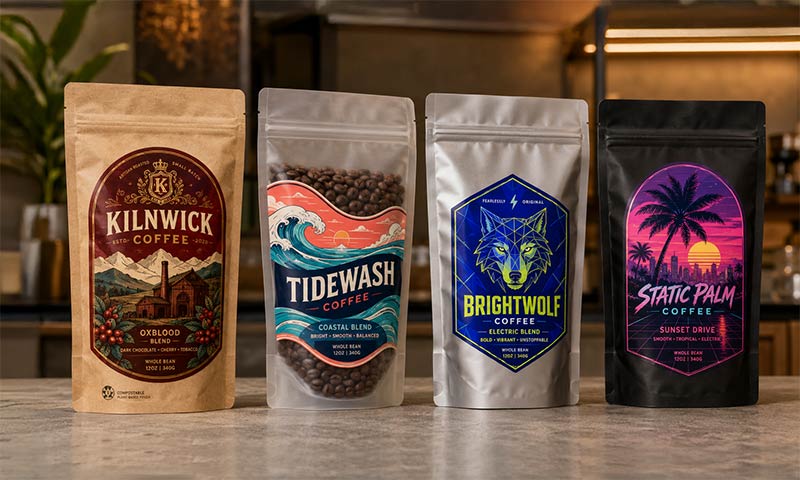
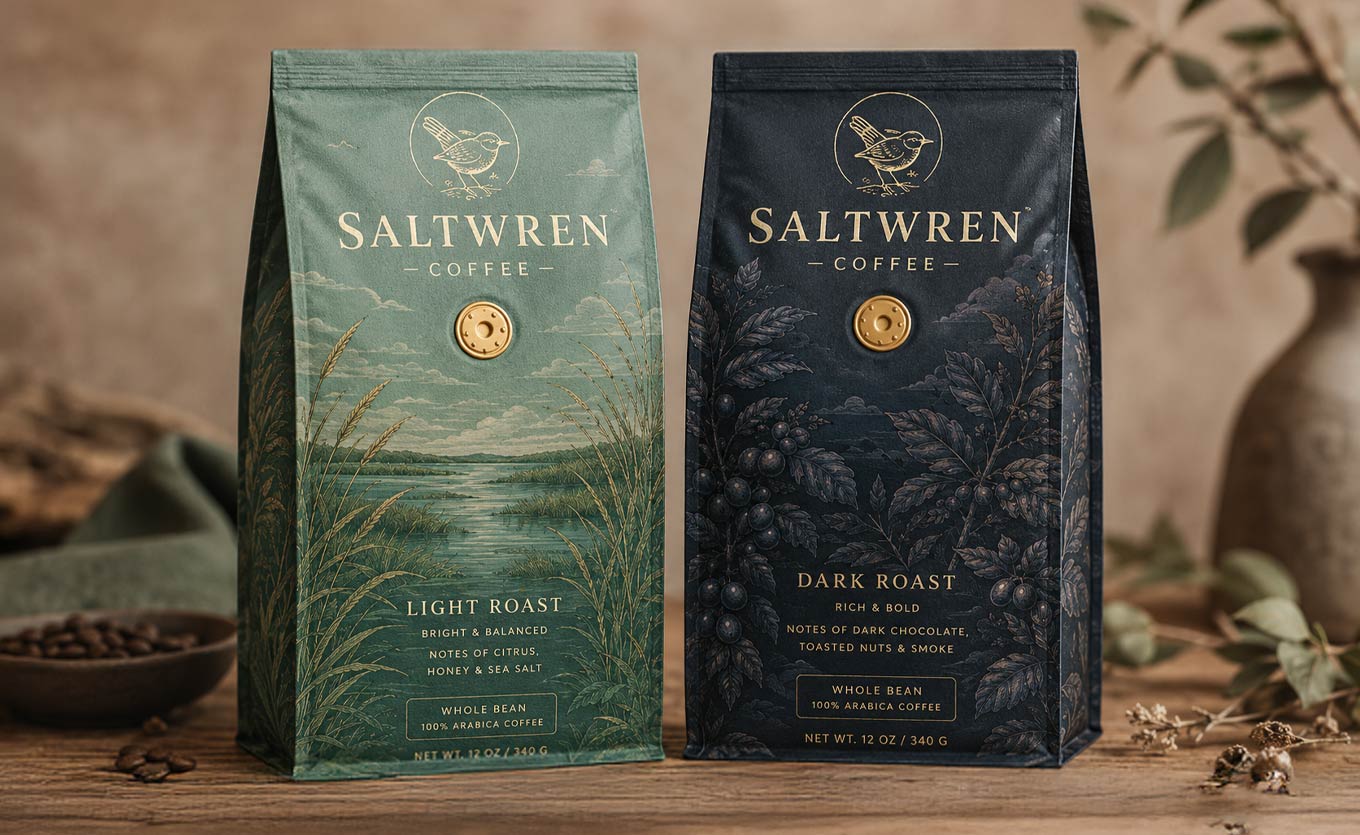
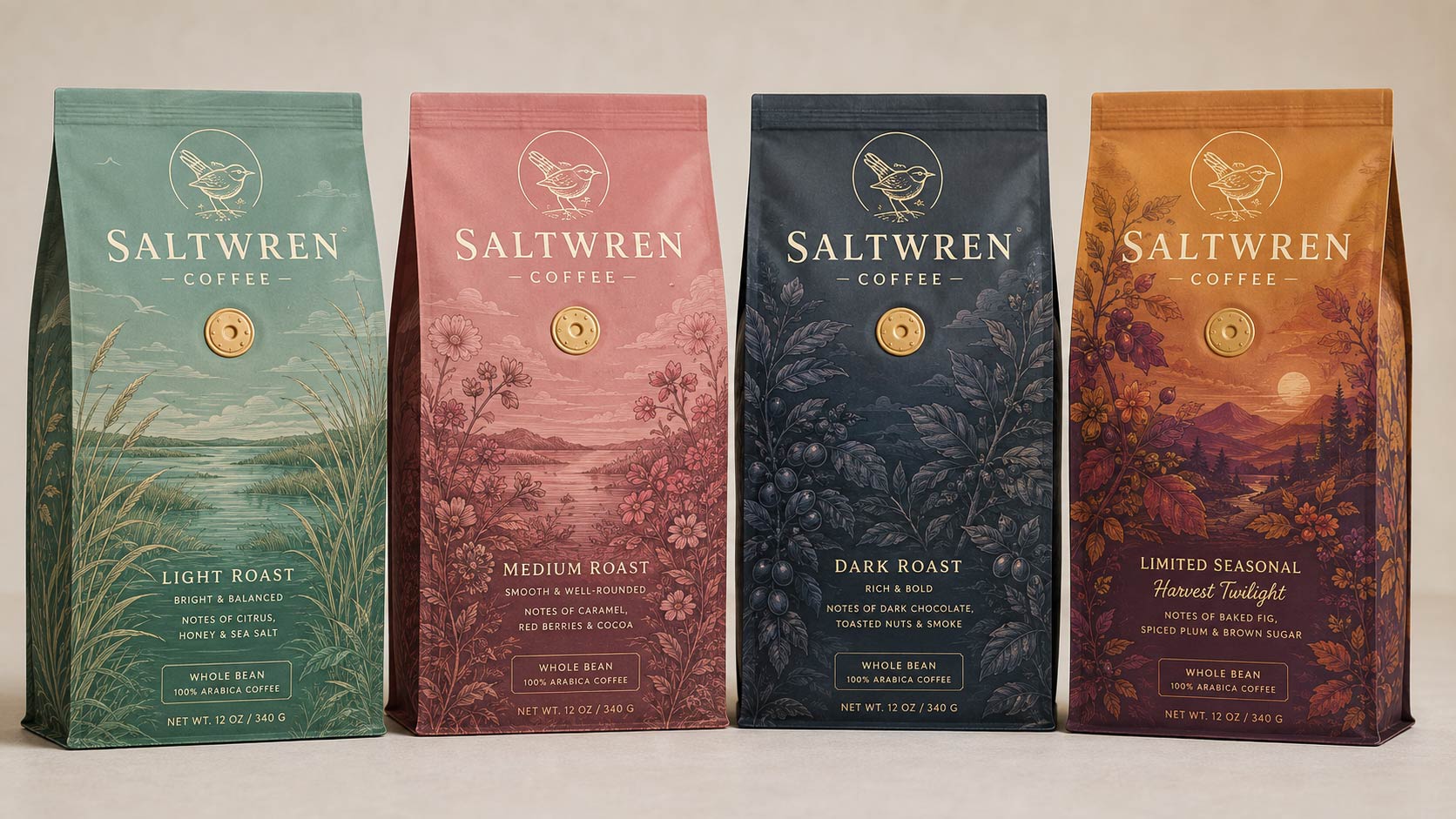
The feature opens on a problem most roasters will recognize. Walk the coffee aisle and you see rows of matte bags in muted earth tones, illustrated mountains, tasting notes, origin maps. Most of them promise excellent coffee and plenty of them deliver it, but from six feet away they blur into one another. Patrick's read on what that means for a roaster is direct. "The biggest trend is custom coffee packaging playing a greater role in the brand experience," he says in the article. "Roasters are using their bags to communicate quality, origin, sustainability, and personality before a customer ever tastes the coffee." Packaging used to have one job, which was protecting what was inside. It still has that job. It just picked up several more.
Two to Five Seconds to Earn Attention
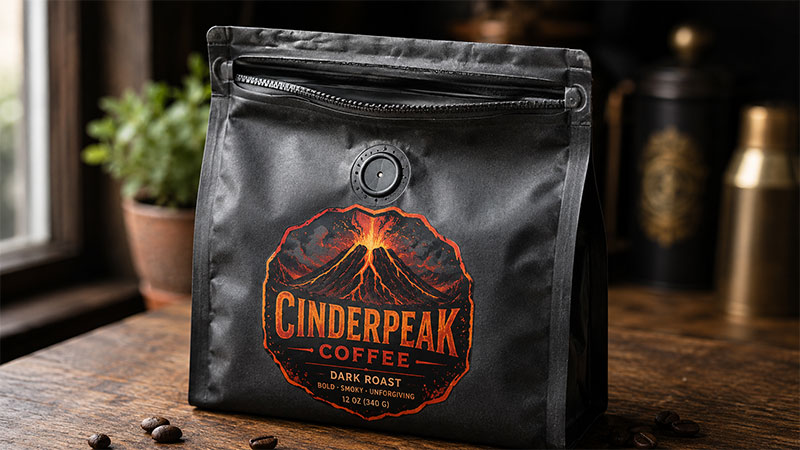
The article makes the point that buyers decide fast, and Patrick puts a number on how fast. "On a grocery shelf, custom coffee bags have two-to-five seconds to earn attention," he says. "A consumer should immediately grasp the who, what, and why: your brand, the roast or flavor profile, and what makes that coffee different." That is a useful test to run on your own bag. Set it on a shelf, step back, and give yourself five seconds. If you cannot answer who made this, what is in it, and why it is different, a shopper who has never heard of you will not answer it either. Most bags fail that test not because they are ugly, but because they are saying too many things at once.
The Barrier to Entry Has Dropped
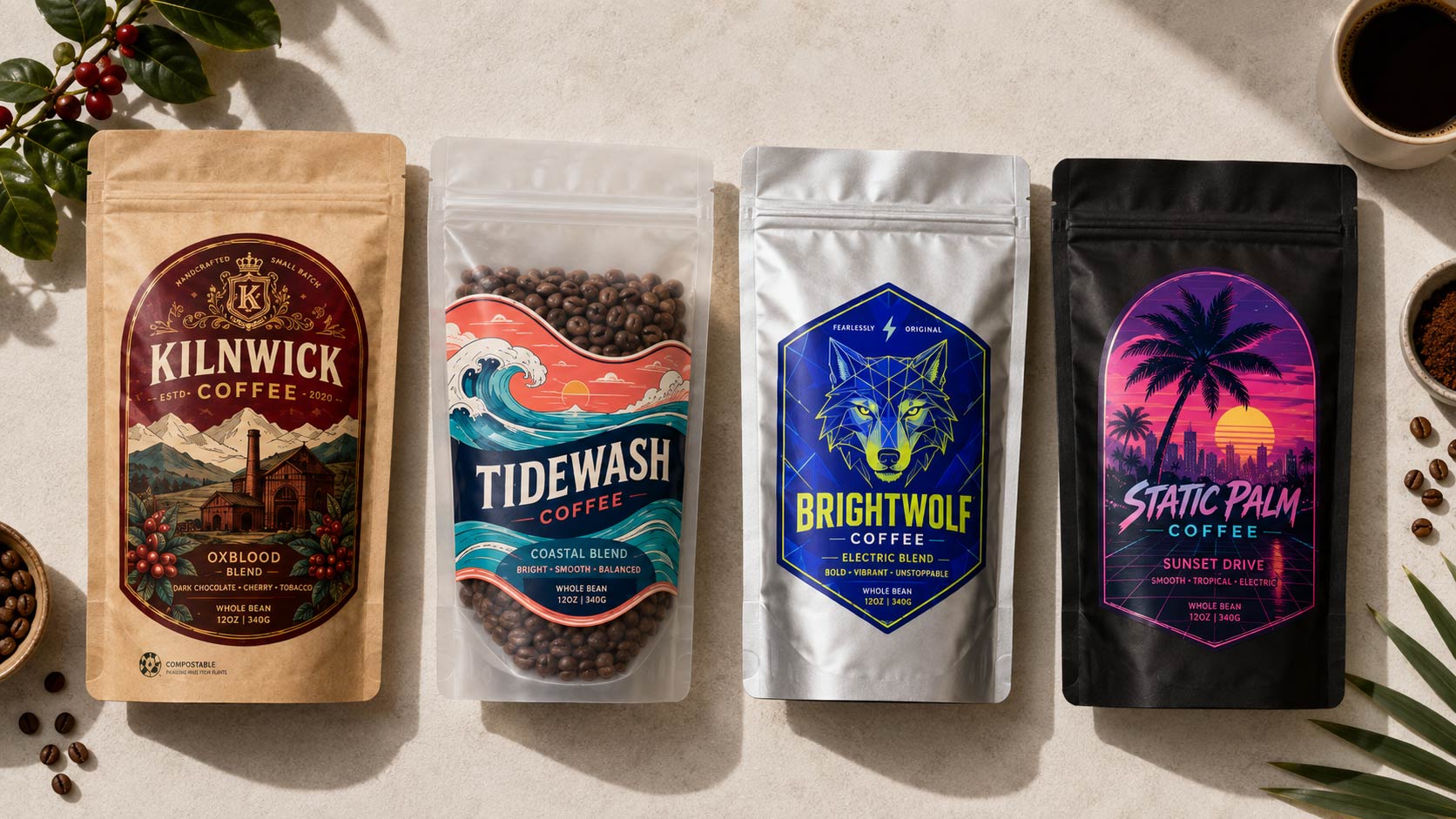
For a long time, real custom printing meant ordering tens of thousands of bags, which put it out of reach for most small roasters. That has changed, and Patrick frames the change as a shift in how roasters should think about the spend. "The barrier to entry is far lower than it used to be," he says. "Packaging is best viewed as an investment, one that contributes to the overall value of the brand, not just a cost of doing business." That is the practical argument for
digital printing. Shorter runs make seasonal releases, collaborations, and single origin bags realistic instead of a gamble on inventory, and a roaster can build a full line of
custom coffee bags one design at a time.
Nothing Checks Every Box Yet
The article spends real time on sustainability, and this is where Patrick is most careful. Coffee is a demanding product to protect. Its aromatics start breaking down as soon as oxygen, moisture, or light reach the beans, and the structures that hold those out best have traditionally been multi-layer films with an aluminum barrier, which are hard to recycle. "Sustainability has to be looked at holistically," he says. "There's a constant balance between the packaging materials and the coffee they protect. The real question is how to safeguard the coffee supply chain while still making responsible packaging choices." Then comes the line that keeps the whole conversation honest: "Nothing checks every box yet."
Pick Your Fights
That is Patrick's actual advice in the feature, and it is the opposite of picking one material and calling it your policy. Compostable and mono-material films keep improving, but they still do not protect coffee the way an aluminum barrier does. So he points roasters toward matching the material to how the coffee is actually sold. A subscription bag that ships direct and gets brewed within weeks is a good fit for a recyclable mono-material structure. A bag that may sit on a grocery shelf for months needs the stronger barrier, even at the cost of some recyclability. Same roaster, same values, two different right answers. We walk through the numbers behind that tradeoff in our guide to
coffee bag barrier materials.
The Bigger Challenge Is Education
One of Patrick's sharpest points in the article is that the hardest part is not the film. "The bigger challenge is education," he says. "That gap is driving some of the most interesting innovation." He is pointing at something real. Recyclable does not always mean curbside recyclable, and often means a store drop off program instead. Compostable usually means industrial composting, which many communities do not have. Even kraft paper, which shoppers read as the green option on sight, is not automatically recyclable or plastic free. A bag can be genuinely well chosen and still end up in a landfill because nobody told the customer what to do with it. That makes clear disposal instructions on the package part of the sustainability decision, not an afterthought.
What Happens to the Bag After the Coffee Is Gone
The feature also gets Patrick on take back, which is where our own
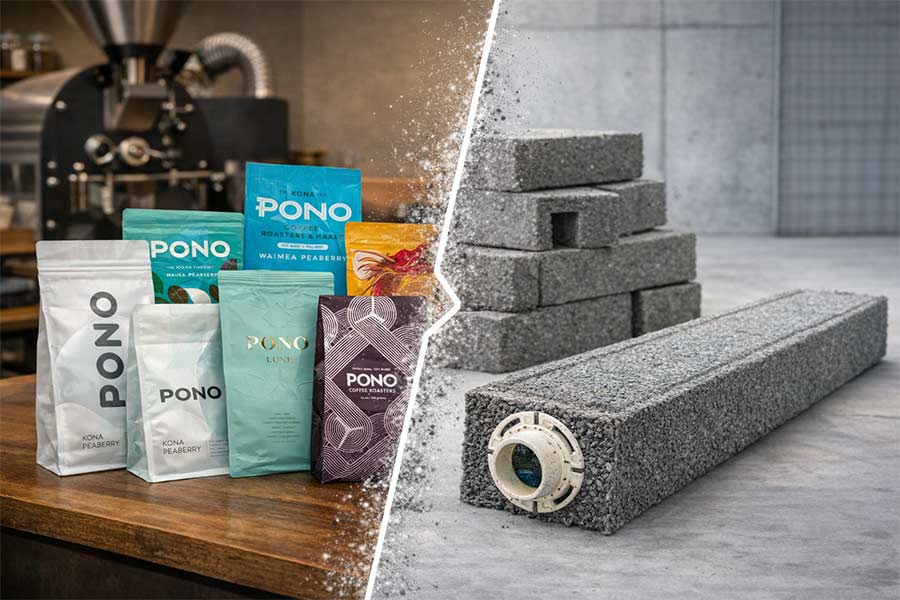
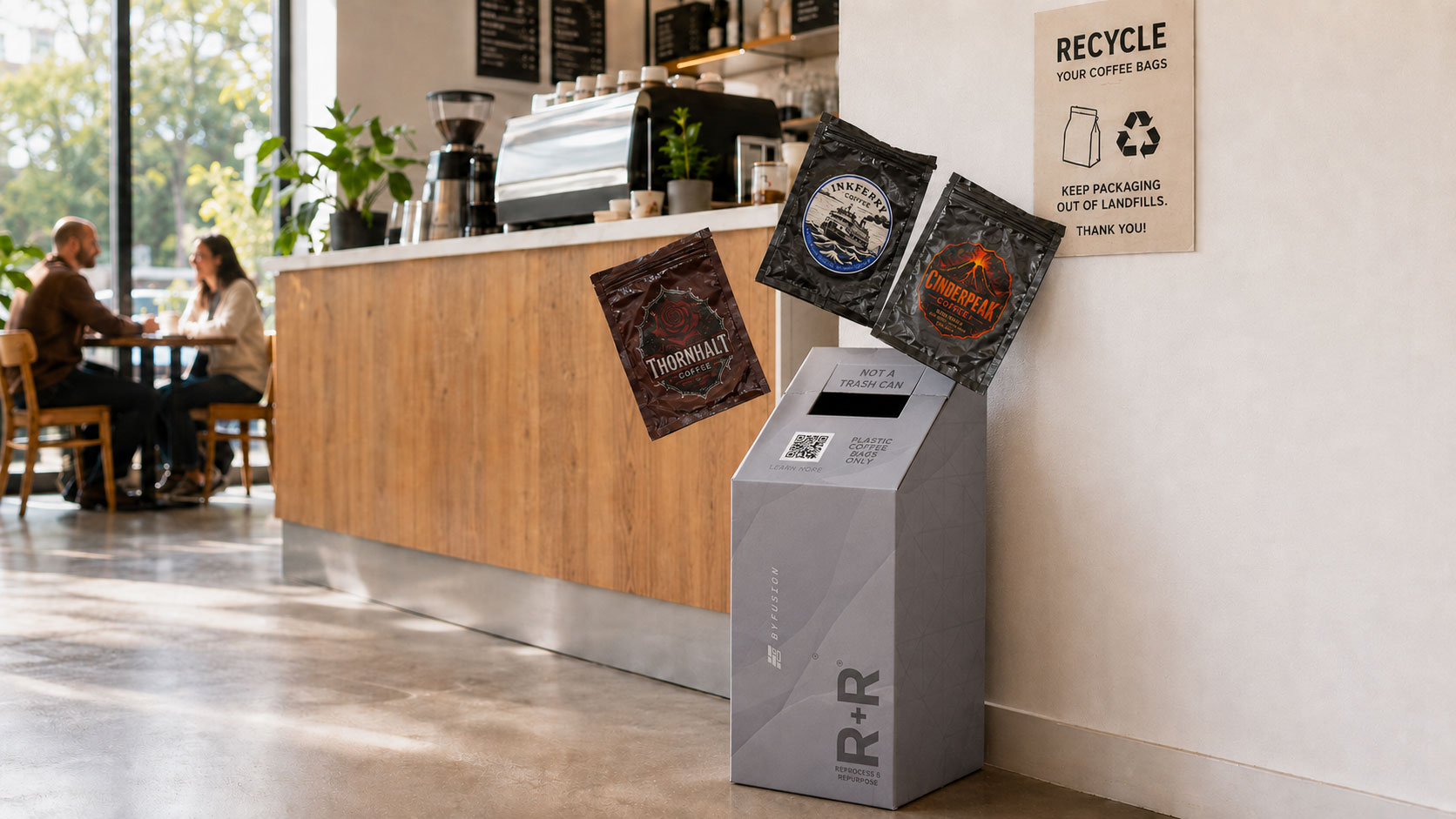
sustainable packaging work has gone. He points to programs that collect used coffee bags and turn the recovered material into feedstock for entirely new products rather than sending it to a landfill. His caveat is the part worth remembering. "The key is the cleanliness of that recovered material," he says. "That's what makes it genuinely useful and diverted from a landfill." A collection bin only helps if what comes out of it is clean enough for someone to actually build with. That is the design problem behind our
R and R take back program, and it is why the sorting matters as much as the collecting.
Sustainability Is a System, Not a Material
Read Patrick's answers in order and they hold together as one argument. Your bag is now the first thing a customer meets, and it has a few seconds to make its case. Digital printing means you can finally afford to make that case properly, in short runs, without betting the year on inventory. And on the environmental side, no single material wins outright, so the honest move is to match the structure to how your coffee really travels and then tell your customer plainly what to do with the bag when it is empty. That is a harder answer than picking the bag with the greenest label on it. It is also the one that holds up.
Read the Feature
The full article covers more ground than we have here, including packaging formats, bag sizes, and what the next few years may look like. It runs in the August and September 2026 issue of Barista Magazine, Volume 22 Issue 3, pages 72 to 77, written by Bhavi Patel. If you want to talk through where your own coffee is sold and which structure fits it, that is the conversation our team has with roasters every day. Start with
custom coffee bags and we will work backward from how your coffee actually moves.
Source: Bhavi Patel, Barista Magazine, August and September 2026, Volume 22 Issue 3, pages 72 to 77. Read it at
baristamagazine.com.