The Finish Everyone Falls For
Soft touch is the finish that sells itself. A customer picks up the bag, the surface is velvety and warm rather than slick, and before they have read a word they have decided your coffee is expensive.
We recommend it. Our own
guide to holiday bag finishes calls it the one to start with if you are only choosing a single upgrade, and that advice still stands.
There is one thing about it that nobody mentions until the bags have been on a shelf for a week. Soft touch shows fingerprints. Gloss does not.
Why the Same Thing That Feels Good Holds a Print
The velvety feel is not a colour or a chemical trick. It is texture. A soft touch surface is covered in a microscopic roughness, far too fine to see, and that roughness is what scatters light into a flat matte look and what your fingertips read as softness.
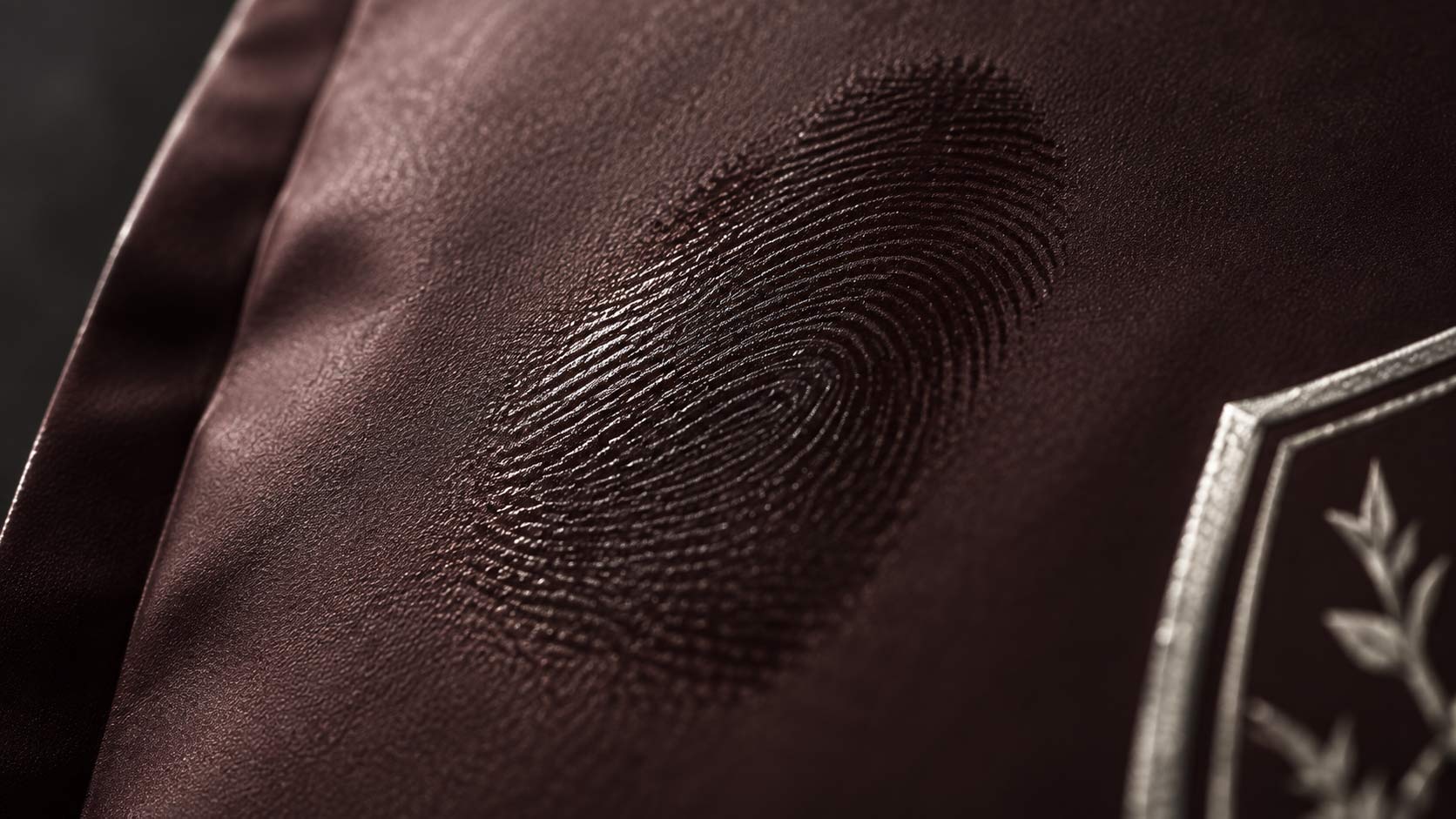
Skin leaves a trace of oil on everything it touches. On a glossy bag that oil sits on a smooth, already reflective surface and mostly disappears. On a soft touch bag the oil settles into the microtexture and fills it in. Where it fills in, the surface stops scattering light and starts reflecting it, so the fingerprint shows up as a slightly darker, slightly shinier patch in the shape of a thumb.
The bag is not damaged and nothing has worn off. You are looking at a temporarily smoother spot on a deliberately rough surface.
Dark Bags Get It Worst
This is the part that catches people out, because the worst case is also the most popular one.
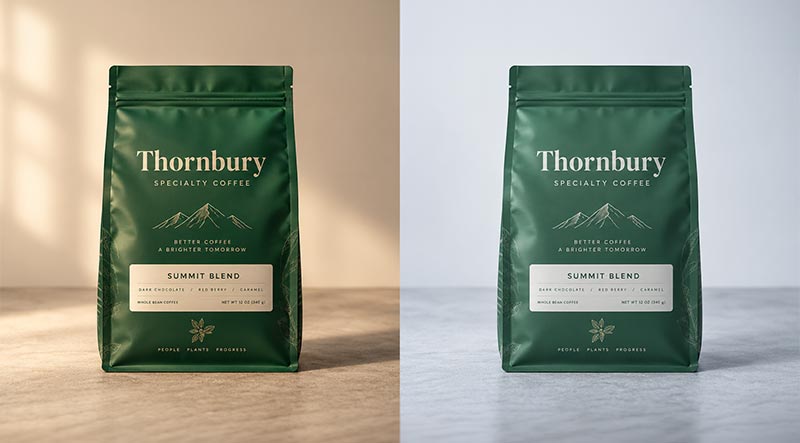
A black soft touch bag with gold foil is the standard premium look in specialty coffee, and it is the single most fingerprint prone combination you can specify. A dark surface gives the maximum contrast between matte and the small glossy patch an oily print leaves behind. On a light grey, a cream or a mid tone, the same fingerprint is there and you will struggle to see it.
The other factor is where the light comes from. Fingerprints on matte are most visible under a hard directional light hitting the bag at a shallow angle, which describes a lot of retail track lighting. Under soft, even light they nearly vanish. It is a cousin of the problem in
our post on store lighting: the bag did not change, the conditions did.
Where the Prints Actually Come From
Roasters usually assume a dirty warehouse or careless handling somewhere in the chain. It is almost never that.
- Shoppers. A bag on an open shelf gets picked up, turned over, read and put back several times before it sells. Every one of those leaves a mark, and the bag that sells last has been handled the most.
- Your own fill and pack line. Bags are handled bare-handed at almost every step between the carton and the case.
- The photo shoot. This is the one that stings, because it shows up in the product images you will use for a year. Anyone styling a soft touch bag should be wearing cotton gloves.
- Markets and events. A farmers market table is the highest-handling environment your packaging will ever see.
What to Actually Do About It
None of this means skip soft touch. It means choose it with your eyes open and plan around it.
- Match the finish to how the bag sells. A gift or holiday SKU that moves fast and gets handed straight to someone is an ideal soft touch candidate. A year-round bag sitting on a busy open shelf for weeks is where you should think twice.
- Consider a lighter base. If you love the feel but not the maintenance, the same finish on a mid tone or cream shows a fraction of what black does.
- Use spot gloss and foil as working surfaces. Glossy and foiled areas do not hold prints the same way, so placing them where hands naturally grip gives the bag somewhere to be touched.
- Tell your wholesale accounts it wipes. A dry microfibre cloth takes a fingerprint off a soft touch bag in a second. Most shop staff have no idea, and a line in your wholesale sheet solves it.
- Glove the photographer. Cheap, and it protects the images that represent the brand everywhere.
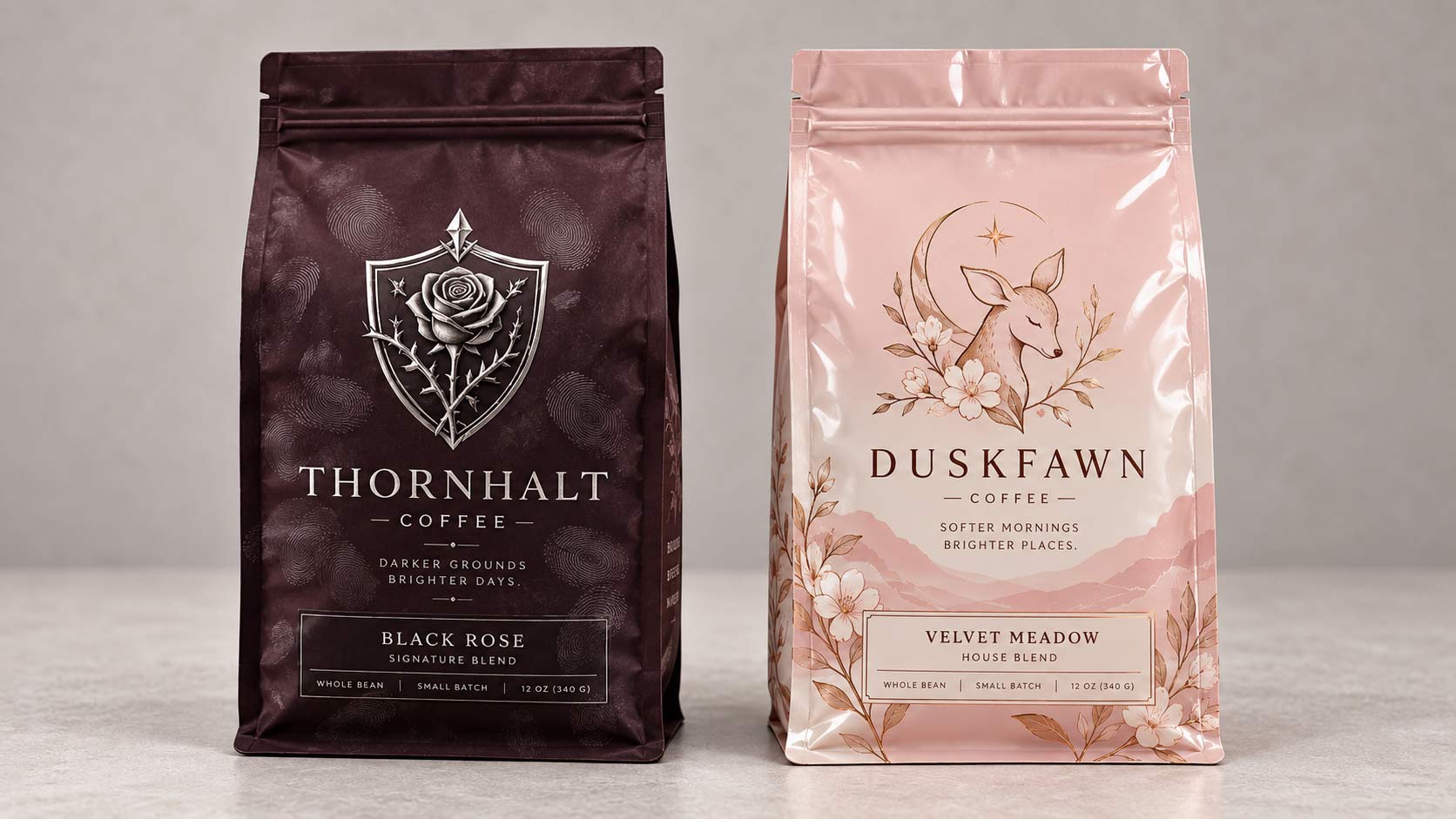
A Trade, Not a Defect
It is worth being plain about what this is, because roasters sometimes call it in as a quality problem.
Soft touch behaving this way is the finish working correctly. The texture that holds a fingerprint is the same texture that produces the feel you paid for, and you cannot have one without the other. It is the same kind of trade as choosing a paper outer on a
kraft bag, or the trade in our post on
how compostable materials shift your colour. You gain something real and you give up something real.
The failure mode is not the fingerprint. It is finding out about it after ten thousand black soft touch bags have already shipped to a grocery account.
Why It Is Worth Knowing
This is a small thing that decides how your brand looks on a shelf in week three, which is the only week that matters for a product people buy on repeat.
It is worth knowing for three reasons. It stops you reporting a normal material behaviour as a defect. It puts the decision where it belongs, at the point of choosing the colour and the finish together rather than separately. And it gives you something useful to tell the accounts that stock you, who will otherwise just see a bag that looks handled.
If you are weighing soft touch for a bag that will live on an open shelf,
talk to us about the base colour before you lock the artwork, because that choice moves this more than the finish itself does.