Why Do Black Coffee Bags Get White Lines at the Folds?
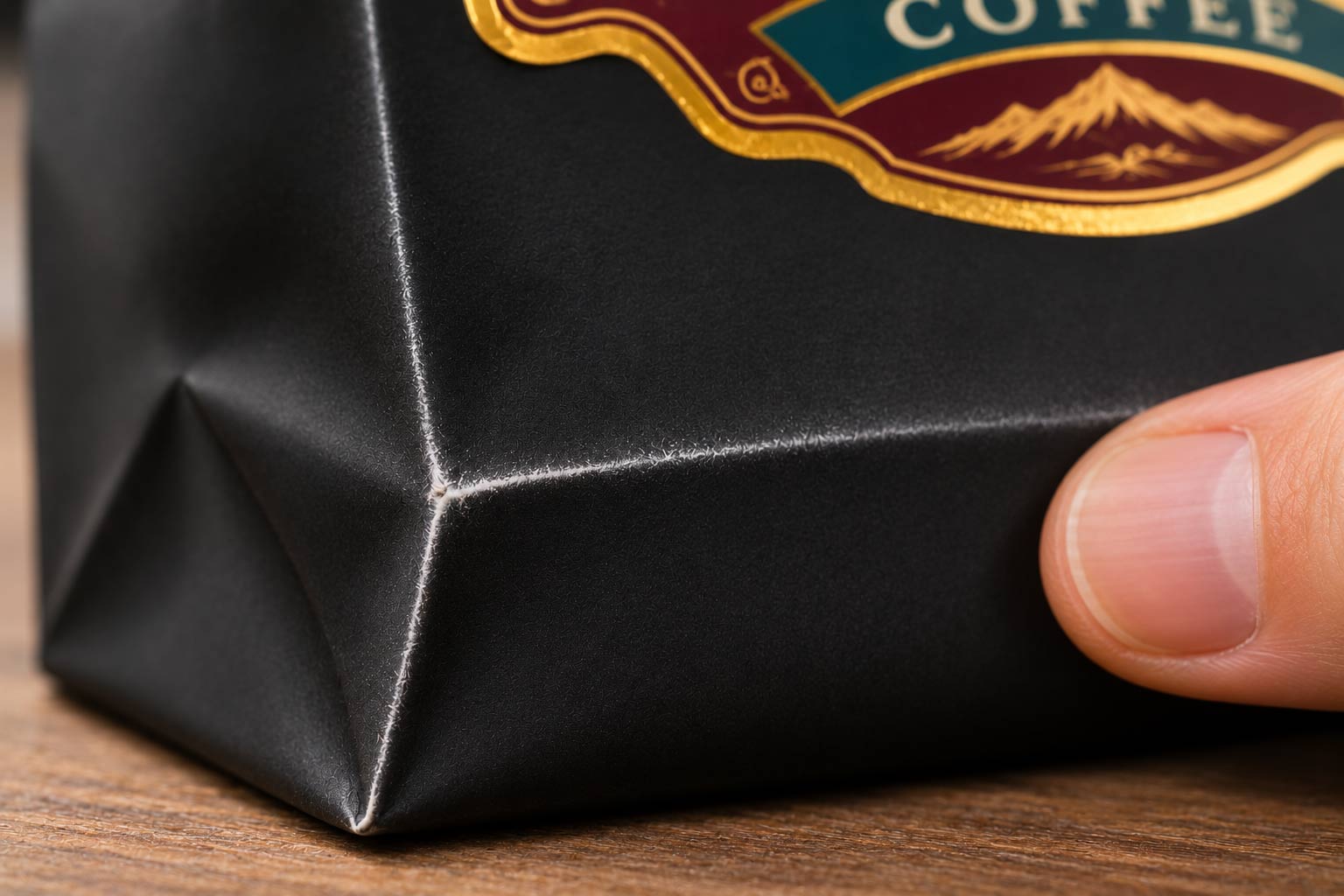
A coffee bag is made of thin layers of plastic film, and sometimes foil or paper, bonded into one sheet. When that sheet is folded hard, the outside of the fold gets stretched. Plastic that is stretched past what it can comfortably take can turn pale where the stretch is greatest, and a coating or ink layer on top can crack along the line. On a white or kraft bag you would never notice. On a black, navy or deep brown bag, the fold shows up as a thin pale line, as if someone drew on the bag with chalk.
The lines usually appear in the same places every time: the bottom gusset, the side gussets, the corners of a box bottom bag and the top, where the bag is folded or rolled down after it is opened. Those are the places the film bends hardest.
Is It Scuffing, a Bad Print or Something Else?
It looks like scuffing, and that is what most people call it. Scuffing comes from rubbing, so it shows up as patches and smudges on the flat panels, wherever bags slide against each other or against a carton. A fold line is different. It is thin, straight and sits exactly on a crease, and the flat panels beside it look perfect.
It also looks like a printing defect, but the ink on the flat panels came out fine. Nothing went wrong on the press. The color only breaks where the film was bent.
So the usual fixes miss. Reprinting the same design on the same structure brings the same lines back, and asking the warehouse to handle the bags more gently helps a little but does not stop a gusset from folding.
What Makes the Lines Worse?
A few things decide how bad the lines get:
- Dark, solid color across a fold. A large area of solid black printed straight across a gusset gives a pale line nothing to hide behind. The same fold through a light color or a busy pattern is hard to see.
- Cold. Plastic film gets stiffer as it gets colder. A bag that folds easily in a warm room is more likely to mark when it is folded, filled or shipped cold, such as in a winter warehouse or an unheated truck.
- Folding the same spot again and again. A bag that is folded flat for shipping, opened, folded again on the filling table and then rolled down every morning in the kitchen is bent on the same lines over and over.
- Sharp creases instead of gentle bends. Pressing a fold flat with a thumb, or crushing bags in a tightly packed carton, puts far more strain on the film than a soft bend.
- The finish. Matte and soft touch finishes are made to look flat and deep, and a pale line stands out against them more than it does against a glossy surface that already has highlights moving across it.
Does a White Crease Line Mean the Bag Will Leak?
Usually not. In most cases the pale line is in the outer layers and is a looks problem, not a freshness problem. But a fold that is bent hard and often can, in time, crack the barrier layer as well, which leaves tiny pinholes that let air in.
If a bag has a lot of deep crease lines, check it. Hold an empty bag up to a bright light in a dark room and look along the folds for pinpoints of light. If you see them, the barrier has cracked, and that is worth raising with your bag maker.
How Do I Stop White Lines on Dark Coffee Bags?
Most of the fix happens in the artwork and in how the bags are stored and handled. Here is what works.
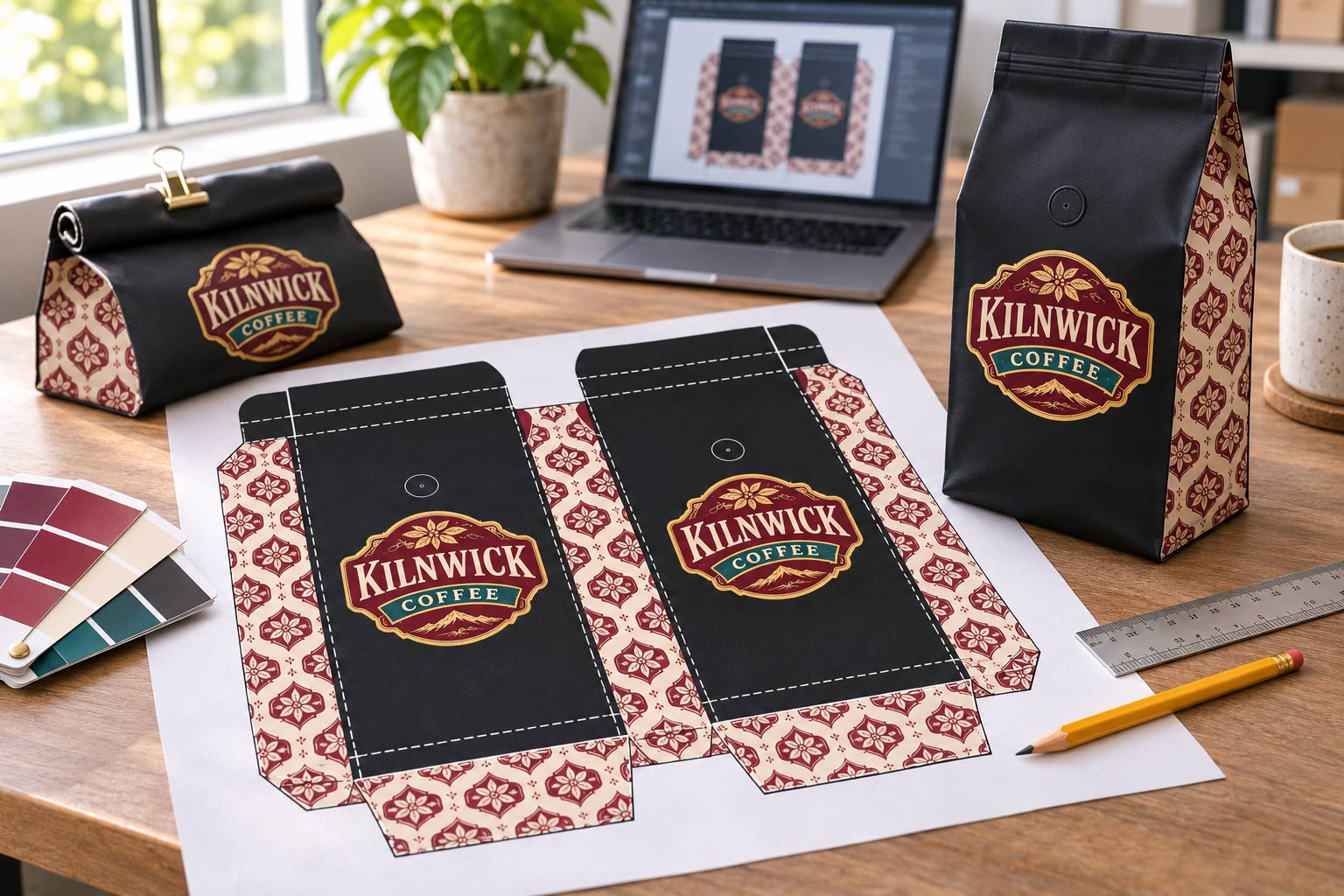
Plan the color around the folds. Your dieline shows exactly where the gussets and folds will be. You do not have to give up a black bag. Keep the bold black on the front and back panels, and let the gussets carry a lighter color, a pattern or a texture that hides a fold line. A bag that is black everywhere has nowhere to hide one. Our post on
why flat artwork looks different on a filled bag explains how the gussets change your design.
Keep words and logos off the folds. A pale line through the middle of your name is far more noticeable than one through a plain area. Place type and logos on the flat panels, clear of every crease.
Store and fill your bags warm. Keep cartons of empty bags off cold floors and away from outside walls in winter, and let a carton that arrived cold sit at room temperature before you start filling. Warm film bends more easily and marks less.
Bend, do not crush. Open bags gently on the filling table instead of pressing the folds flat with a thumb, and do not pack filled bags so tightly in a case that the gussets get crushed.
Think about the finish. If your bag will be handled a lot and you want black, ask how the finish you are considering behaves at the folds. Our post on
soft touch finishes and fingerprints covers another way a dark matte surface shows handling, and our post on
packaging glare covers how gloss and matte behave under store lights.
Test a sample the way it will live. Fill a sample with your coffee, fold it, ship it to yourself in winter if you can, roll the top down a dozen times and look at the folds under a bright light. That is the only way to see how your bag will look after a few weeks on a kitchen counter.
- Keep solid black on the flat panels and plan lighter colors or patterns on the gussets.
- Keep your name and logo clear of every fold.
- Store and fill bags at room temperature.
- Bend folds gently and do not crush filled bags in the case.
- Ask how your chosen finish behaves at the folds.
- Fold, ship and roll a filled sample before you order a full run.
How Savor Brands Handles It
We think a black bag should still look sharp after a few weeks of being opened, rolled and set back on the counter, so we look at more than the front panel when we review your artwork.
- We start with your dieline. Every custom bag starts with a dieline that shows where each panel, gusset and fold will land, so you and your designer can plan color around the folds from the first sketch.
- We talk through the finish with you. Our custom coffee bags come in matte, gloss and soft touch finishes, and we will help you weigh how each one looks on a dark bag that gets handled every day.
- You approve a digital proof on the exact dieline before anything prints.
- We send samples first, so you can fill, fold and roll a real bag before you order a full run.
- We start small. With digital printing from 500 bags per design, you can test a dark design without committing to a large order. If you would rather start with a plain bag, black is one of our six stock bag colors.
If you love a black bag, keep it. Tell us how your bags are filled, stored and used, and we will help you plan a design that stays dark where it counts.
Dark Where It Counts
Black coffee bags get white lines at the folds because a hard fold stretches the film, and stretched plastic can turn pale while a coating or ink layer on top can crack. The line looks like scuffing or a bad print, but it sits only on the creases. Cold film, repeated folding, sharp creases and solid black across the gussets make it worse. Plan color around the folds, keep words off the creases, store and fill bags warm, bend instead of crushing, think about the finish and test a filled sample before a full run. Then your bag stays deep and dark on the shelf and on the counter. For more on what each fold and panel of a bag is called, see our guide to the
parts of a coffee bag.