The Seam Is Not a Mistake
Turn almost any coffee bag around and look at the back. Running from the top down to the bottom, you will usually see a line. Sometimes it is a flat strip you can barely see. Sometimes it is a small raised ridge that stands off the panel. Either way, that line is a coffee bag back seam, and it is not a flaw or a fold. It is the exact spot where the bag was closed up when it was made.
Most people never notice it. Designers notice it at the worst possible moment, which is after the artwork is printed and the wrap-around pattern they drew does not meet on the back. Knowing the seam is there, and knowing which kind you have, lets you design with it instead of fighting it.
How a Flat Roll Becomes a Tube
A coffee bag does not start life as a bag. It starts as a flat roll of printed film, wide and continuous, wound up like a giant roll of wrapping paper. To turn that flat sheet into something that can hold coffee, the machine wraps it around into a tube and seals the two long edges together down the back. Then it seals the bottom, fills the bag, and seals the top.
That back seal is the seam. It has to be there, because a tube made from a flat sheet needs one joint where the two sides come together. The front of your bag is one clean, unbroken panel. The back is where the sheet came full circle and joined itself.
If you want the whole bag broken down part by part, our guide to the
anatomy of a coffee bag walks through every seam, gusset, and closure. The back seam is simply the one that touches your artwork the most.
Fin Seal or Lap Seal: The Two Ways to Close the Back
There are two common ways to make that back seam, and they look and feel different.
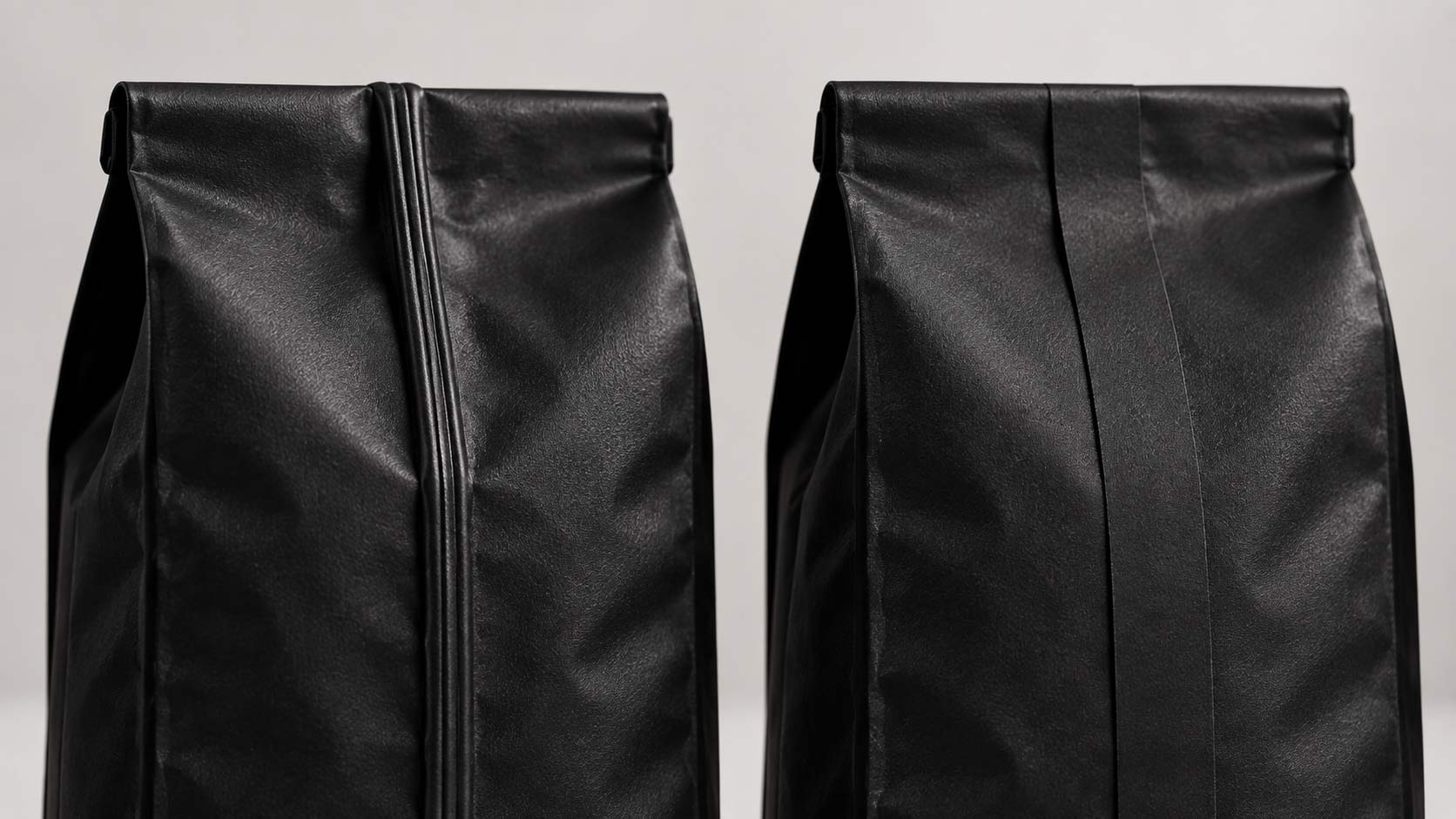
A fin seal presses the two inner faces of the film together and seals them, so the joined edges stick out from the bag like a small fin or ridge. Run your finger down the back and you can feel it. A fin seal is strong and forgiving, because only the inside layer of the film needs to be sealable. That makes it a good match for high barrier films that carry a foil or metallized layer.
A lap seal overlaps one edge on top of the other and seals them flat, so the seam lies almost flush against the back panel. It looks cleaner and uses a little less film, but it asks more of your material, because the outside of one edge has to bond to the inside of the other. Both are proven for coffee, and the
custom coffee bags we build can be made either way, depending on the film and the look you are after.
Here is the practical difference for you. A fin seal stands up and takes a strip of the back panel with it, because the fin folds over and covers that width. A lap seal keeps the panel almost flat and leaves you more usable printing space on the back.
What the Seam Does to a Wrap-Around Design
Most of the time the seam is invisible to your design, because most art lives on the front. The trouble starts when you want a pattern, a color block, or a photo to wrap all the way around the bag as one continuous image.
That flat roll of film is printed before it becomes a tube. So a design that looks perfectly continuous on the flat sheet has to meet itself at the seam once the bag is formed. If you did not plan for it, two things go wrong. The pattern can jump or misalign right at the seam line, and on a fin seal a strip of your art disappears into the fold.
- A continuous stripe or texture can land with a visible break at the seam.
- On a fin seal, artwork near the joined edges gets pulled into the ridge and hidden.
- Small type, a logo, or a barcode placed across the seam can end up split or hard to read.
None of this means you cannot wrap a design around a bag. It means the seam is a real edge in your layout, the same way the fold of a gusset is, and it needs to be treated as one.
Put the Seam Where You Want It
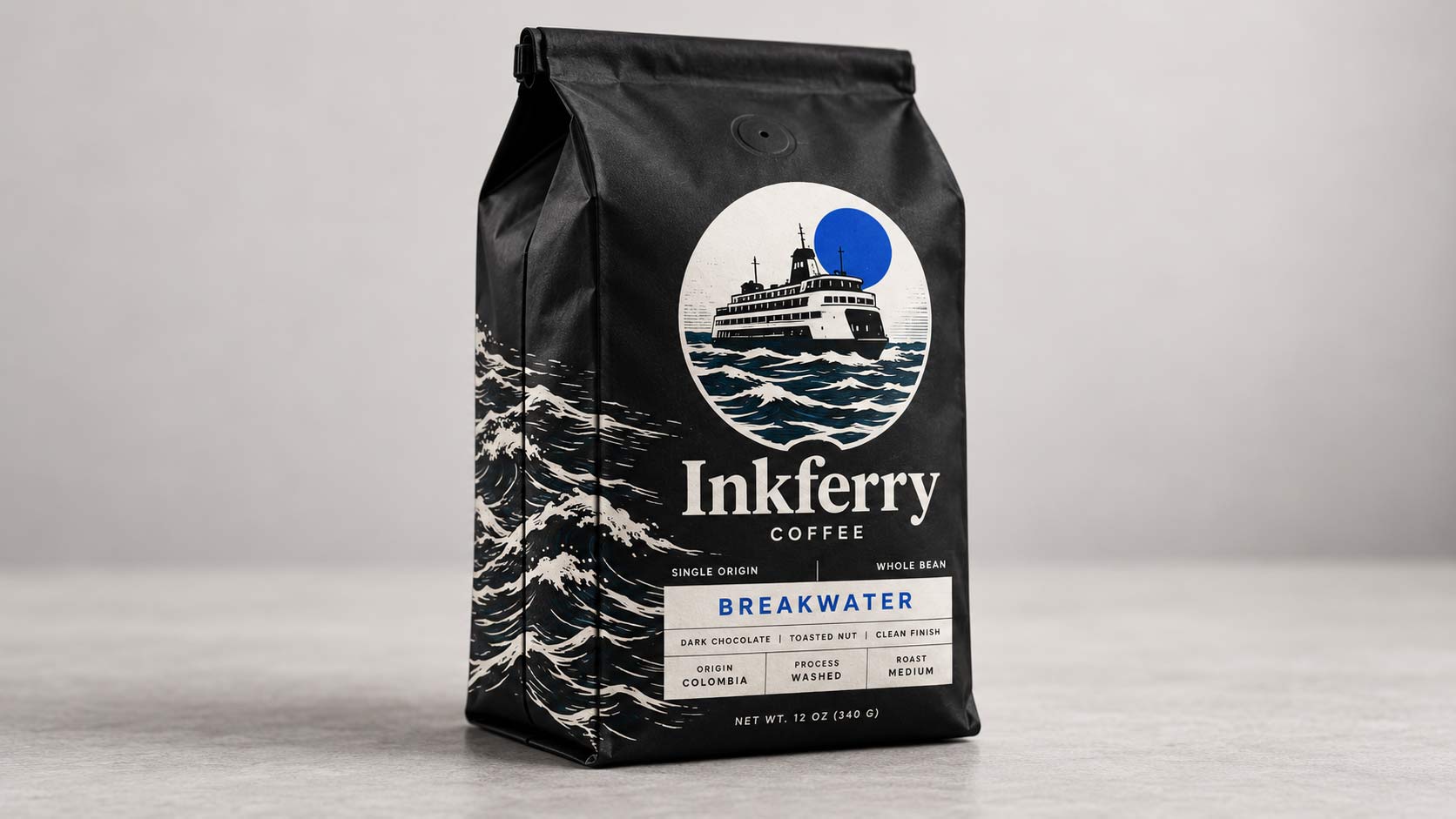
The good news is that the seam is predictable. It runs down the back, in a known place, on every bag in the run. So you can design around it on purpose instead of hoping it lands somewhere harmless.
A few habits keep it from biting you:
- Treat the back panel as its own zone, and let the seam sit at its center or edge rather than under a logo.
- Keep anything that has to stay readable, like ingredients, a story, or a barcode, a comfortable margin away from the seam.
- For a wrap-around look, choose art that can absorb a seam, like an even texture or a field of color, instead of a single image that has to line up perfectly.
- Ask your printer where the seam falls on your exact dieline before you finalize the layout, then design the two sides to meet there.
The back panel is prime space for the parts of your label that do a job rather than sell the bag on the shelf. Send that copy to the back, keep it off the seam, and the front stays clean for your brand.
This Is Not the Same as a Filled Bag Warping
It is easy to lump the seam in with another artwork surprise, but they are different problems. The seam is a fixed line that comes from how the bag is built. The warp you see once a bag is filled comes from gussets opening and the base folding out, which bends and stretches art in a separate way. We cover that one on its own in
what filling a coffee bag does to your artwork, because the fixes are not the same.
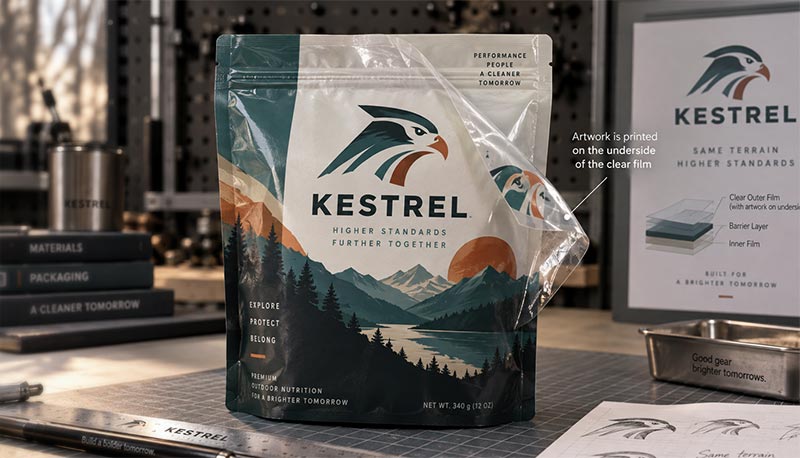
One more thing the seam is not. It is not the same as where your ink lives. On a laminated bag the print sits
on the inside of the outer film, sealed into the wall, which is why the graphics never scuff. The seam is about the shape of the bag. The print layer is about how the color is protected. Two different facts, both worth knowing before you approve a proof.
The Seam Is Part of the Canvas
That line down the back of your coffee bag is the honest fingerprint of how it was made. A flat sheet became a tube, and the two edges had to meet somewhere. Once you know it is coming, it stops being a surprise and starts being a design decision: where to put it, what to keep away from it, and how to let your art meet it cleanly.
If you are laying out a bag and you are not sure where the seam will fall or how your wrap-around art will behave once the film becomes a tube,
send us your design and we will show you exactly where the seam lands and what to move.