Why Does Bag Shape Change How Many Bags Fit in a Case?
Because a filled coffee bag is not the rectangle you saw on the dieline. Once coffee goes in, every bag style settles into its own three-dimensional shape, and some of those shapes stack like bricks while others are wedges that leave empty space no matter how you turn them.
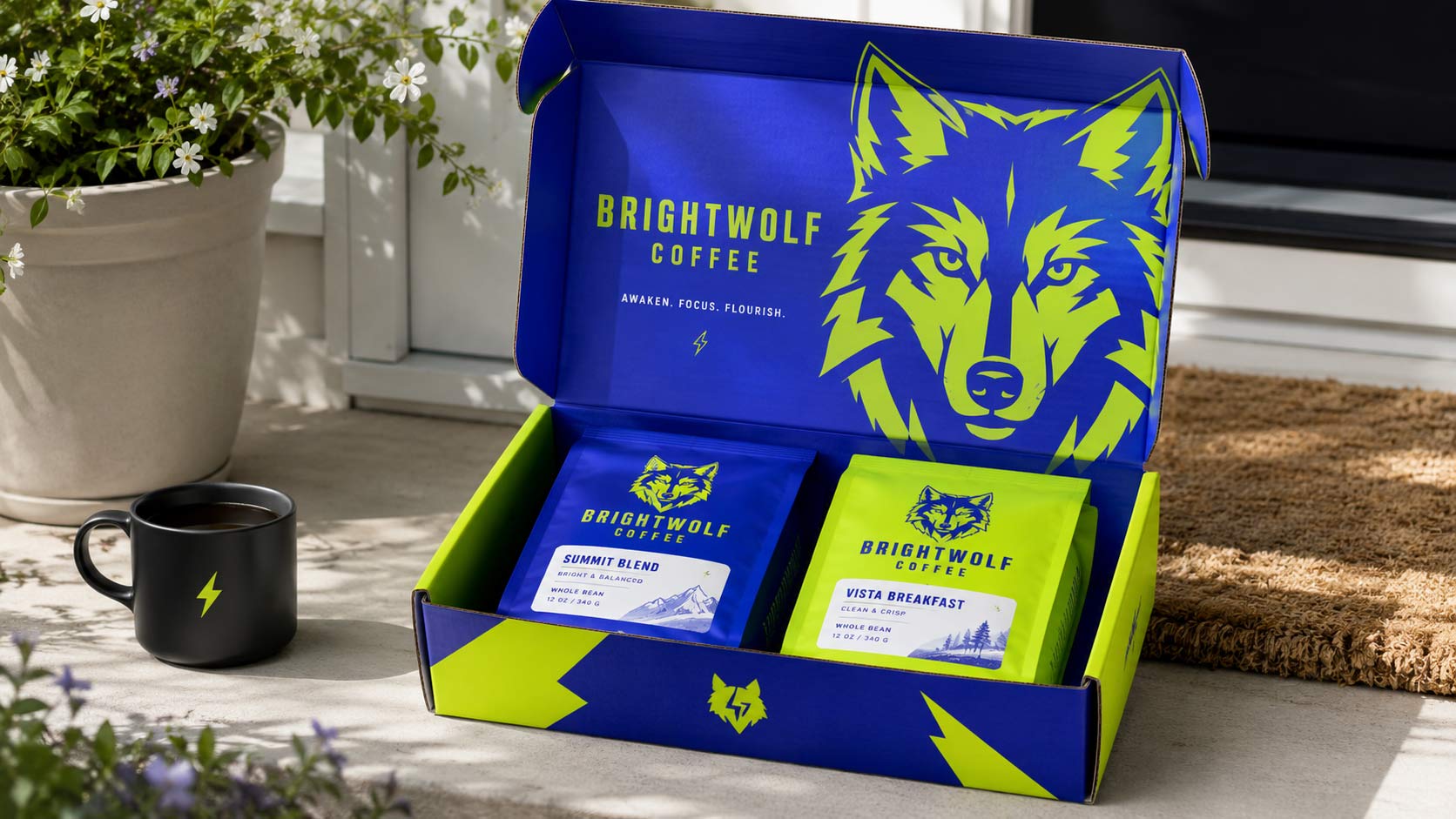
Most roasters choose a bag for how it looks on a shelf, which is the right place to start. But the same bag also has to sit in a shipping case, in a wholesale carton, on a café shelf and in the corner of your stockroom. The shape decides how many fit in each of those places, and that shows up later as shipping cost, crushed bags and shelf space you did not plan for.
What Shape Is Each Coffee Bag Once It Is Filled?
Here is how the common styles behave once they are full. If you want the parts behind each one, our
anatomy of a coffee bag walks through them.
- Stand-up pouch: fat at the bottom, where the gusset opens into a base, and thin at the top, where the bag is sealed flat. Filled, it is a wedge.
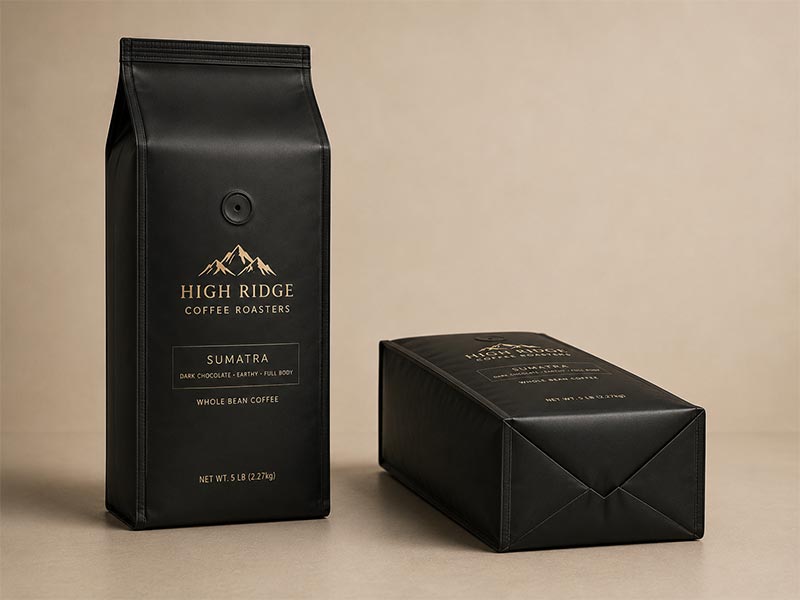
- Quad seal box bottom: a flat, square base and four straight sides. Filled, it is close to a brick.
- Side gusset: pleats down both sides let the bag expand into a block. Filled and folded over at the top, it is also close to a brick.
- Quad seal V cut and side gusset V cut: a wedge-shaped base instead of a square one, which is why they suit big wholesale fills rather than retail shelves. We explain the difference in the quad seal V cut.
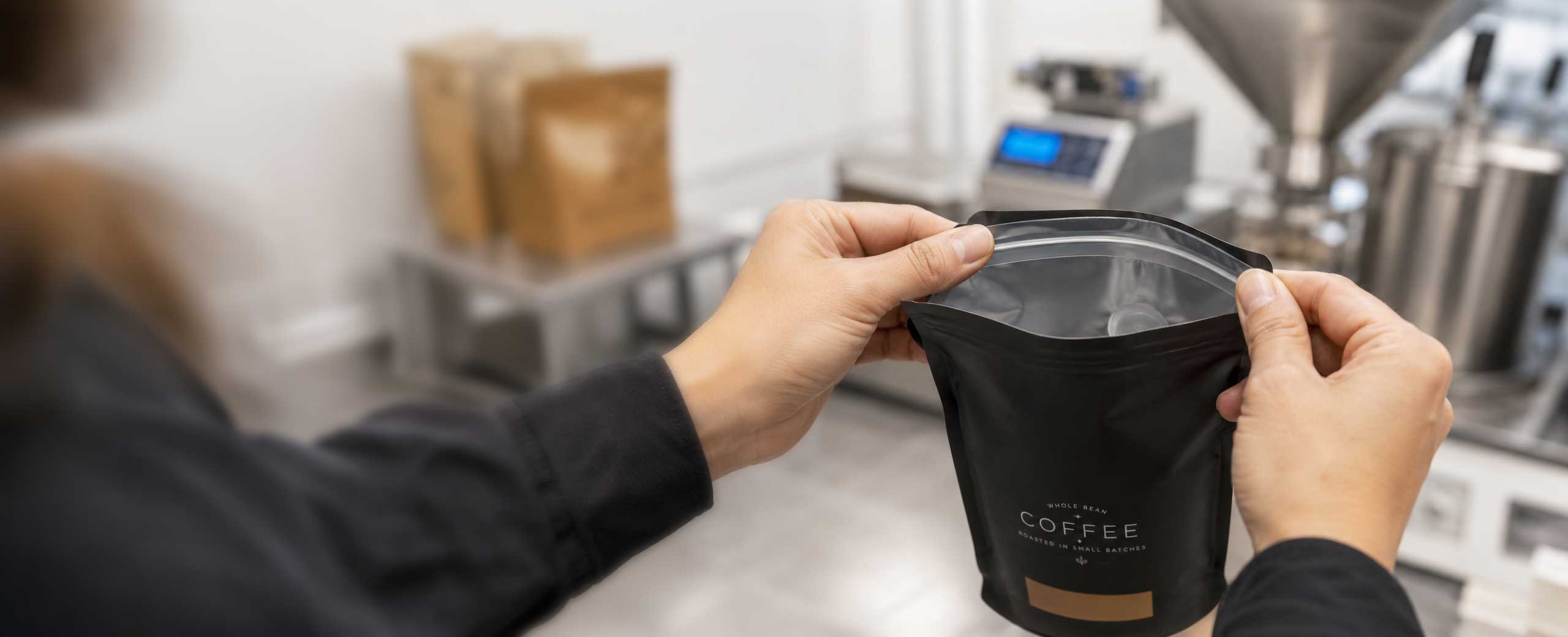
- Flat pouches and sample packs: no gusset at all, so they lie flat and stack in layers.
None of these is better in general. A stand-up pouch is popular for good reasons. The point is that each shape packs differently, and you should know which one you are buying before you buy the cases to ship it in.
Why Do Stand-Up Pouches Waste Space in a Box?
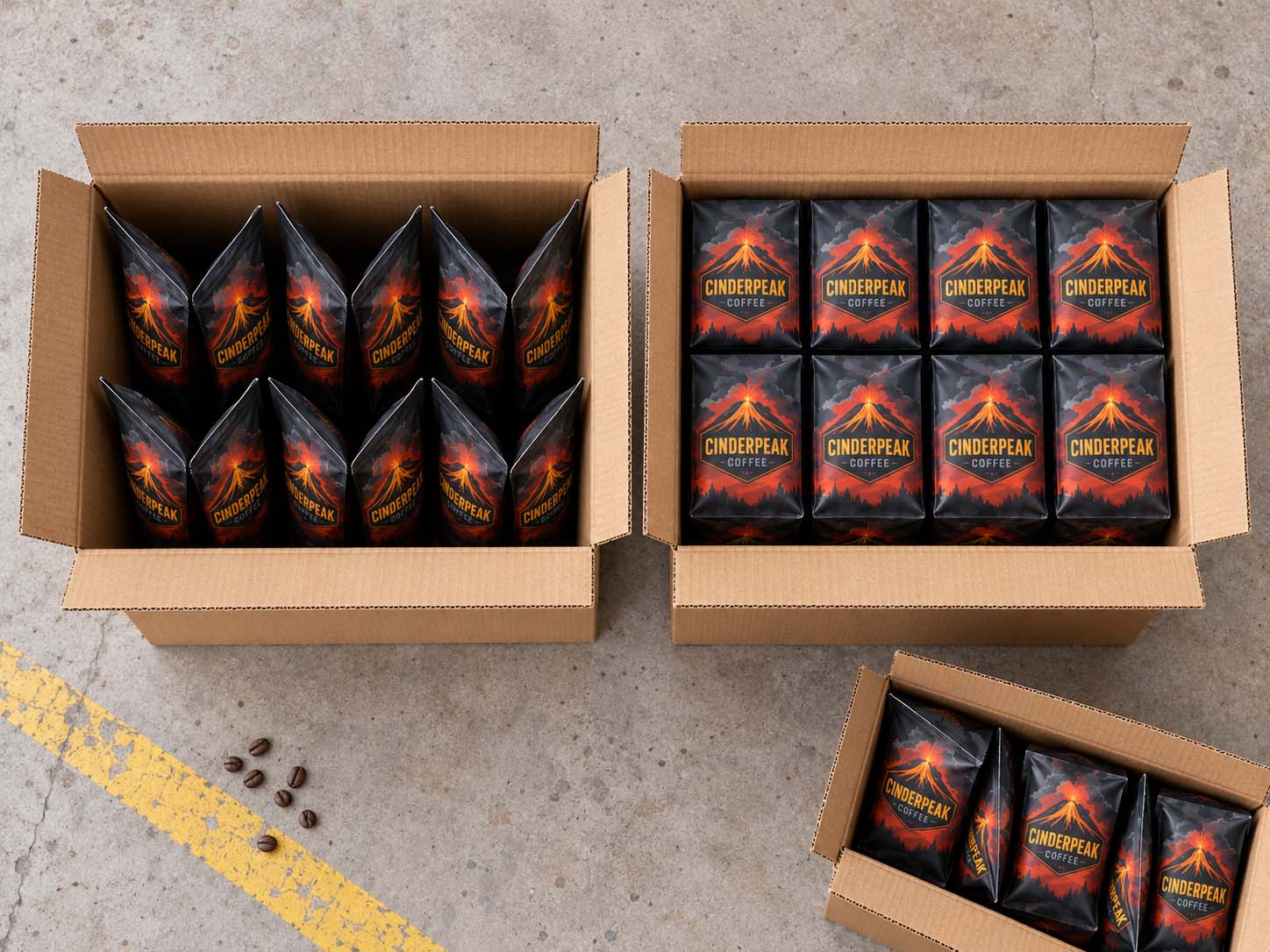
Because a wedge cannot fill a rectangle. Stand a row of filled pouches upright in a shipping case and the bottoms touch while the tops lean apart, leaving a band of empty air across the top half of the box.
There are ways to win some of it back:
- Pack them head to toe, alternating which way each pouch faces, so the thin top of one sits beside the fat bottom of the next.
- Lay them flat in layers if your coffee and your valve placement allow it, which turns the wedge into a stack.
- Size the case to the filled pouch, measured with coffee in it, instead of to the flat bag dimensions.
Box bottoms and side gussets avoid most of this. Because they fill out into blocks, they line up edge to edge in a case with very little air between them, which is one reason side gussets have long been the workhorse for wholesale.
Why Does Empty Space in a Case Cost Money?
Because parcel carriers generally bill by the size of the box as well as its weight, using a dimensional weight calculation, so a case that is half air can cost about the same to ship as a full one. Empty space also means more void fill to buy and more room for bags to shift and rub in transit, which is how corners get crushed.
Right-sizing the outer box is its own topic, and we cover it in
custom mailer boxes for coffee and food brands. This post is the step before it: the bag shape you choose decides how small that box can be in the first place.
Does Bag Shape Change How Much Shelf Space I Need?
It does. A retailer gives you a strip of shelf, and what matters is how many bags fit side by side and how they behave once they are there.
- Box bottoms stand square and upright, so they line up neatly edge to edge and the front panel faces straight out.
- Stand-up pouches stand well when filled correctly, but a filled pouch is thicker in the middle than at the edges, and the tops can lean or flop if the fill is low.
- Side gussets often lie down or lean unless they are folded and tied, which is fine in a basket or a wholesale box and less tidy on a retail shelf.
A filled bag is also narrower than the flat bag, because the coffee pulls the sides in as the bag fills out. That is why a design that looked centered on the flat dieline can sit differently on the shelf, which we explain in
approved flat, printed on a curve.
What About Storing Empty Bags?
Here every style wins. Unfilled flexible bags ship and store flat, so a carton of empty bags takes up a small fraction of the space the same number of tins or jars would. That is one of the quiet advantages of flexible packaging for a small roastery with no warehouse.
Flat does not mean careless, though. Heat, humidity, light and heavy stacking all age unfilled bags before you ever use them, which we cover in
how to store coffee bags before you fill them.
How Do I Test the Fit Before I Order Bags or Cases?
Pack a real case before you commit to anything. It takes less than an hour and it answers questions no spec sheet can.
- Fill sample bags with your real coffee at your real weight.
- Measure a filled bag at its widest, deepest and tallest points. Those are the numbers your case has to fit, not the flat bag size.
- Pack a full case the way your team actually will, then try it head to toe and laid flat if you are using pouches.
- Count how many fit, note how much void fill it takes, and shake it. Bags that move will rub.
- Stand a few on a shelf next to each other and check how they line up and how much width they take.

How Savor Brands Helps You Plan for Packing
Our
stock bags come in fixed preset sizes, which makes them easy to plan around: you can order samples, pack a test case and know your count before you buy. When the fit matters more,
custom coffee bags can be sized around your fill and your cases, and
digital printing starts at 500 bags per design, so a size change does not mean a huge order.
If you ship in boxes, our
custom printed boxes start at 500 per design, so the box can be built around the bag you actually use. Tell us your bag style, your fill weight and how you ship, and we will help you match them.
Pack the Case Before You Pick the Bag
A coffee bag spends a few seconds being chosen and weeks being shipped, stored and shelved. Stand-up pouches are wedges, box bottoms and side gussets are close to bricks, and flat pouches stack. None of that is good or bad on its own, but it decides how many bags fit in a case, how much air you pay to ship and how tidy your shelf looks.
Fill a sample, measure it, pack a test case and then decide. If you want help choosing a shape that works on the shelf and in the box,
tell us how you ship and we will walk through it with you.