The Arithmetic Nobody Ran
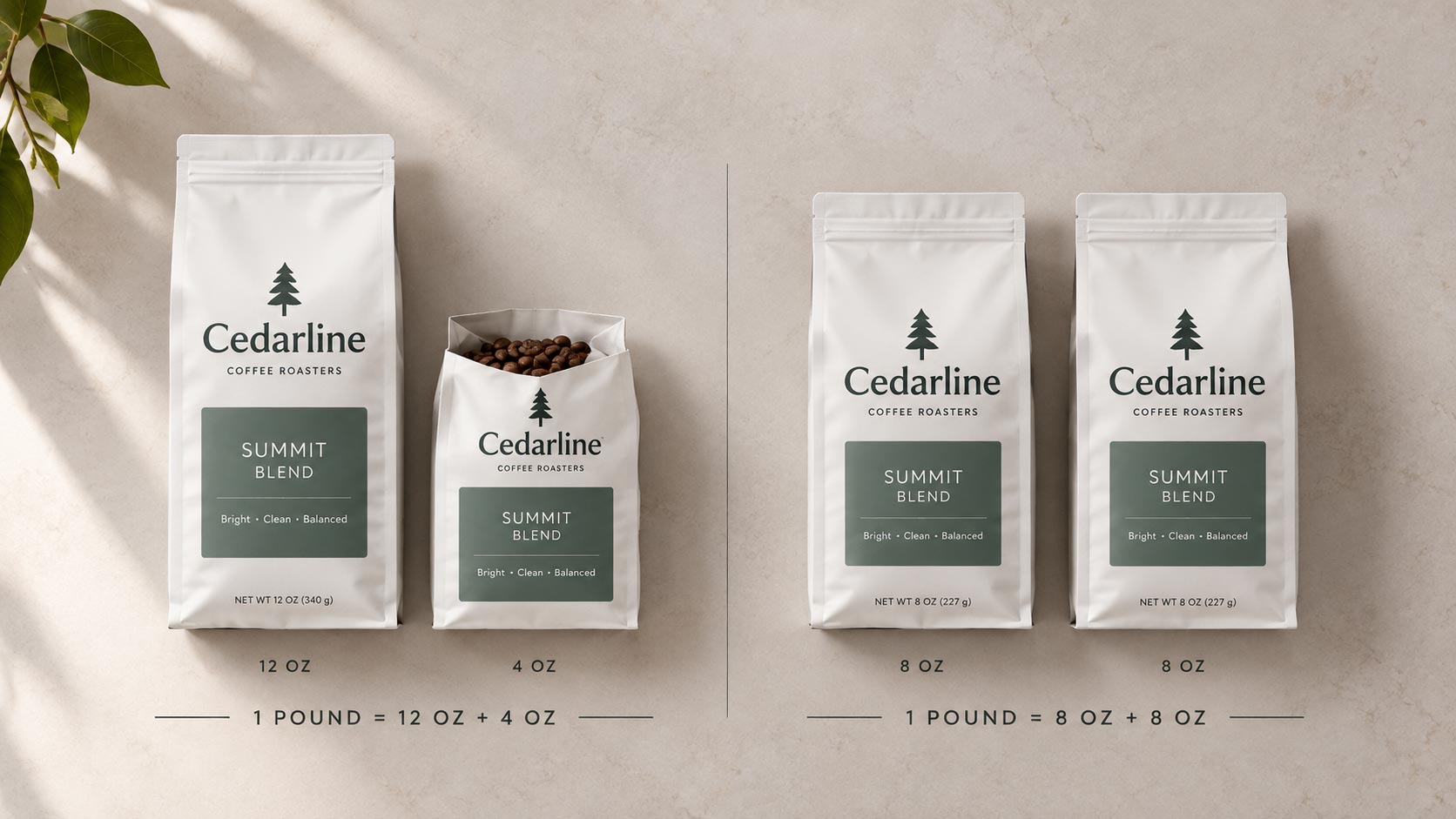
A pound of coffee sold in 12 oz bags is about 1.3 bags. The same pound sold in 8 oz bags is exactly 2.
That is the whole post in two lines, and it is worth sitting with for a second, because nothing else in the sentence changed. Same green, same roast, same customer, same pound going out the door. The only thing that moved was the size of the bag, and the number of bags went up by roughly half.
Scale it and it stops being a curiosity. A roaster moving 2,000 pounds a month in 12 oz was putting out around 2,670 bags. The same 2,000 pounds in 8 oz is 4,000 bags. That is over a thousand extra pieces of packaging a month, produced by a decision that was never about packaging at all.
This Is Not an Argument Against Small Bags
Let us be clear before going further, because it would be easy to read this as a reversal.
The smaller bag is winning for good reasons. It kept shelf prices approachable through a brutal run in green, it lowers the barrier for someone trying you for the first time, and it gets finished while the coffee is still worth drinking. We argued last week that
it is here to stay even now that green has come off the peak, and we still think that.
A second-order effect is not a counterargument. It is just the part you plan for instead of getting surprised by.
Where the Extra Bags Actually Go
Here is why the number matters more for coffee than it would for most products.
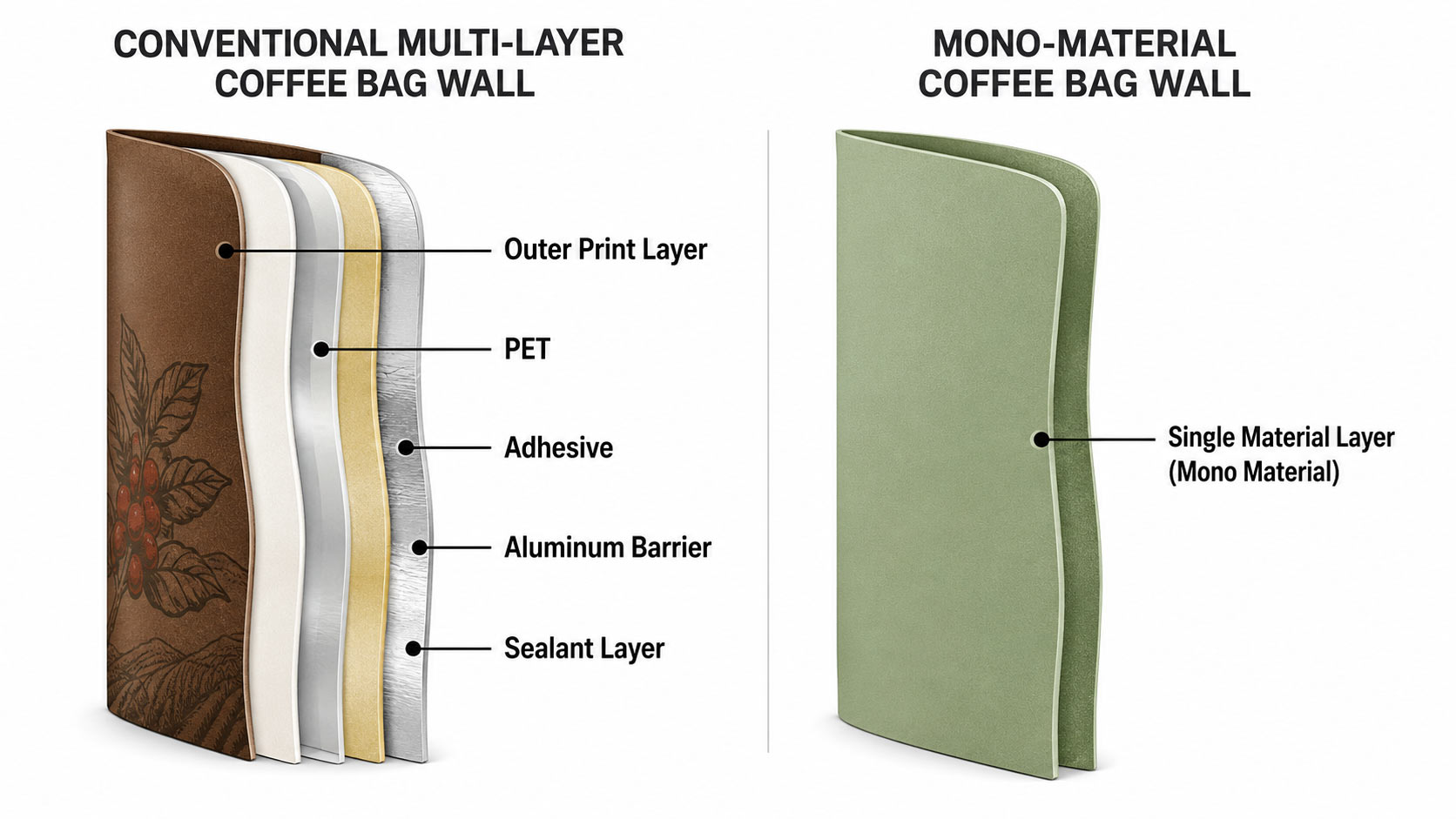
A high barrier coffee bag is a laminate. Several different materials bonded into one wall, which is exactly what makes it good at its job and exactly what makes it awkward at the end of that job. Curbside systems are built to sort single materials, and a bonded multi-layer structure is not one. That is the whole reason
mono-material bags exist as a category.
So when your bag count goes up 50 percent, you are not just buying more packaging. You are putting more material into the world that ordinary municipal recycling was never set up to take. Which is the point at which most roasters either shrug, or find a route.
What R+R® Actually Does
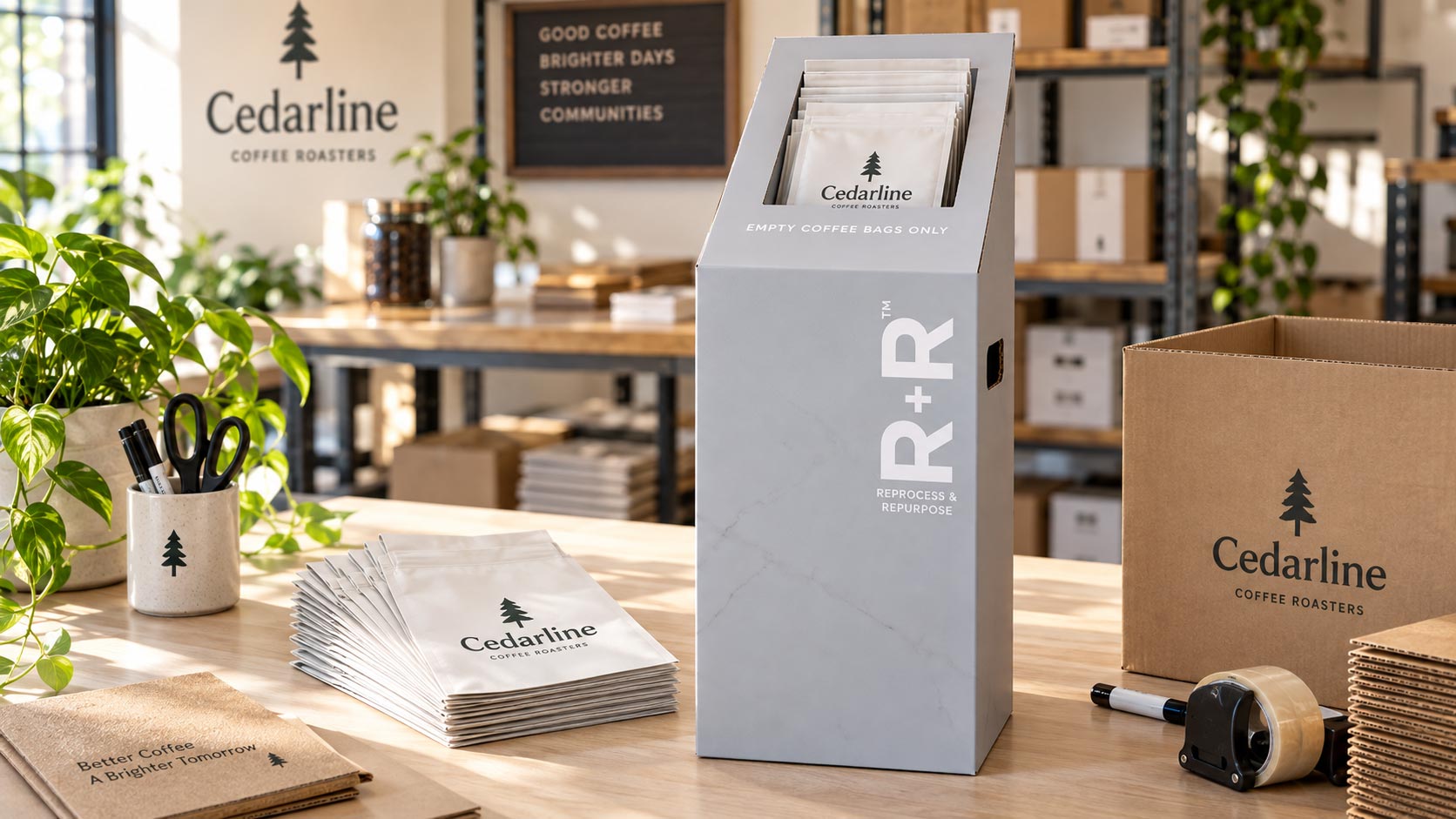
The route we run is the
R+R® Upcycle Program, and the mechanics are deliberately simple.
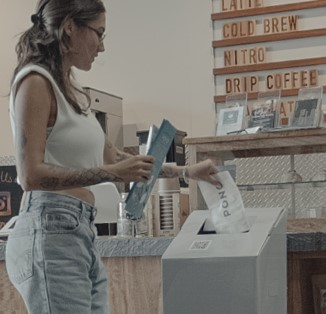
Cafés and roasters collect empty coffee packaging in R+R® boxes. Those boxes come back through the program, the packaging is processed, and the material is repurposed into other products entirely. Drainage systems are one of the real destinations, through partners including HydroBlox and ByFusion. The bag does not become another bag; it becomes something with a much longer life than the coffee it carried.
HYDROBLOX: All boxes must be approved prior to shipment and must be packed in designated R+R boxes. Any boxes that are not in R+R boxes or do not have an approved label will not be accepted.
Two things about it matter here. It is
complimentary for our customers, so rising volume does not become a rising bill. And it is built to be measurable and traceable, which means the extra bags are not a vague sustainability gesture, they are a number you can actually report.
Run Your Own Number
You do not need a spreadsheet for this, just two lines.
Take your monthly volume in pounds and multiply by 16 to get ounces. Divide that by your old bag size, then divide it again by your new one. The gap between those two figures is your extra bag count, and it is what your collection cadence has to absorb.
Worked through: 2,000 lb is 32,000 oz. At 12 oz that is about 2,667 bags. At 8 oz it is 4,000. If you run several sizes, do it per size and add them up, because a line that split into three formats behaves differently from one that simply halved.
What Changes at 50 Percent More Volume
If your line has moved smaller, four practical things shift:
- Your collection box fills faster. Whatever cadence you had is now wrong by about a third. Work out how quickly a box actually fills at your new bag count rather than waiting for it to overflow and become someone's problem to look at.
- Placement matters more. A box in the back fills at staff speed. A box where customers can see it fills at customer speed, and customer speed is what just went up.
- Tell people the bag comes back. Most customers have no idea a coffee bag has anywhere to go. A line on the bag or a card at the counter converts a bin decision into a return, and it is one of the cheapest things you can put on a package.
- Count it. The program is traceable for a reason. If you are producing 50 percent more empties, the recovery figure is a genuinely better number this year than last, and that is worth saying out loud.
The Part That Is Actually Good News
There is a version of this post that treats more bags as purely a problem. That version is boring, and it is also wrong.
An empty bag coming back is a customer walking into your shop holding your packaging. That is a visit, a conversation and a reason to buy again, and you got it because of a design decision you made for completely different reasons. Roasters who lean into that find the return box is one of the better pieces of
marketing they own, precisely because it is not marketing.
Fifty percent more bags coming back is fifty percent more of that.
Plan for the Volume You Actually Have
The shift to smaller bags was a pricing decision made under pressure, and it worked. Like most decisions made under pressure, it moved something downstream that nobody was looking at.
Your bag count is up. Your material volume is up with it. Neither is a reason to go back, and both are easy to handle if you plan for the number instead of discovering it.
If you have moved to smaller formats and want to work out what that does to your collection cadence, or you are not yet set up with
R+R® at all,
talk to our team and we will size it with you.