The Same Notch, Two Different Results
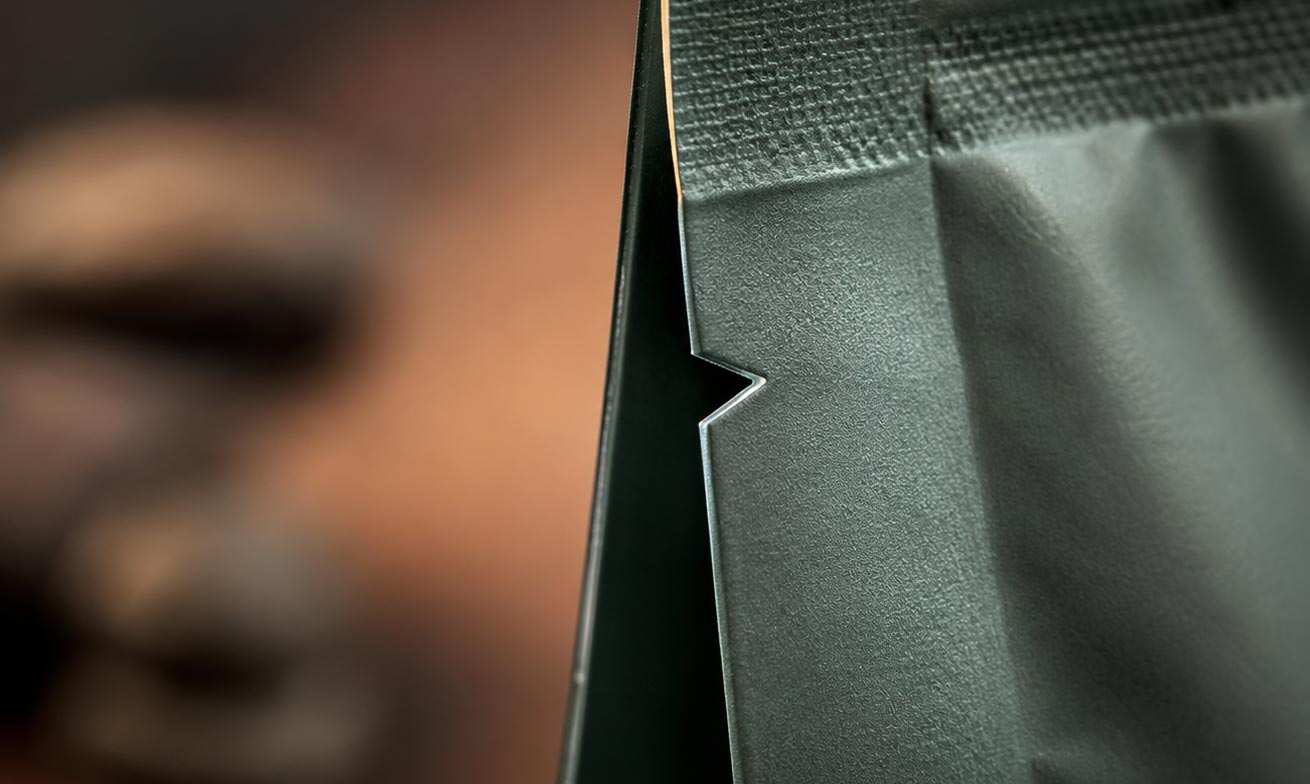
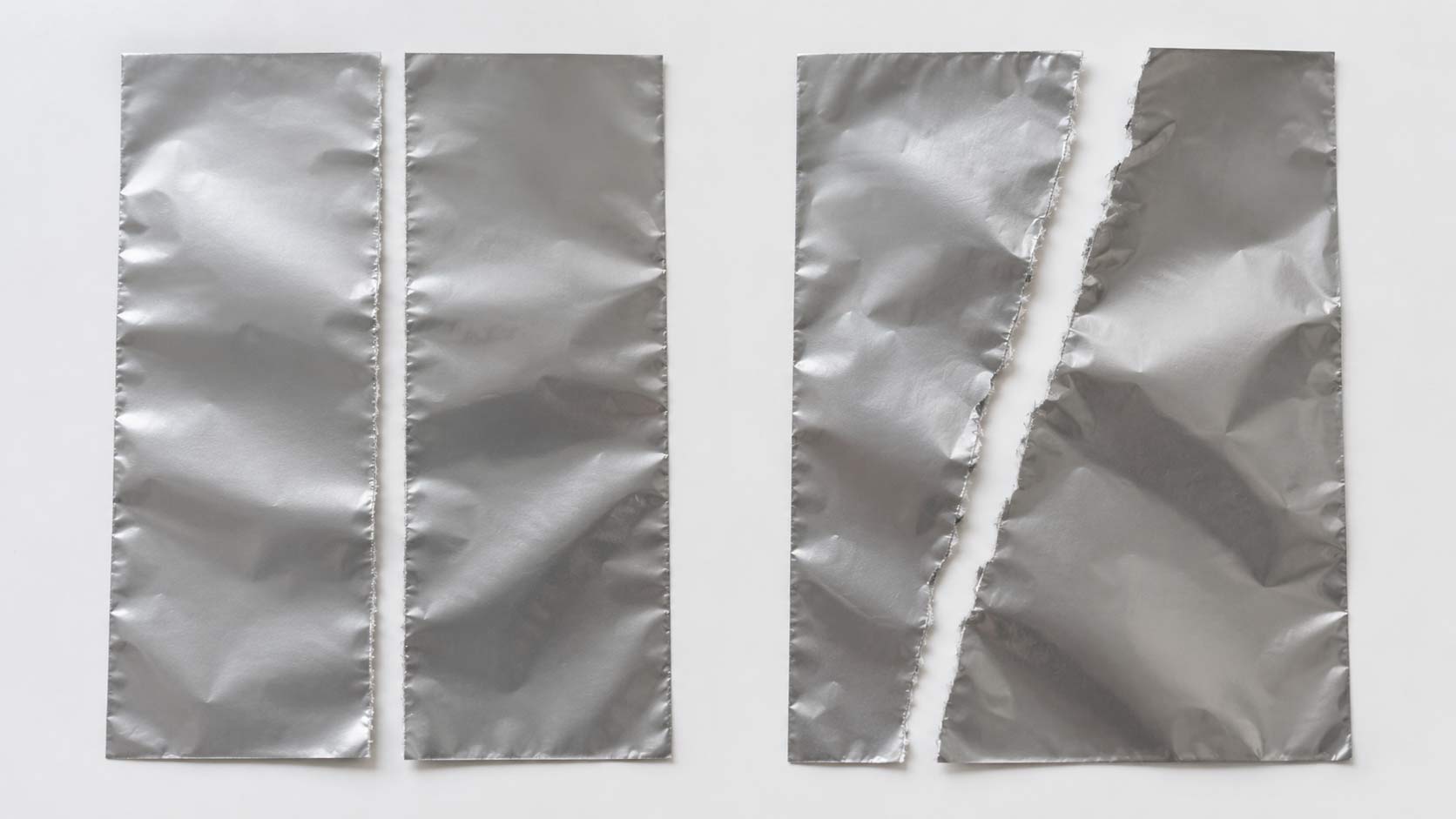
Two bags come off the same order. One opens with a clean strip straight across the top, exactly the way it was supposed to. The other starts at the notch, veers down toward the middle of the front panel, and leaves a ragged diagonal through your logo.
Nothing about those two bags is different. Same film, same notch, same press, same day. So the obvious conclusions line up quickly: the notch is in the wrong place, the film is cheap, or somebody changed the material without telling you.
None of those is usually what happened. A tear notch does not control where a tear goes. It only decides where the tear begins. Where it travels after that is decided by the film, and the film has a direction built into it long before anybody printed on it.
Film Has a Grain, the Way Wood Does
This is the part nobody mentions, and it explains almost everything else.
Packaging film is not poured into a sheet. It is extruded, pulled, and wound, and all of that happens in one direction. The long polymer molecules that make up the film line up with that pull, the way fibers line up along a plank. Many of the films used in coffee packaging are then deliberately stretched during manufacture to improve their strength and clarity, which locks that alignment in even harder.
The result is a material with a grain. The direction the film traveled through the machine is called the machine direction, and the direction across the width of the roll is the cross direction. The film is not the same in both. It stretches differently, it holds differently, and most importantly here, it tears differently.
Tear it along the grain and the tear runs between the aligned molecules, straight and easy. Tear it across the grain and the tear has to break through them, so it wanders, looking for the path of least resistance. That wandering is the diagonal rip across your front panel.
Your Bag Is Cut From That Roll at a Particular Angle
Here is where it becomes a packaging question rather than a materials one.
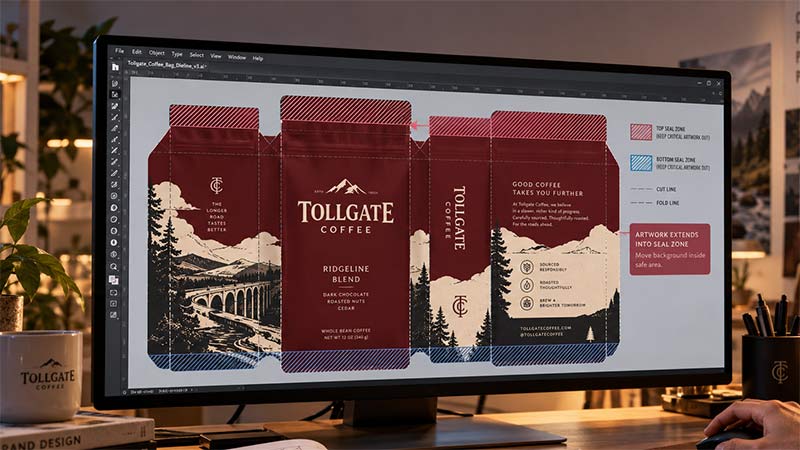
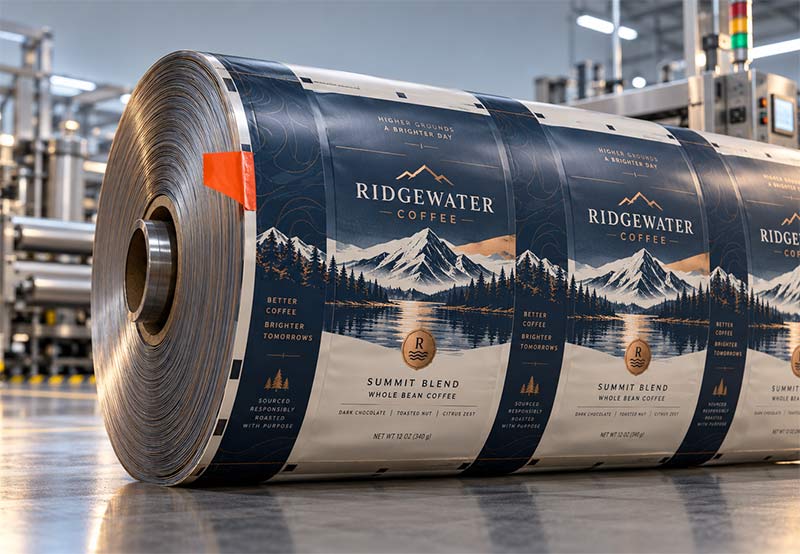
A bag is converted out of a running web of film. How the bag sits on that web, which way the top of the bag faces relative to the direction the roll is traveling, is a decision made at converting. It is driven by the bag style, the layout efficiency, where the gussets fall, and how many bags fit across the width.
That decision quietly determines which way the grain runs across the top of your finished bag. If it runs along the line the customer is tearing, the bag opens like it is supposed to. If it runs across that line, every opening is a small gamble. The notch is in exactly the same place on both bags. The grain under it is not.
This is also why the answer can be different between two suppliers quoting the same bag. They are not using the same web layout, and nobody tells you that, because to them it is just how the job runs.
Structure Changes It Too
The grain is not the only thing in play, because a coffee bag is several films bonded together, and each one brings its own behavior.
- Each ply has its own grain. A laminate combines them, so the tear behavior of the finished structure is a combination, not a copy of any single layer.
- Foil behaves differently from plastic. Aluminum foil has no polymer alignment to follow, and it gives a laminate a much more predictable tear.
- Some films are made to resist tearing. That is the entire point of a tough outer layer, and toughness and easy opening pull against each other.
- Some films are made to tear on purpose. Directional tear films exist specifically so the tear goes where you want it.
- Thickness shifts the feel. A heavier structure takes more force to start and more force to keep going, which changes how controlled the tear feels in the hand.
So two bags that look identical on a shelf can open completely differently, and the reason sits inside the laminate where nobody can see it. If the layer stack is new to you, our breakdown of
what mil, micron and gauge actually mean is the place to start.
Laser Scoring Overrules the Grain Entirely
There is a way to stop leaving this to the material, and it is worth knowing before you compromise on film or notch placement.
A laser can cut a controlled line into the film, to a controlled depth, without cutting through the barrier. The tear then follows that line instead of following the grain. It is the same idea as scoring a sheet of glass. You are not asking the material to behave, you are giving it a path.
That is what makes a straight tear repeatable across a whole run rather than mostly reliable. It also means the tear line can go where the design wants it rather than where the film is willing to go, including curves and openings partway down a panel. The trade is a process step, which is worth it when the opening experience is part of how the brand feels and not worth it when a notch is already doing the job.
Why It Reads as a Misplaced Notch
The misdiagnosis makes sense, which is why it is so common.
The notch is the only part of this that is visible. It is right there at the top of the bag, it is clearly the thing you are supposed to use, and when the result is bad it is the obvious suspect. Move the notch, the thinking goes, and the tear will straighten out.
Moving it rarely helps, because the problem is not the starting point. It is the direction the tear wants to travel once it is moving. A notch half an inch to the left still hands the tear to the same grain. What changes the outcome is changing the grain under it, changing the structure, or giving the tear a scored line to follow instead.
How Savor Brands Handles This
This is a solvable problem, and it is solved before anything is printed rather than after bags arrive.
- We look at the web layout, not just the dieline. Knowing which way the grain runs across the top of your bag is part of specifying it, not an afterthought.
- We place the notch against that direction so the tear is running with the grain wherever the layout allows it.
- We will change the structure if the layout will not cooperate, because a film that tears predictably is worth more than one that only looks right on a spec sheet.
- We laser score when the opening matters, which takes the material out of the decision completely.
- We tear the samples. Not look at them. Tear them, more than one, and see what actually happens before a production run commits to it.
That last one is the whole thing in miniature. A tear is a physical event, and the only honest test of it is doing it with your hands.
Wrapping It Up: Ask Which Way the Grain Runs
Most packaging problems announce themselves. This one hides inside the material, which is why it gets blamed on the one part of the bag you can see.
Next time a bag opens badly, do not start by moving the notch. Tear a few more and watch which way they go. If they all drift the same direction, that is the grain telling you something, and it is a conversation about web layout and structure rather than about notch placement. If they go different ways every time, that is worth knowing too.
The short version: a notch tells the tear where to start, the film tells it where to go, and a laser score overrules both. Our earlier post on
why tear notches matter covers the opening itself,
the anatomy of a coffee bag walks through how the top closure fits together, and
ink does not weld explains why the band the notch sits in has rules of its own. If your bags are opening inconsistently,
send us one that tore badly and we will tell you which direction it went and why.