The Barcode Is About to Stop Being Just a Barcode
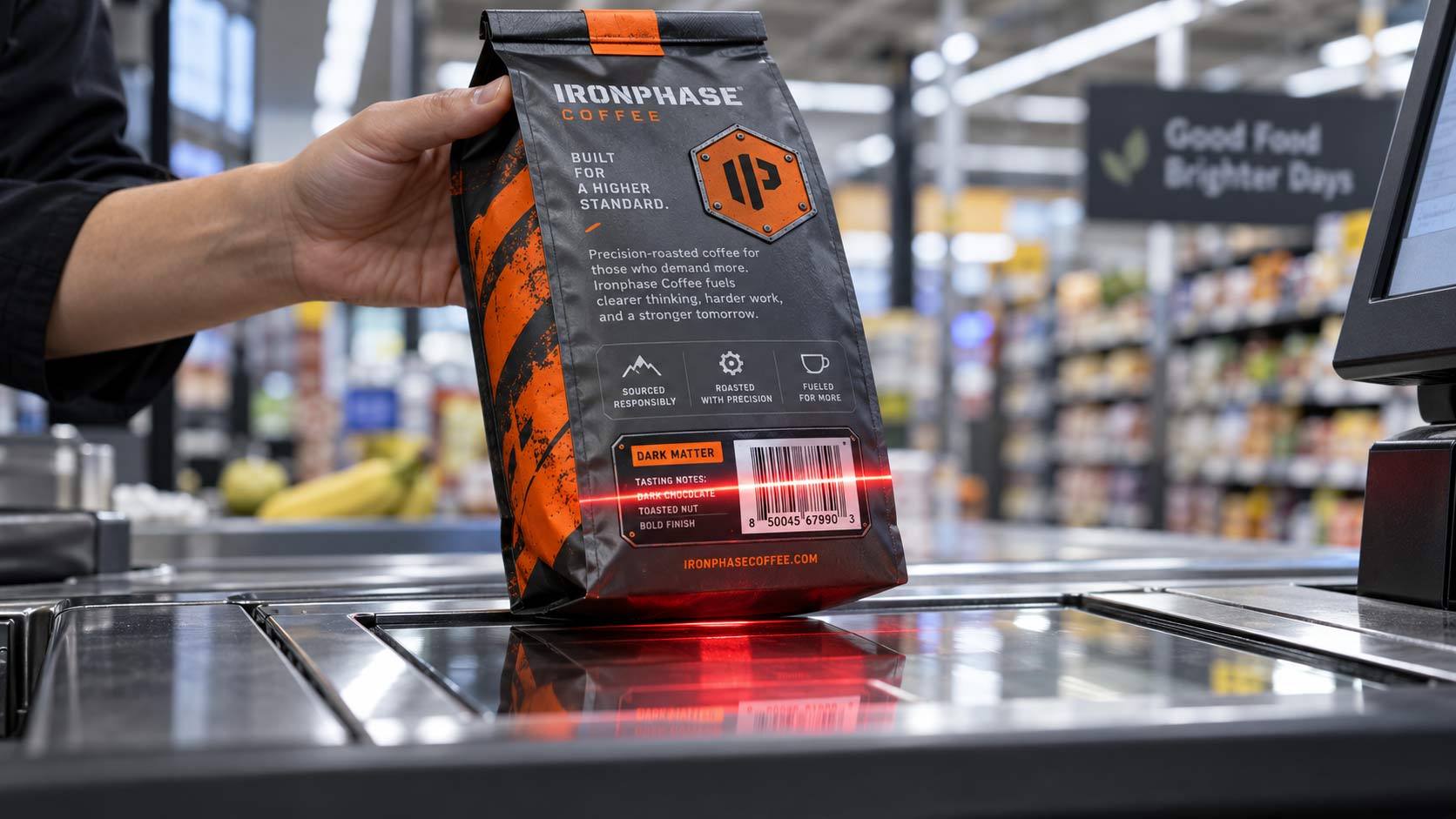
The strip of black lines on the back of your bag has done one job since the 1970s. It holds a number, the till looks the number up, and that is the entire transaction.
That is changing. Retail is moving toward a 2D code, a square QR style symbol, that carries the same product number plus a great deal more: a batch, a date, a link to a page you control.
The date attached to this is
the end of 2027, and the initiative is called Sunrise 2027. What that date actually means is widely misreported, including by people selling you things because of it, so it is worth being precise.
What the 2027 Date Actually Is
Sunrise 2027 is a target for
retailers, not a rule for you.
The goal is that by the end of 2027, checkout systems can read a 2D code as well as the traditional barcode they already read. It is about the scanner at the till being ready, not about what is printed on your bag.
Three things follow from that, and they matter:
- It is voluntary. This is an industry initiative, not legislation. There is no fine for ignoring it and no legal deadline attached to your packaging.
- Nobody is switching off the old barcode. The target is that tills read both. The linear barcode you have now continues to work.
- Individual retailers set their own rules. This is where it gets real. Some large chains have already published their own acceptance timelines, and a few are asking suppliers for 2D codes as a condition of shelf space. That is a commercial requirement from a buyer, not a GS1 mandate, and it arrives on whatever schedule that buyer chooses.
So the honest summary: no authority will make you do this, and a grocery buyer might.
Why a Coffee Bag Feels This Early
Here is the part specific to you, and it is the reason this is worth reading in 2026 rather than 2027.
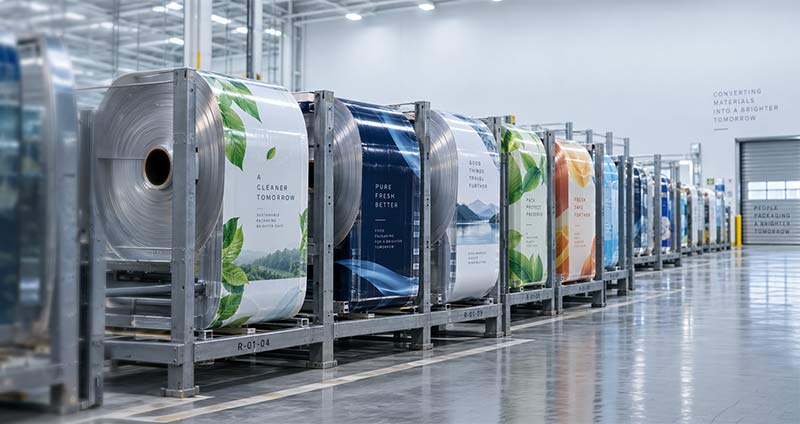
Your bag is printed long before it is sold. A custom run is designed, approved, printed, laminated, cured, converted and shipped, and then it sits in your store room being filled a few hundred at a time for months. The artwork you approve this quarter is on shelves well into next year and sometimes beyond.
That means the practical deadline is not the retailer's date. It is
the last artwork revision you do before that date. If you reprint once a year, you may only have one or two chances to make this change without scrapping bags, and the cheapest possible moment to add a code is a revision you were doing anyway.
What It Would Actually Change on the Bag
Less than people expect, and more than a simple swap.
A 2D code is square rather than a wide rectangle, so it does not drop into the footprint the linear barcode occupies. It needs its own space and its own quiet zone, the clear margin we wrote about in
why your barcode will not scan. Every rule in that post still applies: it needs real contrast, it cannot be printed in a colour the scanner treats as invisible, and it cannot be shrunk past the point of readability.
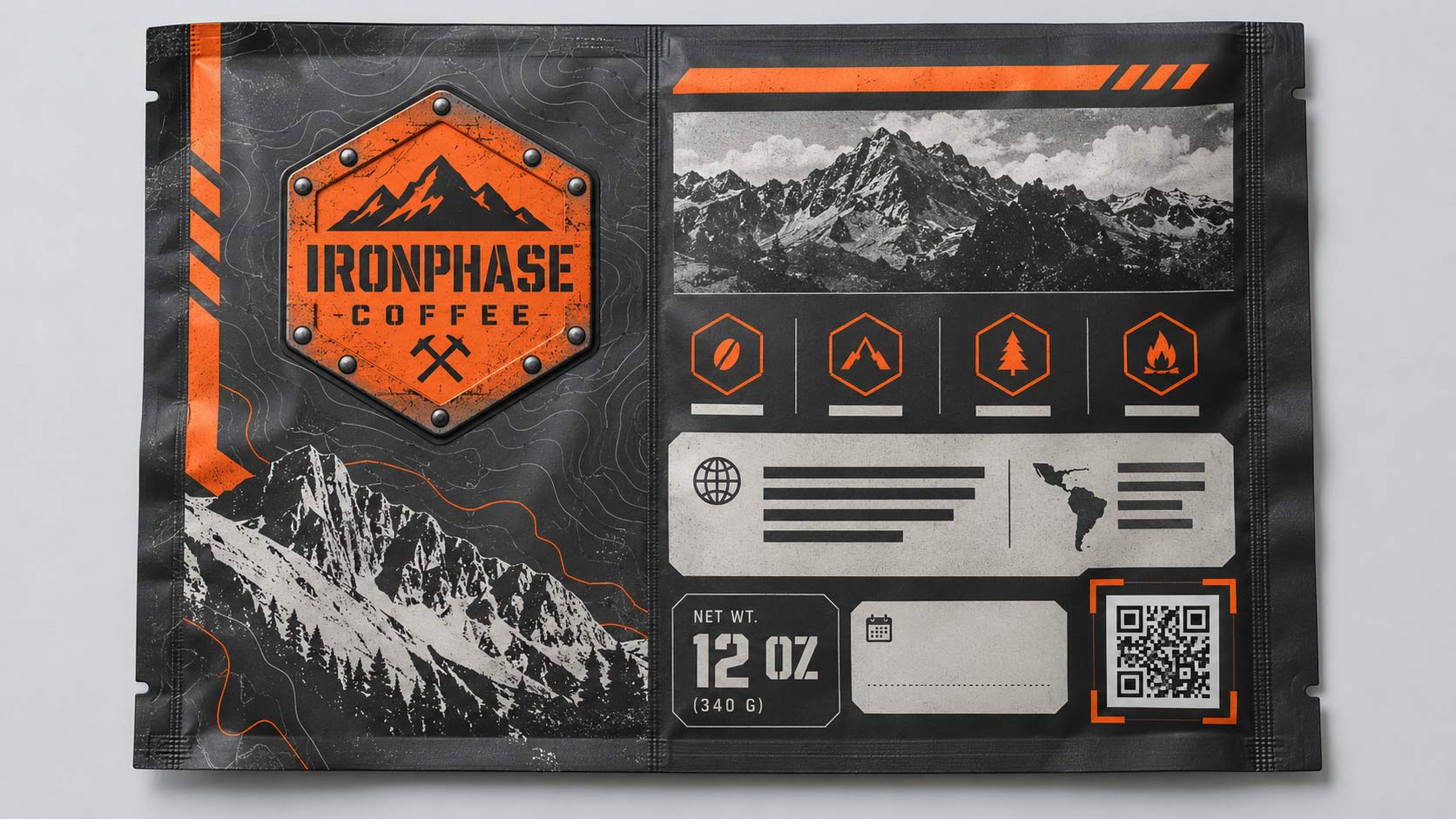
During the transition most packs that move will carry both symbols for a while, which is a layout problem on a surface that is already crowded with a net weight, a roast date space, origin claims and your actual design.
That is a dieline and layout conversation, and it is much easier to have before the artwork is built than after. It is the same lesson as
approved flat, printed on a curve: decisions about the physical surface are cheap early and expensive late.
The Part That Is Actually Interesting
If this were only a compliance chore it would not be worth a post.
The reason it exists is that a 2D code can carry more than a product number. It can point at a web address you control, which means the code on the bag can open your page: the origin story, the farm, the roast date, a brew guide, a reorder link. It is the same idea as the QR codes some roasters already add, except this one is the code the till scans, so it does not cost you a second symbol or a second piece of layout.
For a specialty roaster that is a genuinely good trade. The thing you were legally obliged to print becomes the thing that tells your story, and the surface you were fighting for gets one symbol back instead of two.
What to Do Now
Nothing urgent, and three things worth doing at the right moment.
- Ask your retail buyers, not GS1. Your actual deadline is whatever your largest wholesale account says it is. Most roasters have not asked, and the answer is usually either a date or a shrug, and both are useful.
- Raise it at your next artwork revision. Not as a reprint on its own, which would be a waste, but as a question in the next round you were doing anyway.
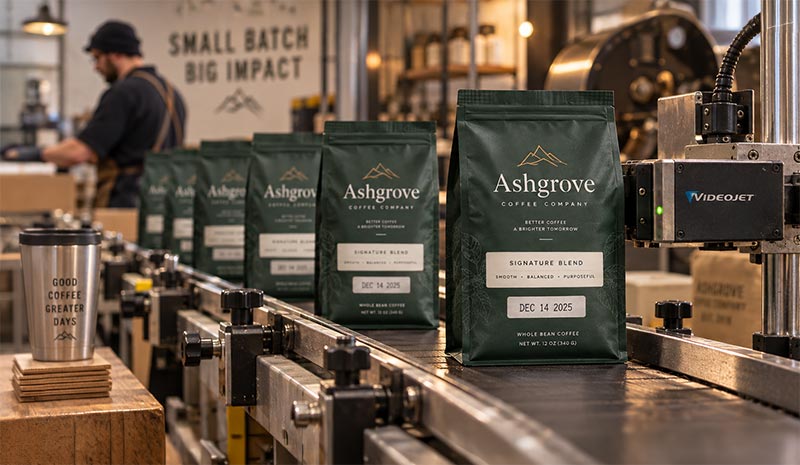
- Leave the room if you are designing now. If you are building new artwork this year, keeping a clean, light, unvarnished patch free on the back panel costs nothing today and saves a redesign later. The same panel already has to leave space for a date applied at fill, which we covered in the roast date post.
Why It Is Worth Knowing
The two wrong reactions to this are panic and dismissal, and both are expensive in different ways.
Panic gets you a reprint you did not need. Dismissal gets you a buyer conversation you cannot answer and, at worst, a shelf you lose while your bags are still correct in every other respect. The useful position is in the middle: know what the date is and is not, know that your own printing cycle is the real constraint, and make the decision at a revision rather than at a deadline.
If you are planning new artwork and want the back panel laid out so a 2D code can be added later without a redesign,
send us the dieline and we will show you where it fits.
Sources
This post describes an industry initiative that is still rolling out, and the detail changes. Checked 2026-10-07 against
GS1's 2D barcode programme, with the retailer-versus-brand distinction and the voluntary status corroborated by
Packaging World's reporting from GS1 Connect and
Esko's guide for packaging teams. We are not compliance counsel. Confirm your own requirements with your retail accounts and your GS1 member organisation.