The Shelf Gets the Attention, the Counter Gets the Reorder
Almost every coffee bag brief is written for one moment: a shopper standing in an aisle, deciding in a couple of seconds. That moment matters. But it is short, and it happens once per bag.
Then the bag goes home. It sits on a kitchen counter next to the grinder or the kettle, and the customer looks at it every morning until the coffee runs out. No ad you could buy gets that much time with your customer. The question is what the bag is saying while it sits there, and whether it is still saying anything useful on the morning the customer decides to buy again.
That is the real job of coffee packaging for repeat customers. The shelf sells the first bag. The counter sells the second one.
What Happens to a Bag After It Gets Home
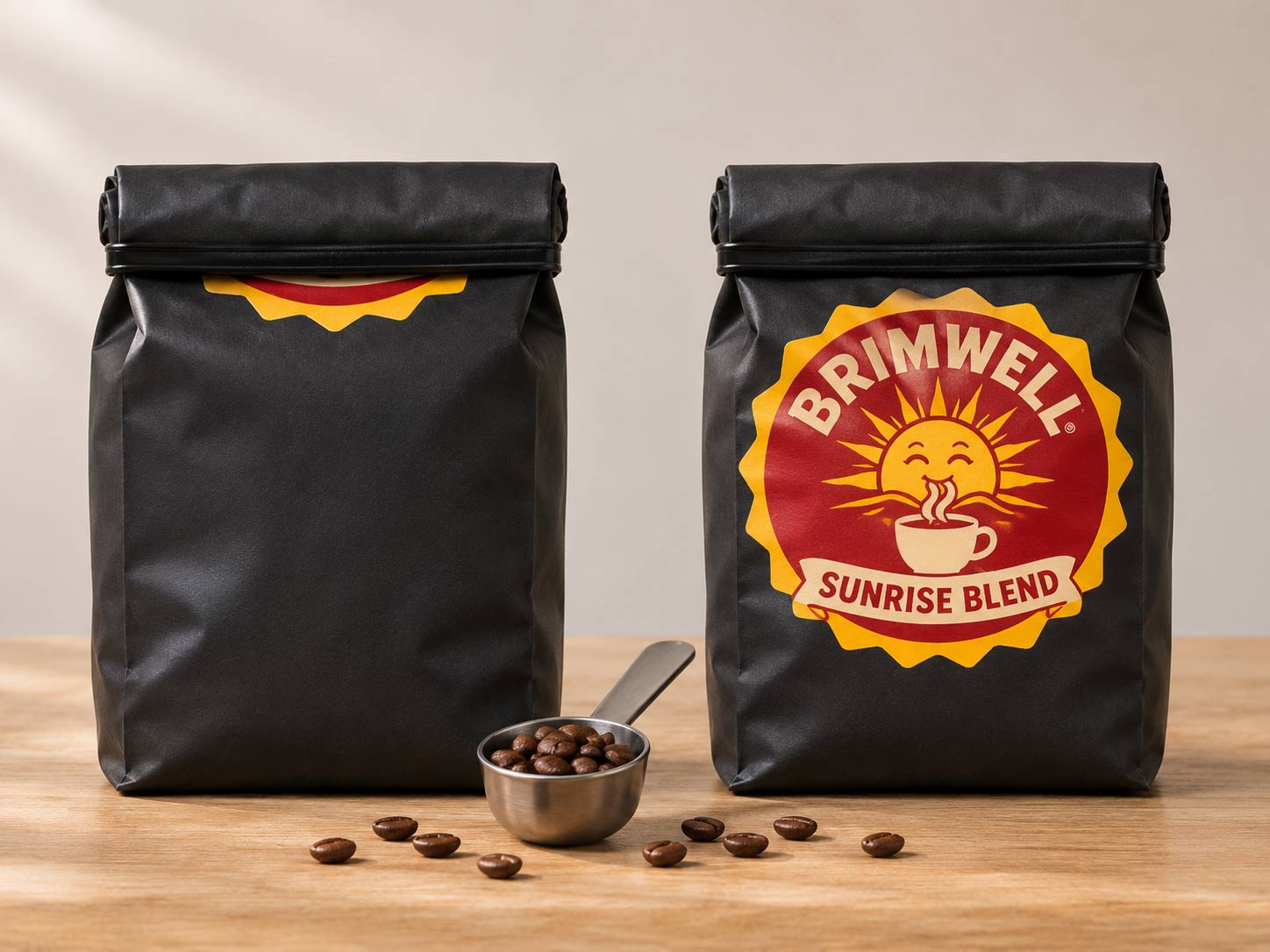
A coffee bag does not stay the way it looked on the shelf. Each morning the coffee level drops, and many people roll or fold the top down to push the air out and keep the beans fresh. A side gusset bag with a tin tie is made to be rolled down this way. A zipper bag often gets folded over too, once there is a lot of empty bag above the coffee.
Every fold hides part of the front panel. If your brand name and roast name sit right at the top, where many designs put them, they are the first things to disappear. By the end of the bag, what still shows is often the lower part of the front, plus whichever side or back panel happens to face the room.
The bag also gets turned around. It goes into a cupboard side out, or it sits with its back to the room because that is how it was set down. And the moment the customer is most likely to think about buying more is the last scoop, which is exactly when the bag is most rolled down and closest to the trash.
Why Brands Miss It
Brands rarely see their own bag at this stage. Designers review the artwork as a flat file. Owners judge a sample when it is full, standing tall and brand new. Nobody looks at the bag on day ten, rolled down to half its height with its best panel hidden.
So when repeat orders are slow, the usual suspects are the price, the coffee or the marketing. The packaging rarely gets blamed, because on the shelf it looks great. The real problem is that the details a customer needs to buy again, your name, the exact roast they liked and where to get it, were placed where the bag hides them at the moment it matters.
How to Design Coffee Packaging for Repeat Customers
None of these fixes cost more to print. They are layout decisions, made before the artwork is final.
- Keep the brand and roast name out of the fold zone. Set them in the middle of the front panel instead of hugging the top edge, so they still show after the bag has been rolled down a few times.
- Make the roast name readable from across the room. The customer sees the bag from the other side of the kitchen. Big, simple type for the roast name helps them remember exactly which coffee they are about to run out of.
- Repeat the essentials on every panel. Put the brand and roast name on the back, and on a side gusset bag down the gussets too. Whichever side faces the room, the customer can still tell what it is.
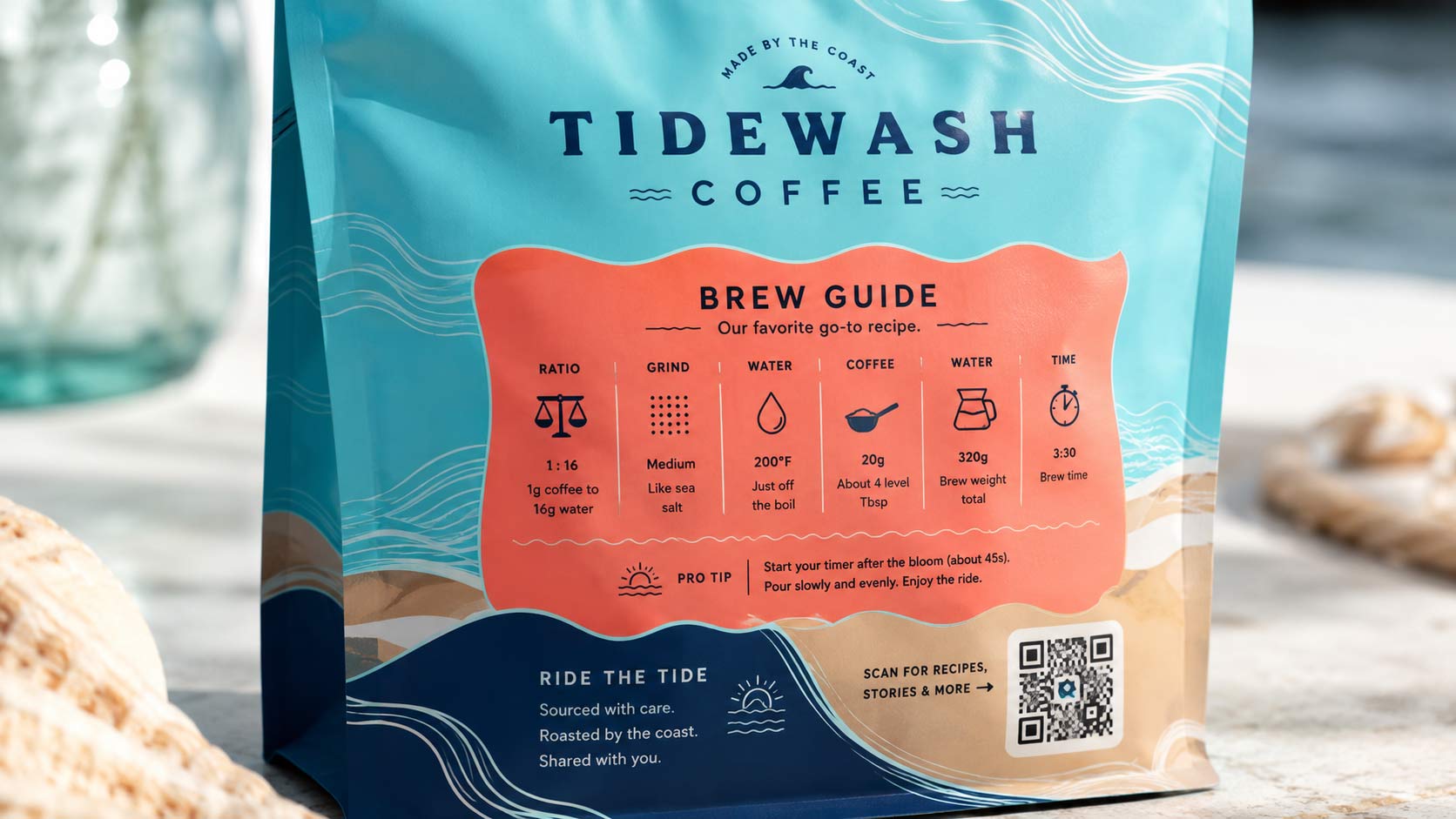
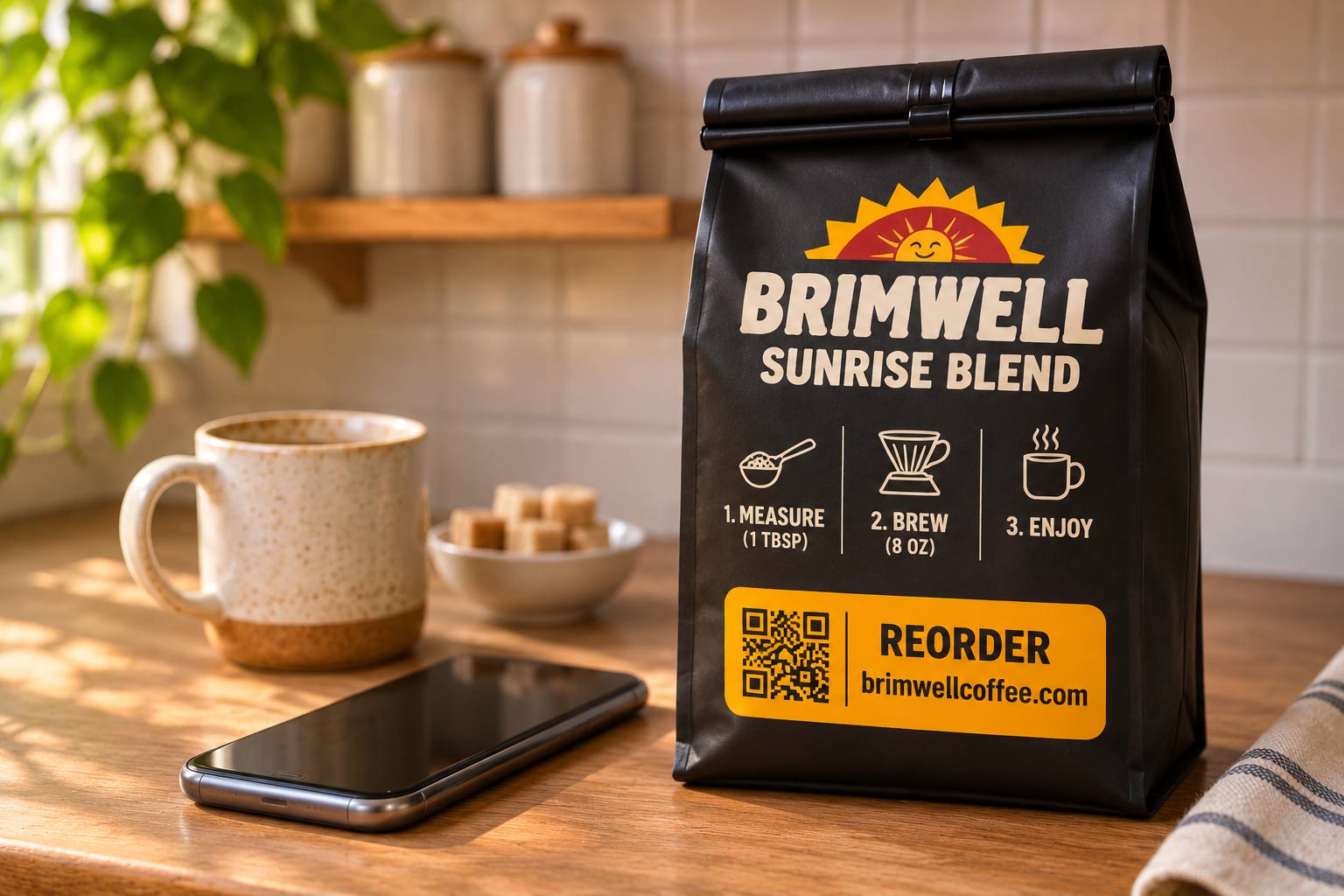
- Put the reorder step low on the back panel. A short web address, or a QR code that opens the exact roast page, belongs near the bottom of the back, the part that stays visible longest. Our guide to QR codes on packaging covers how to set one up so it scans.
- Give them something worth reading every morning. A short brew guide, a serving idea or a line about the farm gives the customer a reason to keep the bag in view. Our post on putting the brew guide on the bag explains what to include.
- Design around the closure. A zipper sits a little below the top and leaves a line across the front, and a tin tie folds down from the top edge. Plan the layout for the bag you are actually using. Our post on designing around the zipper line shows where artwork runs into trouble.
Test It the Way Your Customer Uses It
The simplest test takes about a week. Fill a sample bag with your real coffee, take it home and use it like a customer would. Roll it down every morning. Leave it wherever it lands. On the last day, stand across the kitchen and ask one question: can you tell what coffee this is and where to buy more without picking it up?
If the answer is no, the fix is still easy, as long as you find it before the full run. Moving a name down or adding a line to the back panel is a change on a proof, not a reprint.
How Savor Brands Helps Your Bag Keep Selling
We think a quality bag is one that still works on the last scoop, not just on its first day on the shelf, so we help you plan for both before anything is printed.
- Proofs on the exact dieline. You see where the zipper, the gussets and the seals land on your bag, so you can keep your name and reorder details away from the spots that fold or hide.
- Samples to live with. Ask us about packaging samples so you can run the one week counter test with a real bag before you commit.
- Room to improve the back panel. Digital printing starts at 500 bags per design, so you can update your reorder details, brew guide or seasonal story on the next run without a large order of custom coffee bags.
- A shape that fits how it gets used. On our stock bags, the stand-up pouch and the box bottom carry a resealable zipper and the side gusset does not, which changes how the bag gets closed and folded at home. We help you choose with that in mind.
Design for the Last Scoop
Your coffee bag gets a few seconds on the shelf and weeks on the counter. The shelf sells the first bag. The counter, rolled down and turned around, decides whether there is a second one. Keep your name out of the fold, make the roast readable from across the room, repeat the essentials on every panel and put the reorder step low on the back where it stays visible to the end.
Then test it the way your customer lives with it. When you are ready to plan a bag that keeps selling after it gets home,
talk to us about your packaging.