What Hawaii Businesses Are Asking in 2026
Back in 2024 we shared
the five packaging questions we heard most from Hawaii businesses. Two years later, the questions sound familiar, but the answers have moved. Lead times are now planned door to door, some materials have changed, and Hawaii's Kona blend labeling law has a deadline coming in 2027 that lands right on your bag.
So here is the 2026 list, ten questions in all, each with the short answer first and the detail after. They come from roasters, farms, cafes and food makers on every island, and from the questions on our
Hawaii packaging page.
1. What Is the Smallest Custom Packaging Order for a Hawaii Business?
Custom printed bags start at 500 per design on digital printing, and custom boxes and mailers start at 500 per design too. Stock bags start at 1,000. Rotogravure printing, for brands selling at volume, starts at 10,000 per design.
"Per design" is the part people miss. Every version of your artwork counts on its own, so a Kona and a Kaʻū in two different designs is 1,000 bags, not 500.
Digital printing needs no plates, which is why the minimum stays small enough for a new roaster, a farm stand or a seasonal release.
Rotogravure uses engraved cylinders, costs more to set up, and gives you the lowest price per bag once you are ordering in the tens of thousands.
- Custom digital bags: 500 per design
- Custom boxes and mailers: 500 per design
- Stock bags: 1,000
- Rotogravure bags: 10,000 per design
2. How Long Does Custom Packaging Take to Reach Hawaii?
Plan on 9 to 12 weeks from the day you approve your artwork. Production takes about 4 to 6 weeks, and shipping to your door in Hawaii takes about 5 to 6 weeks more.
The best habit is to count backward from the day you need bags in hand, whether that is a farmers market opening, the holiday rush or the Kona Coffee Cultural Festival in November. Most of the calendar is not printing at all. It is the time laminated film needs to cure and the time freight spends on the water, which is why "rush the printing" saves very little. Our post on
why bags spend more time curing than printing explains where the weeks actually go. The step you control is artwork approval, so approving promptly is the fastest way to move your date.
If you are already short on time,
stock bags with a printed label can bridge the gap while your custom order is made.
3. Do You Work With Businesses on Every Island?
Yes. We are based in Honolulu and work with brands on Oʻahu, Maui, Hawaiʻi Island, Kauaʻi, Molokaʻi and Lānaʻi, and orders ship straight to your door wherever you are.
Being local means a Hawaii specialist on your project who knows the shipping calendar, the humidity and the local market, and who can talk through your bag in your time zone instead of five hours ahead.
4. How Do I Keep Coffee and Food Fresh in Hawaii Humidity?
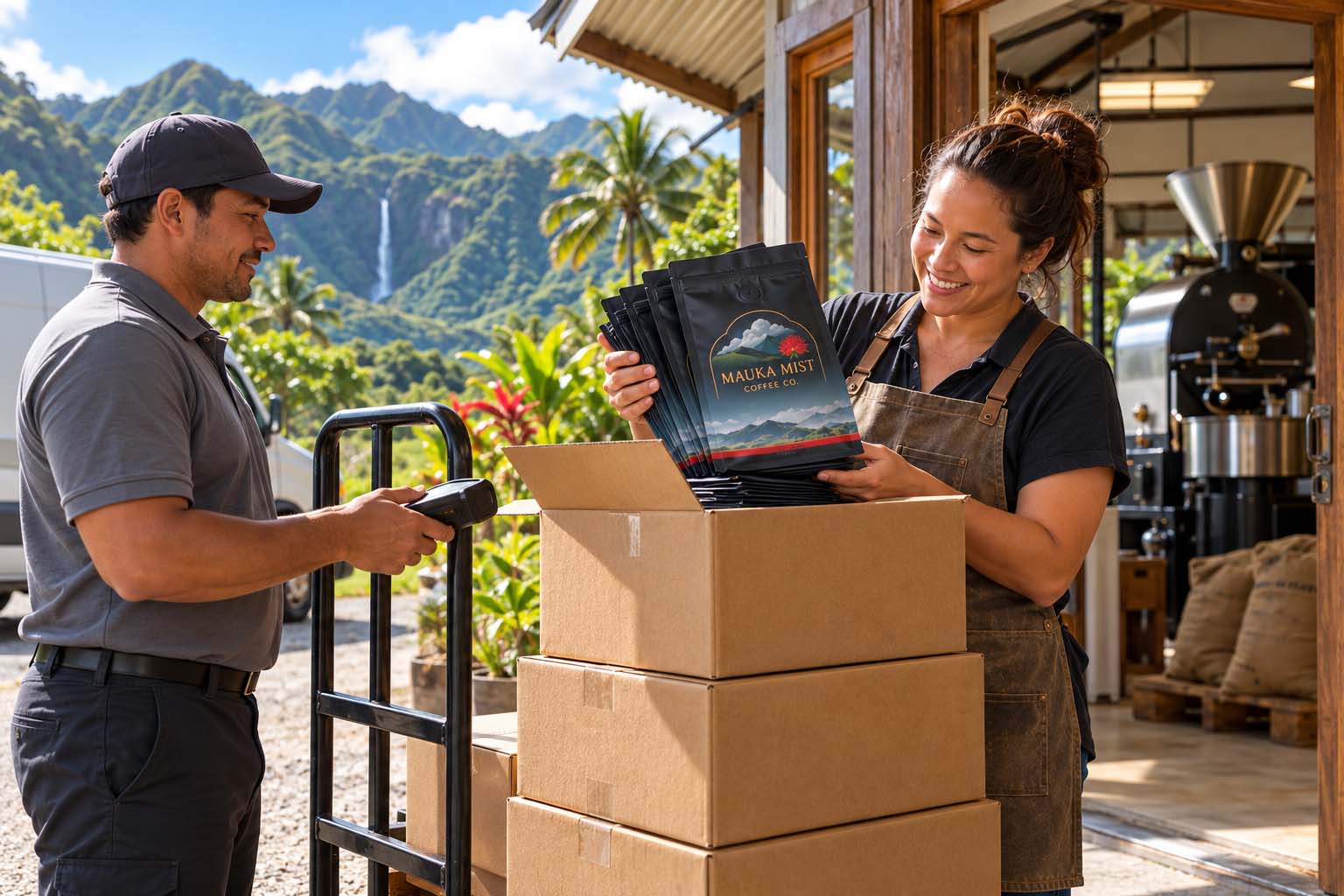
Choose your barrier for the shelf life you need, then make sure the seal and the closure can hold it. As a guide, industrial compostable and EVOH films run about four months, metallized polyester about six, and aluminum about nine to twelve.
Humidity is hardest on a bag after it is opened, sitting in a warm kitchen. That is why the closure matters as much as the film: a resealable zipper that closes all the way across keeps moist air away from the coffee or snacks between uses. For freshly roasted coffee, a one-way valve lets gas out without letting air in. Our guide to
coffee bag barrier materials walks through choosing by shelf life instead of by guesswork.
5. Can I See a Sample Before I Order?
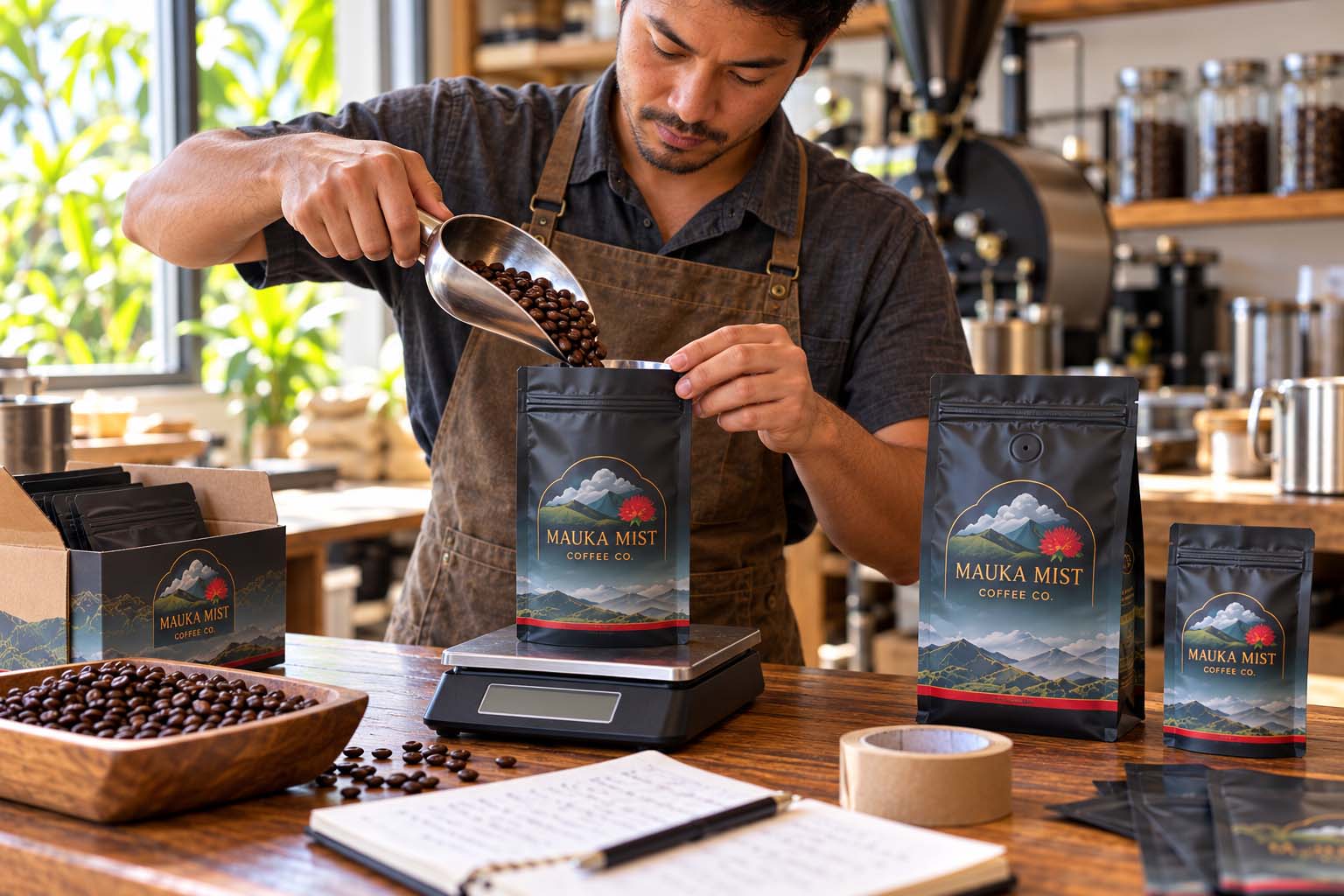
Yes, and we recommend it. A sample lets you check the film, the seal, the closure and the size against your real product at your real fill weight before a full run is printed.
The size check is the one that saves the most trouble. A bag that looks right on a spec sheet can be too tall, too narrow or too full once your coffee or granola is inside. Our guide to
ordering packaging samples first lists exactly what to look at.
6. What Sustainable Packaging Options Do You Offer?
Two kinds: industrial compostable film for brands that want a compostable bag, and our R+R® Upcycle Program for collecting used packaging so it gets a second life.
One honest note for Hawaii brands. Industrial compostable means the bag is made to break down in a commercial composting facility, not in a backyard pile, so it is worth checking what composting is available near your customers before you choose it. Our
sustainable packaging page covers the current options.
7. What Happens to the Bags When They Are Empty?
Through the R+R® Upcycle Program, we take back paper-free, non-compostable packaging and send it to partners who turn it into building and drainage products instead of landfill.
It gives your customers somewhere to put the empty bag and gives your brand a story to tell at the register. The
R+R Upcycle Program page explains how collection works.
8. What Is the Most Cost-Effective Packaging?
For custom printed bags, the stand-up pouch is usually the most economical style. For the lowest cost up front, stock bags with your own label are hard to beat.
Beyond the bag style, a few choices keep the price sensible without hurting the product.
- Match the barrier to your shelf life. Paying for twelve months of protection on coffee you sell in three weeks is money on the table.
- Keep the number of designs down. Every design carries its own 500 minimum, so fewer versions means smaller, cheaper orders.
- Order the right size. A bag sized to your fill uses less film and looks fuller on the shelf.
9. Do I Need a Degassing Valve or a Closure?
For freshly roasted coffee, yes to the valve. Roasted coffee keeps releasing gas for days, and a one-way valve lets it out without letting air back in. The closure depends on how fast your customers finish the bag.
A valve is not a closure, though. It does nothing once the bag is opened. For that you choose between a resealable zipper, a tin tie or a simple heat seal, and the right answer depends on the product and how it is used. Our post on
choosing a coffee bag closure lays out when each one makes sense.
10. Do I Need to Change My Kona Blend Bags?
If you sell a Kona blend, or any blend named for a Hawaii origin, almost certainly. Under Hawaii's labeling law, the 10 percent transitional blend threshold ends on June 30, 2027, and from July 1, 2027 those blends must contain at least 51 percent Hawaii-grown coffee.
The percentage is printed on the bag, so your packaging has its own deadline: whenever your current stock runs out. With 9 to 12 weeks from artwork approval to delivery, the time to plan new artwork is well before your last case of old bags. Our post on
the 2027 Kona blend labeling deadline explains what changes on the bag. We are packaging people, not lawyers, so check the exact wording with the Hawaii Department of Agriculture.
How Savor Brands Helps Hawaii Businesses
We have worked with Hawaii brands for years, and most of these questions get answered in the first conversation.
- A local team in Honolulu that knows the islands, the shipping calendar and the climate.
- Low minimums of 500 per design on custom coffee bags and boxes, so small batches and seasonal releases make sense.
- Samples first, so you check the bag with your own product before a full run.
- Planning backward from your date, so your bags arrive before your launch, not after it.
Wrapping It Up: Ask Early, Order Once
Hawaii businesses ask about minimums, timing, islands, humidity, samples, sustainability, cost, valves and, this year, Kona blend labels. The short version: start at 500 per design, plan 9 to 12 weeks from artwork approval, choose your barrier for your shelf life, test a sample with your real product, and get ahead of the 2027 labeling change.
If your question is not on this list,
send it to us, or visit our
Hawaii packaging page to see the brands we work with across the islands.