Why Do Coffee Bags Arrive Looking Shrink-Wrapped in Winter?
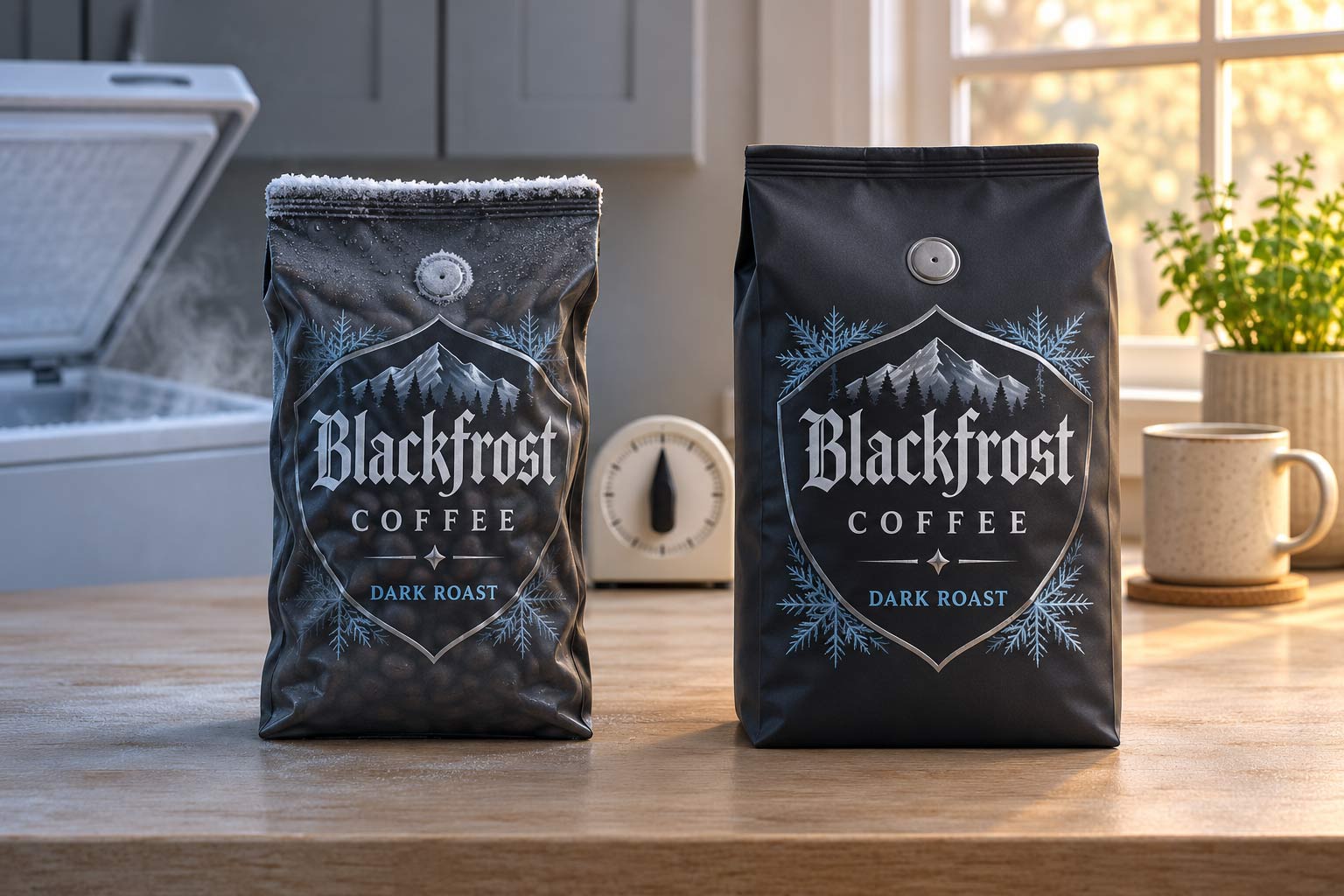
Because the gas inside the bag shrinks when it gets cold. Every sealed coffee bag holds a pocket of gas around the beans, mostly carbon dioxide the coffee gave off after roasting. Gas takes up less space as it cools. Run the numbers on the basic gas law and a bag sealed in a 70°F roastery holds about 9 percent less gas volume by the time it sits in a 20°F truck, and about 13 percent less at 0°F. Those are calculated figures, not measurements of any one bag, but the direction never changes: colder means smaller.
The coffee and the film do not shrink anywhere near that much, so the gas pocket is what gives. The film gets pulled in against the beans, the gussets cave, and the bag looks tight, crinkled and flat. It looks exactly like a bag that lost its seal. Most of the time, it is just a cold bag.
Why Doesn't the Valve Let the Bag Puff Back Up?
Because a one way degassing valve only works one way. It lets gas out when the pressure inside is higher than outside, and it stays shut when the pressure inside is lower. That is its whole job: carbon dioxide out, oxygen kept out. Our post on
why every coffee bag needs a degassing valve covers how it works.
So think about the bag's trip. At the roastery, the coffee releases gas and the valve vents the extra, which leaves the bag relaxed, at about room pressure. Then the bag goes out into the cold. The gas inside shrinks, the pressure inside drops, and the valve stays closed, exactly as it should. Nothing is allowed back in, so the film collapses to fill the gap. Cold also slows down how fast the coffee releases new gas, so the beans are not much help either.
A bag without a valve behaves a little differently. Sealed with fresh coffee, it often goes out already puffy, so the cold usually just takes some of the puff away. The sucked in look shows up most on valve bags, because the valve already did its job before the bag ever left the building.
If your bags also travel by air, the effect stacks. The valve vents on the way up, when the outside pressure drops, and then the bag lands and goes into the cold with even less gas inside. Our post on
why coffee gift boxes puff and crush on flights explains the altitude side.
Is It a Leak? How to Tell in a Few Hours
Let the bag warm up. That is the whole test. Leave the sealed bag on a counter at room temperature for a few hours. As the gas inside warms, it expands again, and a sound bag relaxes back toward the shape it had when it was filled.
A real leak behaves differently. A bag with a bad seal or a pinhole stays limp after it has warmed up, because air has been moving in and out and there is no sealed pocket left to expand. Other signs of a real problem:
- A seal you can peel apart at the weld instead of one that tears the film. Our post on why coffee bag seals fail walks through what a good seal looks like.
- A wrinkle or channel sealed into the top seam.
- Coffee that smells flat the moment it is opened, long before its date.
One more thing. Do not judge a cold bag by squeezing it. Every squeeze pushes gas out through the valve, and none comes back, so the bag gets even flatter. Our post on
squeeze and sniff explains why handled bags go limp on store shelves for the same reason.
How Do I Fix Winter Coffee Shipping?
You cannot stop gas from shrinking in the cold. You can plan for it so the bag still looks right when it arrives, and so your customer knows what they are looking at. Here is what works.
Give the bag room to breathe. A bag filled to the very top has almost no gas pocket to lose, and the little it loses shows up as film pressed hard onto the beans. A bag sized to its fill, with a sensible amount of headspace, has some give. Our guide to
headspace in coffee bags explains how much room a bag should leave and why.
Pack bags snug, not crushed. Cold film is stiffer than warm film, and a bag that gets folded or crushed hard in a cold truck is more likely to mark at the folds. Pack bags upright and snug in the box, with fill around them so they do not slide, and leave the gussets room to sit naturally. On dark bags this matters more. Our post on
white crease lines on black coffee bags covers how cold folds show.
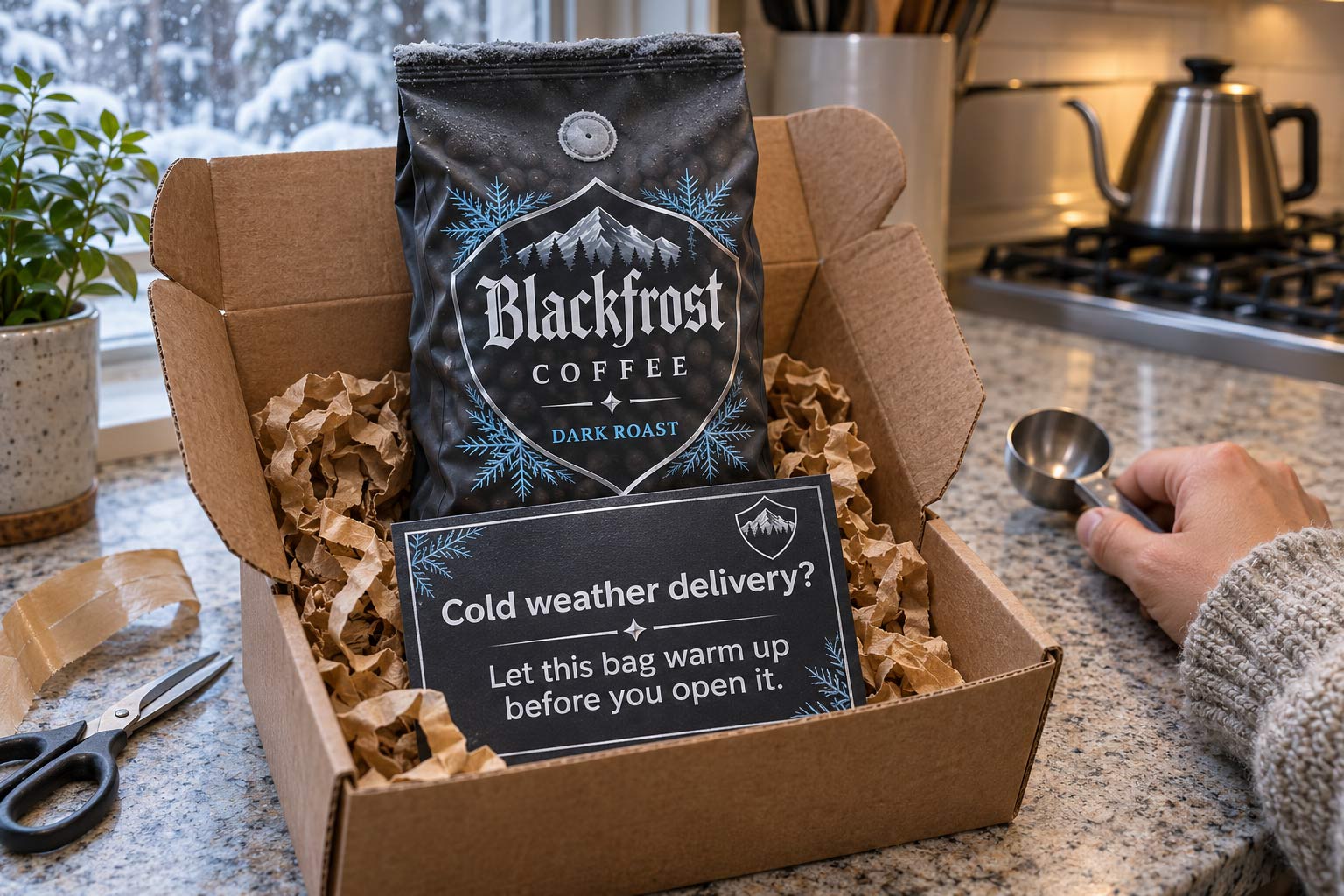
Tell your customers what they will see. A short note in online orders saves a lot of worried emails: "In cold weather this bag may arrive looking tight. That is the cold, not a leak. Let it warm to room temperature before you open it." Letting the bag warm up first matters for a second reason. Open a cold bag in a warm kitchen and moisture from the room can condense on the cold beans, which is the last thing fresh coffee needs.
Let wholesale cases warm before they go on the shelf. A case that comes off a cold truck and goes straight onto a shelf puts the flattest bags in the front row, where shoppers judge your coffee by how full the bag looks. Ask your cafe and grocery accounts to let cases sit at room temperature for a few hours before stocking.
Store and fill at room temperature. Keep cartons of empty bags off cold floors and away from outside walls, and let a carton that arrived cold warm up before you fill from it. More on that in the sealing section below.
Watch the route. Air legs and long, cold ground routes both make the effect bigger. You will not reroute every order, but if one lane keeps producing complaints, it is worth looking at. Our post on
shipping methods for online coffee orders covers the options, and our
summer coffee shipping guide covers the hot side of the year.
Run a freezer test before winter. Fill a sample bag with your coffee, seal it, and leave it in a freezer overnight. In the morning you will see your own winter bag. Then leave it on the counter for a few hours and watch it come back. Ten minutes of setup tells you how your bag, your fill and your headspace behave before a customer finds out for you.
- Size the bag to the fill and leave sensible headspace.
- Pack bags upright and snug, without crushing the gussets.
- Put a "let it warm before opening" note in online orders.
- Ask wholesale accounts to warm cases before stocking.
- Store and fill bags at room temperature.
- Freezer test a filled sample before the cold season.
How Do I Seal Coffee Bags So They Survive the Cold?
Most roasters seal custom coffee bags with a heat sealer across the top, above the zipper if the bag has one. Heat, time and pressure melt the inner layers of the film together into one weld. A good seal is flat, even and free of wrinkles, and if you pull it apart, the film tears before the weld peels.
In winter, a few habits help:
- Seal warm bags. Your sealer settings were almost certainly set up at room temperature. Bags that came in cold should warm up before they go on the sealer.
- Keep the seal area clean. Coffee fines and oils on the inside of the top seam are the most common cause of weak spots, cold or not. Wipe or tap the top clean before sealing.
- Check a few seals every run. Pull test one bag at the start of a session and again after a break, when the sealer has cooled down.
Exact temperatures and dwell times depend on your film and your machine, so ask your bag maker for the settings that fit your structure.
What Is the Most Cost-Effective Way to Ship Coffee?
The cheapest way to ship coffee is usually the one that ships the least air. Carriers charge by weight, distance and speed, and most also charge by the size of the box through dimensional weight. A small, well packed box beats a big box full of padding almost every time.
A few things make the biggest difference:
- Right size the box. A mailer sized to the bags you actually ship cuts both the box price and the dimensional weight. Our post on custom mailer boxes for coffee covers how to size one.
- Pick a bag shape that packs well. Box bottom and side gusset bags pack tighter than wedge shaped stand up pouches. Our post on how bag shape decides case fit shows why.
- Use ground service when time allows. Ground is usually cheaper than air. In winter it can also be slower, which is one more reason to plan for cold bags.
- Compare carriers and their flat rate options on your real order sizes, not on a single bag.
How Much Does It Cost to Ship a Bag of Coffee?
It depends on the weight of the packed box, its size, how far it travels and how fast it needs to get there. Carrier rates change regularly, so the only reliable number is the one from your carrier's rate tool on the day you ship.
What you can control is the weight. Carriers often price light parcels in weight steps, so a 12 oz bag of coffee plus its box, filler and insert card can cross the one pound line and jump to a higher rate. Weigh a fully packed order, not just the coffee. If you sit just over a step, a lighter mailer or less filler can bring you back under it.
How Do You Keep Coffee Fresh After Opening the Bag?
Press out the extra air, close the bag tightly, and keep it somewhere cool, dark and dry. A zipper or tin tie lets the customer close the bag again after every scoop, and squeezing out the air before closing leaves less oxygen sitting on the beans. Our post on
zipper and tin tie closures compares the options.
Skip the refrigerator for an opened bag. Cold coffee taken in and out of the fridge collects moisture every time it meets warm air, and coffee picks up odors easily. If you freeze coffee at all, freeze it sealed and unopened, and let it come all the way to room temperature before you open it. That is the same rule as a bag that just came in from a cold delivery.
How Savor Brands Handles It
We want your bag to look full and fresh on a customer's porch in January, not only on your filling table. That starts with how the bag is built and keeps going through samples and proofs.
- We size the bag to your fill. Every custom coffee bag starts with a dieline sized around the amount of coffee you put in it, so the bag has the headspace it needs instead of being packed to the top or left half empty.
- We help you choose valve or no valve. Our stock bags come with or without a degassing valve, and we will talk through which one fits how fresh your coffee is when you bag it and how far it travels.
- We build for freshness. Both our stock and custom bags use high barrier film structures, so the coffee stays protected while the gas pocket around it does its winter shrinking.
- We send samples first, so you can fill one, put it through the freezer test and see your own winter bag before you order a full run.
- You can print the note right on the bag. With digital printing from 500 bags per design, a short "let it warm before opening" line can go on the back panel, and you approve a digital proof on the exact dieline before anything prints.
Tell us how your coffee ships and where it goes, and we will help you plan a bag that arrives looking the way it left.
Cold Air, Not a Bad Bag
In winter coffee shipping, a bag that arrives shrink-wrapped is usually just a cold bag. The gas inside shrinks as it cools, the one way valve correctly keeps outside air from coming in, and the film pulls tight against the beans. Let it warm for a few hours and a sound bag relaxes. Size the bag to its fill, pack snug, store and seal warm, tell customers to let the bag warm before opening, and run a freezer test before the season starts. For planning the rest of the cold season, from gift boxes to the bags inside them, see our guide to
winter coffee packaging boxes.