Your Name Is the One Thing on the Bag You Cannot Edit Later
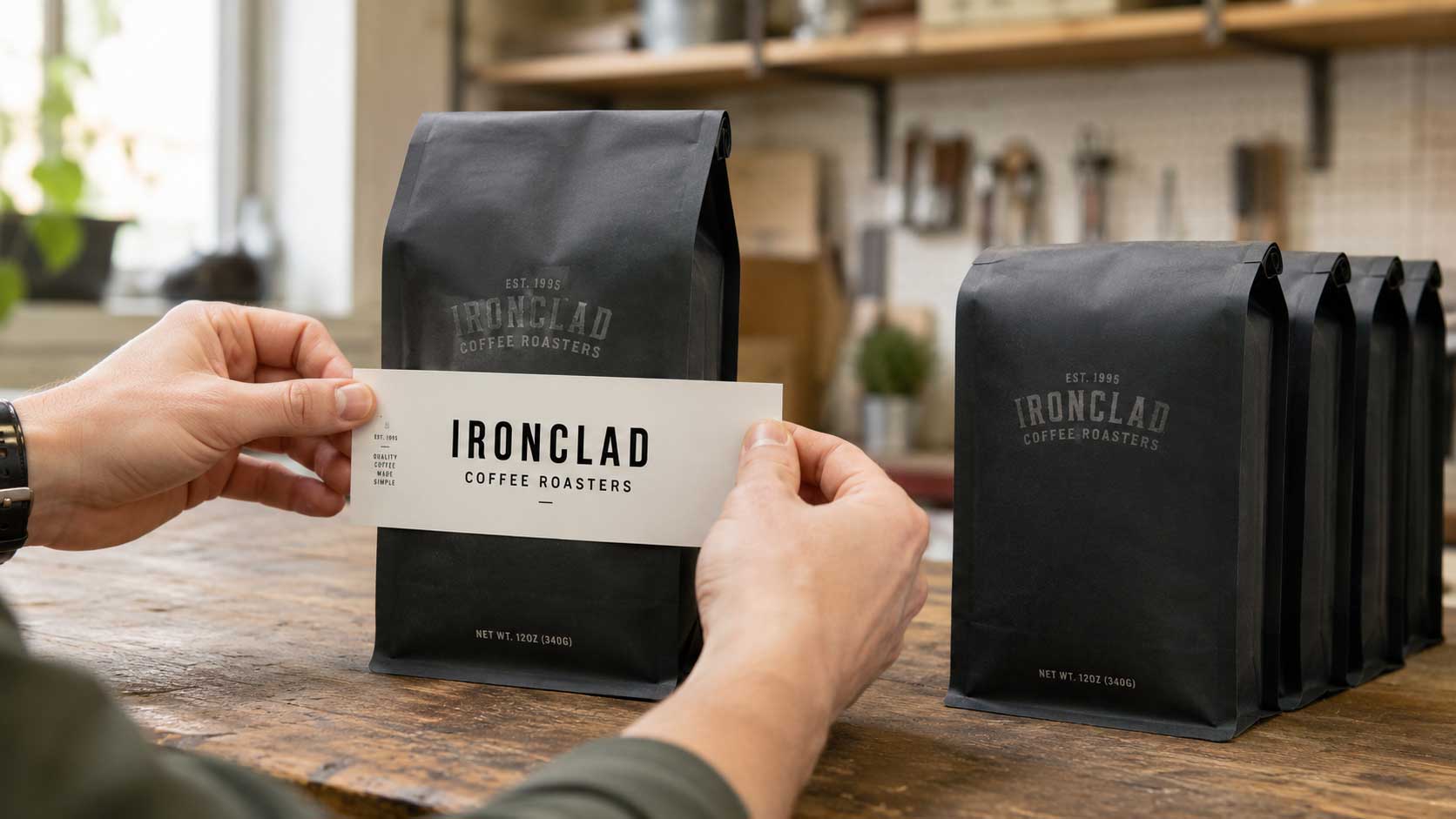
A website can change by lunchtime. A coffee bag cannot. Once your name is printed, it is part of the bag. On most custom coffee bags the ink sits on the inside face of the outer film, sealed between layers, which is why the graphics never scuff. Our post on
reverse printed coffee bags explains how that works. It also means there is no peeling the name off and starting again.
Changing a name after the bags arrive means new artwork, new proofs and a new production run. On a rotogravure run, every color gets its own engraved cylinder, so a new name means new cylinders too. Production plus shipping runs about 9 to 12 weeks from artwork approval, and every bag already on the shelf carries the old name. That is why the name deserves more thought than any other line on your
custom coffee bags.
The good news is that the checks are simple and mostly free. A strong coffee brand name passes three tests before it goes anywhere near a press: you can say it, people can spell it, and nobody else already owns it.
What Makes a Good Coffee Brand Name?
The best names are easy to read, easy to spell and easy to say. They roll off the tongue, so customers repeat them without thinking. That matters more than it sounds, because most new coffee customers arrive the old fashioned way: a friend mentions the bag, or someone sees it on a counter and goes looking for it later.
Every one of those moments is a small test. Can the friend pronounce it? Can the person who heard it type it into a search bar and find you? Can a shopper read it across an aisle?
Here is what tends to help a name, and what tends to hurt it:
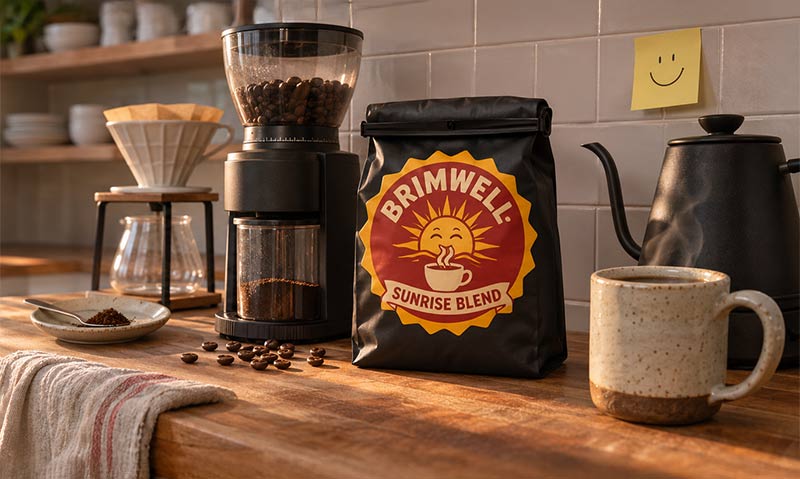
- Short and clear beats clever and long. A short name can be printed bigger on the front panel, and big letters read from farther away.
- One obvious spelling. Swapped letters, silent letters and made up spellings send people to the wrong search result.
- One obvious way to say it. If two people would pronounce it differently, word of mouth breaks down.
- No numbers, hyphens or symbols that someone has to explain out loud.
- Room to grow. A name tied to a single roast, street or bean can feel cramped once you add a second café or a new line.
How Do You Test a Coffee Brand Name Before You Commit?
Run three quick tests on every name on your shortlist. None of them costs anything.
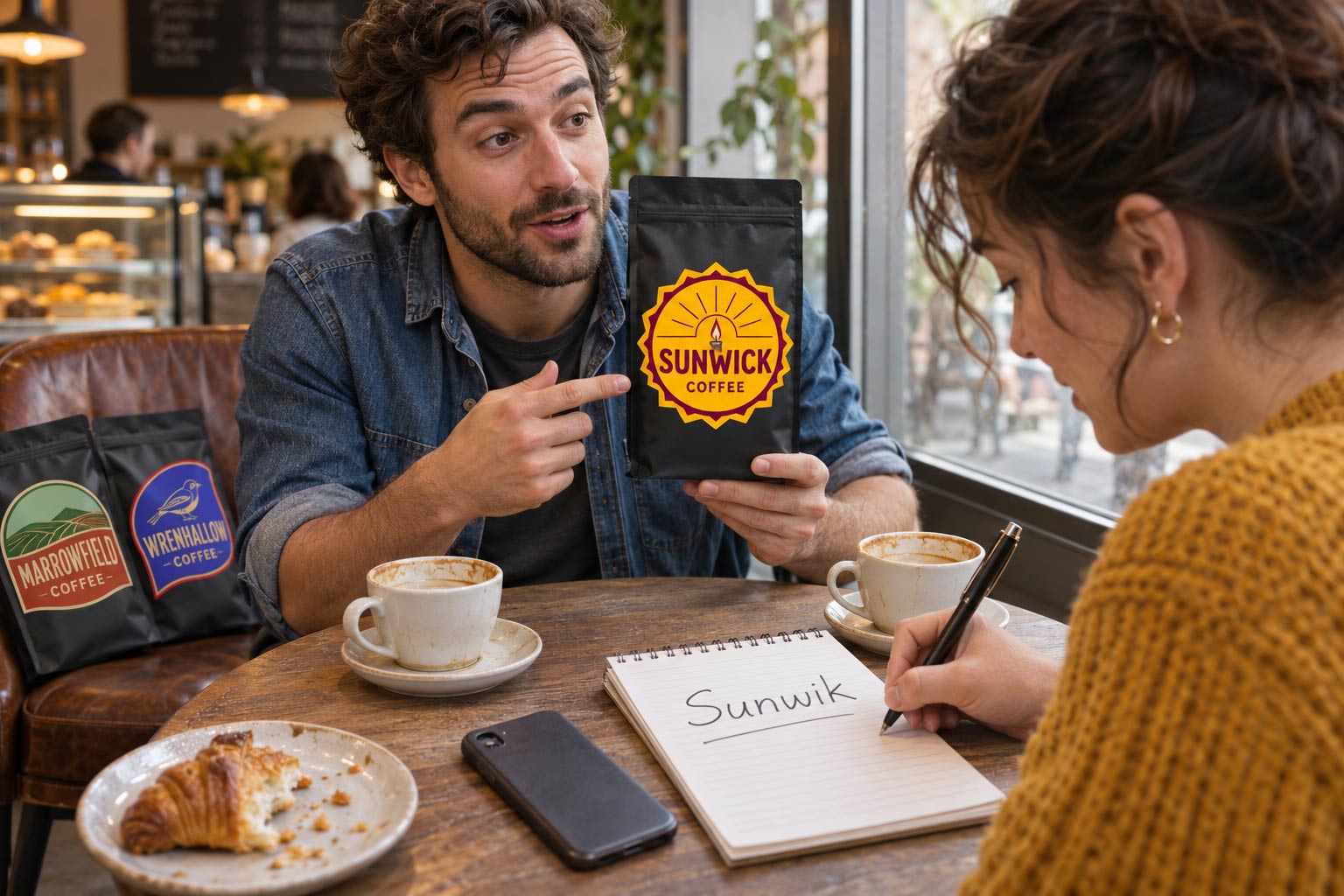
The phone test. Say the name once to someone who has never heard it, then ask them to write it down. If they spell it wrong, customers will too. Do it with three or four people, not just one.
The search test. Type the name into a search engine the way a customer would, including the likely misspellings. If the first page is full of another coffee company, a café or a famous brand, you will spend years competing with them for your own name.
The shelf test. Print the name at the size it would appear on the bag and look at it from across a room. Thin, decorative lettering that looks lovely on a laptop can disappear under store lights. Our posts on
keeping small text sharp and
packaging glare cover what happens to letters once they are printed on film.
Is the Name Free to Use? Search Before You Print
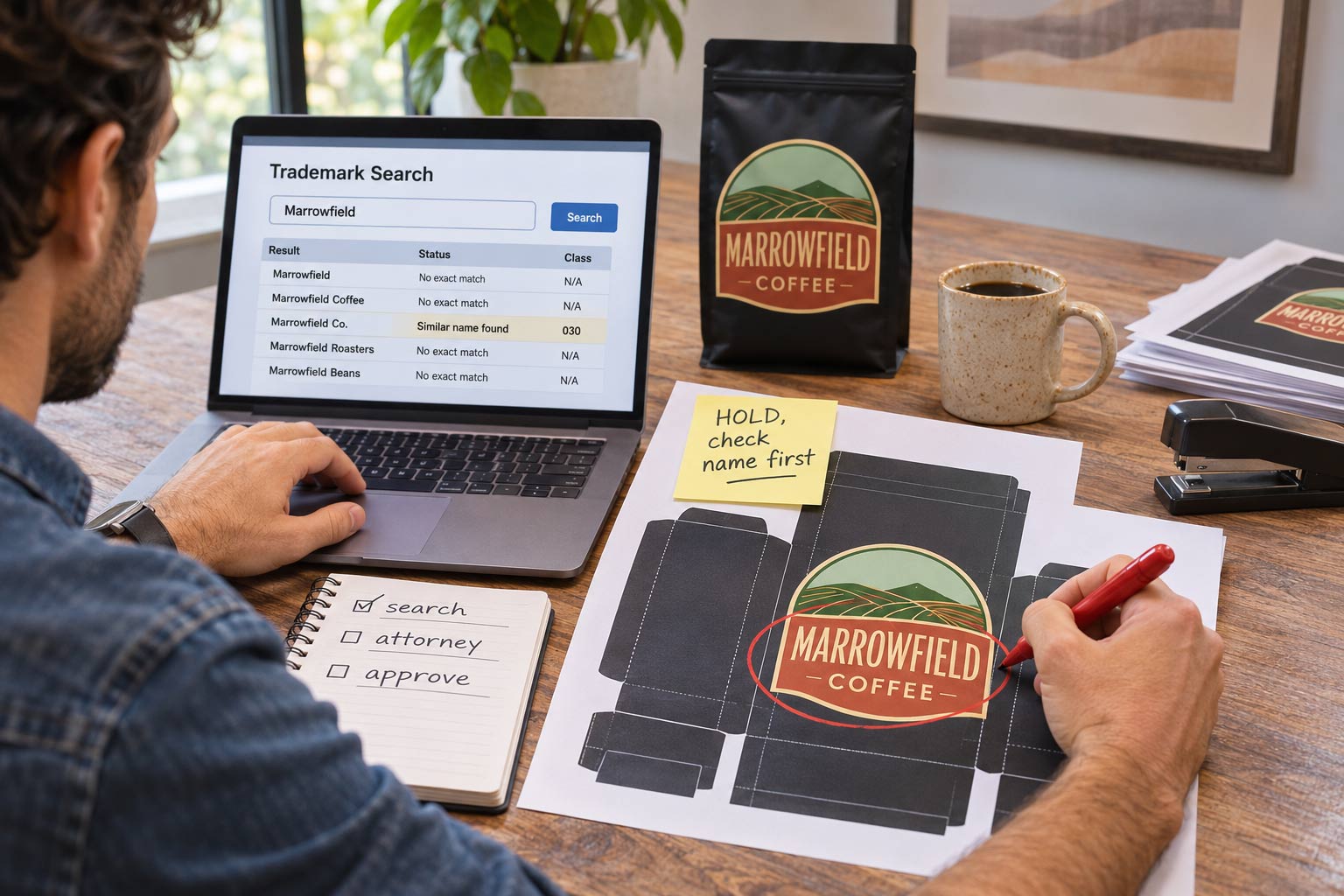
A name that passes all three tests can still be taken. In the United States, the US Patent and Trademark Office runs a free online trademark search system where you can look up federally registered and pending trademarks. The USPTO recommends searching before you file, and it is just as smart to search before you print.
A few things the USPTO makes clear are worth knowing before you search:
- Search for similar names, not just identical ones. The USPTO advises looking for marks that are confusingly similar to yours. A different spelling or an extra word does not make a name safe.
- Search related goods and services too. Coffee and tea are usually filed under one class, and cafés and restaurants under another. Trademark examiners have treated coffee and restaurant names as related, because coffee is so often sold where food is served. Do not stop at roasted coffee.
- Look beyond the federal database. Someone can own rights to a name simply by using it to sell goods, without ever registering it, though those rights cover only the area where they do business. The USPTO suggests checking for that kind of use and checking state trademark and business registries.
- A business name or domain is not a trademark. Registering a company name with your state only means the state allows you to do business under it, and buying a domain does not give you trademark rights either. Both can still be challenged if they cause confusion with someone else's mark.
You can put TM next to your name as soon as you start using it, whether or not you have filed anything. The registered symbol, the R in a circle, is only allowed once the USPTO has registered the mark, and only for the goods or services listed in the registration. That matters on a bag, because whichever symbol you print stays printed.
We are a packaging company, not a law firm, so treat this as a list of questions to bring to a trademark attorney, not as legal advice. A search helps you avoid obvious conflicts. It does not guarantee a name is clear, and an attorney can read the results with you.
Six Steps Before You Approve Your Coffee Bag Artwork
Most of the fix is about order. Settle the name first, then design, then print.
- Build a shortlist of three to five names, so one bad search result does not send you back to zero.
- Run the phone, search and shelf tests on every name and drop the ones that fail.
- Search the USPTO database for the same and similar names in coffee, tea and café services, then search the web, marketplaces and your state registry.
- Check the domain and social handles while you are at it, so the name on the bag matches the place customers will look for you.
- Talk to a trademark attorney about your favorite before you spend money on artwork.
- Only then brief your designer and approve the bag proof, with the final name, spelling and symbol locked.
If you are not sure yet, test the name small before you go big. A short
digitally printed run starts at 500 bags per design and needs no printing cylinders, so a first batch does not lock you into a name the way a large run would.
Stock bags with a printed label are another low commitment way to put a name in front of real customers, since the label is the only thing carrying it. Once the name has earned its place, moving to a 10,000 bag
rotogravure run makes sense.
How Savor Brands Handles It
We print exactly the name you approve, so we care about getting you to a name you will still be happy with in five years. Here is how we help, within what we actually do:
- Proofs before production. You see your name on a digital proof laid out on the exact bag dieline, at its real size and position, before anything is printed. That is the moment to check spelling, spacing and the symbol one last time.
- Samples you can hold. Ask us about samples, so you can run the shelf test on a real bag rather than a screen.
- Small first runs. Digital printing from 500 bags per design means a new name does not have to start with thousands of bags.
- A path to scale. When the name is settled and selling, we move you to rotogravure at 10,000 bags, with the same artwork carried forward.
- Designer contacts. We do not provide design services, but we can share our list of designers who already know our process.
We do not clear trademarks or give legal advice. That part belongs with an attorney, and it belongs before the artwork, not after the bags arrive. Our post on
what to do with outdated coffee bags shows how much harder a change gets once the boxes are in your stockroom.
Say It, Spell It, Search It, Then Print It
Your coffee brand name is printed into every bag you sell, and it is the one thing on the package you cannot quietly fix later. Pick a name that is easy to read, easy to spell and easy to say. Test it out loud, in a search bar and at shelf distance. Search the USPTO database and beyond for anything similar in coffee and cafés, remember that a business filing or a domain is not a trademark, and talk to an attorney before you brief the designer. Then approve the proof, start with a run size that fits your confidence, and let customers do the advertising for you every time they say your name.