What Is Flexible Packaging?
Flexible packaging is any package made from material that bends, folds or squeezes without breaking. Think bags, pouches, sachets, wraps and printed film on a roll. If the empty package can lie flat or be rolled up, it is flexible packaging.
The opposite is rigid packaging: glass jars, metal tins, hard plastic tubs and bottles that keep their shape whether they are full or empty. In between sits semi rigid packaging, like a paperboard box or a thin plastic tray, which holds its shape but gives a little when you press it.
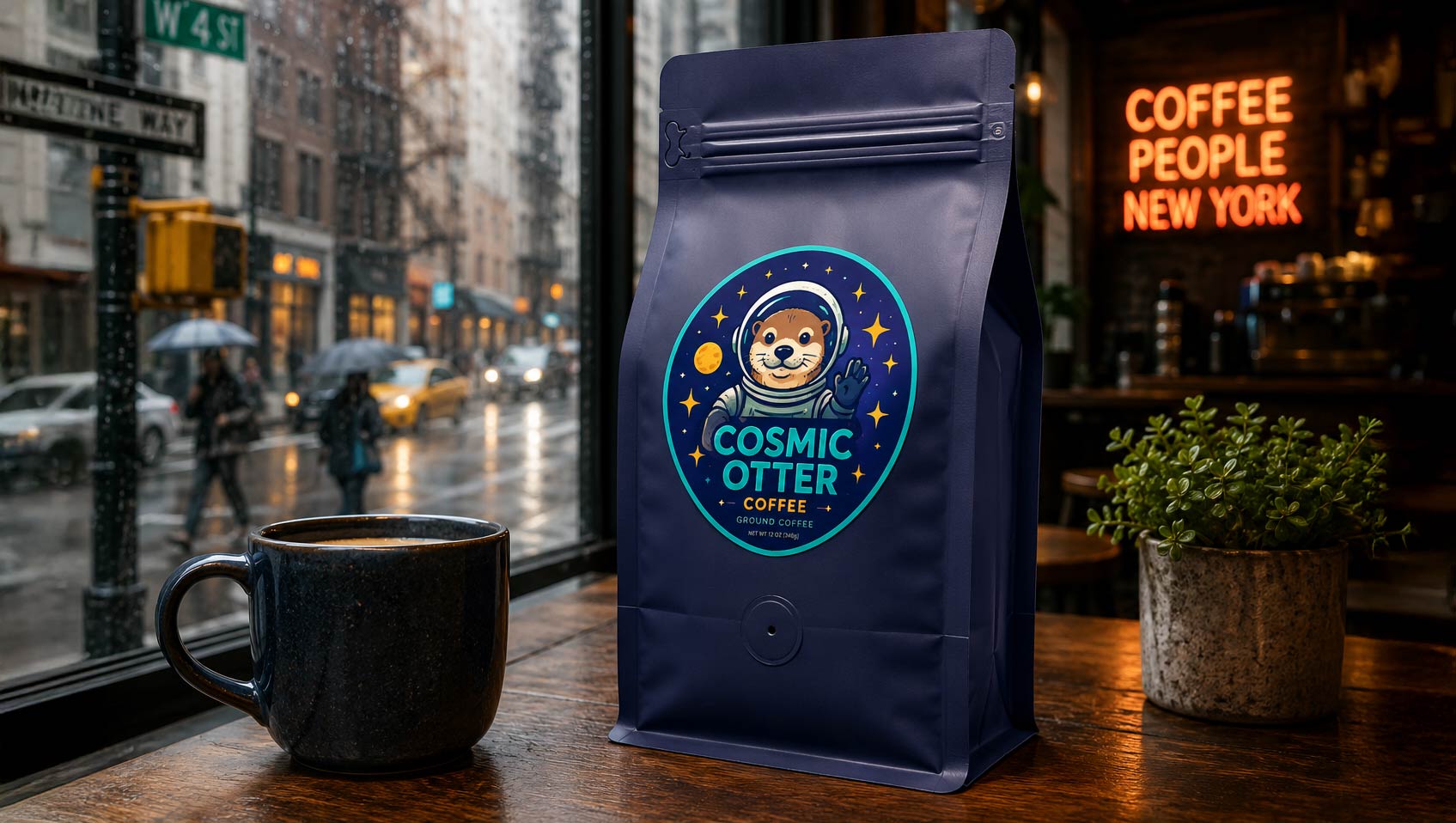
For coffee, flexible packaging is the normal choice. Almost every bag of beans on a store shelf is a pouch built from thin layers of film, which is why people in the trade use "flexible packaging" and "bags" almost as the same word.
What Are Some Examples of Flexible Packaging?
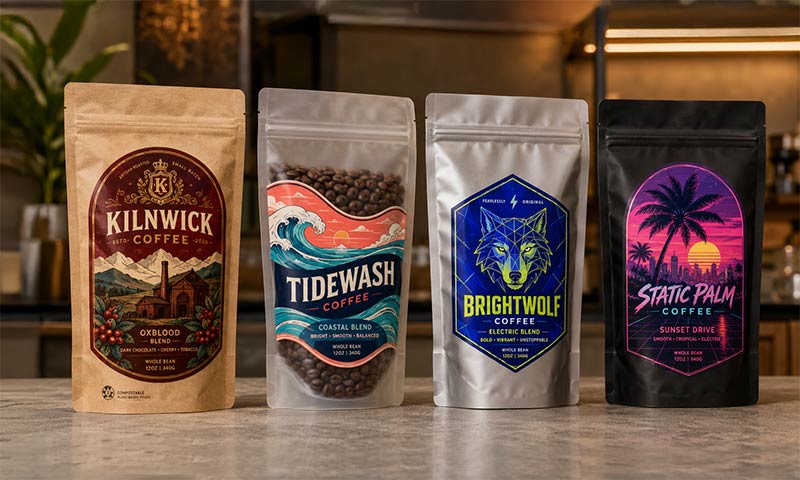
You have probably handled several today. Coffee bags, chip bags, candy wrappers, frozen vegetable bags, pet food bags and the little sugar sticks at a café are all flexible packaging. In coffee, the common formats are:
- Stand-up pouches, with a folded bottom gusset that opens into a base when the bag is filled.
- Box bottom bags, also called flat bottom or quad seal bags, with a square base and four crisp corner seals.
- Side gusset bags, the classic coffee shape, often closed with a tin tie.
- Quad seal V cut bags, with a wedge shaped base, a common pick for 5 lb wholesale fills.
- Flat pouches and tri-seal sample pouches, for samples and single servings.
- Stick packs, the narrow single serve tubes used for instant coffee and drink mixes.
- Spouted pouches, for cold brew concentrate and other liquids.
- Roll stock, printed film on a large roll that a packing machine turns into bags.
Our post on
what each coffee bag style says to a shopper goes deeper on choosing between them.
What Are the Four Types of Packaging?
There is no single official list of four, which is why this question gets so many different answers. People usually mean one of two lists, and both are worth knowing.
The first sorts packaging by material. That list usually reads flexible (bags and pouches), rigid (glass, metal and hard plastic), semi rigid (thin trays and some boxes) and paper based (cartons and corrugated boxes). Different sources draw the lines in slightly different places, but the idea is the same: how stiff is the package, and what is it made from.
The second sorts packaging by level. Primary packaging touches the product, like the coffee bag itself. Secondary packaging groups those units, like a retail box or a
printed mailer box holding a few bags. Tertiary packaging moves everything in bulk: shipping cases, pallets and stretch wrap. A coffee brand deals with all three, and the flexible bag is the primary package doing most of the work of keeping the coffee fresh.
What Is Flexible Packaging Made Of?
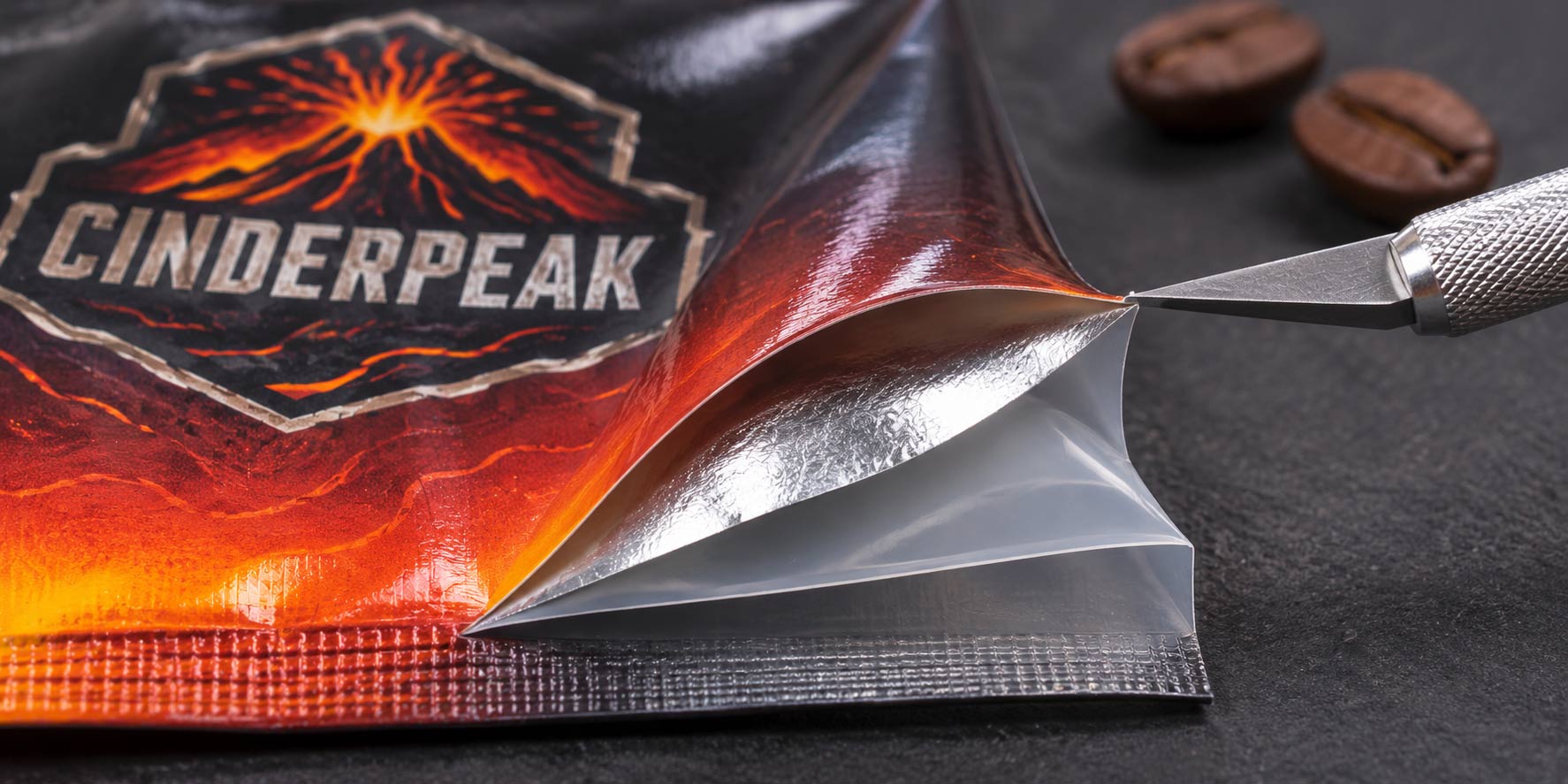
Most flexible packaging bags are made from two to four thin layers of film bonded together, a process called lamination. Each layer has one job, and together they do what no single film could do alone:
- The outer layer carries the printed design and gives the bag its finish and stiffness. On many bags the ink sits on the inside face of this layer, sealed away from scuffs.
- The barrier layer keeps oxygen, moisture and light away from the product. Aluminum foil, metallized film and EVOH are common choices.
- The inner sealant layer melts under heat so the bag can be sealed shut, and it is the only layer that touches the product.
Some bags add a kraft paper layer on the outside for a natural look, and some combine jobs into fewer layers. Our guide to the
parts of a coffee bag covers the valve, zipper and gussets that get built in on top, our post on
reverse printed coffee bags explains why the ink sits inside the outer layer, and our guide to
coffee bag thickness explains the mil and micron numbers you will see on a quote.
What Is an Example of a Flexible Plastic?
Polyethylene, the plastic in a bread bag or a grocery bag, is the most common example. It is soft, it stretches and it melts at a fairly low temperature, which is why it so often forms the inner sealing layer of a coffee bag. A few other flexible plastics show up in packaging all the time:
- PET (polyester) film, clear, stiff and strong, often used as the printed outer layer.
- Polypropylene film, glossy and crisp, used for snack bags, labels and some outer layers.
- Metallized PET, polyester with an extremely thin coat of aluminum that blocks light and slows oxygen.
- EVOH, a clear plastic used as a thin barrier layer against oxygen.
Aluminum foil is also a common layer in flexible packaging, but it is a metal, not a plastic. Rolled thin enough, it bends like film and gives the strongest barrier of the group.
Flexible vs Rigid Packaging: Which Is Better?
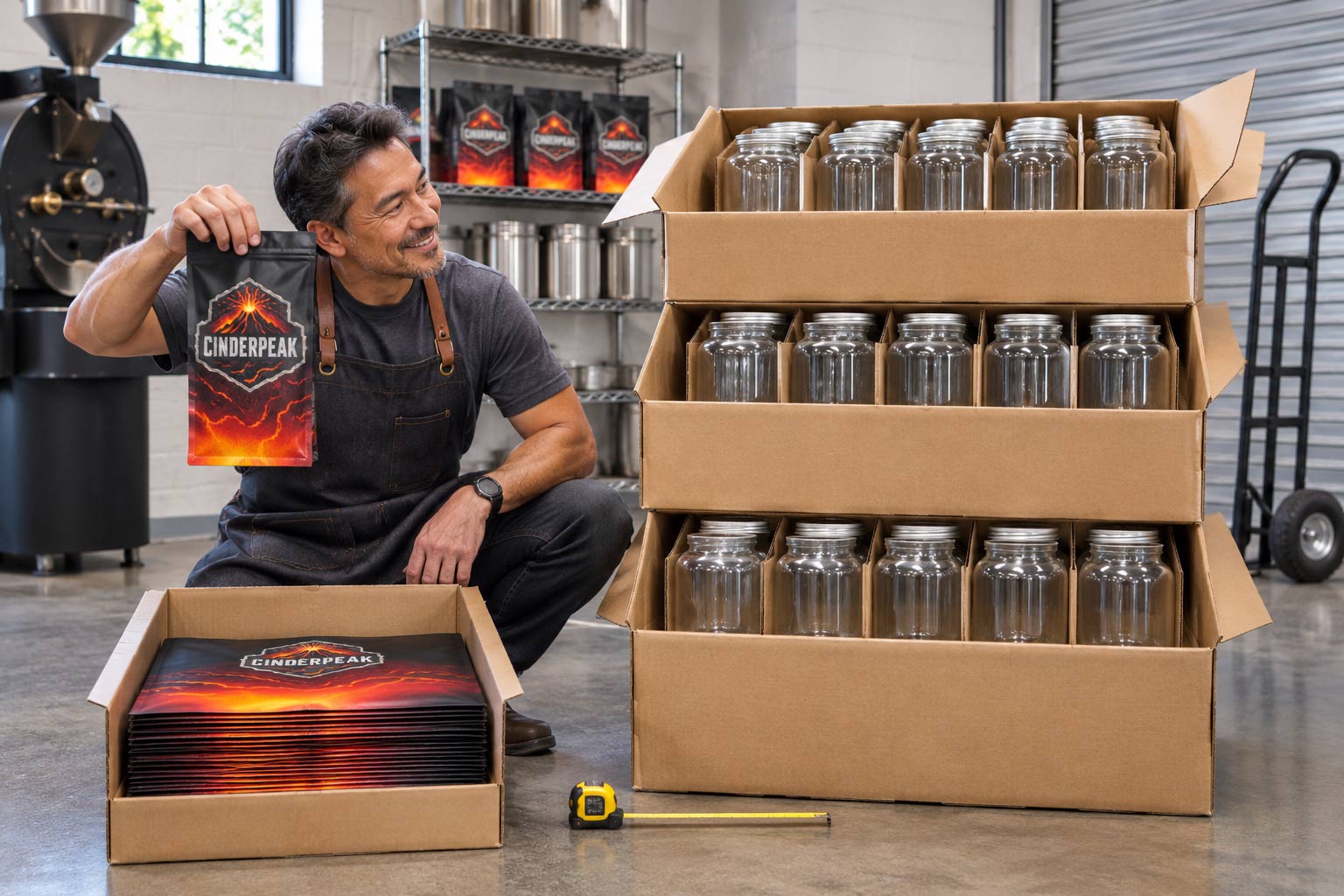
Neither one wins everywhere. Flexible packaging is lighter, uses less material, ships and stores flat before it is filled, and gives you the whole surface to print. Rigid packaging protects better against crushing and feels more solid in the hand.
The space difference surprises most people. Empty bags arrive flat and stacked in cartons, while empty jars and tins take up just as much room before filling as after. That means fewer cartons coming in, less shelf space used in a small roastery and lighter boxes going out to customers.
Rigid packaging still makes sense for some products. Something fragile that cannot take any pressure, or a premium gift where a heavy tin is part of the experience, can justify the extra weight. For roasted coffee, a bag with the right barrier and a one way degassing valve does the freshness job, which is a big reason the coffee aisle is mostly bags.
How Long Does Flexible Packaging Keep Coffee Fresh?
The barrier layer decides it more than anything else. On our
custom coffee bags, the barrier sets the protection window for sealed coffee: about 4 months for EVOH, 6 months for metallized polyester and 12 months for aluminum.
Choose the barrier from how long the coffee will sit before someone opens it. A roaster selling through its own café in a few weeks does not need what a brand shipping to stores across the country needs. A one way degassing valve lets carbon dioxide out of freshly roasted coffee without letting air back in, and a zipper keeps the bag closed after it is opened. Our guide to
coffee bag barrier materials walks through each option.
Is Flexible Packaging Sustainable?
It can be, and the honest answer has two sides. Flexible packaging uses less material than a jar or a tin and is much lighter to ship. But most multilayer bags cannot go in a curbside recycling bin, because the layers are bonded together and sorting facilities cannot pull them apart.
There are better routes.
Mono-material coffee bags build every layer from the same family of plastic so the bag is easier to recycle where that plastic is accepted. Compostable structures are another path: our Green Lite material is industrial compostable, with each component of the structure compostable on its own, though it is not certified as a finished bag. And through our
R+R program, roasters collect empty bags in an R+R box and ship them back so the material can be upcycled into new products. Our
sustainable packaging page has the details.
How Is Flexible Packaging Printed?
Most custom flexible packaging is printed one of two ways: digital printing or rotogravure printing. Digital suits smaller runs and many designs. Rotogravure suits large runs of one design.
Digital printing works like a very large, very precise printer. There are no plates or cylinders to make, so you can print a few hundred bags of each design, change artwork between orders and run several roasts at once.
Rotogravure printing engraves the design onto a set of copper cylinders, one for each color, then prints from them at high speed. The cylinders cost money up front, so rotogravure pays off on big runs, where it brings the price per bag down and gives deep, consistent color. Our post on
rotogravure printing for coffee packaging shows how the press works.
What Is Roll Stock?
Roll stock is printed flexible packaging film delivered on a large roll instead of as finished bags. A form fill seal machine at the packing plant unrolls the film, shapes it into a bag, fills it and seals it in one continuous motion.
It makes sense for high volume brands that run that kind of machine, or work with a co-packer who does. Roll stock is printed on a rotogravure press, so it runs at rotogravure volumes. For most small and mid sized roasters, finished bags are the simpler place to start.
How Do You Choose a Flexible Packaging Company?
Look past the price per bag and ask how the company handles the steps where things go wrong. A good flexible packaging partner answers these clearly:
- What is the minimum per design? A low minimum lets you launch a new roast without buying a year of bags.
- Do you offer both digital and rotogravure? Then you can start small and move up without changing suppliers.
- Will I see a proof before printing? Ask for a digital proof on the exact dieline, and a physical sample when it matters.
- What barrier options do you offer, and how long does each protect? An answer in months beats a vague "high barrier."
- What is the lead time, and when does the clock start? Ask whether it starts at the order, the deposit or artwork approval.
- Can I order samples? Filling a sample with your real product answers questions no spec sheet can.
How Savor Brands Handles Flexible Packaging
Every custom bag we make starts with a dieline sized to your product, and you approve a digital proof on that exact dieline before anything prints. You can order
samples to fill with your own coffee and check the size, the feel and the closure in your hands, and the first bags off the press are checked against the proof you approved. The numbers we work to are simple:
- Custom digital printing: 500 bags per design.
- Stock bags: 1,000 bags, in six stock colors, ready for your label. See our stock bags.
- Rotogravure printing: 10,000 bags per design.
- Spouted pouches: 500 minimum.
- Barrier: about 4 months for EVOH, 6 for metallized polyester and 12 for aluminum.
- Lead time: about 9 to 12 weeks after artwork approval, roughly 4 to 6 weeks to produce and 5 to 6 weeks to ship.
If you are not sure where to start, tell us what you are packing, how much you sell each month and how long it sits before it is opened. We will point you to the bag, the barrier and the print method that fit. For a look at how coffee, food and pet food bags share the same building blocks, read
The Flexible Packaging Family.
Flexible Packaging, Unfolded
Flexible packaging is simply packaging that bends: bags, pouches, stick packs and film on a roll. It is built from thin layers that each do one job, it ships and stores flat, and the right barrier keeps coffee fresh for months. The real choices are the bag style, the barrier and the print method, and a good partner helps you make all three before a single bag is printed.