How Are Coffee Packaging Bags Made?
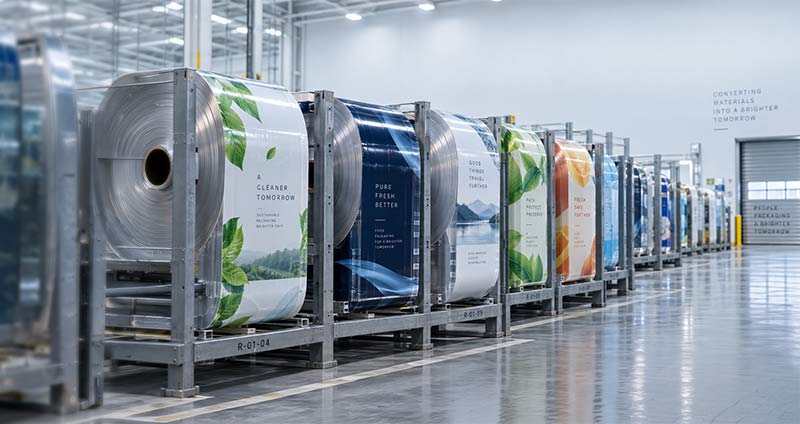
Coffee packaging bags are made from thin films that are printed, bonded together into one strong sheet, left to cure, cut into narrow rolls and then folded and sealed into bags by a machine. Most custom bags go through seven steps on the way from a clear roll of film to a finished bag in a carton:
- Plan the bag: pick the style, size and film, and approve a proof.
- Print: put your artwork on the outer film, by digital or rotogravure press.
- Laminate: bond the printed film to the barrier and sealing layers.
- Cure: let the adhesive between the layers reach full strength.
- Slit: cut the wide roll into narrow rolls the width of your bag.
- Make the bags: fold, seal and cut, and add the zipper, valve and tear notch.
- Check and pack: compare the bags to the approved proof and box them up.
Each step leaves a mark you can see on the finished bag, which is why it helps to know them. The sections below answer the questions roasters ask most about each one.
What Happens Before Anything Is Printed?
A custom bag starts as a plan. You choose the bag style, the size and the film structure, and the bag maker draws a dieline, the flat template that shows where every panel, fold, seal and gusset will land. Your designer places the artwork on that dieline.
Then comes the proof. You see your artwork laid out on the exact dieline and approve it before anything prints. This is the cheapest moment in the whole job to fix a mistake, because nothing physical has been made yet. Our post on
coffee bag mockups and proofs covers what to check, and if you want to hold a bag before you commit, order
coffee packaging samples.
How Are Coffee Bags Printed?
Custom coffee packaging bags are printed one of two ways.
Digital printing works like a very large, very precise printer. There are no plates or cylinders to make, so it suits short runs, several designs at once and artwork that changes often.
Rotogravure printing engraves each color of your design into its own copper cylinder. Making the cylinders takes time and money, but once they exist the press runs very fast and very consistently, which is why rotogravure wins on large runs of one design. Our post on
how rotogravure works goes inside the press.
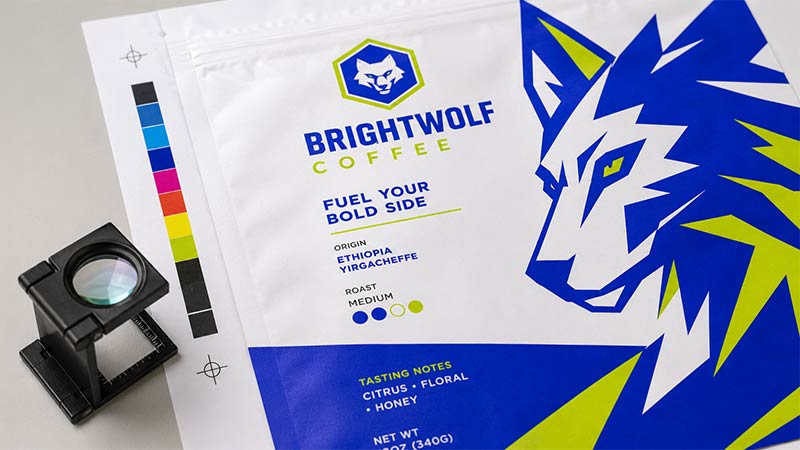
Either way, the first print off the press is checked against your approved proof before the rest of the run continues. Our post on
why the first bag off the press matters explains what gets checked.
Is the Bag Printed Before or After It Is Laminated?
Before, on most coffee bags. This is the step even some packaging guides get backwards, so it is worth getting straight.
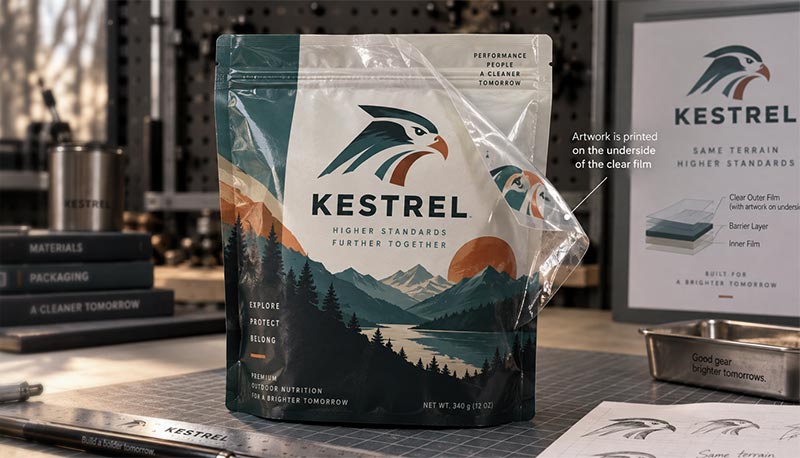
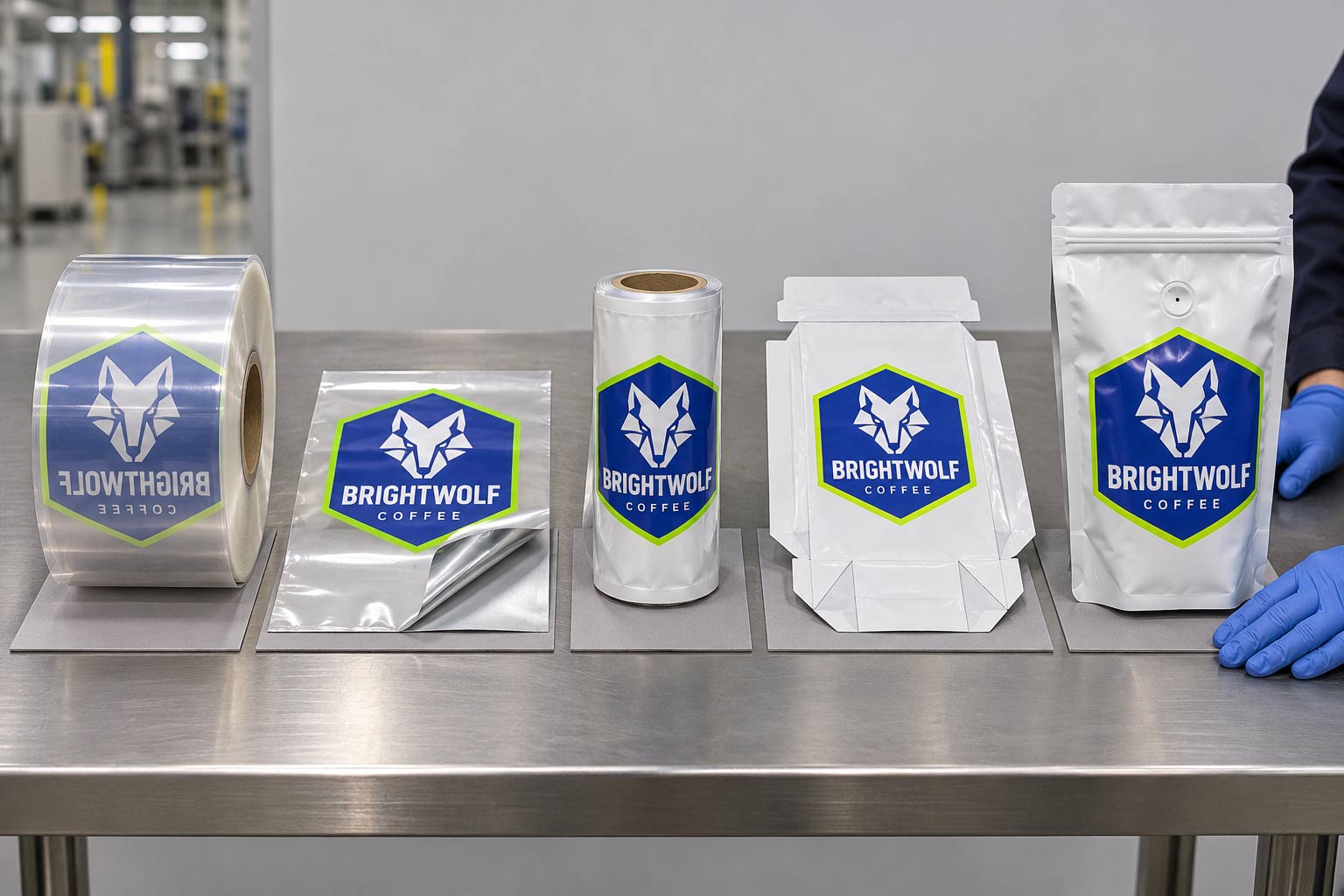
On a laminated bag, the press prints your artwork onto the inside face of a clear outer film, in mirror image. That printed film is then bonded to the other layers, so the ink ends up sealed inside the wall of the bag with clear film over it. That is why the graphics on a good coffee bag do not scuff off. Our post on
reverse printed coffee bags explains why designers get asked for a white ink layer because of it.
Kraft paper bags are the main exception. The paper is the part you want to see and feel, so the print goes on the outside of the paper instead of under a clear film.
What Is Lamination?
Lamination bonds two to four thin films into one sheet, with a thin layer of adhesive between each one. Each film has one job. The printed outer film carries the design and gives the bag its finish. The barrier layer, such as aluminum foil, metallized polyester or EVOH, keeps out oxygen, moisture and light. The inner sealant layer melts under heat so the bag can be sealed shut.
The barrier you choose sets how long sealed coffee stays protected. On our
custom coffee bags that is about 4 months for EVOH, 6 months for metallized polyester and 12 months for aluminum. Our post on
coffee bag barrier materials walks through the choice, and our guide to
coffee bag thickness explains what the numbers on a film spec mean.
Why Does Laminated Film Have to Cure?
The adhesive between the layers keeps reacting and building strength for days after the rolls come off the laminator. Turn the film into bags too soon and the layers can separate, the film can curl or wrinkle, and seals can look fine while being weak.
So the laminated rolls rest on a rack until the bond is fully set. It is one of the longest waits in the whole job, much longer than the printing itself, and no supplier can safely skip it. Our post on
why your bags spend more time curing than printing explains why, and which steps can actually save time.
What Is Slitting?
Film is printed and laminated in wide rolls, often with several bags side by side across the width. Slitting runs that wide roll past sharp blades that cut it into narrower rolls, each one the right width for your bag. It sounds minor, but a clean, straight slit is what lets the film track evenly through the bag machine.
How Is the Film Turned Into a Bag?
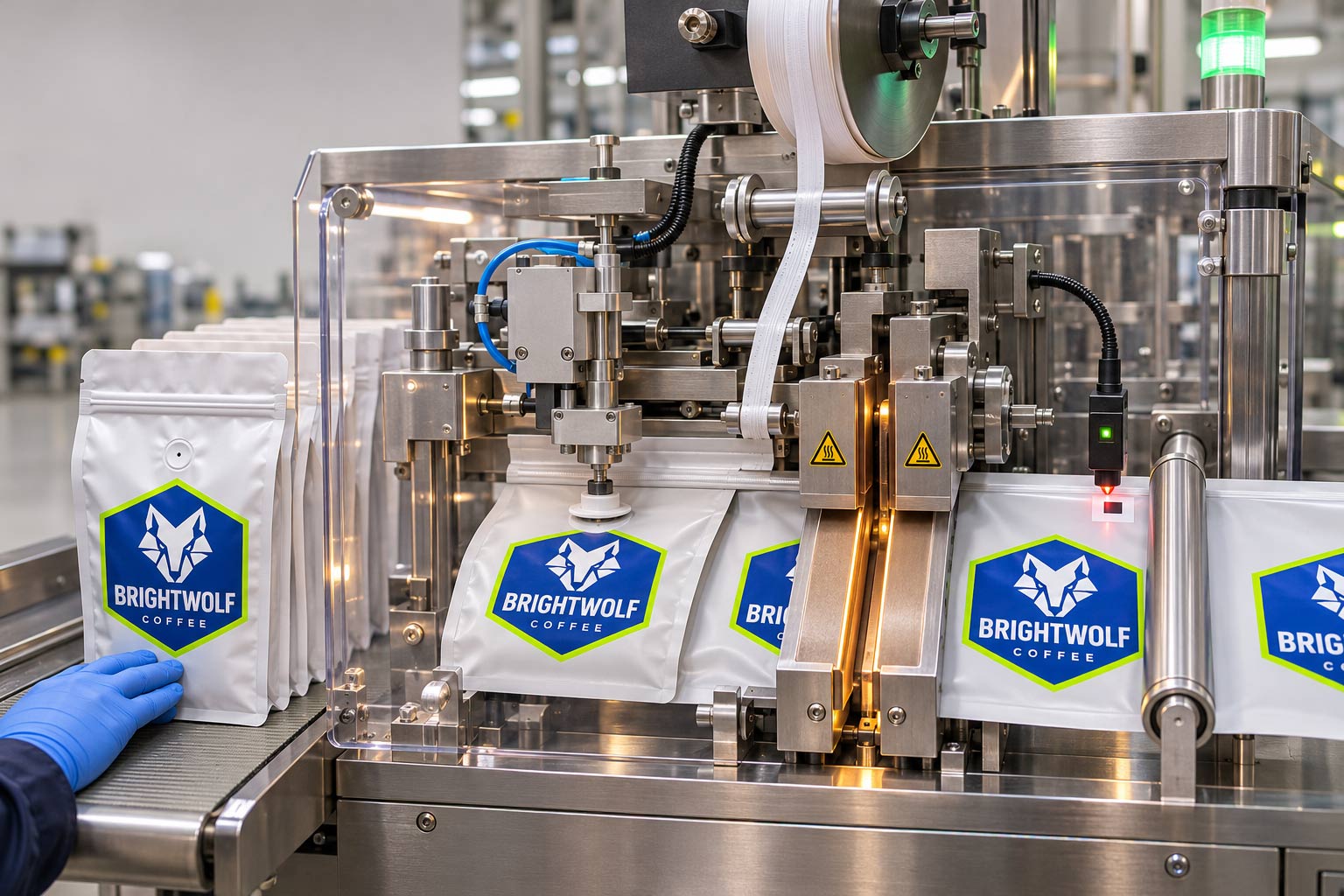
A bag making machine unwinds the slit roll, folds the film into shape, forms the gussets, heat seals the edges and cuts each bag free. It does this over and over at speed, and every bag has to come out with the seals and the artwork in the same place.
Two small details on your bag come from this step. The little printed block near the edge of the film is an eye mark, which a sensor reads so the machine cuts and seals in step with the print. Our post on the
eye mark on your coffee bag covers it. And some bag styles are formed by wrapping the film around and sealing it to itself, which leaves a seam down the back panel. Our post on the
coffee bag back seam explains what that does to your artwork.
When Are the Valve, Zipper and Tear Notch Added?
During bag making. These features are built into the bag on the machine, not added afterward by hand:
- The valve, a one way degassing valve that lets carbon dioxide out of fresh coffee without letting air back in, is welded onto the film over a few tiny holes.
- The zipper is two plastic strips fed into the bag and sealed into the walls a little below the top.
- The tear notch is a small cut in the side seal, placed above the zipper, so the bag tears open cleanly.
Some features depend on the bag style. On our stock bags, for example, the stand up pouch and the box bottom bag carry a zipper and the side gusset bag does not. Our guide to the
parts of a coffee bag shows where each feature sits.
The bags usually leave the factory with one end open. You fill them with coffee and heat seal that end yourself, above the zipper, so the bag stays sealed until your customer tears it open.
How Long Does It Take to Make Custom Coffee Bags?
Plan on about 9 to 12 weeks from the day you approve your artwork: roughly 4 to 6 weeks to produce the bags and 5 to 6 weeks to ship them. Most of that time is curing, scheduling and transit, not printing.
The part you control most is the front of the job. Approving artwork quickly and settling the bag size before your designer starts are the two things that do the most to keep your date. Extras like a
die cut shape can add a few days. If you need bags sooner than that,
stock bags with a label can bridge the gap while your custom bags are made.
Can Coffee Bags Be Made in Small Quantities?
Yes. Because digital printing needs no cylinders, custom printed bags can be made in small runs. Our custom digital bags start at 500 bags per design, so you can launch a new roast or test a design without buying a year of bags. Rotogravure starts at 10,000 bags per design, where its lower price per bag pays off, and stock bags start at 1,000.
How Do You Choose a Coffee Packaging Manufacturer?
Look past the price per bag and ask how the manufacturer handles the steps where things go wrong. A good coffee packaging manufacturer answers these clearly:
- Will I approve a proof on the exact dieline? That is where most mistakes get caught.
- Can I order samples first? Filling a real bag with your own coffee tells you more than any picture.
- Do you offer both digital and rotogravure? Then you can start small and move up without changing suppliers.
- What is the minimum per design? A low minimum lets you add roasts as you grow.
- What is the real lead time from artwork approval? Ask for production and shipping separately.
- Which barrier do you recommend for my coffee, and why? The answer should start from how long your coffee sits before it is opened.
How Savor Brands Handles It
We think the quality of a coffee bag is decided long before it reaches your filling table, so we take care with the steps you never see. Every custom bag starts with a dieline sized to your coffee, and you approve a digital proof on that exact dieline before anything prints.
- We help you choose the structure first. Tell us how long your coffee sits before it is opened and we will point you to the barrier that fits, from EVOH to aluminum.
- We plan every feature on the dieline. The valve, zipper and tear notch are placed on your template, so you see where they land before anything prints.
- We let the film cure before it becomes bags, because a rushed laminate is a weak bag.
- We send samples first, so you can fill a real bag with your own coffee before you order a full run.
- We start small and grow with you: 500 bags per design in digital, 10,000 per design in rotogravure, and 1,000 for stock bags in six colors.
If you are not sure where to start, tell us what you are packing, how much you sell each month and how long it sits on a shelf. We will help you pick the bag, the barrier and the print method. For the bigger picture, read
what flexible packaging is.
From Clear Film to Your Filling Table
Coffee packaging bags are made in seven steps: plan and proof, print, laminate, cure, slit, make the bags, then check and pack. On most bags the printing happens first, on the inside of the outer film, which is why the graphics last. The curing wait is the longest quiet part of the job, and the zipper, valve and tear notch are built in on the bag machine. Approve your proof carefully, ask your manufacturer about each step, and order samples before a full run. Then the bag that arrives is the bag you planned.